Best Accent Voice Alternatives in 2026: 7 Accent Training Apps Compared

- 1
 ELSA SpeakAI pronunciation feedbackVisit
- 2
 BoldVoiceProfessional accent coachingVisit
- 3
 SpeechlingDaily pronunciation practiceVisit
- 4
 ChatterFoxStructured accent lessonsVisit
- 5
 AccentAdvisorAccent assessment and coachingVisit
- ELSA Speak suits learners who want AI pronunciation feedback on American English.
- BoldVoice suits professionals who want accent coaching with human feedback.
- Speechling suits learners who want daily pronunciation practice with coach review.
- ChatterFox suits learners who want structured accent reduction lessons.
- AccentAdvisor and Pronounce AI suit focused pronunciation feedback at lower cost.
Quick comparison
| Product | Ideal for | Price from | Free version | |
|---|---|---|---|---|
| ELSA Speak | AI pronunciation feedback | See website | Yes | Visit |
| BoldVoice | Professional accent coaching | See website | Free trial | Visit |
| Speechling | Daily pronunciation practice | See website | Yes | Visit |
| ChatterFox | Structured accent lessons | See website | Free trial | Visit |
| AccentAdvisor | Accent assessment and coaching | See website | Free trial | Visit |
 Pronounce AI | AI speech feedback | See website | Free trial | Visit |
 SpeechAce | AI pronunciation scoring | See website | Free trial | Visit |
The best accent voice alternatives
Accent training apps help speakers improve pronunciation, clarity, and confidence in a target accent, usually American or British English. The apps below cover AI feedback, human coaching, and structured lessons. We compared official feature pages, pricing pages, and app store listings.
ELSA Speak
Ideal for: AI pronunciation feedback
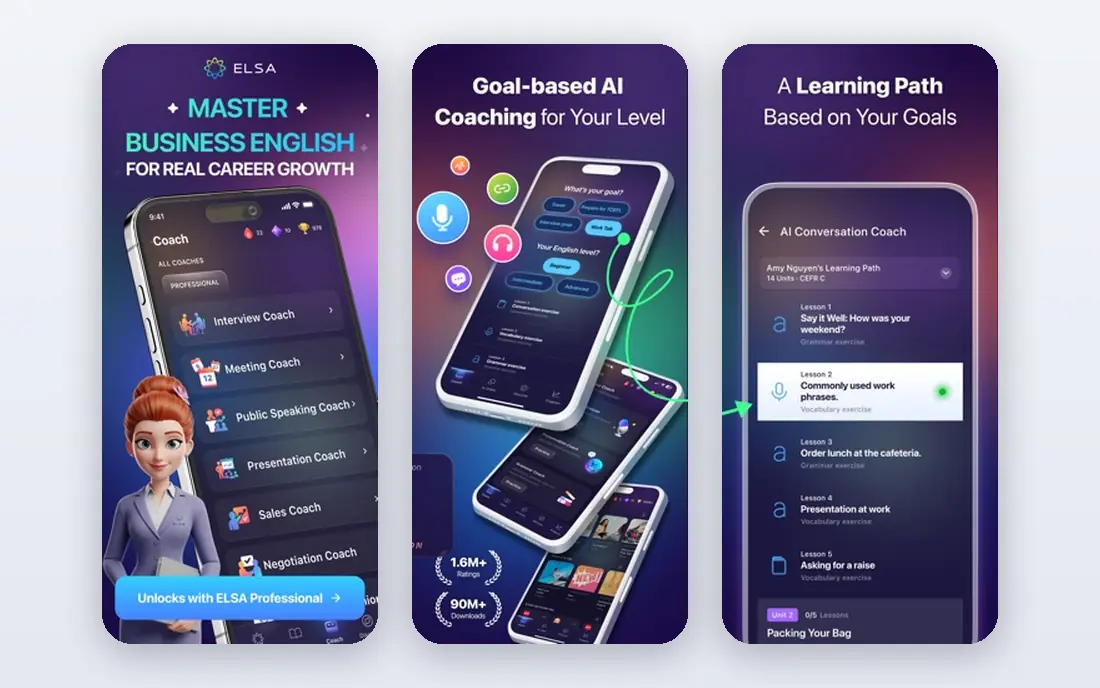
ELSA Speak uses AI to score pronunciation at the sound level, showing which sounds need work and offering targeted lessons. Learners practice words, phrases, and conversations, with progress tracking that shows improvement over time. Its American English focus suits learners aiming for US clarity.
British accent learners get less coverage, and human coaching is limited. For an English learner who wants detailed AI pronunciation feedback, ELSA Speak is our pick. Its free tier covers basic lessons well.
- AI feedback on individual sounds and words
- Structured lessons for American English
- Progress tracking
- American English focus
- Advanced coaching needs a paid plan
BoldVoice
Ideal for: Professional accent coaching
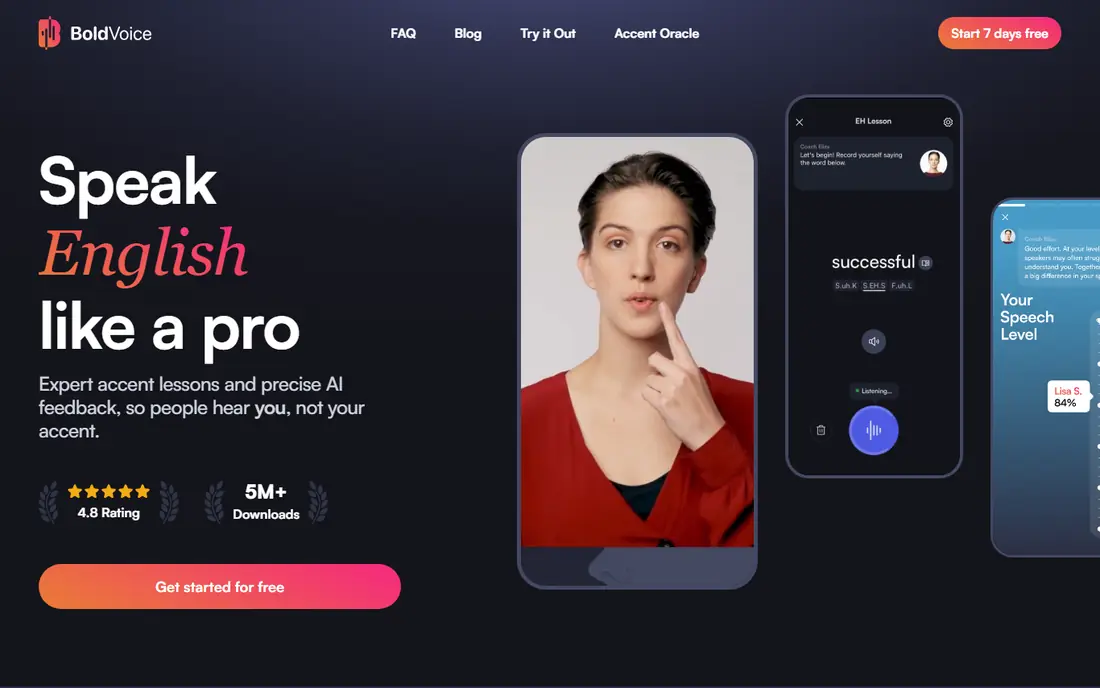
BoldVoice offers accent coaching for professionals, with video lessons, practice exercises, and feedback from human coaches on higher plans. Its focus on work communication suits international professionals who want clearer speech in meetings and presentations. That human feedback sets it apart from AI-only apps.
Pricing sits above app-only tools, and its accent focus is mainly American. For a professional who wants coached accent improvement, BoldVoice is a strong pick. Trial its lessons to judge coach feedback quality.
- Accent coaching with video lessons and human feedback
- Professional focus for work communication
- Progress tracking
- Higher price than app-only tools
- American accent focus
Speechling
Ideal for: Daily pronunciation practice
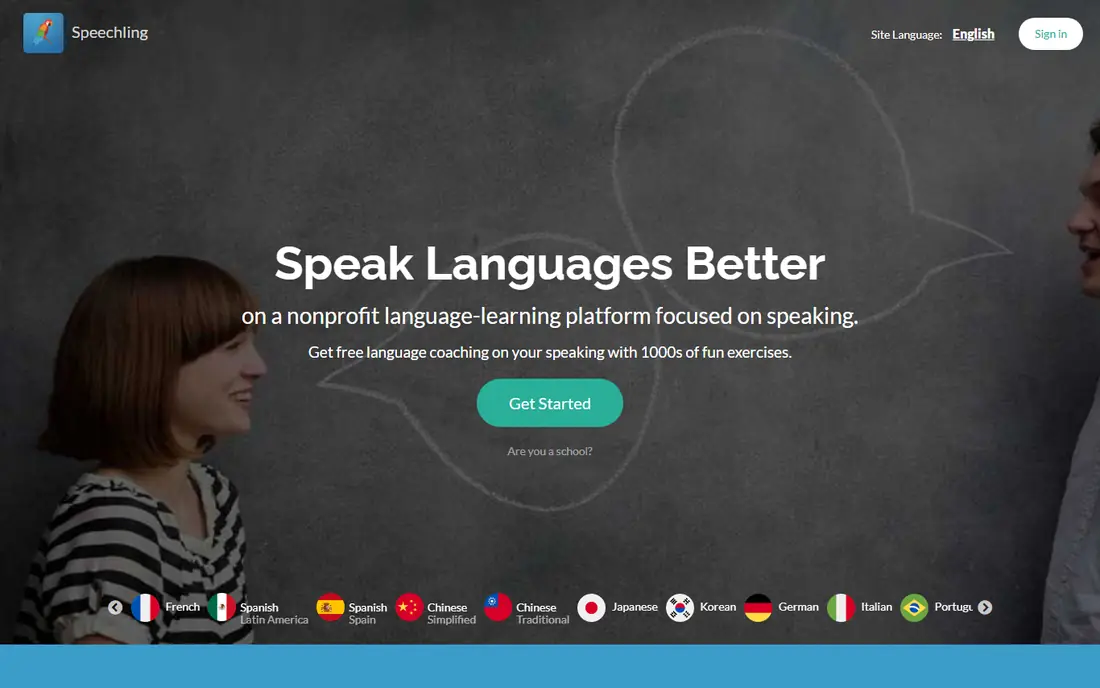
Speechling gives learners daily sentences to record, with feedback from real coaches, even on its free tier with limits. Its routine suits learners who want steady, small daily practice rather than long lessons. Language coverage extends beyond English, which helps multilingual learners.
Free-tier coach feedback may take time, and its interface is plainer than ELSA or BoldVoice. For a learner who wants daily practice with human feedback at low cost, Speechling is a good pick. Use it consistently for best results.
- Daily sentences with coach feedback on free tier
- Many languages beside English
- Simple practice routine
- Coach feedback can be slow on free tier
- Interface is simpler than rivals
ChatterFox
Ideal for: Structured accent lessons
ChatterFox offers structured accent reduction courses with video lessons, practice drills, and progress tracking for American English. Its curriculum suits learners who want a guided course rather than open-ended app practice. That structure helps learners who struggle to plan their own study.
AI feedback depth is thinner than ELSA, and its focus is American accent only. For a learner who wants a structured accent course, ChatterFox is a practical pick. Trial its first lessons to judge teaching style.
- Structured accent reduction lessons with video and practice
- American accent focus
- Progress tracking
- Less AI feedback depth than ELSA
- Pricing is subscription based
AccentAdvisor
Ideal for: Accent assessment and coaching
AccentAdvisor starts with an accent assessment, then builds a personalized coaching plan with lessons and human coach options. Its support for American and British accents suits learners with different targets, and its assessment helps focus practice on the sounds that matter most. That personalization is a clear strength.
Its app and community ecosystem is smaller than ELSA, and coaching prices vary. For a learner who wants an assessment-led plan with coach support, AccentAdvisor is a good pick. Check coaching plan details before subscribing.
- Accent assessment with personalized coaching plans
- Human coach options
- American and British accent support
- Smaller app ecosystem than ELSA
- Pricing varies by coaching plan
Pronounce AI
Ideal for: AI speech feedback
Pronounce AI gives AI feedback on pronunciation, fluency, and grammar for spoken practice, including interview and meeting scenarios. Learners can practice realistic speaking tasks and get instant scores, which suits professionals preparing for work conversations. Its interface is simple and fast to start.
Lesson library depth is smaller than ELSA, and feedback comes only from AI. For a learner who wants quick AI speech feedback for work scenarios, Pronounce AI is a practical pick. Trial it with your own meeting phrases.
- AI feedback on pronunciation, fluency, and grammar
- Practice for interviews and meetings
- Simple interface
- Newer tool with a smaller lesson library
- Feedback is AI-only
SpeechAce
Ideal for: AI pronunciation scoring
SpeechAce scores spoken English with AI feedback on sounds, words, and fluency, helping learners pinpoint exactly which sounds need work. Its practice tools suit individual learners, while its API serves schools and apps that want pronunciation scoring inside their own products. That scoring depth appeals to learners who like measurable progress.
It offers less guided course structure than ChatterFox or BoldVoice, so self-directed learners benefit most. For a learner who wants precise AI pronunciation scores, SpeechAce is a good final pick here. Trial it with your own typical phrases to judge feedback quality.
- AI scoring of pronunciation at sound and word level
- Practice for learners and professionals
- API for education apps
- Less structured course content than ChatterFox
- Feedback is AI-only
How we picked these
We compared official feature pages, pricing pages, and app store listings, looking for accent training, pronunciation feedback, or speech coaching features. We favored apps that are actively maintained and work in October 2026, and we mixed AI feedback tools with human coaching options. We did not claim hands-on testing, and we note that accent goals vary, so check whether each app targets American, British, or other accents.
We also weighed practical details that matter after signup. That included how easy each product is to set up, whether support answers promptly, and whether pricing stays clear as usage grows. We read user complaints as well as praise, since repeated complaints about billing, onboarding, or missing features often signal a real weakness. Where a product had a known limitation, we said so in its write-up rather than smoothing it over. Our goal was a shortlist that a reader can trust for accent voice alternatives, not a list of every vendor in the market. Readers with unusual needs should still test their top two choices, since fit depends on budget, team size, and the features used every day.
What to check before you choose
Start with your accent target and goal: clearer American English for work, British English for study, or general speaking confidence. Each app targets different accents and goals, and picking the wrong target wastes practice time. Also decide whether you want AI feedback, human coaching, or a structured course, since those suit different learners.
Next, trial with your own speech: record your typical work phrases and judge feedback quality. Check whether the app identifies your specific problem sounds, since generic feedback helps less. Practice daily in short sessions, since consistency matters more than long, rare study blocks. A trial week will show whether the app fits your routine.
Testing your shortlist before you commit
A short trial answers questions that no comparison table can settle. Sign up for your top two choices, run a real task from your own work, and watch how long it takes and where you get stuck. For accent voice alternatives, that real task might be a weekly workflow you repeat, a report you need every month, or a setup step your team must repeat for new members. If a tool slows that task down, it will cost time every week, no matter how good its feature list looks.
Pay attention to support during the trial as well. Send a question through the normal support channel and note how long a useful answer takes. Check billing clarity too: confirm what the trial includes, when it ends, and what the first paid invoice will actually show. A tool that is hard to cancel, or that hides fees until checkout, deserves caution.
Finally, ask who else on your team must use the tool. A product that only one person likes will stall, while a product the whole team adopts will pay for itself. Gather quick feedback from the people who will use it daily, compare their notes with your own, and then choose. That small amount of trial discipline prevents most bad purchases, and it costs far less than switching tools again in six months.
Budgeting the full cost, not just the headline price
Headline prices rarely tell the full story. Add up per-user fees, add-on charges, implementation help, and any training your team needs, then compare that total across your shortlist. A cheaper plan that needs three paid add-ons can end up costing more than a fuller plan from a rival. Check renewal terms as well, since introductory discounts often expire after the first term and the second year price is the one you will actually live with.
Think about exit costs too. Before you commit, confirm how your data exports, whether your content or history moves cleanly, and what happens if you pause or cancel. A tool with clean exports gives you freedom later, while a tool that locks data in makes switching painful. Choosing with the full cost and the exit path in mind keeps your accent voice alternatives decision sound for the long term, not just for the first month.
Frequently asked questions
Can an app really change my accent?
Apps can improve pronunciation, clarity, and confidence with consistent practice, but accents change gradually and rarely disappear fully. Set realistic goals around clarity rather than sounding native.
Which accent app is best for American English?
ELSA Speak, BoldVoice, and ChatterFox focus on American English, with ELSA leading on AI feedback and BoldVoice on human coaching. AccentAdvisor also supports American and British targets.
How long does accent training take?
Progress depends on practice frequency and starting level, with many learners noticing clarity gains within weeks of daily practice. Consistent short sessions beat occasional long sessions.
Are human coaches better than AI feedback?
Human coaches give nuanced feedback on rhythm and naturalness, while AI gives instant, detailed sound-level scores. Many learners benefit from combining both approaches.
Is accent training about sounding native?
No, the goal is usually clear, confident communication, not erasing your identity. Good training improves intelligibility while keeping your natural voice.