Airdna Alternatives in 2026: 8 Options Compared

- PriceLabs and Beyond lead for dynamic pricing of short term rentals.
- Rabbu and Mashvisor suit investors and hosts who want market analysis.
- Hospitable and OwnerRez help manage bookings alongside pricing.
- Check market coverage for your city, since data depth varies by location.
Quick comparison
| Product | Ideal for | Price from | Free version | |
|---|---|---|---|---|
 PriceLabs | Dynamic pricing for short term rentals | See website | Free trial | Visit |
 Beyond | Automated pricing with host support | See website | No | Visit |
 Mashvisor | Investor market analysis for rentals | See website | Free trial | Visit |
 Rabbu | Market data and revenue estimates | See website | No | Visit |
 Hospitable | Host automation plus pricing tools | See website | Free trial | Visit |
 OwnerRez | Property management with booking tools | See website | Free trial | Visit |
 Wheelhouse | Dynamic pricing for hosts | See website | Free | Visit |
 DPGO | Pricing optimization for rentals | See website | Free trial | Visit |
The best airdna alternatives
AirDNA provides short term rental market data and analytics. Alternatives differ in whether they focus on pricing, market research, or property management, so match the tool to your role as host or investor.
PriceLabs
Ideal for: Dynamic pricing for short term rentals
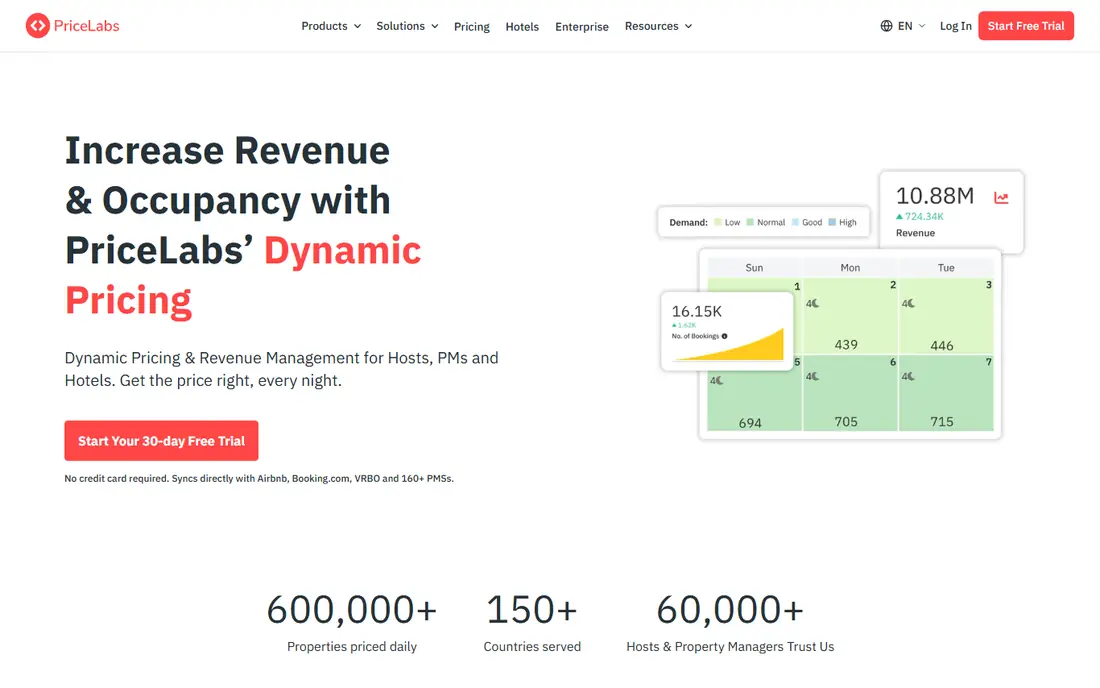
PriceLabs automates nightly pricing based on demand, seasonality, and market data, with integrations to major PMS platforms. It suits hosts who want data driven rates without manual updates. Customization is deep.
Settings need tuning to fit your property, and pricing is per property. For dynamic pricing, PriceLabs is our pick.
- Dynamic pricing automation
- Market data
- PMS integrations
- Settings need tuning
- Pricing is per property
Beyond
Ideal for: Automated pricing with host support
Beyond, formerly Beyond Pricing, offers automated pricing with revenue management support and analytics. It suits hosts who want experts to help set strategy. The service handles much of the work.
Pricing is often revenue based, and DIY control is less than PriceLabs. For supported automated pricing, Beyond is strong.
- Automated pricing
- Revenue management support
- Analytics
- Revenue share pricing
- Less DIY control
Mashvisor
Ideal for: Investor market analysis for rentals
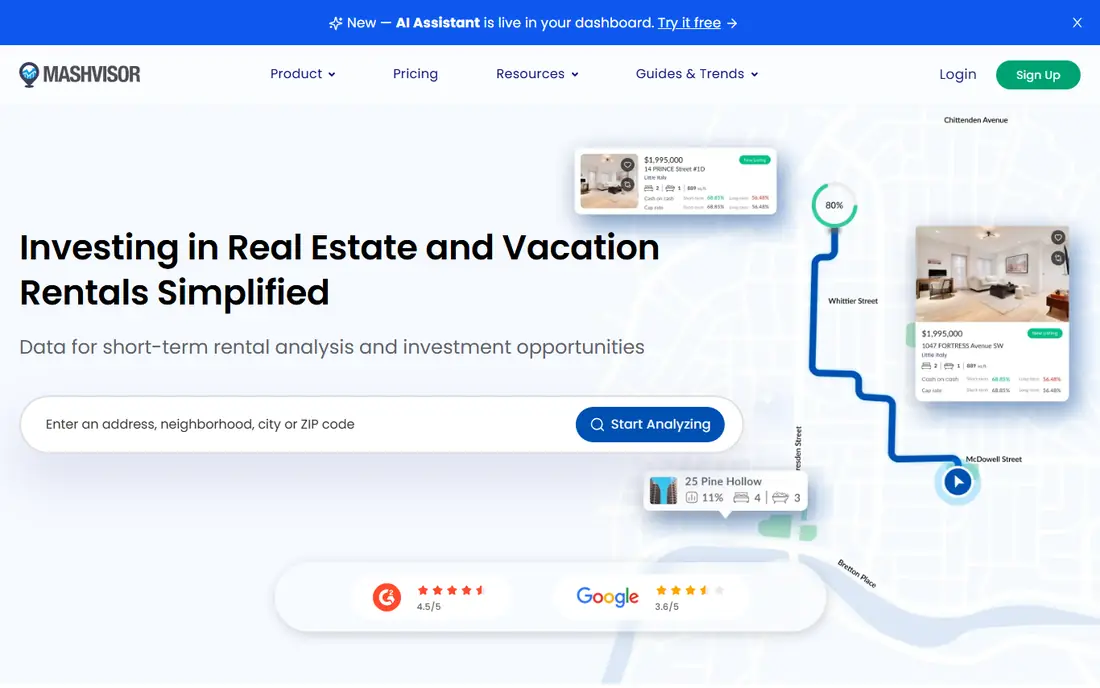
Mashvisor helps investors analyze short term and long term rental markets, with return estimates and neighborhood data. It suits buyers comparing areas and properties. The US coverage is broad.
Its focus is US markets, and pricing is per user. For investor analysis, Mashvisor is a good choice.
- Market analysis
- Return estimates
- Neighborhood data
- US focus
- Pricing is per user
Rabbu
Ideal for: Market data and revenue estimates
Rabbu provides short term rental market data and revenue estimates, plus tools for hosts. It suits hosts and investors who want area level insight. Reports cover occupancy and rates.
Coverage varies by market, and pricing is custom. For market estimates, Rabbu is worth checking.
- Market data
- Revenue estimates
- Host tools
- Coverage varies by market
- Pricing is custom
Hospitable
Ideal for: Host automation plus pricing tools
Hospitable, formerly Smartbnb, automates host messaging and offers pricing tools plus direct booking features. It suits hosts who want operations plus pricing in one tool. Automation saves daily time.
Pricing is per property, and market data is thinner than AirDNA. For host automation, Hospitable is a strong pick.
- Messaging automation
- Pricing tools
- Direct booking features
- Pricing is per property
- Market data is thinner
OwnerRez
Ideal for: Property management with booking tools
OwnerRez manages bookings, channel connections, and pricing integrations for vacation rentals. It suits hosts and managers who need a full management platform. The feature range is broad.
The learning curve is real, and pricing is per property. For full management, OwnerRez is a capable choice.
- Booking management
- Channel connections
- Pricing integrations
- Learning curve
- Pricing is per property
Wheelhouse
Ideal for: Dynamic pricing for hosts
Wheelhouse offers dynamic pricing with a free tier, market data, and simple setup. It suits hosts who want automated pricing without a high monthly fee. The basics are solid.
Feature depth is less than PriceLabs, and support varies. For free tier pricing, Wheelhouse is a practical option.
- Free tier pricing tools
- Market data
- Simple setup
- Feature depth is less than PriceLabs
- Support varies
DPGO
Ideal for: Pricing optimization for rentals
DPGO optimizes rental pricing with market insights and multi channel support. It suits hosts who want pricing help across Airbnb and other channels. The interface is modern.
It is a smaller vendor, and coverage varies by market. For pricing optimization, DPGO is worth a trial.
- Pricing optimization
- Market insights
- Multi channel support
- Smaller vendor
- Coverage varies
How we picked these
We compared official feature pages, pricing, and coverage statements for each tool, checking market data depth, pricing automation, and integrations. We favored tools that state their data sources and coverage. We did not claim hands-on testing; our comparison rests on published features and public reviews.
We also checked whether each option is still offered and supported, and we left out products with unclear pricing, broken pages, or a poor fit for the topic. Where a price or free tier could not be confirmed from the vendor site, we wrote See website rather than guessing. Readers should still check the vendor page before buying, since prices and plans change.
How to choose an AirDNA alternative
Start with your role. Hosts need pricing and calendar tools, while investors need market analysis and return estimates. A tool built for hosts may lack investor depth, and vice versa. Pick the tool that answers your main question.
Check coverage for your market. Data depth varies by city, with larger markets covered better than small towns. Ask for a sample report for your area before subscribing, and compare its occupancy and rate figures with your own experience.
Test pricing automation carefully. Dynamic pricing tools adjust nightly rates based on demand, but settings matter. A tool that underprices on peak weekends loses money, while one that overprices leaves nights empty. Start with conservative settings and review weekly.
Consider management integration. Pricing tools work best when they connect to your property management system or booking channels. Check integrations with Airbnb, Vrbo, and your PMS before committing, since manual syncing wastes time.
Before you pay, confirm the total cost for the first year, including any add ons, renewal prices, and fees that only appear at checkout. A low starting price can hide a higher renewal rate, and a free tier can limit the feature you need most. Write down the features you will use weekly, and pay only for those.
After you choose, give the option a fair trial with your real workload, not just a quick tour. Set a reminder to review it after two to four weeks, and note what worked, what annoyed you, and what you never used. That review tells you whether to keep, upgrade, or switch before a renewal locks you in.
If the option disappoints, switch sooner rather than later. Export your data first, check whether you can keep your account history or settings, and confirm any cancellation terms. A good provider makes leaving straightforward, and a difficult exit is itself useful information about the service.
Talk to people who already use the option before you commit, especially for a business purchase. A short conversation with a current user reveals support quality, setup effort, and daily friction that marketing pages omit. Ask what surprised them after the first month, since early impressions often differ from longer use.
Keep a simple record of why you chose the option, including the price you were quoted and the features that mattered. That note makes renewal talks easier and helps a colleague or future you understand the decision. If the price rises or a key feature changes, the note shows whether the original reasons still hold.
Finally, plan the first week of use before you pay. List the setup steps, the data you need to move, and the people who need access. A clear first week plan turns a promising choice into a working routine, and it exposes missing features while you can still change your mind.
Save the vendor support page and the cancellation instructions in the same place as your receipt. When something goes wrong, you will want support details at hand rather than searching for them under pressure. A tidy record saves time and keeps a small problem from becoming a long one.
Keep notes on the first month of use, including any issues and how support handled them. Those notes give you clear evidence if you need a refund, an upgrade, or a switch, and they help you advise a friend or colleague who asks about the same choice later.
Frequently asked questions
What is the best AirDNA alternative?
PriceLabs is our pick for dynamic pricing, while Beyond suits hosts who want automated pricing with support. Mashvisor is strong for investor market analysis. Your role as host or investor decides the winner.
What does AirDNA do?
AirDNA provides short term rental market data, including occupancy, nightly rates, and revenue estimates by area, plus tools for hosts and investors. Alternatives cover similar data with different pricing and management features.
Can pricing tools really increase revenue?
They can help by adjusting rates for demand, seasonality, and events, but results depend on your market and settings. Review pricing weekly, especially in the first months, and compare revenue with prior periods before judging.
Do I need market data if I only host one property?
It helps for setting rates and judging whether your property performs well for its area. A pricing tool may matter more than broad market data for a single property, while investors analyzing many areas need market reports.
How much do these tools cost?
Pricing varies from per property monthly fees for pricing tools to higher plans for market data. Some tools charge a percentage of revenue. Compare total cost for your property count and the features you need.
How often should I review my choice?
Review it at least once a year, and sooner if your needs, budget, or team size change. Prices, features, and policies shift over time, and a better fit may appear. A short yearly check, comparing your current option with two alternatives, keeps you from paying for features you no longer use.