MessageBird Alternatives in 2026: 8 Tools Compared

- Twilio is the most complete alternative, with messaging, voice, video, and email APIs at scale.
- Vonage, Sinch, and Infobip suit global messaging with strong carrier coverage.
- Plivo, Bandwidth, and Telnyx offer competitive pricing for high-volume SMS and voice.
- MessageMedia suits small businesses that want simple SMS without API complexity.
Quick comparison
| Product | Ideal for | Price from | Free version | |
|---|---|---|---|---|
 Twilio | Complete CPaaS platform | See website | Free trial | Visit |
 Vonage | Global messaging and voice | See website | Free trial | Visit |
 Plivo | Low-cost SMS and voice | See website | Free trial | Visit |
 Sinch | Global messaging at scale | See website | Free trial | Visit |
 Bandwidth | Carrier-grade voice and messaging | See website | Free trial | Visit |
 Telnyx | Developer-friendly CPaaS | See website | Free trial | Visit |
 Infobip | Omnichannel messaging | See website | Free trial | Visit |
 MessageMedia | Simple business SMS | See website | Free trial | Visit |
The best MessageBird alternatives
We compared official feature pages, pricing pages, and app-store listings for communications platforms available in October 2026. MessageBird, now known as Bird, offers omnichannel messaging, and the tools below cover the same SMS, voice, and WhatsApp needs.
Twilio
Ideal for: Complete CPaaS platform
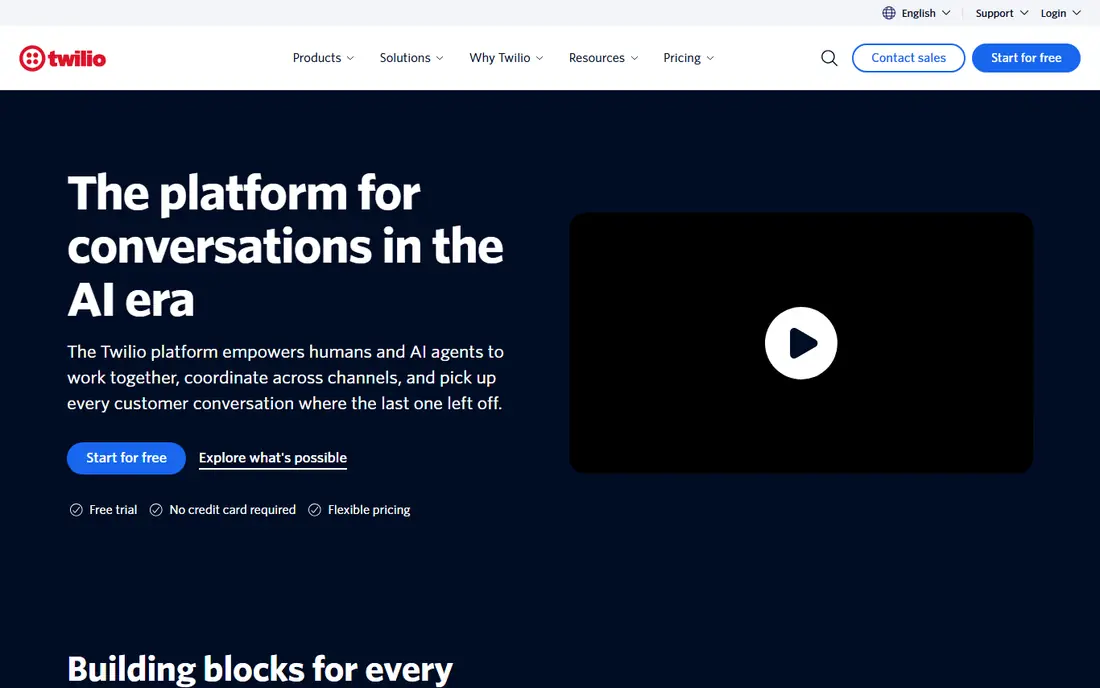
Twilio is the largest communications platform as a service, covering SMS, WhatsApp, voice, video, email through SendGrid, and verification. Its APIs, docs, and community are extensive, and its global carrier network supports high-volume messaging. Developers can build omnichannel flows with Twilio's Studio and Flex products.
Pricing can be complex across many products, and premium support costs extra. For a team that wants the broadest platform with the deepest docs, Twilio is the default MessageBird alternative.
- Broadest API coverage
- Messaging, voice, video, and email
- Strong docs and community
- Pricing can be complex
- Support tiers cost extra
Vonage
Ideal for: Global messaging and voice
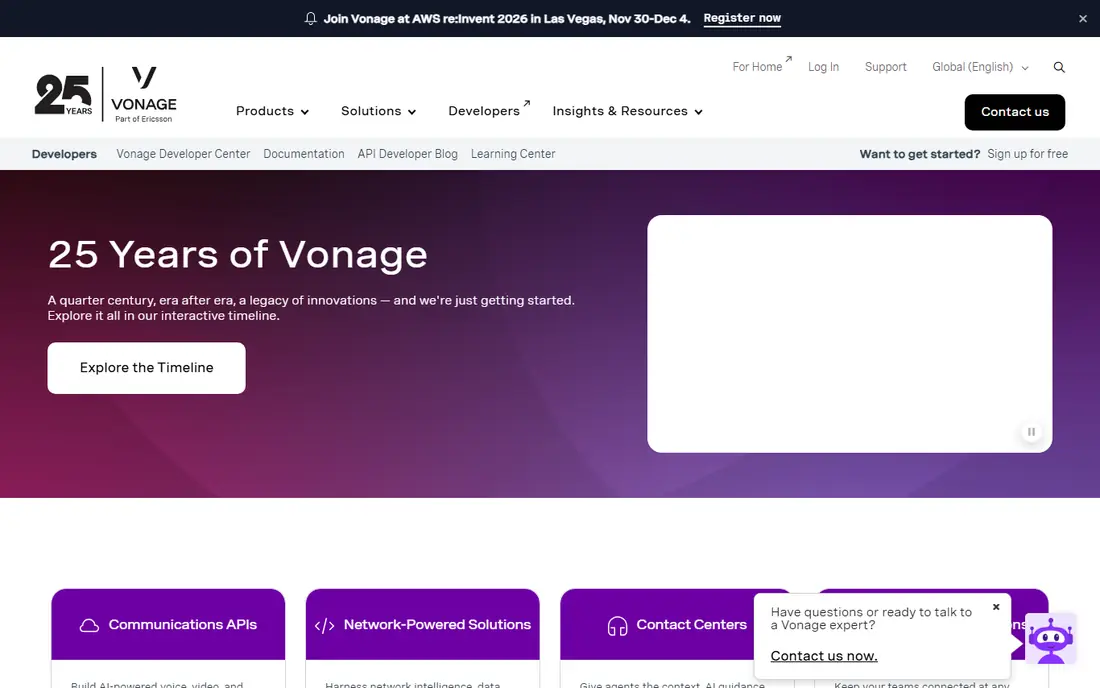
Vonage, formerly Nexmo, offers communications APIs for SMS, voice, video, and verification, plus contact center and unified communications products. Its global network covers many countries, and enterprise support suits larger companies with compliance needs.
Some pricing is quote-based, and the interface feels enterprise-focused. For a company that needs global messaging plus voice and contact center in one vendor, Vonage is a strong choice.
- Global SMS and voice APIs
- Video and contact center
- Strong enterprise support
- Pricing is quote-based for some products
- Interface is enterprise-focused
Plivo
Ideal for: Low-cost SMS and voice
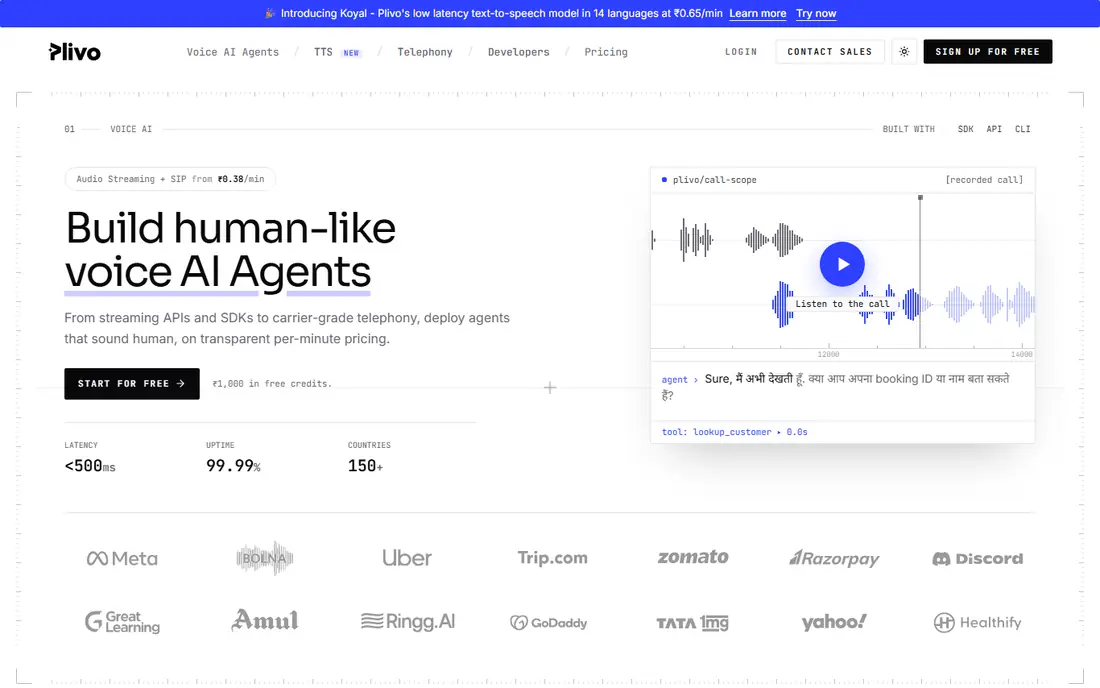
Plivo offers SMS and voice APIs with competitive pricing and a simple developer experience. Its platform covers messaging, voice, and verification, with coverage in many countries and tools for high-volume sending. Docs and SDKs support common languages.
The ecosystem is smaller than Twilio's, with fewer marketing and contact center tools. For a team that mainly needs reliable SMS and voice at a good price, Plivo is a strong value pick.
- Competitive SMS and voice pricing
- Simple APIs
- Good deliverability
- Smaller ecosystem than Twilio
- Fewer marketing tools
Sinch
Ideal for: Global messaging at scale
Sinch is a global communications platform covering SMS, RCS, WhatsApp, voice, and verification, with a large carrier network and enterprise clients in many industries. Its verification products handle one-time passwords and number lookup, which suit login and fraud use cases.
Pricing is quote-based and setup needs technical skill. For a company that needs global messaging at scale with verification, Sinch is a leading choice.
- Global SMS and RCS coverage
- Verification products
- Strong enterprise clients
- Pricing is quote-based
- Setup needs technical skill
Bandwidth
Ideal for: Carrier-grade voice and messaging
Bandwidth is a communications platform that owns its own network, offering voice, messaging, and emergency services with strong quality control. Its number management tools suit companies that need many phone numbers, and its APIs support SMS, voice, and toll-free messaging.
Pricing is quote-based and the network is strongest in the US, so global teams should check coverage. For a US-focused team that wants carrier-grade voice and messaging, Bandwidth is a distinctive choice.
- Owns its own network
- Strong voice quality
- Number management tools
- Pricing is quote-based
- Best for US-focused teams
Telnyx
Ideal for: Developer-friendly CPaaS
Telnyx is a developer-friendly communications platform with voice, SMS, fax, and number management, plus a private global network. Its portal and pricing are clear, and its APIs support common languages. It also offers AI and storage products for voice workflows.
Telnyx is a smaller brand than Twilio, with fewer marketing tools. For a developer team that wants clear pricing and a modern portal, Telnyx is an appealing alternative.
- Clear pricing and portal
- Voice, SMS, and numbers
- Private network
- Smaller brand than Twilio
- Fewer marketing tools
Infobip
Ideal for: Omnichannel messaging
Infobip is an omnichannel communications platform covering SMS, WhatsApp, RCS, email, voice, and push, with a contact center product and strong global coverage. It suits companies that need many channels in one platform, with analytics and automation across them.
Pricing is quote-based and the platform can feel broad for a team that only needs SMS. For a global company that wants omnichannel messaging in one vendor, Infobip is a strong choice.
- Omnichannel messaging across many channels
- Strong global coverage
- Contact center
- Pricing is quote-based
- Platform can feel broad for simple SMS needs
MessageMedia
Ideal for: Simple business SMS
MessageMedia offers business SMS through a web portal and APIs, with integrations for CRM, e-commerce, and marketing tools. Small businesses can send campaigns, alerts, and two-way messages without building a full platform. Support and onboarding suit non-technical teams.
API depth is thinner than Twilio or Plivo, so large-scale developer use may outgrow it. For a small business that wants simple, reliable SMS, MessageMedia is an easy pick.
- Simple SMS for small businesses
- Web portal and integrations
- Good support
- API depth is thinner than Twilio
- Less suited to large-scale developer use
How we picked these
We compared official feature pages, pricing pages, and app-store listings for communications platforms available in October 2026. We favored tools with current products, global messaging coverage, and a range of prices, from developer APIs to enterprise platforms. We also compared per-country deliverability, sender registration support, and compliance features, since messaging success depends on local carrier rules. We did not include our own product in this list.
How to choose a MessageBird alternative
Start with your channel mix. SMS-only needs point to Plivo, MessageMedia, or Telnyx, while omnichannel needs point to Twilio, Vonage, Sinch, or Infobip. Voice-heavy needs point to Bandwidth or Twilio, while verification needs point to Sinch or Twilio Verify.
Then test deliverability in your target countries. Send test messages, check pricing per message and per number, and confirm compliance features such as opt-out handling and sender ID rules. The best alternative is the one that delivers reliably where your customers actually are.
Messaging costs and deliverability vary by country, so test in your real markets before committing. Send test messages to major carriers in each target country, check delivery rates and latency, and confirm sender ID and registration rules, since some countries require pre-registered senders or templates. Pricing also needs care: per-message rates, monthly number fees, and carrier surcharges add up differently across vendors, so model your actual volume and mix. For verification codes, check throughput and failover, since a delayed code loses users. Also confirm compliance features such as opt-out handling, consent records, and data residency, which matter for regulated industries. Finally, test the vendor's status page and support response during a trial, since messaging outages cost revenue and trust. A vendor that answers fast during a trial will likely answer fast during a real incident.
For teams new to messaging APIs, start with one channel and one country, then expand. A small pilot that sends real verification codes or alerts to test users will reveal deliverability, latency, and cost issues before they affect customers. Document sender registrations and template approvals as you go, since those steps take calendar time in some countries and cannot be rushed at launch.
Number management is another detail to verify early. Check how the vendor handles number provisioning, porting, and regulatory registration in your target countries, since some markets require business verification or local presence before a number is issued. Also confirm what happens to numbers if you pause or cancel service, and whether short codes or alphanumeric sender IDs are available where you need them. For voice use cases, test call quality and latency on real calls, not just in a demo, since carrier routing varies by region. A vendor that provisions numbers quickly and documents local rules clearly will save weeks during rollout.
Frequently asked questions
What is the best MessageBird alternative?
Twilio suits most teams with the broadest platform and docs, while Vonage, Sinch, and Infobip suit global omnichannel needs. Plivo and Telnyx suit price-sensitive developer teams, and MessageMedia suits small businesses.
What is MessageBird now called?
MessageBird rebranded as Bird, offering omnichannel messaging and customer engagement tools. The tools on this list cover the same SMS, voice, and WhatsApp needs.
Is Twilio expensive?
Twilio pricing is pay-as-you-go per message, call, and number, which suits variable use. High-volume teams should compare per-message rates and volume discounts with Plivo, Telnyx, and Bandwidth before committing.
Can I send WhatsApp messages with these tools?
Yes. Twilio, Vonage, Sinch, Infobip, and other platforms on this list offer WhatsApp Business APIs, subject to Meta's approval and messaging rules. Check each vendor's WhatsApp onboarding before choosing.
What is CPaaS?
CPaaS, communications platform as a service, lets developers add SMS, voice, video, and verification to apps through APIs, without building telecom infrastructure. Twilio, Vonage, and the other tools on this list are CPaaS providers.
What is the difference between SMS, RCS, and WhatsApp messaging?
SMS is the universal fallback that works on any phone, but it lacks rich media and read receipts. RCS adds rich media, branding, and read receipts on supported Android devices, though iPhone support is rolling out gradually. WhatsApp offers rich messaging to its large user base, but it requires Meta approval, templates for business-initiated messages, and opt-in from users. Most global teams use SMS as a fallback, plus WhatsApp or RCS where their audience uses them, rather than betting on one channel alone.