Alternatives to Enterprise SSO Leaders in 2026: 7 Options Compared

- Keycloak suits self-hosted open-source SSO, with single sign-on, single sign-out, identity brokering and support for OpenID Connect, OAuth 2.0 and SAML.
- JumpCloud suits unified workforce identity, access and devices in one platform, with agentic IAM for AI agents.
- OneLogin suits budget workforce SSO, with plans from 3 USD per month and more than 8,000 pre-built connectors.
- FusionAuth suits customer identity with deployment choice, running self-hosted, dedicated, on-prem, hybrid or air-gapped, with a free community edition.
- WorkOS suits B2B apps adding enterprise SSO, with support for any SAML or OIDC provider through one integration and free use up to 1 million monthly active users.
- Descope suits visual identity journeys, with drag-and-drop flows for signup, login, MFA, SSO and step-up authentication.
- ZITADEL suits multi-tenant identity, with B2B organizations at its core, role-based access control and passkeys.
- Workforce SSO and customer SSO are different products: pick JumpCloud or OneLogin for employees, and WorkOS, Descope, FusionAuth or ZITADEL for your app's customers.
Quick comparison
| Product | Ideal for | Price from | Free version | |
|---|---|---|---|---|
 Keycloak | Self-hosted open-source SSO | Free | Yes | Visit |
 JumpCloud | Unified workforce identity | See website | No | Visit |
 OneLogin | Budget workforce SSO | $3 per month | No | Visit |
 FusionAuth | Customer identity, any deployment | See website | Yes, community edition | Visit |
 WorkOS | B2B app enterprise SSO | See website | Yes, up to 1M monthly active users | Visit |
 Descope | Visual identity journeys | See website | No | Visit |
 ZITADEL | Multi-tenant identity | See website | No | Visit |
The best alternatives to enterprise sso leaders
Enterprise SSO leaders such as Okta, Microsoft Entra ID, Auth0 and Ping Identity dominate large-company identity, but they can be expensive, complex or tied to a vendor ecosystem. The alternatives below cover two different needs: workforce SSO for your own employees, and customer or B2B SSO for users of your product. We checked each alternative's official homepage before listing it, and we note which need each one serves.
Keycloak
Ideal for: Self-hosted open-source SSO
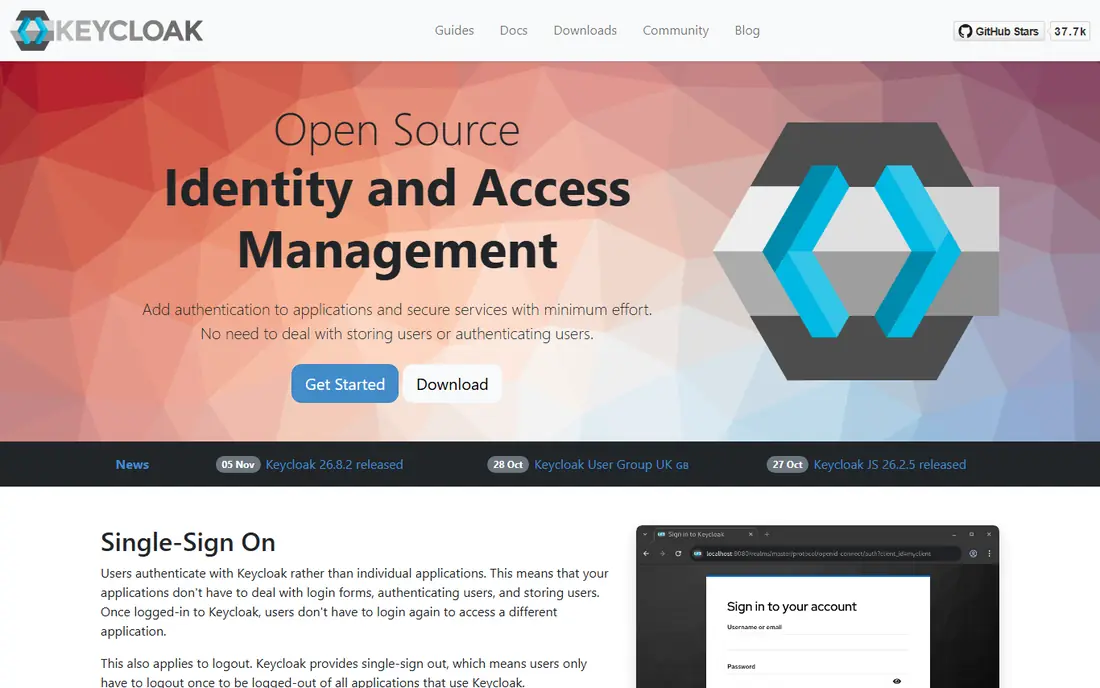
Keycloak adds authentication to applications and secures services with minimum effort, so applications do not need to deal with login forms, authenticating users or storing users. Once logged in to Keycloak, users do not need to log in again to access a different application, and single sign-out logs them out of all applications at once. Social login is added through the admin console by selecting a network, with no code or application changes, and Keycloak can broker authentication through existing OpenID Connect or SAML 2.0 identity providers. Its admin console centrally manages applications, services, authorization policies, users, permissions and sessions, while its account console lets users update profiles, change passwords and set up two-factor authentication.
Keycloak suits teams that want full control and no licence fees, especially in regulated environments or for internal tools where self-hosting is acceptable. Its open-source model avoids vendor lock-in and per-user pricing. The trade-off is operations: you own patching, backups and scaling. For teams with DevOps capacity, Keycloak is the most flexible SSO alternative here.
- Open-source identity and access management
- Single sign-on and single sign-out across applications
- Identity brokering and social login with no code changes
- User federation with LDAP and Active Directory
- Fine-grained authorization services
- Standard protocols including OpenID Connect, OAuth 2.0 and SAML
- Self-hosting needs operations expertise for updates, scaling and high availability
- No vendor support contract by default
JumpCloud
Ideal for: Unified workforce identity
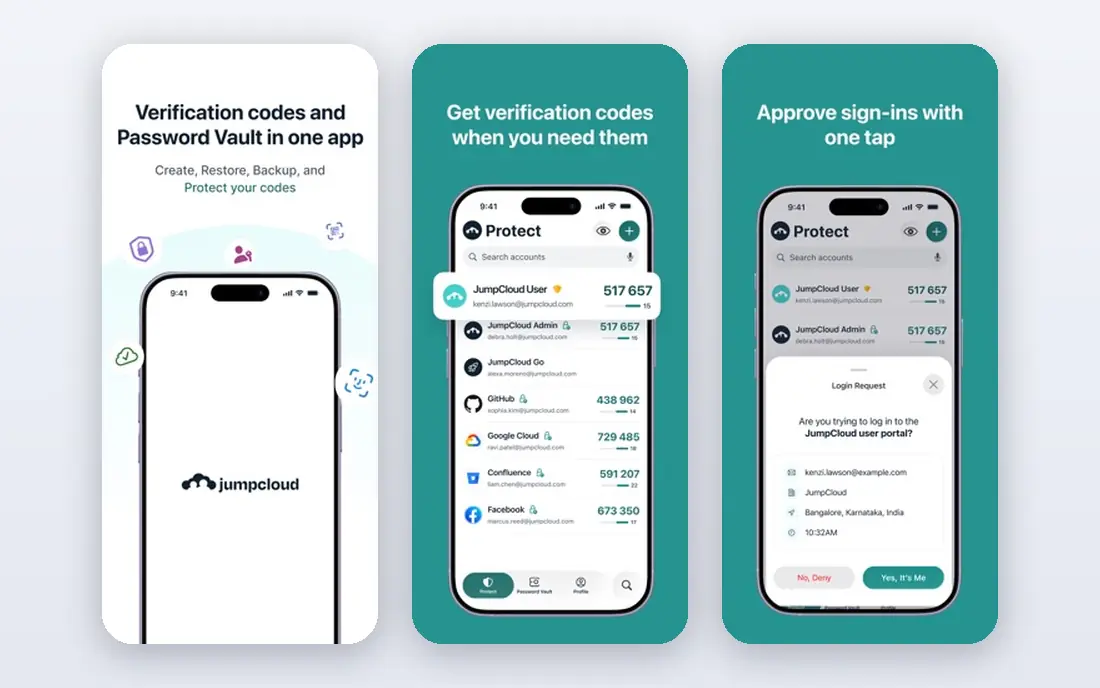
JumpCloud unifies identity, access and device management, granting users secure, frictionless access to everything they need for work, however they choose, managed in one unified view. Its homepage highlights agentic IAM, which lets teams see every agent, govern every identity and safely connect agents to infrastructure, apps and enterprise data, plus research showing 92 percent of organizations surveyed had an AI-related incident last year, with 36 percent unable to tell what the AI accessed.
JumpCloud suits small and midsize companies that want one platform for employee identity, devices and access, replacing separate directory, SSO and device tools. Its agentic IAM is a forward-looking advantage as AI agents access more systems. For customer identity in your own product, pair JumpCloud with WorkOS or Descope, but for workforce identity JumpCloud is a strong Okta and Entra ID alternative.
- Unified platform for identity, access and devices
- Secures human and non-human identities
- Agentic IAM to see and govern AI agents
- Frictionless access across apps and devices in one unified view
- Trusted by organizations worldwide including Canva, Honda and Cisco
- Workforce focus, so customer SSO for your product needs a different tool
- Pricing by plan, not shown on the homepage
OneLogin
Ideal for: Budget workforce SSO
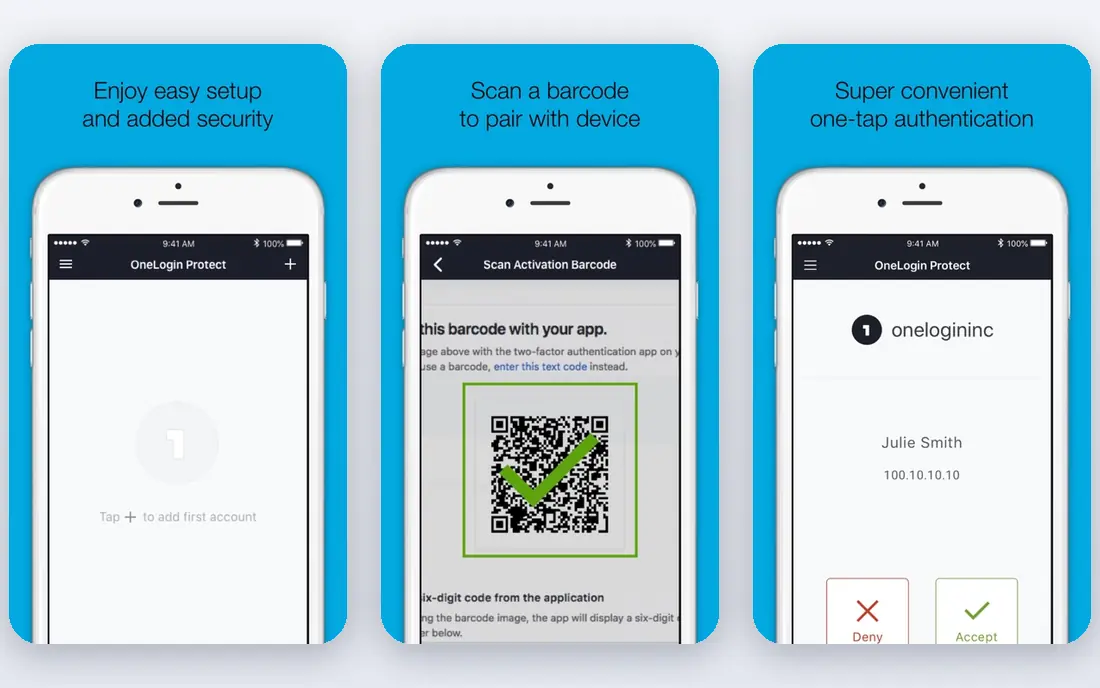
OneLogin offers single sign-on, multi-factor authentication and identity lifecycle management as a secure identity foundation at a price that works for your budget. Its homepage highlights one secure login for all apps, reducing password fatigue and helpdesk requests, adaptive MFA across every application, and lifecycle management that automatically grants, adjusts and removes access as people join, move roles and leave. Workforce pricing starts at 3 USD per month for Basic, 6 USD per month for Essentials, 10 USD per month for Business and a custom Enterprise tier, with features scaling from SSO and MFA to unlimited lifecycle management, advanced directories, SmartFactor authentication, RADIUS, VLDAP and API access management.
OneLogin suits budget-conscious companies that want workforce SSO, MFA and lifecycle automation without enterprise pricing. Its connector library covers most SaaS apps, and its lifecycle automation saves IT time on onboarding and offboarding. For customer-facing SSO, OneLogin offers separate customer and B2B identity products, but its strongest value here is workforce identity at a clear, low price.
- Enterprise-grade security without enterprise cost
- SSO, MFA and identity lifecycle management
- More than 8,000 pre-built connectors
- 50 percent reduction in helpdesk tickets with self-service password reset and 9x faster onboarding stated on its homepage
- Workforce plans from 3 USD per month
- Free trial available
- Customer identity and B2B identity pricing need a sales conversation
- Advanced features need higher tiers
FusionAuth
Ideal for: Customer identity, any deployment
FusionAuth secures access for humans, services and AI across any environment, giving teams full control over how identity is deployed, integrated and scaled. Every identity capability is available via API, built to integrate into products, pipelines and workflows, with fine-grained authorization for users, services and AI agents. It deploys self-hosted, dedicated, on-prem, hybrid or air-gapped, wherever business and regulations demand, with isolated infrastructure, full upgrade control and no forced SaaS upgrades. Its homepage notes customers moving from Auth0 over confusing roles and pricing at scale, and praise for adding identity providers at no extra cost on all plans.
FusionAuth suits product teams that need customer identity with deployment freedom, especially in regulated industries or regions with data sovereignty rules. Its predictable pricing avoids the per-user growth penalties that push teams off other CIAM platforms. For workforce SSO alone, JumpCloud or OneLogin fit better, but for customer identity with control, FusionAuth is a leading alternative.
- API-driven customer identity platform for humans, services and AI
- Deploy self-hosted, dedicated, on-prem, hybrid or air-gapped
- Predictable pricing with no growth penalties
- Free community edition
- Supports complex B2C, B2B and B2B2C user models
- Trusted by more than 20 million developers
- Customer identity focus, so workforce device management needs a separate tool
- Enterprise features need paid plans
WorkOS
Ideal for: B2B app enterprise SSO
WorkOS makes your app enterprise-ready, with APIs for SSO, SCIM directory sync, MFA, AuthKit user management, audit logs and more. Its SSO supports any SAML or OIDC identity provider with a single integration, so B2B customers can connect Okta, Entra ID, Google, OneLogin, ADFS and others without custom work per customer. Its admin portal lets IT administrators connect identity providers and directories themselves, customize branding, host on a custom domain and follow step-by-step setup guides, while SCIM provisioning works with Okta, Entra ID, ADFS and more. Customer stories include Cursor running fully on WorkOS with faster logins and no Auth0 pricing opacity, and companies rolling out SSO in less than a week.
WorkOS suits SaaS companies that need to offer enterprise SSO to their own business customers, the classic reason teams adopt Okta or Auth0 and then seek an alternative. Its single integration and admin portal save weeks of per-customer SSO work. For workforce identity, choose JumpCloud or OneLogin, but for B2B app SSO WorkOS is the most developer-friendly alternative here.
- Enterprise SSO supporting any SAML or OIDC identity provider with a single integration
- SCIM directory sync, MFA, AuthKit user management, audit logs, RBAC and HRIS integrations
- Admin portal for self-service customer onboarding
- Modern SDKs for Node.js, Ruby, Python, .NET, Go and more
- Free up to 1 million monthly active users
- B2B app focus, so workforce identity for your own employees is not its main use
- Enterprise SSO features are paid beyond the free tier
Descope
Ideal for: Visual identity journeys
Descope lets teams create and customize identity journeys for customers, partners, AI agents and MCP servers using visual workflows, SDKs and APIs. Its no-code platform offers drag-and-drop journeys that govern frontend and backend logic from one workflow, with branded screens, changes without touching code, complete user management with identity merging and fine-grained authorization (RBAC, ReBAC, ABAC), and self-service experiences for profiles, roles, access keys, audits and SSO configuration. Security features include passwordless authentication to prevent account takeover, adaptive MFA for risky logins only, and step-up authentication before sensitive actions. Its B2B features cover self-service SSO and SCIM setup, smooth SSO migration, multi-tenancy and delegated admin.
Descope suits product teams that iterate on signup and login flows often and want to change journeys without redeploying code. Its agentic identity support for AI agents and MCP servers is a forward-looking advantage. For simple workforce SSO, OneLogin is cheaper and simpler, but for customer and partner identity with flexible journeys Descope is a strong alternative.
- Customer and agentic identity platform with visual workflows
- Drag-and-drop user journeys for signup, login, MFA, SSO, step-up and more
- B2B features including self-service SSO and SCIM, multi-tenancy, delegated admin and fine-grained authorization
- Agentic identity for AI agents and MCP servers
- Passwordless methods including magic links, passkeys, biometrics and one-time passwords
- Powers auth for thousands of organizations from startups to the Fortune 500
- Visual workflow model suits product teams more than pure IT workforce deployments
- Pricing by plan, not shown on the homepage
ZITADEL
Ideal for: Multi-tenant identity
ZITADEL streamlines application development with an all-in-one identity suite for consumers, businesses and employees. Its hosted login page is customizable, with modern authentication methods, SSO and social logins through prebuilt provider templates, plus MFA and passkeys for security. Developers can also build their own login UI through APIs. Authorization uses role-based access control, while B2B multi-tenancy sits at the core: add organizations and grant projects to them to extend your application's scope. Its actions feature executes workflows after predefined events without deploying code, and it adapts to workflows, user management processes and brand guidelines.
ZITADEL suits B2B SaaS teams that need multi-tenant identity with clean organization and project structure, plus passkey-first security. Its open-source roots and growing community give it flexibility similar to Keycloak with a more productized cloud option. For workforce-only SSO, OneLogin or JumpCloud are simpler, but for multi-tenant product identity ZITADEL is a compelling alternative.
- Customizable identity platform for consumers, businesses and employees
- Modern authentication methods, SSO and social logins with prebuilt provider templates
- Passkeys and MFA for security
- Role-based access control
- Multi-tenant at its core with organizations and project grants
- Extensible with actions that run workflows after events without deploying code
- Community of more than 4,000 GitHub stars and more than 2,500 Discord members
- Smaller vendor than JumpCloud or FusionAuth
- Enterprise support and pricing need a sales conversation
How we picked these
We compared official homepages, SSO protocol support, workforce versus customer focus, deployment options, pricing transparency and multi-tenancy, favoring alternatives that are actively developed in 2026 and cover real enterprise SSO use cases. We covered self-hosted open source, unified workforce identity, budget workforce SSO, customer identity with deployment choice, B2B app SSO, visual identity journeys and multi-tenant identity, because the best alternative depends on whether you secure employees or customers. We checked each vendor's own site before listing it.
How to choose an SSO alternative
Start with who you secure. For your own employees, choose JumpCloud for unified identity and devices, or OneLogin for budget SSO, MFA and lifecycle management. For your product's customers, choose WorkOS for B2B enterprise SSO, Descope for visual journeys, FusionAuth for deployment control, ZITADEL for multi-tenancy, or Keycloak for self-hosted open source. Mixing these up wastes money: a workforce tool rarely fits customer SSO well, and vice versa.
Next, check protocol and migration needs. Confirm SAML and OIDC support for your customers' identity providers, SCIM for provisioning, and MFA and passkey options for security. Test migration with one customer or one department first, since SSO migration touches login for everyone. WorkOS and Descope both highlight fast SSO migration, while Keycloak and FusionAuth give you control over hosting and upgrades during migration.
Finally, compare total cost at your scale. OneLogin's 3 USD per month workforce pricing is transparent, while WorkOS offers free use up to 1 million monthly active users for apps, and Keycloak and FusionAuth community editions cost only hosting and operations. Enterprise SSO leaders often charge per user or per connection, so model your cost at double your current user count: a tool that is cheap today but penalizes growth will cost more later.
Frequently asked questions
What is the best alternative to Okta for workforce SSO?
JumpCloud suits unified workforce identity, access and devices, while OneLogin suits budget workforce SSO from 3 USD per month with more than 8,000 connectors. Both offer SSO, MFA and lifecycle management without Okta's enterprise pricing.
What is the best alternative to Auth0 for B2B app SSO?
WorkOS suits B2B apps adding enterprise SSO, with one integration for any SAML or OIDC provider and an admin portal for self-service customer setup. Descope and FusionAuth also suit B2B customer identity, with Descope offering visual journeys and FusionAuth offering deployment choice.
Can I self-host an SSO alternative?
Yes, Keycloak is open source and self-hosted, while FusionAuth deploys self-hosted, dedicated, on-prem, hybrid or air-gapped. Self-hosting gives control over data and upgrades but needs operations expertise for patching, scaling and high availability.
What is the difference between workforce SSO and customer SSO?
Workforce SSO secures your own employees' access to internal apps, with lifecycle management for joining, moving and leaving. Customer SSO secures users of your product, including B2B customers connecting their own identity providers, with multi-tenancy, delegated admin and self-service setup.
Do these alternatives support SAML and OIDC?
Yes, the platforms here support standard protocols. Keycloak supports OpenID Connect, OAuth 2.0 and SAML, WorkOS supports any SAML or OIDC provider through one integration, and Descope, FusionAuth and ZITADEL support SAML and OIDC SSO for B2B customers.
How hard is it to migrate from Okta or Entra ID?
Migration difficulty depends on app count, protocol mix and user store. WorkOS and Descope highlight fast SSO migration, while Keycloak and FusionAuth offer control over the process. Test with one app or customer first, keep the old provider running during cutover, and confirm MFA and SCIM provisioning work before full migration.