Best Alternatives to Kindle Direct Publishing in 2026: 8 Platforms Compared

- 1
 IngramSparkBookstore and library distributionVisit
- 2
 Draft2DigitalWide ebook distributionVisit
- 3
 SmashwordsEbook store and distributionVisit
- 4
 BookBabyAssisted publishingVisit
- 5
 LuluPrint-on-demand booksVisit
- IngramSpark suits authors who want print and ebook distribution to bookstores and libraries worldwide.
- Draft2Digital and Smashwords suit ebook-first authors who want wide distribution without managing many accounts.
- BookBaby and Lulu suit authors who want assisted publishing and print-on-demand with less DIY work.
- PublishDrive suits authors who want wide ebook distribution plus subscription and library channels.
- Apple Books and Google Play Books suit authors who want direct sales on two of the largest ebook stores.
Quick comparison
| Product | Ideal for | Price from | Free version | |
|---|---|---|---|---|
| IngramSpark | Bookstore and library distribution | See website | See website | Visit |
| Draft2Digital | Wide ebook distribution | See website | See website | Visit |
| Smashwords | Ebook store and distribution | See website | See website | Visit |
| BookBaby | Assisted publishing | See website | See website | Visit |
| Lulu | Print-on-demand books | See website | See website | Visit |
 PublishDrive | Wide distribution plus libraries | See website | See website | Visit |
 Apple Books for Authors | Apple ebook sales | See website | See website | Visit |
 Google Play Books | Google ebook sales | See website | See website | Visit |
The best alternatives to Kindle Direct Publishing
Kindle Direct Publishing, or KDP, lets authors sell ebooks and print books on Amazon. The platforms below offer different routes to readers: some distribute widely to many stores, some focus on print, and some sell direct on major ebook stores. They differ in royalties, distribution reach, and how much work the author does. The right pick depends on whether you prioritize Amazon alternatives, bookstore shelves, or the widest possible reach.
IngramSpark
Ideal for: Bookstore and library distribution
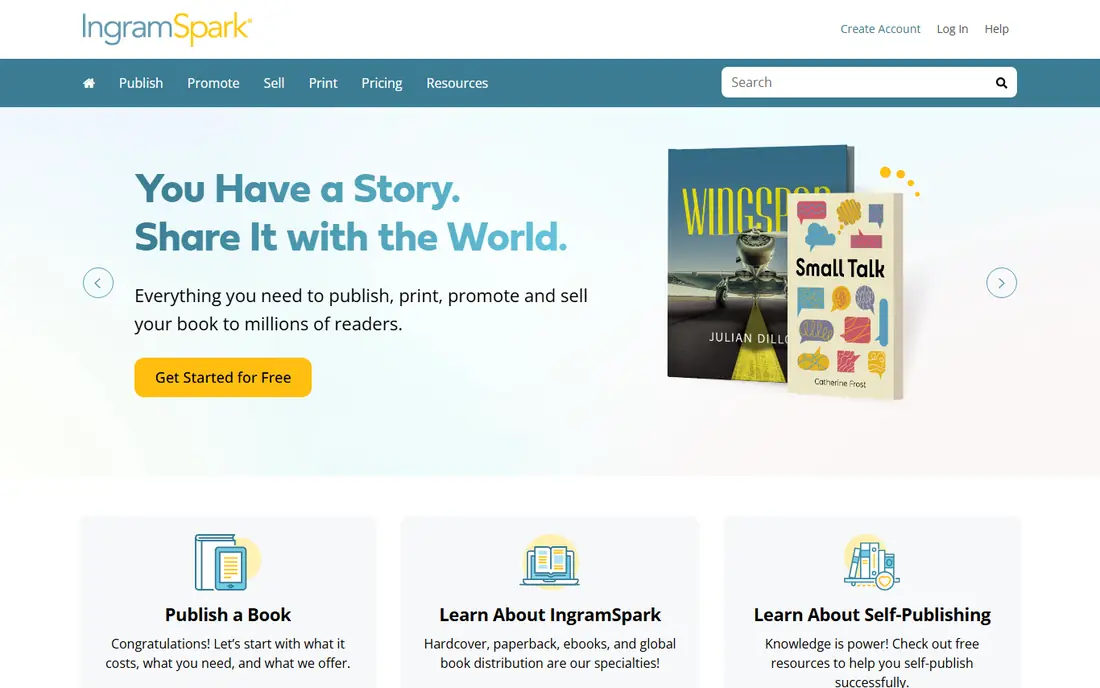
IngramSpark, from Ingram, distributes print and ebooks to bookstores, libraries, and online retailers around the world, which makes it the strongest pick for authors who want their books orderable beyond Amazon. Print-on-demand means no inventory, and the catalog feeds into the systems bookstores use to order. Ebook distribution covers major retailers as well.
Setup involves fees in some cases, and the interface takes learning. For authors who care about bookstore and library availability, IngramSpark is the essential complement to KDP.
- Distribution to bookstores and libraries
- Print and ebook options
- Global catalog reach
- Setup fees may apply
- Interface takes learning
Draft2Digital
Ideal for: Wide ebook distribution
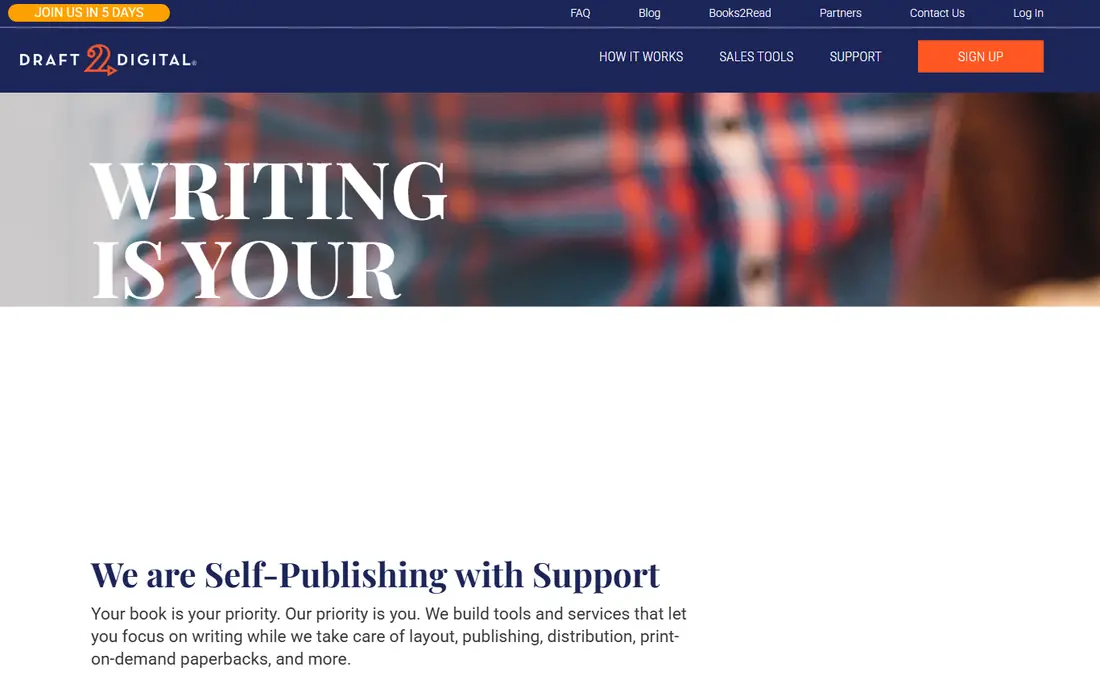
Draft2Digital distributes ebooks to many retailers, including Apple Books, Barnes and Noble, Kobo, and library platforms, from one dashboard with one royalty payment. Free formatting tools convert a manuscript into a clean ebook, and the service charges a one-time activation fee plus annual maintenance after the first year, alongside a share of sales. That model suits authors who want wide reach without managing ten accounts.
Print distribution is limited compared with IngramSpark. For ebook-first authors who want wide distribution with minimal hassle, Draft2Digital is our pick for most authors.
- One dashboard for many stores
- Free ebook formatting
- Simple royalty handling
- Print options are limited
- Store list varies by region
Smashwords
Ideal for: Ebook store and distribution
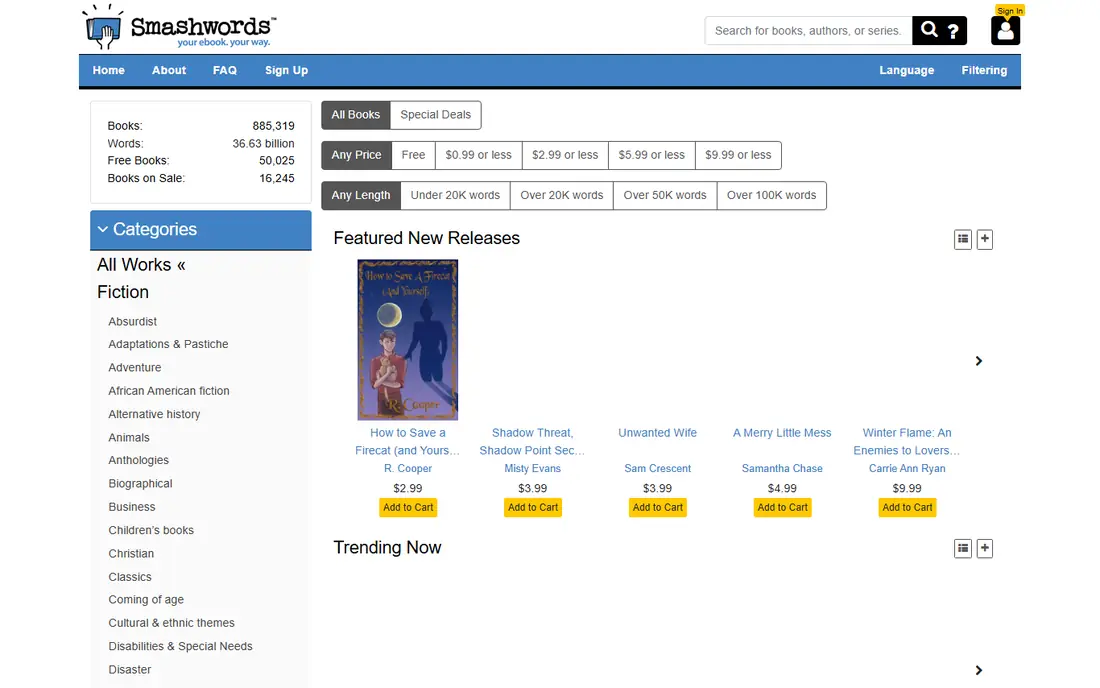
Smashwords runs an ebook store and distributes to retailers and libraries, with tools for formatting, pricing, and coupons that authors control directly. Its catalog is strong in independent and genre fiction, and its distribution network reaches many of the same stores as Draft2Digital. Smashwords is now part of the Draft2Digital family, though it still operates as a distinct store.
The store design feels dated next to newer retailers. For authors who want another direct store plus wide distribution, Smashwords remains useful.
- Large ebook store
- Wide distribution
- Author-friendly tools
- Store design feels dated
- Now part of the Draft2Digital family
BookBaby
Ideal for: Assisted publishing
BookBaby offers assisted publishing packages that bundle editing, cover design, formatting, and distribution, which suits authors who want professional help rather than doing everything themselves. Print-on-demand and ebook distribution are included, and support is US-based. Packages range from basic distribution to full production help.
Packages cost more than DIY platforms, and royalty terms vary by package. For authors who want guidance and a polished result without hiring freelancers separately, BookBaby is a strong choice.
- Assisted editing, design, and distribution
- Print and ebook packages
- US-based support
- Packages cost more than DIY platforms
- Royalties vary by package
Lulu
Ideal for: Print-on-demand books
Lulu focuses on print-on-demand with flexible formats, from paperbacks and hardcovers to photo books and calendars, printed through a global network. Authors can sell through the Lulu store, their own site, or retail distribution, and there are no upfront inventory costs. The platform suits authors whose readers want physical books.
Ebook distribution is less broad than Draft2Digital or IngramSpark. For print-centered authors, especially those selling direct, Lulu is a practical pick.
- Flexible print options
- Direct store
- Global printing network
- Ebook distribution is less broad
- Pricing varies by format
PublishDrive
Ideal for: Wide distribution plus libraries
PublishDrive distributes ebooks to major stores, subscription services, and library platforms, with dashboards that show sales across channels. Subscription pricing suits prolific authors, since one plan can cover many titles. Library and subscription channels add readers beyond the big retailers.
Subscription pricing means costs continue even in slow months. For authors who publish often and want library and subscription reach, PublishDrive is worth a trial.
- Wide store and library reach
- Subscription options
- Clear dashboards
- Subscription pricing
- Smaller brand recognition than leaders
Apple Books for Authors
Ideal for: Apple ebook sales
Apple Books for Authors lets authors publish directly to Apple Books, reaching the large audience of iPhone, iPad, and Mac readers. Publishing is free, and authors keep a standard retail share. The store does not demand exclusivity, so the same book can sell elsewhere too.
Readers need Apple devices or apps, which limits reach compared with multi-store distribution. For authors with an Apple-heavy audience, direct publishing here is a smart addition to wide distribution.
- Direct sales on Apple Books
- Large iOS audience
- No exclusive lock-in
- Apple devices only for readers
- Setup needs an Apple account
Google Play Books
Ideal for: Google ebook sales
Google Play Books publishing puts ebooks in front of the huge Android audience through the Play store, with flexible pricing and promotional tools. Publishing is free, and authors control pricing by region. The store works on Android, iOS through the Play Books app, and the web.
The review process can be slow, and discovery varies by category. For authors who want direct access to Android readers, Google Play Books is a useful channel alongside wider distribution.
- Direct sales on Google Play
- Huge Android audience
- Flexible pricing
- Review process can be slow
- Store discovery varies
How we picked these
We compared official feature pages, pricing, distribution lists, and public reviews for each platform, and we checked that each product is actively offered in October 2026. We favored platforms with real distribution reach and clear royalty terms, and we kept a mix of wide distributors, print specialists, assisted publishers, and direct stores. We left out vanity presses with unclear terms and tools that have shut down.
How to choose a publishing platform
Distribution choices shape who finds your book, so match the platform to your readers rather than chasing every store at once.
Decide between wide and exclusive
Wide distribution puts your ebook in many stores, while exclusivity programs can offer promotional perks on one store. Most independent authors do better wide, since readers are spread across Apple, Kobo, libraries, and Amazon. If most of your readers already buy on Amazon, KDP plus IngramSpark for print may be enough.
Check print needs separately
Ebook distribution and print distribution are different problems. If bookstores matter, IngramSpark is nearly required, since its catalog feeds bookstore ordering. If you sell print direct at events or from your site, Lulu or BookBaby may fit better. Confirm trim sizes, paper options, and proof copies before committing.
Read the royalty and rights terms
Compare royalty shares, payment schedules, and whether the platform takes any rights beyond distribution. Avoid contracts that claim exclusive rights or charge ongoing fees for books that stop selling. A platform should earn its share through distribution and services, not through locking up your work.
Print specifications deserve attention before you upload, since trim size, paper type, and cover finish affect both cost and reader impression. Order proof copies of print editions and check margins, image quality, and spine text on the physical book, not just on screen. Ebook files deserve the same care, so preview them on phones, tablets, and e-readers to catch formatting problems that only appear on small screens. A clean interior, with consistent headings and working links, signals professionalism as strongly as the cover does, and readers notice sloppy formatting quickly.
Marketing plans should match the distribution choice, since wide distribution helps only if readers can find the book. Build an author page, gather early reviews, and use each store's promotional tools, from price drops to library programs, to reach readers beyond your existing audience. Track sales by store so you can see which channels repay the effort, and keep your metadata, categories, and description updated as you learn what readers search for. A book that is easy to find, well formatted, and fairly priced has a better chance in any store, and the platforms here all reward authors who treat publishing as a craft rather than a single upload.
Frequently asked questions
What is Kindle Direct Publishing?
Kindle Direct Publishing is Amazon's self-publishing platform for ebooks and print-on-demand paperbacks sold on Amazon. The platforms here offer other routes to readers, including wide distribution, bookstore availability, and direct sales on other major stores.
Which KDP alternative reaches the most stores?
Draft2Digital and PublishDrive offer the widest ebook store coverage from one dashboard, while IngramSpark offers the widest print reach into bookstores and libraries. Many authors use one of each.
Can I publish on KDP and other platforms at the same time?
Yes, unless you enroll a book in an exclusivity program, which limits that book to one store for its term. Most authors publish wide and keep Amazon as one channel among many.
Do I need an ISBN?
Requirements vary by platform and format. Some platforms provide free ISBNs, while others let you use your own. Using your own ISBN keeps your publisher name consistent across stores, which matters for print distribution.
How do royalties compare across platforms?
Royalty shares vary by platform, store, price, and format, so compare the terms for your price band before choosing. Wide distributors typically take a share of net sales, while direct stores pay the standard retail share.