Alternatives to Kotlin in 2026: 7 Languages Compared

- Java suits Android and backend teams that want the closest Kotlin alternative with a huge ecosystem.
- Swift suits iOS and Apple platform apps, while Dart with Flutter suits cross-platform mobile apps.
- Scala suits JVM teams that want functional programming, while Go suits backend services that need speed and simplicity.
- Rust suits systems work where safety and speed matter, while Python suits fast scripting, data, and backend prototypes.
- Language choice should follow platform, team skill, and hiring, not just language fashion.
Quick comparison
| Product | Ideal for | Price from | Free version | |
|---|---|---|---|---|
 Java | Android and backend | Free | Yes | Visit |
 Swift | Apple apps | Free | Yes | Visit |
 Dart | Cross-platform mobile | Free | Yes | Visit |
 Scala | JVM functional programming | Free | Yes | Visit |
 Go | Backend services | Free | Yes | Visit |
 Rust | Systems programming | Free | Yes | Visit |
 Python | Scripting and data | Free | Yes | Visit |
The best alternatives to Kotlin
We compared official language pages, documentation, and public reviews for seven Kotlin alternatives. Our pick for most Kotlin users is Java for Android and backend work, with Dart close behind for cross-platform mobile apps.
Java
Ideal for: Android and backend
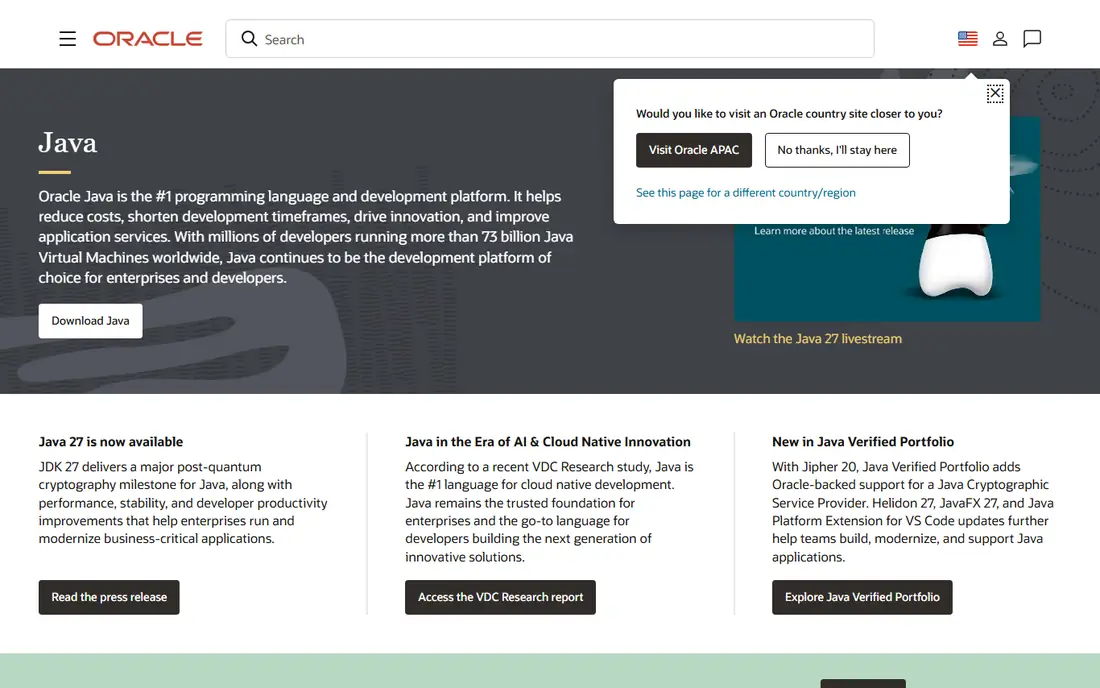
Java is the closest alternative to Kotlin, since Kotlin runs on the JVM and works alongside Java code. Android apps, backend services with Spring, and enterprise systems all use Java widely, with a huge library ecosystem and many jobs. Teams moving from Kotlin to Java face the smallest learning curve in this list.
Java code is more verbose than Kotlin, and null handling needs more care, since Kotlin null safety has no direct Java equal. For Android and backend teams that want stability and hiring depth, Java is the safest Kotlin alternative.
- Closest to Kotlin on JVM and Android
- Huge libraries
- Many jobs
- More verbose than Kotlin
- Null handling is less safe
Swift
Ideal for: Apple apps
Swift is Apple modern language for iOS, macOS, watchOS, and tvOS apps, with safety features and performance that feel familiar to Kotlin developers. Its syntax is clean, optionals handle nulls safely, and the iOS ecosystem is deep. Teams building Apple apps will find Swift the natural choice.
Swift is mainly an Apple language, though server-side Swift exists, it is far smaller than Java or Go backend use. For cross-platform mobile work, Dart suits better. For Apple-first apps, Swift is the clear pick.
- Modern Apple language
- Safe and fast
- Strong iOS ecosystem
- Apple platforms mainly
- Smaller backend use
Dart
Ideal for: Cross-platform mobile
Dart, paired with Flutter, lets teams build Android, iOS, web, and desktop apps from one codebase with fast, native-feeling UI. Its syntax feels familiar to Kotlin and Java developers, and hot reload speeds up UI work. That single-codebase benefit suits startups and teams that must ship on both mobile platforms fast.
Native platform features sometimes need plugins or platform code, and the Dart ecosystem is smaller than Java or JavaScript. For cross-platform mobile apps, Dart with Flutter is the best Kotlin alternative for teams leaving Android-only work.
- Flutter cross-platform apps
- Fast UI
- Single codebase
- Smaller native ecosystem
- Web use is niche
Scala
Ideal for: JVM functional programming
Scala runs on the JVM and blends functional and object-oriented programming, which suits teams that liked Kotlin functional features and want more. It shares Java libraries and tooling, so JVM teams can adopt Scala without leaving their platform. Data and backend teams use Scala widely, especially with Spark and Akka.
Scala has a steeper learning curve, and compile times can be slower than Java or Kotlin. Hiring is also narrower. For JVM teams that want functional depth, Scala is a strong alternative.
- Functional and object-oriented
- JVM ecosystem
- Concise code
- Steeper learning curve
- Slower compile times
Go
Ideal for: Backend services
Go, from Google, is built for backend services, cloud tools, and network programs, with simple syntax, fast builds, and strong concurrency. Its single-binary deployment suits microservices and DevOps tools. Teams that liked Kotlin for backend work but want simpler, faster services often move to Go.
Go is less expressive than Kotlin, with fewer functional features, though generics have improved it. For mobile UI work, Go is a poor fit. For backend services where speed and simplicity matter, Go is an excellent choice.
- Simple and fast
- Great concurrency
- Easy deployment
- Less expressive than Kotlin
- Generics are newer
Rust
Ideal for: Systems programming
Rust offers memory safety without a garbage collector, plus speed close to C, which suits systems software, browsers, game engines, and performance-critical backend parts. Its ownership model prevents whole classes of bugs at compile time, though learning that model takes time. The ecosystem grows each year, with strong tooling through Cargo.
Rust development is slower at first than Kotlin or Python, and the learning curve is steep. For systems work where safety and speed matter most, Rust is worth the investment. For typical app backends, Go or Java will ship faster.
- Memory safety without garbage collection
- High speed
- Growing ecosystem
- Steep learning curve
- Slower initial development
Python
Ideal for: Scripting and data
Python is the easiest language here to learn, with huge libraries for web backends, data analysis, automation, and AI. Teams that used Kotlin for backend prototypes or scripts can move to Python fast, especially with frameworks like Django and FastAPI. That breadth makes Python a common second language for developers.
Python runs slower than compiled languages, and mobile apps built in Python are not native in the usual sense. For data, scripting, and backend prototypes, Python is a superb alternative. For native mobile apps, Java, Swift, or Dart suit better.
- Very easy to learn
- Huge libraries
- Data and AI strength
- Slower runtime
- Mobile apps are not native
How we picked these
We compared official language pages, documentation, and public reviews for each language, and we favored languages that still work in October 2026 and cover real Kotlin use cases: Android, backend, cross-platform, and systems work. We did not claim hands-on testing, and we weighed platform fit, ecosystem, learning curve, and job demand. All languages here are free and open source, so price does not decide the choice.
What to check before you choose
Start with platform. Android work favors Java, Apple work favors Swift, and cross-platform mobile favors Dart with Flutter. Backend services favor Java, Go, or Python depending on team skill and scale. Systems work favors Rust, while data work favors Python. A language that fits the platform will save more time than any syntax preference.
Next, check team skill and hiring. A team that knows the JVM will adopt Java or Scala faster than Rust, while a team new to programming will learn Python fastest. Check library support for your specific needs, such as payments, maps, or machine learning, since a missing library can cost weeks. Finally, build a small prototype in your top two choices before committing a large project.
Also consider the job market and community around each language, since a language choice is also a hiring choice. Java and Python offer the largest hiring pools, while Rust and Scala offer smaller but often highly skilled pools. Check local job listings for the roles you plan to hire, not just global trends, since demand varies by city and industry. Community strength matters for learning: a language with good docs, active forums, and maintained libraries will save your team weeks of frustration. Look at library maintenance too, since a key library that is abandoned can force a painful rewrite later. Try building the same small feature in your top two languages, and compare code clarity, test ease, and debugging experience, since those daily factors matter more than benchmark speed for most apps.
Migration planning keeps a language switch from becoming a rewrite disaster. If you already have Kotlin code, you do not need to rewrite it all at once: Kotlin works alongside Java on the JVM, and Dart or Go services can sit beside existing systems behind APIs. Start with a new service or a small module in the new language, prove it in production, then expand gradually. Keep shared standards for testing, logging, and deployment across languages, so operations does not fragment. Train the team with real project work and code reviews, not just tutorials, since idioms and pitfalls only appear in production code. Finally, document why you chose the new language and where it fits, so future teams do not relitigate the decision without context.
Frequently asked questions
What are the best alternatives to kotlin?
Java is the closest alternative for Android and backend work, while Dart with Flutter suits cross-platform mobile apps. Swift suits Apple apps, Go suits backend services, and Python suits data and prototypes. Match the language to your platform first.
Is Java better than Kotlin for Android?
Kotlin is now the preferred Android language for new work, with less verbose code and null safety. Java remains fully supported and suits teams with large Java codebases or hiring needs. For new Android apps, Kotlin is usually the better choice, while Java is the best fallback.
Can I use Dart instead of Kotlin?
Yes, Dart with Flutter suits cross-platform mobile apps on Android and iOS from one codebase. For Android-only apps with deep native needs, Kotlin or Java may fit better. For teams that must ship on both platforms fast, Dart is a strong alternative.
Is Go a good replacement for Kotlin backend work?
Yes, Go suits backend services that need speed, simplicity, and easy deployment, especially microservices. Kotlin with Spring suits larger enterprise backends with complex business logic. Choose Go for simple, fast services and Kotlin or Java for complex enterprise systems.
Should I learn Rust after Kotlin?
Rust suits developers who want systems programming, performance work, or a deeper understanding of memory safety. The learning curve is steep, so learn Rust when you have a systems project in mind. For app and backend work, Java, Go, or Python will pay off faster.