Alternatives To Skylight Calendar in 2026: 7 Options Compared

- 1
 FantasticalIndividuals who want a polished calendar appVisit
- 2
 CoziFamilies sharing one household calendarVisit
- 3
 TimeTreeGroups that share several calendars at onceVisit
- 4
 Hearth DisplayFamilies who want a wall display like SkylightVisit
- 5
 DAKboardHouseholds that want a custom display on their own screenVisit
- Our pick for most people is Fantastical, thanks to its balance of features, price and ease of use.
- If you want to start free, look at Cozi, which all offer a free plan or tier.
- Prices vary widely, so check the official pricing page for Cozi and TimeTree before you commit, since plans change.
- The honest catch matters: every option here has a weakness, and the right choice depends on which weakness you can live with.
Quick comparison
| Product | Ideal for | Price from | Free version | |
|---|---|---|---|---|
| Fantastical | Individuals who want a polished calendar app | See website | Free trial | Visit |
| Cozi | Families sharing one household calendar | Free | Yes | Visit |
| TimeTree | Groups that share several calendars at once | Free | Yes | Visit |
| Hearth Display | Families who want a wall display like Skylight | See website | No | Visit |
| DAKboard | Households that want a custom display on their own screen | Free | Yes | Visit |
 Google Calendar | Anyone who wants a free calendar that syncs everywhere | Free | Yes | Visit |
 Microsoft Outlook | People already using Microsoft email and calendars | Free | Yes | Visit |
The best alternatives to Skylight Calendar
Choosing among alternatives to skylight calendar is easier when you compare them side by side. We reviewed official feature pages, pricing, app store listings, privacy policies and public reviews to build this list, and we kept only options that exist and work in October 2026.
Fantastical
Ideal for: Individuals who want a polished calendar app
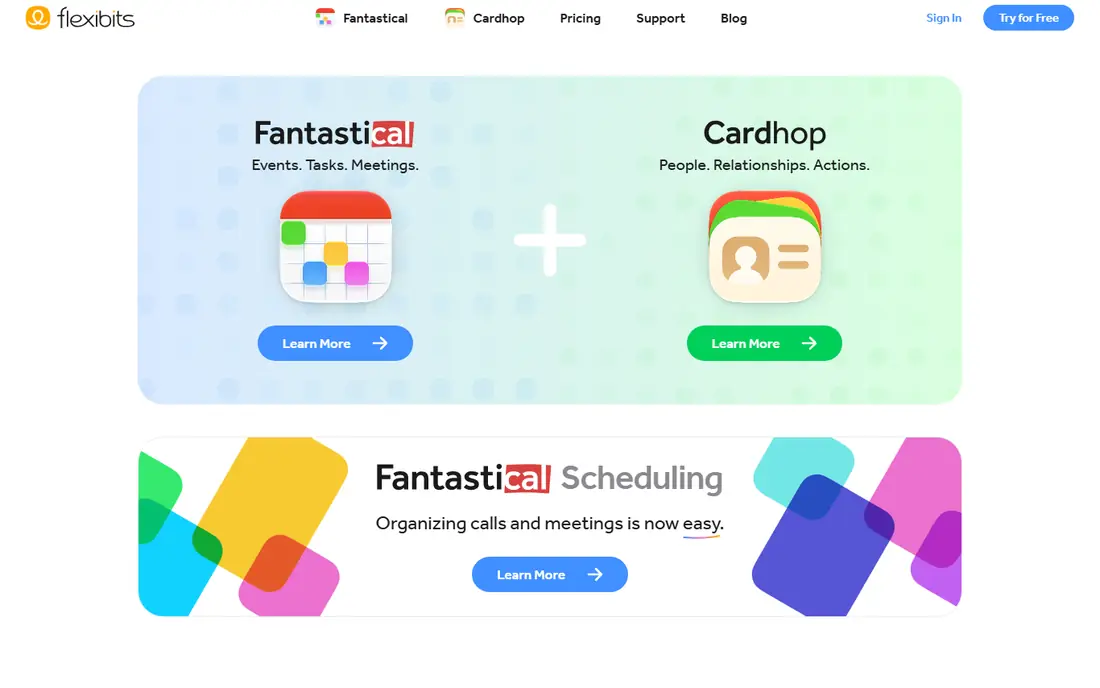
Fantastical suits people who live by their calendar and want entry to feel fast rather than fiddly. Its natural language input turns a typed sentence into a dated event with far less tapping than a form. The catch is cost, since the most useful views and features sit behind a subscription, so check the trial before you commit. On pricing, the starting point is listed as see website, and the free plan status is free trial. Check the official site for the current plan details, since prices and limits change over time. Before you commit, use the free plan or trial to test it with your real work for a week. Pay attention to how it feels on day three, not just day one, since small frictions grow over time. If it still feels awkward after that week, try another option on this list rather than forcing a fit.
- Natural language event entry
- Strong calendar and task views
- Works across Apple devices and the web
- Paid plan needed for the full feature set
- Best on Apple devices
Cozi
Ideal for: Families sharing one household calendar
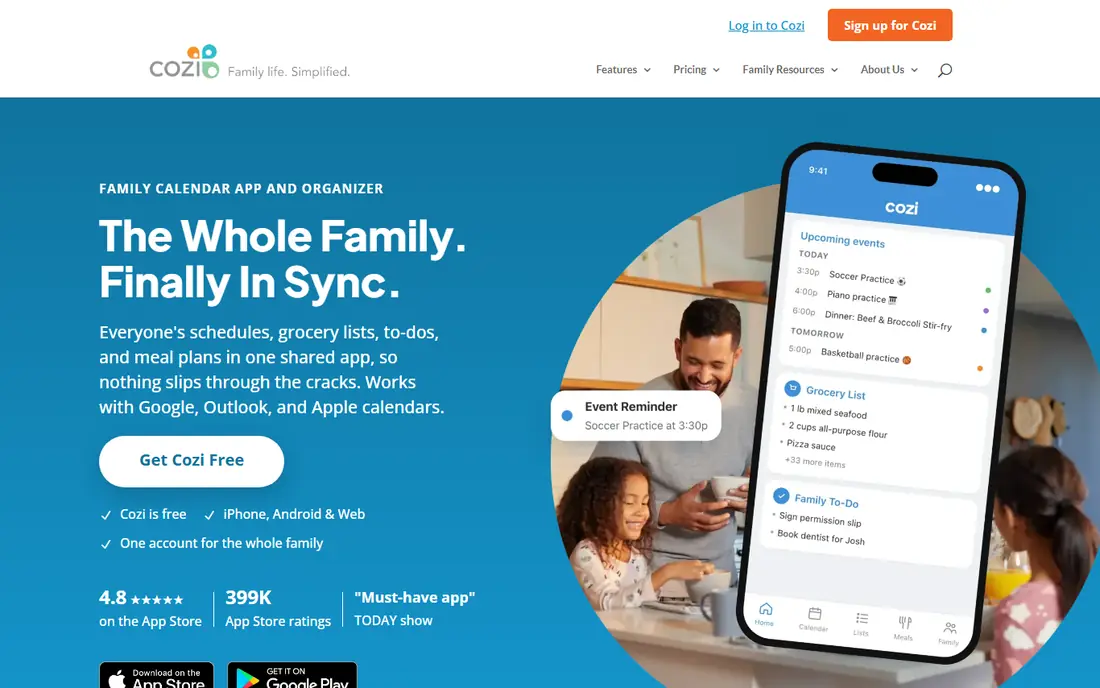
Cozi is built for a household, not a single user, and that shows in how it groups people, lists and meals together. One shared account keeps every family member on the same page without everyone needing separate setups. The free plan carries ads and locks the month view on mobile behind Gold, which may annoy heavy phone users. On pricing, the starting point is listed as free, and the free plan status is yes. Check the official site for the current plan details, since prices and limits change over time. A short trial tells you more than any feature list. Set up the tasks you actually do each week, invite the people who will use it with you, and see where it helps and where it gets in the way. The best choice is usually the one your team or household keeps using without reminders.
- Shared family calendar, lists and meal plans in one account
- Simple colour coded views
- Free core plan
- Ads on the free plan
- Premium features cost extra
TimeTree
Ideal for: Groups that share several calendars at once
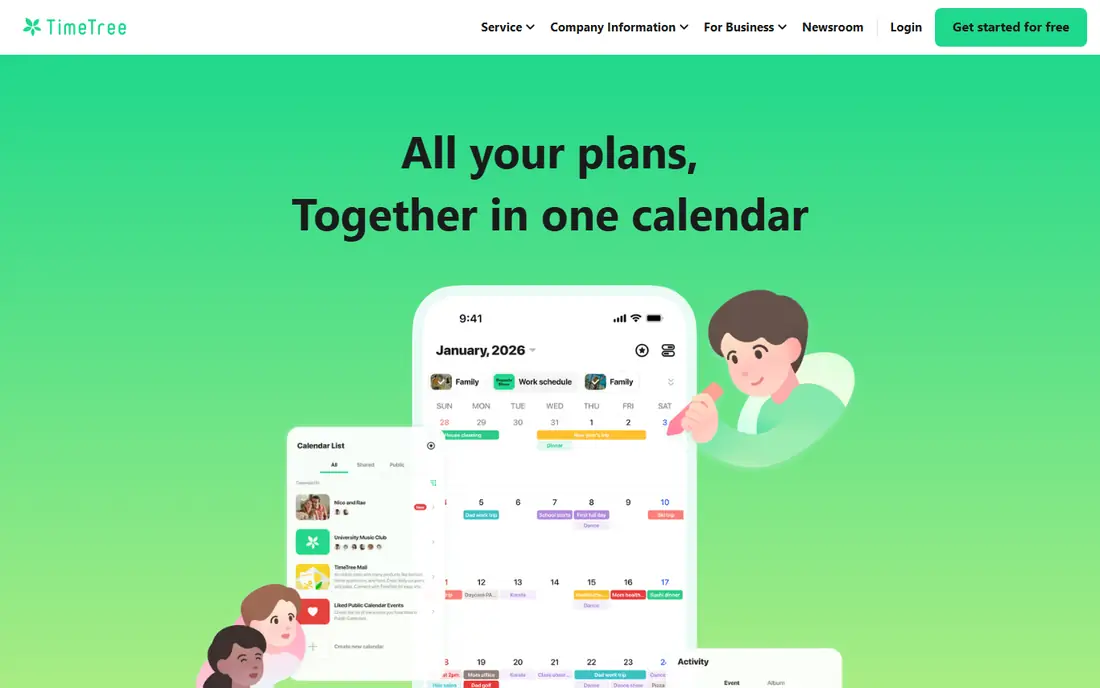
TimeTree fits clubs, teams and extended families that juggle more than one shared calendar. Filters let you view one group calendar or everything together, which keeps a busy household from turning into a wall of overlapping events. It looks plain next to paid rivals, and attachments and an ad free view require the premium plan. On pricing, the starting point is listed as free, and the free plan status is yes. Check the official site for the current plan details, since prices and limits change over time. Price alone should not decide this. A cheaper option that nobody uses costs more in wasted time than a pricier one that fits your routine. Compare the plan you would actually buy, check what is excluded, and read the cancellation terms before you pay.
- Multiple shared calendars with filters
- Easy invites
- Works on iOS, Android and the web
- Premium features are subscription only
- Design is plain
Hearth Display
Ideal for: Families who want a wall display like Skylight
Hearth Display is the closest match here if you want a screen on the wall rather than another phone app. Routines, chores and meal planning sit next to the calendar, so children can follow the day without needing their own device. You pay for hardware as well as the service, so it only makes sense if the whole household will actually use the display. On pricing, the starting point is listed as see website, and the free plan status is no. Check the official site for the current plan details, since prices and limits change over time. Before you commit, use the free plan or trial to test it with your real work for a week. Pay attention to how it feels on day three, not just day one, since small frictions grow over time. If it still feels awkward after that week, try another option on this list rather than forcing a fit.
- Purpose built wall display with routines and meal planning
- Syncs with major calendars
- Child friendly routines
- Hardware purchase required
- Higher upfront cost than an app
DAKboard
Ideal for: Households that want a custom display on their own screen
DAKboard suits households that already have a spare screen and enjoy setting things up their own way. It pulls calendars, photos, weather and to do lists onto one custom layout, which is more flexible than a fixed purpose device. That flexibility comes with setup work, and the polished features sit on paid tiers, so it is not the pick for people who want to plug in and go. On pricing, the starting point is listed as free, and the free plan status is yes. Check the official site for the current plan details, since prices and limits change over time. A short trial tells you more than any feature list. Set up the tasks you actually do each week, invite the people who will use it with you, and see where it helps and where it gets in the way. The best choice is usually the one your team or household keeps using without reminders.
- Turns a TV or tablet into a calendar display
- Many integrations
- Free tier for a basic display
- Setup takes more effort
- Advanced features need a paid plan
Google Calendar
Ideal for: Anyone who wants a free calendar that syncs everywhere
Google Calendar is the safe default, and for many households it is all the calendar they need. It syncs reliably across phones, tablets and computers, and sharing a calendar with a partner or group takes seconds. It lacks built in meal plans, chores and routines, so families who want a household hub will need to add other tools. On pricing, the starting point is listed as free, and the free plan status is yes. Check the official site for the current plan details, since prices and limits change over time. Price alone should not decide this. A cheaper option that nobody uses costs more in wasted time than a pricier one that fits your routine. Compare the plan you would actually buy, check what is excluded, and read the cancellation terms before you pay.
- Free with a Google account
- Dependable sync across devices
- Easy sharing and invites
- Fewer family organiser extras than Cozi or Hearth
- Tied to Google services
Microsoft Outlook
Ideal for: People already using Microsoft email and calendars
Outlook fits people whose email already lives with Microsoft, since the calendar sits right beside it. Shared calendars, invites and tasks work well for both work schedules and family plans in a single account. The web version is free but the richest desktop features need a paid plan, and the interface packs in a lot, which can feel busy at first. On pricing, the starting point is listed as free, and the free plan status is yes. Check the official site for the current plan details, since prices and limits change over time. Before you commit, use the free plan or trial to test it with your real work for a week. Pay attention to how it feels on day three, not just day one, since small frictions grow over time. If it still feels awkward after that week, try another option on this list rather than forcing a fit.
- Calendar, email and tasks in one place
- Strong sharing for work and family
- Free web version
- Full desktop features need a subscription
- Interface can feel busy
How we picked these
We compared official feature pages, pricing pages, app store listings, privacy policies and public reviews for each option, and we kept only products that exist and work in October 2026 and truly fit the topic. We favoured options with clear pricing, honest limits and a track record, and we mixed well known leaders with smaller options that do a specific job well. We did not claim hands on testing we did not do, and where a price could not be verified we wrote See website rather than guessing.
What to check before you choose
Start with the job you need done, not the feature list. Write down the three things you will do with alternatives to skylight calendar every week, then check each shortlisted option against those three things. An option that covers your three tasks well beats a longer feature list that misses one of them. Next, check the total cost, not just the headline price. Look at per user fees, limits on the free plan, and what happens when you outgrow a tier. Also check how easy it is to leave: data export, contract length and cancellation terms matter when a tool stops fitting your needs. - Test with real work during any free plan or trial, not just a demo. - Read the privacy policy, especially for tools that hold personal or financial data. - Ask who will actually use it daily, and whether they find it easy. - Compare two finalists side by side before you pay for a year upfront.
Frequently asked questions
What is the best alternatives to skylight calendar for beginners?
For beginners, Fantastical is a good starting point because it is easy to learn and covers the core job well. Cozi is another friendly option if you want something simpler. Start with a free plan or trial, and only pay once you know you will use it regularly.
Is there a free alternatives to skylight calendar?
Yes, in many cases. Fantastical offer a free plan or tier, though limits apply. Check the current limits on the official site, since free plans change, and compare them with how much you plan to use the tool.
How much does alternatives to skylight calendar cost?
Costs vary a lot across this list, from free plans to custom enterprise pricing. We list the starting price for each option above, and where we could not verify a price we wrote See website. Always check the official pricing page for the plan you would actually buy.
How is skylight alternatives different from alternatives to skylight calendar?
They overlap, but each option on this list leans toward a different kind of user. Compare the best_for line for each product above, test your top two with real work, and pick the one that fits your daily routine rather than the one with the longest feature list.
Can I switch later if I pick the wrong alternatives to skylight calendar?
In most cases, yes, but switching takes effort, especially if your data lives in the first tool. Before you commit, check export options and contract terms. Starting with a free plan or a monthly plan, rather than a yearly one, keeps switching easier.