Alternatives to Social Media Apps in 2026: 6 Picks Compared

- Minds takes the first slot, best suited to creator monetization.
- 6 of the 6 tools have a free plan, including Minds, Mastodon, Threads and Damus.
- For custom feeds and open identity, Bluesky is worth a look.
- A fair warning about Mastodon: onboarding friction in picking a server.
Direct answer
Minds leads the list, best for creator monetization. For a different need, Mastodon covers community-run servers and Threads covers large ready audience. The full list of 6 tools follows, with prices and free plan facts.
Quick comparison
| Product | Ideal for | Price from | Free version | |
|---|---|---|---|---|
 Minds | Creator monetization | $0 | Yes | Visit |
 Mastodon | Community-run servers | $0 | Yes | Visit |
 Threads | Large ready audience | $0 | Yes | Visit |
 Damus | Nostr protocol posting | $0 | Yes | Visit |
 Pixelfed | Decentralized photo sharing | $0 | Yes | Visit |
 Bluesky | Custom feeds and open identity | $0 | Yes | Visit |
Tool-by-tool breakdown
This Ainotely guide covers 6 Alternatives to Social Media Apps. Each profile lists a starting price, free plan details, strengths and drawbacks, so you can drop poor fits quickly.
Minds
Ideal for: Creator monetization
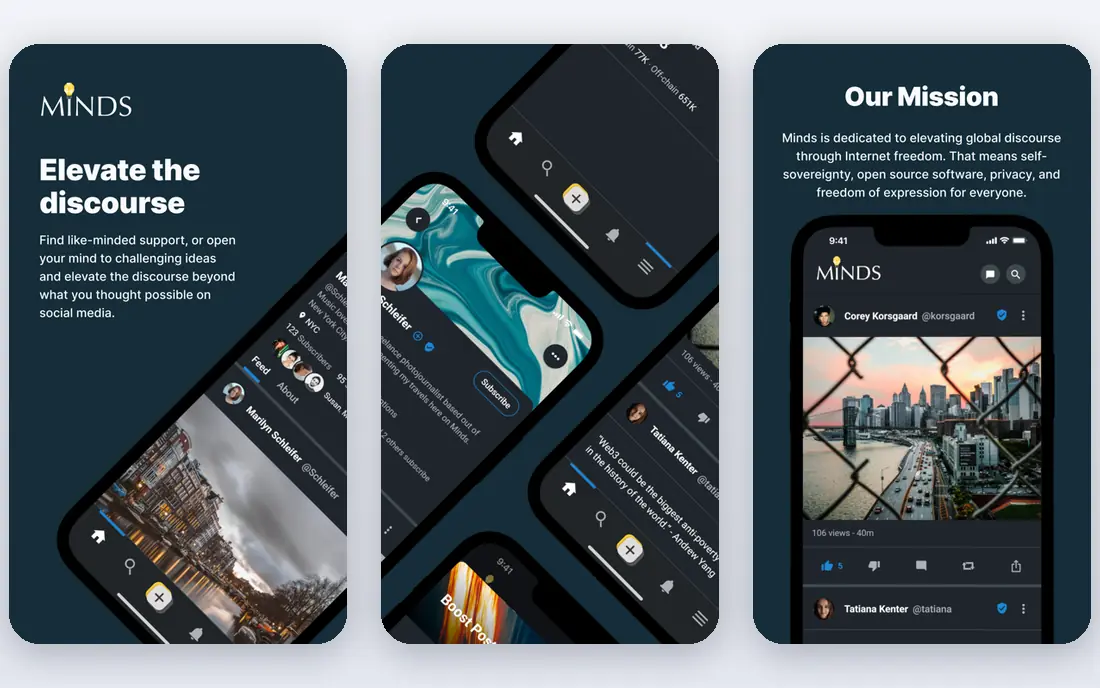
Minds targets creator monetization. Minds is a social network built around creator monetization, with tokens, tips, and revenue sharing for widely used content. For general social use, its niche character is the primary limit.
The permissive moderation approach also means content quality varies more than on tightly moderated servers. More specifically, creators earn from engagement instead of relying on brand deals or ad splits. The system leans open source with a focus on free expression. The starting price for Minds: $0. Free access exists with Minds.
What to check first: Moderation approach is permissive.
- Tokens and tips
- Open source leaning
- Smaller mainstream audience
Mastodon
Ideal for: Community-run servers
Where Mastodon fits: community-run servers. New users must pick a server, learn federation etiquette, and rebuild their follow graph, which feels harder than signing up for a single app.
The main drawbacks: Onboarding friction in picking a server.
For everyday use, general servers work fine to start, whereas topic servers for tech, journalism, or art provide better local timelines. Price to start with Mastodon: $0. A free plan is available with Mastodon.
- Thousands of community servers
- No ads and no central algorithm
- Smaller and quieter network
Threads
Ideal for: Large ready audience
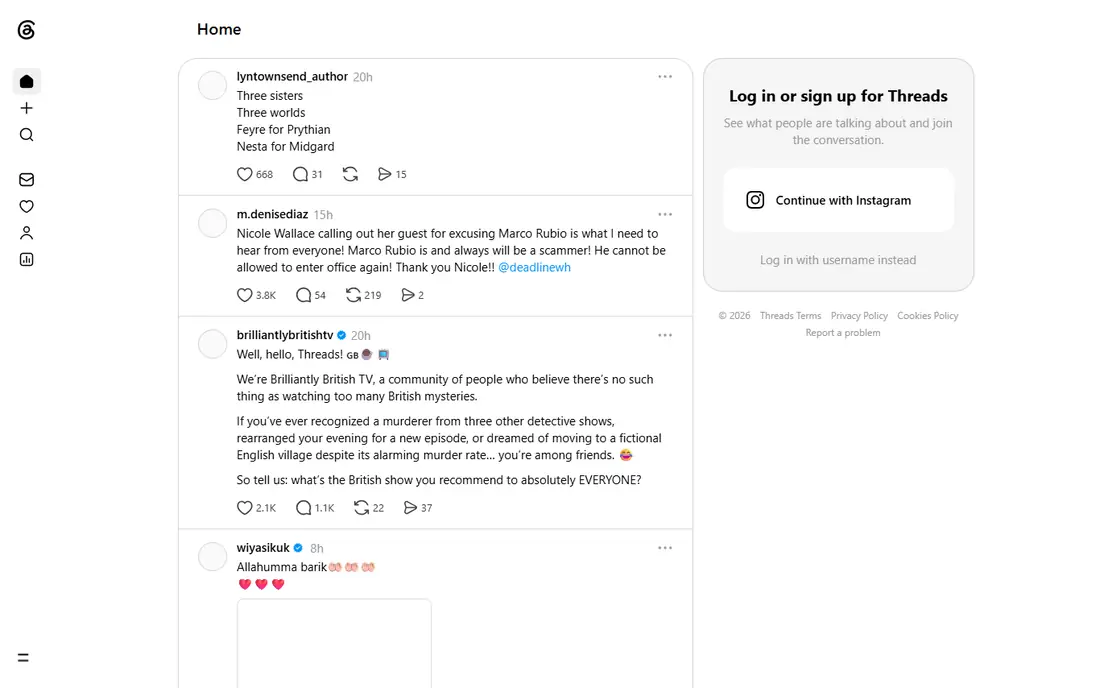
Choose Threads for large ready audience. Threads is the text-first social app from Meta, built on Instagram accounts. Its advantage is the ready audience: users can follow the same accounts they follow on Instagram and reach a large public conversation from day one, without rebuilding a network from scratch.
As for the details, Threads is the right pick when reach matters most and Meta ownership is acceptable. It is the wrong pick when independence is the point. Federation with the wider Fediverse has been partial and slow. Threads is a Meta product with algorithmic feeds and advertising-driven data use, which is exactly what numerous people leaving big social apps want to escape. The starting price for Threads: $0. Threads includes a free tier.
Drawbacks to consider: Restricted portability and federation.
- Largest ready audience here
- Refined app and discovery
- Owned by Meta with algorithmic feeds
Damus
Ideal for: Nostr protocol posting
In short, Damus is for Nostr protocol posting. The network is smaller and more technical in tone. In practice, for users who care most about censorship resistance and owning their identity outright, Damus and the wider Nostr ecosystem offer the most solid guarantees here.
Limits to weigh: Smaller network; Clients vary in polish.
Main advantages: Censorship-resistant design.
Beyond that, Damus is a leading app for Nostr, a protocol where users hold their own cryptographic keys rather than accounts on a company server. Worth adding: losing a private key can mean losing the account, and clients vary in polish compared to Bluesky or Threads. The design appeals to tech-savvy users who want protocol-level control. From a buyer's view, key management is the ramp-up time. Starting cost for Damus: $0. Free access exists with Damus.
- No central server
- Protocol-first with user-held keys
- Technical setup with keys
Pixelfed
Ideal for: Decentralized photo sharing
Pixelfed serves decentralized photo sharing. Server quality and moderation vary, so picking a well-run instance matters. In daily use, Pixelfed fits photographers and casual photo sharers who value an open, ad-free feed over mass reach.
For people whose central complaint about Instagram is the feed and ads instead of photos themselves, Pixelfed reproduces the old photo-sharing feel most faithfully. As for the details, for visual discovery at scale, Pinterest remains a better complement than a replacement. Pixelfed pricing: $0. Pixelfed has a free plan.
The main drawbacks: Much smaller audience than Instagram.
- Photo-first federated sharing
- ActivityPub federation with Mastodon
- Fewer editing and discovery features
Bluesky
Ideal for: Custom feeds and open identity
Bluesky is aimed squarely at custom feeds and open identity. Bluesky is a decentralized social network built on the AT Protocol, designed as a place where users control their feeds. Rather than one company algorithm, users pick custom feeds, mute lists, and moderation services, and starter packs let new users follow curated lists of journalists, scientists, or old mutuals in one tap.
As for the details, Bluesky has tens of millions of registered users but far fewer daily actives than the biggest products, and search and discovery are thinner. The result feels close to early Twitter, with short posts, replies, and reposts in a familiar layout. The trade-offs are audience size and discovery. On cost, Bluesky starts like this: $0. You can start on Bluesky without paying.
Downsides: Most users still on the central server.
- Portable identity on AT Protocol
- Feels like early Twitter
- Smaller audience than Instagram or X
Our selection method
The comparison looks at four things: starting price, free access, how well the feature set matches Alternatives to Social Media Apps, and the main limit of each tool. Treat prices as a snapshot: vendors change plans often, so check the vendor site for the figure that applies today. Tools are placed by general fit for Alternatives to Social Media Apps, with price clarity and free access as tie-breakers. A different team can reasonably rank them differently.
A buyer's checklist
- Check the current price for Minds, Bluesky and the rest on each vendor page, since seats and billing terms change the total.
- Read the fine print on the free plans from Minds, Mastodon, Threads and others; seat, project and feature caps differ.
- Read the limits listed for Minds first: smaller mainstream audience.
- Check the support hours and onboarding help Bluesky offers; smaller vendors vary a lot here.
- Confirm the exact Damus plan that includes your must-have features.
Frequently asked questions
Do these tools publish their prices?
Yes. Every tool from Minds to Bluesky shows a starting price, though seats, add-ons and billing terms still change the final cost.
How are the Alternatives to Social Media Apps ordered?
Minds sits first and Bluesky last because the order follows typical fit for Alternatives to Social Media Apps, then price clarity and free access. It is a judgement call, so read each profile for fit and limits.
Do these alternatives have ads?
Mastodon, Pixelfed, Bluesky, and Nostr apps are currently ad-free or ad-light by design. Minds uses tokens and boosts instead of traditional ads.
Can I keep my followers when I switch?
Partly. Mastodon supports moving accounts between servers with followers. Bluesky gives you portable identity on its protocol.
Can I try these options before paying?
Often, yes. Minds, Mastodon, Threads and others have a free plan. Use your own data and a real task during the test, and check what the free tier or trial limits before you rely on it.
Is Minds the right pick for everyone comparing Alternatives to Social Media Apps?
No single tool suits every team. Minds comes first because it fits creator monetization, while Mastodon suits community-run servers and Threads suits large ready audience. Match the tool to your own size, budget and workflow before deciding.