Domo is the first pick on this list for end-to-end data journeys with AI. Listed starting prices: Tableau from $15 per user a month. Sisense fits embedded analytics in products; Looker fits governed and embedded analytics. The remaining 2 options are covered below with prices and limits.
Choosing spreadsheet-based reporting usually comes down to price, fit and limits. This Ainotely guide sets 5 tools side by side on those three points, with the facts kept short and checkable.
Key takeaways
This list starts with Domo, which is built for end-to-end data journeys with AI.
Qlik Sense fits data integration and analytics together.
Tableau stands alone as the one tool in this list with a free plan.
One limit worth knowing about Tableau: can need training for advanced use.
The cheapest monthly starting price in the list is $15 per user per month, offered by Tableau.
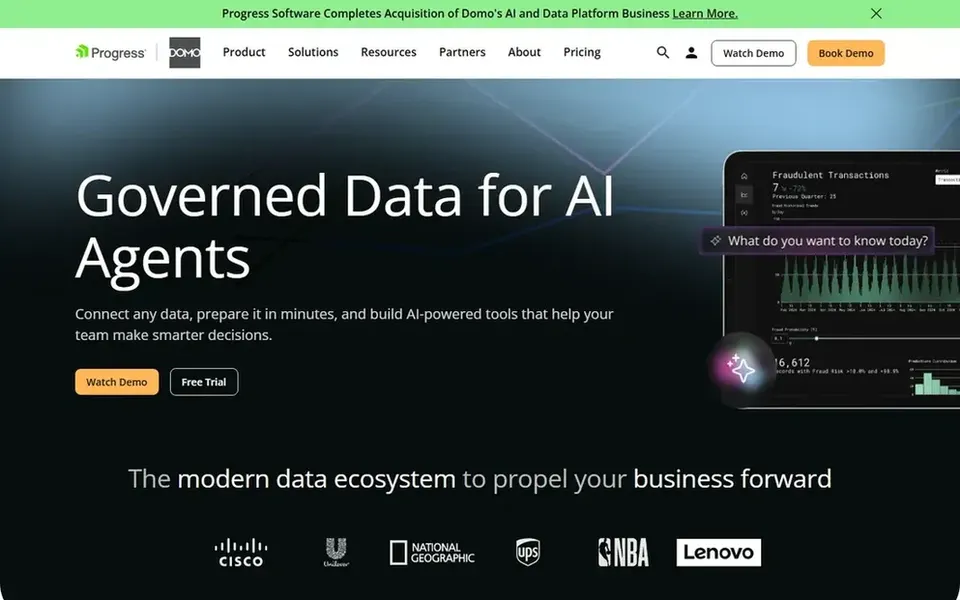
Domo targets end-to-end data journeys with AI. Domo strengthens the whole data journey with AI and data products. It links and moves data from any source, prepares and expands data access for exploration, and accelerates business-critical insights.
Limits to weigh: Setup can involve several components.
If your focus is purely visual analytics, Tableau is more direct. The breadth of Domo may overwhelm small teams that only need dashboards, and setup can involve several components. Check the vendor site for Domo pricing; none is listed in this comparison. Free access: Free trial.
For embedded analytics in products, Sisense is a natural candidate. Sisense gives AI-powered embedded analytics with pro-code, low-code, and no-code adaptability. It is meant to unlock insights and convert data into revenue by putting analytics inside products and customer-facing applications.
Sisense centres on embedded analytics, which may not suit teams seeking only internal dashboards, and integration needs product work. If you need a wide governed semantic layer, Looker is a more solid match. Sisense shows no starting price here, so confirm the cost on the vendor site. Free access: Free trial.
Where it shines: Pro-code, low-code. Downsides: Embedded focus may not suit all teams.
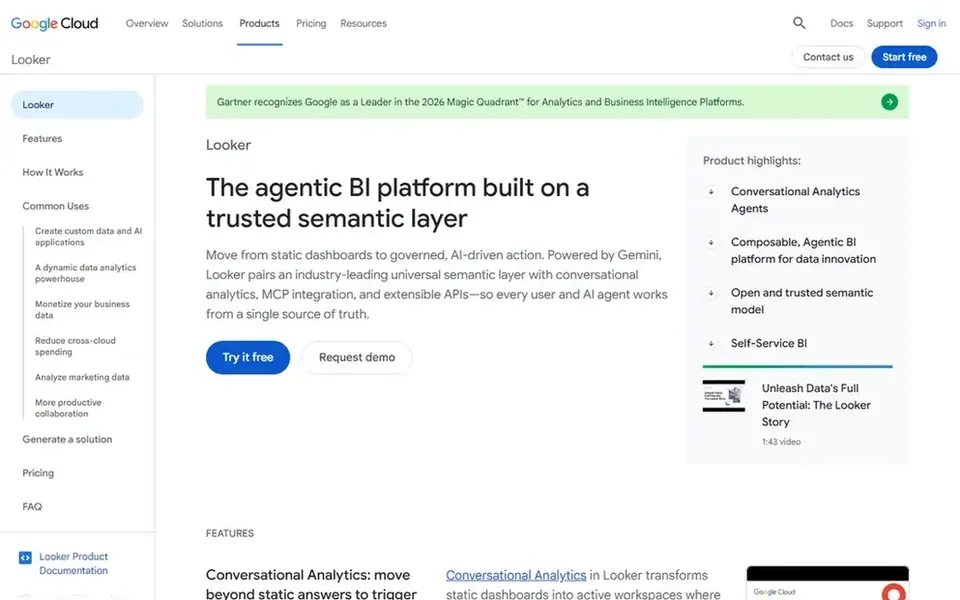
Looker was built for governed and embedded analytics. If you need fast visual exploration with wide database connectivity, Tableau may be a better fit. Looker is Google Cloud's agentic business intelligence and embedded analytics product.
It brings together metrics with a trusted semantic layer, so definitions stay consistent across reports, and Gemini agents assist with analysis. In daily use, teams outside Google Cloud should weigh integration effort. Pricing for Looker is not stated here, so ask the vendor for current figures. Free plan details: Not stated.
Drawbacks to consider: Semantic modeling needs upfront work.
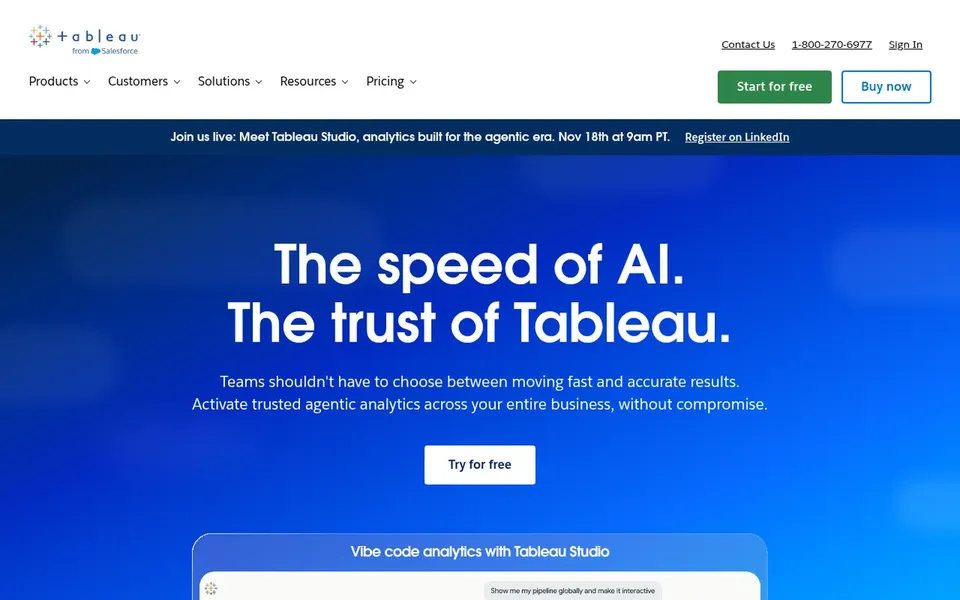
Tableau works best for visual analytics and shared dashboards. Tableau is business intelligence and analytics software aimed at visual data exploration. On top of that, Tableau can demand training for advanced calculations and data modeling, and complicated deployments may need specialist support.
Also, for straightforward, low-cost reporting, a lighter tool may be enough. From a buyer's view, users link to almost any database, then drag-and-drop to build charts and dashboards. Entry price for Tableau: $15 per user per month. Free access exists with Tableau.
Qlik Sense makes the most sense for data integration and analytics together. Qlik, now with Talend, provides a data fabric with end-to-end data integration, data quality, and analytics options.
If you only need visual dashboards, a more straightforward tool may be quicker to adopt. In practice, the breadth of Qlik can complicate initial rollout, and governance needs planning. No starting price is listed for Qlik Sense here; confirm pricing on the vendor site. Free options: Not stated.
Points against: Breadth can complicate initial rollout.
Confirm the entry price on the vendor page. For Domo, Sisense, Looker and Qlik Sense that means a quote rather than a fixed price.
Look at the free plan from Tableau closely: its caps decide whether it is usable for real work.
Run a trial of Domo and Sisense with real work before paying for a year; your own workflow is the best test.
Before choosing Domo, weigh its main limit: wide system may overwhelm small teams.
Price Domo for your actual team size; headline prices rarely include add-ons or overage.
Find out whether the entry plan of Qlik Sense covers your must-haves or only a trimmed-down version.
How we picked
For each of the 5 tools we noted price, free plan or trial, fit for spreadsheet-based reporting and the main limit, using vendor pages and documentation. Where a price is missing, the vendor does not list one publicly or ties it to a quote. Always confirm before budgeting. The ranking is editorial: typical fit first, then clear pricing, then free access. If your needs are unusual, read the profiles rather than relying on position.
Every price and plan detail on this page comes from the vendors’ own websites. We did not run hands-on tests unless the text says so, and we do not publish star ratings or review scores. See how we score and our disclosure.
Keep your shortlist in one place
Paste prices, trial dates and notes from this guide into Ainotely, our AI note app. It files them into a topic and pulls out tasks like “cancel trial by Friday”. Free 7-day trial, no card needed.
How are the tools for spreadsheet-based reporting ordered?
The order follows typical fit for spreadsheet-based reporting, with Domo first and Qlik Sense last, then price clarity and free access. It is editorial judgement, not a score, so another team could rank the tools differently.
What is the cheapest option for spreadsheet-based reporting in this list?
On published monthly entry prices, Tableau is the lowest here at $15 per user per month. Entry price is only part of the cost, because seats, add-ons and billing terms can change the total. All 5 picks in this alternatives to Spreadsheet-Based reporting comparison show their pricing, free plan details and main limits on the cards above.
Which options for spreadsheet-based reporting have a free plan?
Tableau is the only tool in this list with a free plan. Free plans usually cap users, projects or features, so check the limits on the vendor page. Several others offer a trial instead. For the full picture, the cards above cover all 5 entries of this alternatives to Spreadsheet-Based reporting list, including price, free plan and limits.
Which tool is best for embedded analytics?
Domo is the pick this page puts first, mainly for end-to-end data journeys with AI. If your situation differs, Sisense suits embedded analytics in products, and Looker suits governed and embedded analytics. Compare price and limits before you decide.
Can I try these tools before paying?
Often, yes. Tableau has a free plan and Domo and Sisense offer a free trial. Use your own data and a real task during the test, and check what the free tier or trial limits before you rely on it. Pricing, free plan details and limits for all 5 tools in this alternatives to Spreadsheet-Based reporting roundup sit on the individual cards above.