Stripe Alternatives for Online Payments in 2026: 8 Options Compared

- PayPal is our first pick for Payments customers already trust, because it covers the core job well without a narrow focus.
- Square is a strong second option for Online and in-person payments together, and it suits buyers who want a different balance of features and price.
- Most options here use quote-based or trial-led pricing, so ask for current plan details before you compare totals.
- Paddle stands out for Merchant of record for software, with handles tax and compliance as merchant of record as its clearest strength.
- Shortlist two or three options, test each with a real task, and compare the total cost and limits before you commit.
Quick comparison
| Product | Ideal for | Price from | Free version | |
|---|---|---|---|---|
 PayPal | Payments customers already trust | See website | See website | Visit |
 Square | Online and in-person payments together | See website | See website | Visit |
 Adyen | Enterprise payments across channels | See website | See website | Visit |
 Paddle | Merchant of record for software | See website | See website | Visit |
 FastSpring | Merchant of record for digital goods | See website | See website | Visit |
 Braintree | Cards and PayPal in one gateway | See website | See website | Visit |
 Checkout.com | Flexible global card acquiring | See website | See website | Visit |
 Authorize.net | A long-running payment gateway | See website | See website | Visit |
The best Stripe alternatives for online payments
These 8 options cover the main ways to handle alternatives to stripe for online payments, from well-known leaders to smaller tools that suit a narrower job. We compared official feature pages, pricing, app-store listings, privacy policies, and public reviews to sort out where each one earns its place.
Payment note: this article compares payment providers. It is not financial advice. Fees, payout timing, holds, and supported methods vary by country, business type, and risk profile, so confirm the current terms on each provider site before switching. Trading and payment processing both carry risk, and contract terms matter.
PayPal
Ideal for: Payments customers already trust
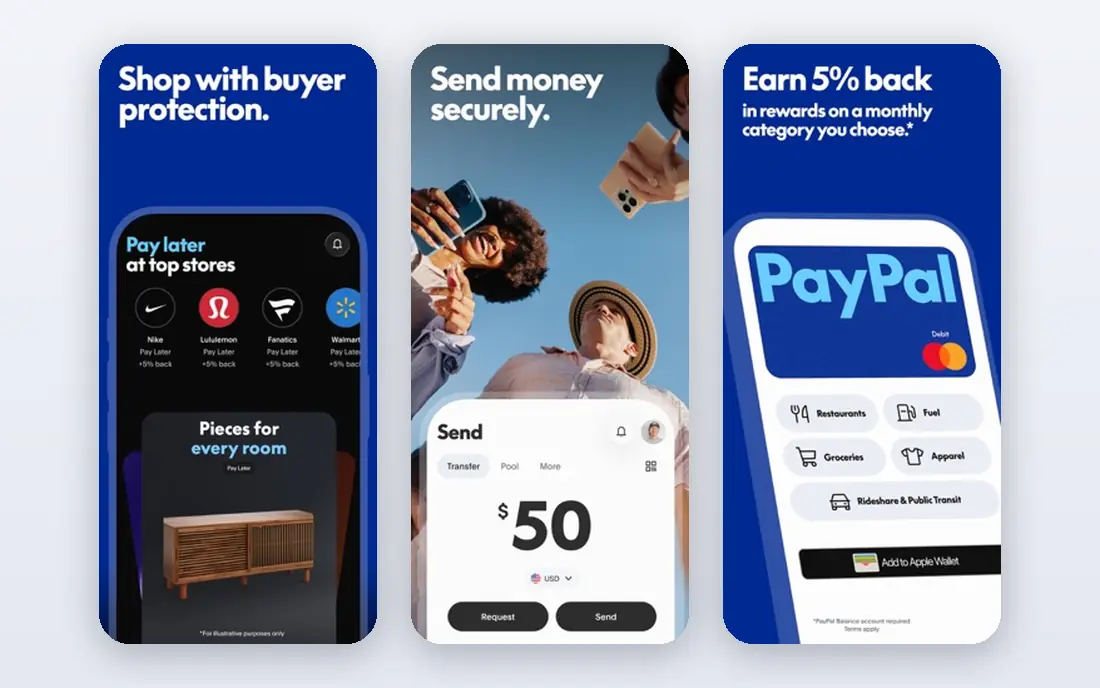
PayPal fits payments customers already trust. PayPal fits sellers who want a familiar payment button that buyers already use. Its strengths include wallet, cards, and Pay Later, huge buyer recognition, and simple integration.
The honest catch is fees and holds can frustrate sellers, and checkout varies by region. That matters most when your team relies on that area every day, so weigh it against the strengths above before you decide. A tool can still be the right pick with a clear weakness, as long as that weakness sits outside your main job.
We would shortlist PayPal if payments customers already trust is your main priority. Check the current pricing page before you commit, since plans, limits, and terms change over time. Start small, test it with a real workload, and compare the result with one other option on this list before you commit.
- Wallet, cards, and Pay Later
- Huge buyer recognition
- Simple integration
- Fees and holds can frustrate sellers
- Checkout varies by region
Square
Ideal for: Online and in-person payments together

For online and in-person payments together, Square is a strong candidate. Square suits sellers who take payments both online and at a counter. Its strengths include online checkout plus in-person hardware, simple pricing, and business tools.
The honest catch is international coverage is narrower than Stripe, and custom API depth varies. That matters most when your team relies on that area every day, so weigh it against the strengths above before you decide. A tool can still be the right pick with a clear weakness, as long as that weakness sits outside your main job.
We would shortlist Square if online and in-person payments together is your main priority. Check the current pricing page before you commit, since plans, limits, and terms change over time. Start small, test it with a real workload, and compare the result with one other option on this list before you commit.
- Online checkout plus in-person hardware
- Simple pricing
- Business tools
- International coverage is narrower than Stripe
- Custom API depth varies
Adyen
Ideal for: Enterprise payments across channels
Adyen is built around enterprise payments across channels. Adyen fits larger sellers selling across regions and channels. Its strengths include unified online and in-person payments, broad local methods, and detailed reporting.
The honest catch is enterprise onboarding and minimums, and smaller sellers may find it heavy. That matters most when your team relies on that area every day, so weigh it against the strengths above before you decide. A tool can still be the right pick with a clear weakness, as long as that weakness sits outside your main job.
We would shortlist Adyen if enterprise payments across channels is your main priority. Check the current pricing page before you commit, since plans, limits, and terms change over time. Start small, test it with a real workload, and compare the result with one other option on this list before you commit.
- Unified online and in-person payments
- Broad local methods
- Detailed reporting
- Enterprise onboarding and minimums
- Smaller sellers may find it heavy
Paddle
Ideal for: Merchant of record for software
If merchant of record for software is the priority, Paddle deserves a close look. Paddle suits software sellers that would rather hand tax to a partner. Its strengths include handles tax and compliance as merchant of record, and subscription billing.
The honest catch is revenue-share pricing can cost more at scale, and checkout control is shared. That matters most when your team relies on that area every day, so weigh it against the strengths above before you decide. A tool can still be the right pick with a clear weakness, as long as that weakness sits outside your main job.
We would shortlist Paddle if merchant of record for software is your main priority. Check the current pricing page before you commit, since plans, limits, and terms change over time. Start small, test it with a real workload, and compare the result with one other option on this list before you commit.
- Handles tax and compliance as merchant of record
- Subscription billing
- Revenue-share pricing can cost more at scale
- Checkout control is shared
FastSpring
Ideal for: Merchant of record for digital goods
FastSpring fits merchant of record for digital goods. FastSpring suits digital sellers who want tax handled without building it. Its strengths include global tax handling and localised checkout, and subscription management.
The honest catch is customisation is more limited than a raw API, and pricing is revenue based. That matters most when your team relies on that area every day, so weigh it against the strengths above before you decide. A tool can still be the right pick with a clear weakness, as long as that weakness sits outside your main job.
We would shortlist FastSpring if merchant of record for digital goods is your main priority. Check the current pricing page before you commit, since plans, limits, and terms change over time. Start small, test it with a real workload, and compare the result with one other option on this list before you commit.
- Global tax handling and localised checkout
- Subscription management
- Customisation is more limited than a raw API
- Pricing is revenue based
Braintree
Ideal for: Cards and PayPal in one gateway
For cards and PayPal in one gateway, Braintree is a strong candidate. Braintree fits teams that already accept PayPal and want cards through the same gateway. Its strengths include cards, PayPal, and wallets through one integration, and vaulting and recurring billing.
The honest catch is payPal ownership shapes the roadmap, and onboarding can be slow. That matters most when your team relies on that area every day, so weigh it against the strengths above before you decide. A tool can still be the right pick with a clear weakness, as long as that weakness sits outside your main job.
We would shortlist Braintree if cards and PayPal in one gateway is your main priority. Check the current pricing page before you commit, since plans, limits, and terms change over time. Start small, test it with a real workload, and compare the result with one other option on this list before you commit.
- Cards, PayPal, and wallets through one integration
- Vaulting and recurring billing
- PayPal ownership shapes the roadmap
- Onboarding can be slow
Checkout.com
Ideal for: Flexible global card acquiring
Checkout.com is built around flexible global card acquiring. Checkout.com suits high-volume sellers who want control over acquiring. Its strengths include direct acquiring in many markets, flexible APIs, and fraud tooling.
The honest catch is sales-led onboarding, and smaller volumes face higher relative effort. That matters most when your team relies on that area every day, so weigh it against the strengths above before you decide. A tool can still be the right pick with a clear weakness, as long as that weakness sits outside your main job.
We would shortlist Checkout.com if flexible global card acquiring is your main priority. Check the current pricing page before you commit, since plans, limits, and terms change over time. Start small, test it with a real workload, and compare the result with one other option on this list before you commit.
- Direct acquiring in many markets
- Flexible APIs
- Fraud tooling
- Sales-led onboarding
- Smaller volumes face higher relative effort
Authorize.net
Ideal for: A long-running payment gateway
If a long-running payment gateway is the priority, Authorize.net deserves a close look. Authorize.net fits merchants that already have a merchant account and need a proven gateway. Its strengths include established gateway with recurring billing and fraud tools, and broad processor support.
The honest catch is interface and API feel older, and merchant account setup is separate. That matters most when your team relies on that area every day, so weigh it against the strengths above before you decide. A tool can still be the right pick with a clear weakness, as long as that weakness sits outside your main job.
We would shortlist Authorize.net if a long-running payment gateway is your main priority. Check the current pricing page before you commit, since plans, limits, and terms change over time. Start small, test it with a real workload, and compare the result with one other option on this list before you commit.
- Established gateway with recurring billing and fraud tools
- Broad processor support
- Interface and API feel older
- Merchant account setup is separate
How we picked these
We started from the topic itself and kept only products that exist, work in October 2026, and truly fit the job in the title. For each option we checked official feature pages and pricing, app-store listings where relevant, privacy policies, and public reviews, and we left out products whose fit depended on stretching the definition. Where a price or free tier could not be verified from the vendor, we wrote See website rather than guessing a number.
We also weighed who each product is really for, not just its feature list. A broad platform can be the wrong pick for a small team, and a simple tool can be the wrong pick for a large operation, so the write-ups above name the audience, the strength, and the catch for each option. That is the comparison we would want before spending money or moving data.
How to choose a payment provider
Start with your main job
Write down the one job you need done every week, then judge each option against that job first. Extra features look good in a demo, but they add cost, training, and admin work when they sit unused. If two options both cover your main job, pick the one with the clearer pricing and the simpler setup for your team.
Check pricing and limits
Compare the total cost for your team size and usage, not just the headline plan. Check seat pricing, usage limits, add-ons, and contract terms, and ask what happens when you grow past a tier. A free plan or trial is useful, but read what it excludes, since the feature you need most is often the one held back for paid plans.
Test before you commit
Run a short trial with real data and a real task, and involve the people who will use the tool daily. Check support response, data export, and how easy it is to leave, because switching costs are part of the price. If a trial feels hard to set up, treat that as useful evidence about the product, not just about your team.
Frequently asked questions
What is the cheapest alternative to Stripe?
There is no single cheapest option, since fees depend on card type, region, and volume. Compare the blended fee for your actual sales mix, not just the headline rate.
Do I need a merchant account to use these providers?
Payment facilitators like Square and PayPal let you start without a separate merchant account. Gateways like Authorize.net usually need one, so check before choosing.
Which Stripe alternative is best for subscriptions?
Paddle and FastSpring handle subscriptions plus tax as merchant of record. Stripe-style APIs from Adyen and Checkout.com suit teams building custom billing.
Can I accept PayPal without Stripe?
Yes. PayPal, Braintree, and several other providers offer PayPal checkout directly. Braintree is owned by PayPal, so the two work closely together.
How long do payouts take?
Payout timing varies by provider, country, and risk checks. Read the payout schedule and hold policy on the provider site before you rely on a date.