Best Apty Alternatives in 2026: 8 Options Compared

- Our top pick for most people is WalkMe, because it covers the core needs of this category with a clear, well supported product.
- If cost matters most, start with Appcues and Spekit, and check their current pricing pages before you commit to a paid plan.
- For larger or more demanding teams, Pendo and Whatfix offer deeper features, though setup and pricing need closer review.
- The right choice depends on what you already use, so shortlist two or three options and try them with your real workflow before you switch.
Quick comparison
| Product | Ideal for | Price from | Free version | |
|---|---|---|---|---|
 WalkMe | Enterprises guiding users through software | See website | See website | Visit |
 Pendo | Product teams guiding and measuring adoption | See website | Free trial | Visit |
 Whatfix | Enterprises onboarding employees on software | See website | See website | Visit |
 UserGuiding | SaaS teams onboarding users affordably | See website | Free trial | Visit |
 Appcues | Product teams shipping tours fast | See website | Free trial | Visit |
 Userpilot | SaaS teams personalizing onboarding | See website | Free trial | Visit |
 Spekit | Sales teams learning tools in flow | See website | Free trial | Visit |
 Chameleon | Product teams building targeted tours | See website | Free trial | Visit |
The best apty alternatives
We compared official feature pages, pricing pages, app store listings, privacy policies, and public reviews to build this list of apty alternatives. Each option below is a real product that works in October 2026 and fits this topic, with an honest note on where it falls short.
WalkMe
Ideal for: Enterprises guiding users through software

WalkMe is the enterprise standard for guiding users inside complex software. It is best for enterprises guiding users through software. Its strengths include enterprise digital adoption; walkthroughs; analytics. For readers weighing apty alternatives, that combination makes it a serious option rather than a filler pick, and it earned its place here on the strength of its official feature set and public reception. The honest catch is worth stating plainly. Enterprise pricing; implementation is a project That trade off matters more for some readers than others, so weigh it against what you actually need day to day. On pricing, check the vendor site for the current plan, since tiers and limits change over time. If it matches your main use case, it is a reasonable choice, and if it does not, another option on this list likely fits better.
- Enterprise digital adoption
- Walkthroughs
- Analytics
- Enterprise pricing
- Implementation is a project
Pendo
Ideal for: Product teams guiding and measuring adoption
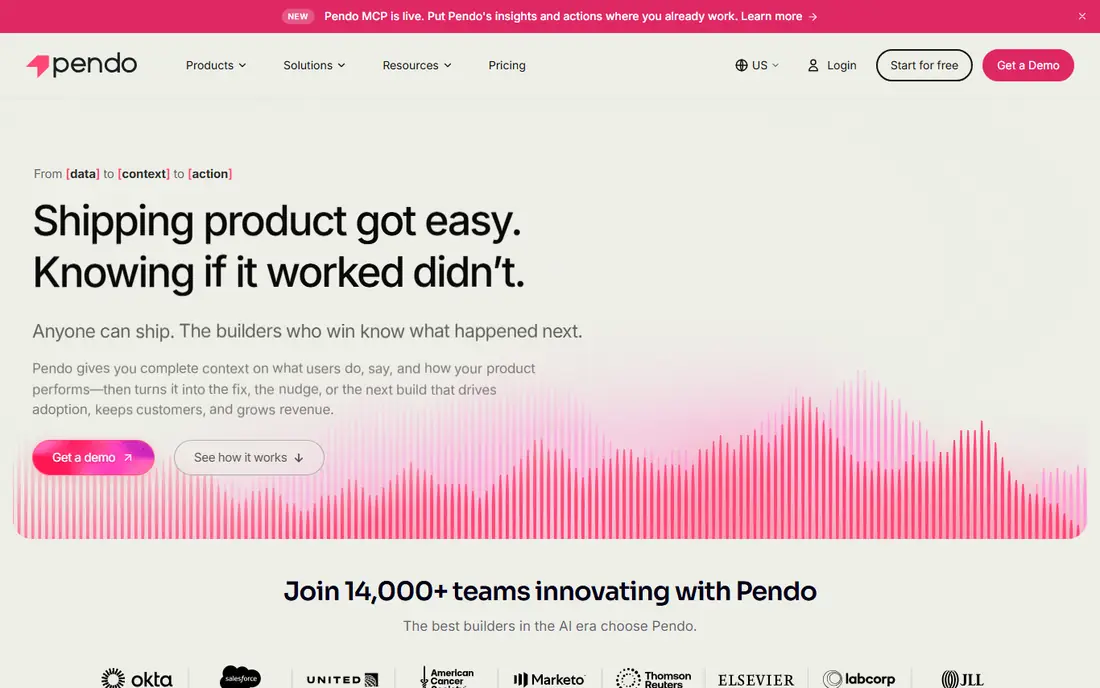
Pendo suits product teams that want guides, analytics, and feedback together. It is best for product teams guiding and measuring adoption. Its strengths include in product guides plus analytics; feedback tools; roadmaps. For readers weighing apty alternatives, that combination makes it a serious option rather than a filler pick, and it earned its place here on the strength of its official feature set and public reception. The honest catch is worth stating plainly. Pricing is quote based; setup takes time That trade off matters more for some readers than others, so weigh it against what you actually need day to day. Before you commit, test it with the task you do most often, since that reveals fit faster than a feature list. If it matches your main use case, it is a reasonable choice, and if it does not, another option on this list likely fits better.
- In product guides plus analytics
- Feedback tools
- Roadmaps
- Pricing is quote based
- Setup takes time
Whatfix
Ideal for: Enterprises onboarding employees on software
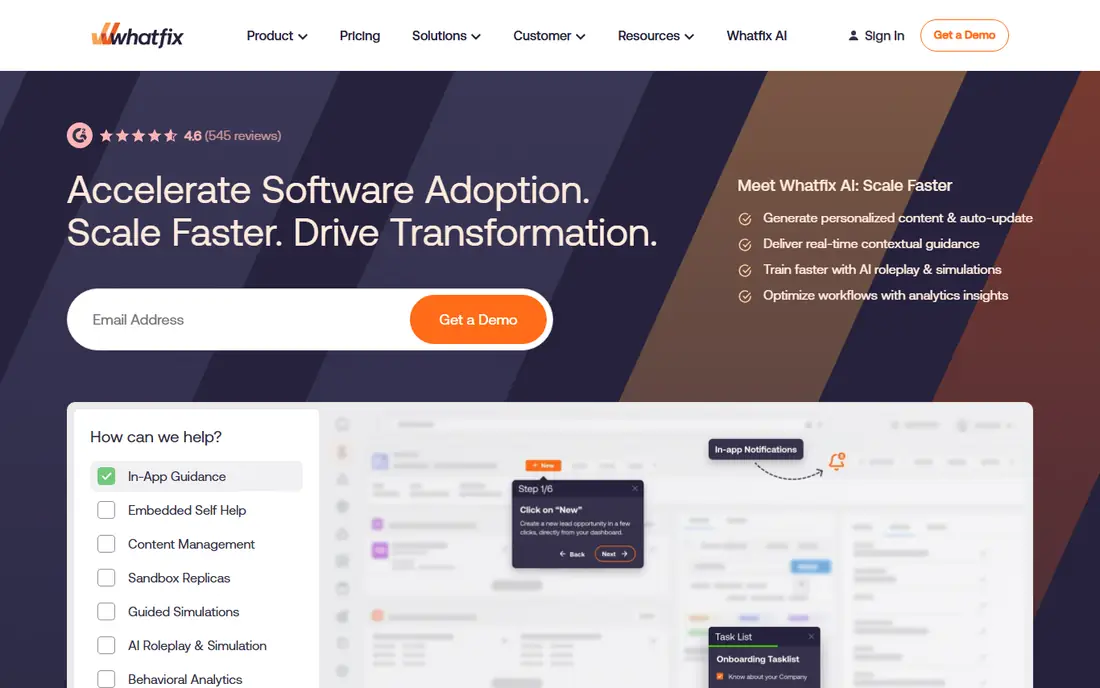
Whatfix fits enterprises onboarding employees across many internal tools. It is best for enterprises onboarding employees on software. Its strengths include in app guidance; training content; analytics. For readers weighing apty alternatives, that combination makes it a serious option rather than a filler pick, and it earned its place here on the strength of its official feature set and public reception. The honest catch is worth stating plainly. Enterprise pricing; implementation takes time That trade off matters more for some readers than others, so weigh it against what you actually need day to day. We would shortlist it alongside one rival from this list and compare them on your actual workflow. If it matches your main use case, it is a reasonable choice, and if it does not, another option on this list likely fits better.
- In app guidance
- Training content
- Analytics
- Enterprise pricing
- Implementation takes time
UserGuiding
Ideal for: SaaS teams onboarding users affordably
UserGuiding is an affordable onboarding choice for SaaS teams. It is best for saas teams onboarding users affordably. Its strengths include no code guides; checklists; surveys. For readers weighing apty alternatives, that combination makes it a serious option rather than a filler pick, and it earned its place here on the strength of its official feature set and public reception. The honest catch is worth stating plainly. Analytics depth is lighter than leaders; pricing per user That trade off matters more for some readers than others, so weigh it against what you actually need day to day. It is worth checking current pricing and plan limits on the vendor site, since those details change. If it matches your main use case, it is a reasonable choice, and if it does not, another option on this list likely fits better.
- No code guides
- Checklists
- Surveys
- Analytics depth is lighter than leaders
- Pricing per user
Appcues
Ideal for: Product teams shipping tours fast
Appcues helps product teams ship onboarding tours quickly. It is best for product teams shipping tours fast. Its strengths include no code tours; checklists; surveys. For readers weighing apty alternatives, that combination makes it a serious option rather than a filler pick, and it earned its place here on the strength of its official feature set and public reception. The honest catch is worth stating plainly. Analytics depth is limited; pricing scales with users That trade off matters more for some readers than others, so weigh it against what you actually need day to day. On pricing, check the vendor site for the current plan, since tiers and limits change over time. If it matches your main use case, it is a reasonable choice, and if it does not, another option on this list likely fits better.
- No code tours
- Checklists
- Surveys
- Analytics depth is limited
- Pricing scales with users
Userpilot
Ideal for: SaaS teams personalizing onboarding
Userpilot fits SaaS teams that want personalized onboarding flows. It is best for saas teams personalizing onboarding. Its strengths include no code flows; surveys; analytics. For readers weighing apty alternatives, that combination makes it a serious option rather than a filler pick, and it earned its place here on the strength of its official feature set and public reception. The honest catch is worth stating plainly. Pricing per user adds up; advanced analytics need higher tiers That trade off matters more for some readers than others, so weigh it against what you actually need day to day. Before you commit, test it with the task you do most often, since that reveals fit faster than a feature list. If it matches your main use case, it is a reasonable choice, and if it does not, another option on this list likely fits better.
- No code flows
- Surveys
- Analytics
- Pricing per user adds up
- Advanced analytics need higher tiers
Spekit
Ideal for: Sales teams learning tools in flow
Spekit suits sales teams that need training content inside the tools they use. It is best for sales teams learning tools in flow. Its strengths include in app training content; salesforce integration; playbooks. For readers weighing apty alternatives, that combination makes it a serious option rather than a filler pick, and it earned its place here on the strength of its official feature set and public reception. The honest catch is worth stating plainly. Focus is on enablement, not full adoption analytics; pricing per user That trade off matters more for some readers than others, so weigh it against what you actually need day to day. We would shortlist it alongside one rival from this list and compare them on your actual workflow. If it matches your main use case, it is a reasonable choice, and if it does not, another option on this list likely fits better.
- In app training content
- Salesforce integration
- Playbooks
- Focus is on enablement, not full adoption analytics
- Pricing per user
Chameleon
Ideal for: Product teams building targeted tours
Chameleon fits product teams that want targeted tours with testing. It is best for product teams building targeted tours. Its strengths include targeted tours; surveys; a/b testing. For readers weighing apty alternatives, that combination makes it a serious option rather than a filler pick, and it earned its place here on the strength of its official feature set and public reception. The honest catch is worth stating plainly. Pricing scales with users; analytics depth is moderate That trade off matters more for some readers than others, so weigh it against what you actually need day to day. It is worth checking current pricing and plan limits on the vendor site, since those details change. If it matches your main use case, it is a reasonable choice, and if it does not, another option on this list likely fits better.
- Targeted tours
- Surveys
- A/B testing
- Pricing scales with users
- Analytics depth is moderate
How we picked these
We started from the topic itself and looked for products that truly fit it, not just well known names in a nearby category. We compared official feature pages, pricing pages, app store listings, privacy policies, and public reviews, and we left out products we could not verify or that did not match the topic. Prices and free tiers in this article come from vendor sites where we could confirm them, and where a price was not clear we wrote See website rather than guessing. We also aimed for a mix of large, established options and smaller tools that serve a specific audience well. No product here was added to fill space, and our notes on weaknesses come from public reviews and plan limits rather than from hands on testing, which we do not claim.
What to check before you choose
Start with the job you need done most often, then check whether each shortlisted product handles that job without extra tools or workarounds. A long feature list means little if the core task feels awkward, so give weight to the workflow you will repeat daily. Next, look at total cost, not just the headline price, including per user fees, usage limits, and add ons that your team will actually need. Also check how the product fits what you already use, including sign in, data import, and support options when something goes wrong. Read the privacy policy for products that handle personal or customer data, and confirm contract terms, renewal rules, and cancellation steps before you pay. Finally, run a trial with real data and real teammates where a trial is offered, and keep notes on what slowed you down, since that trial experience is often the best guide to a long term fit.
Frequently asked questions
What are the best apty alternatives?
The best choice depends on your size and budget, but WalkMe, Pendo, and UserGuiding are strong starting points for most readers. Compare them on the task you do most often, then check current pricing before you decide.
Are there free apty alternatives?
Some options on this list offer a free tier or a free trial, including Appcues where noted in the comparison table. Free tiers usually limit features or usage, so check the vendor pricing page to see what is included before you rely on a free plan.
How much do apty alternatives cost?
Pricing varies widely, from free tiers to quote based enterprise plans, so there is no single typical price. Use the starting price column as a guide and confirm the current plan on each vendor site, since tiers change over time.
How do I switch from my current tool?
Start by exporting your data from your current tool and checking import options on your new choice. Run both tools side by side for a short trial period, move one workflow at a time, and confirm that integrations and permissions work before you cancel the old plan.
Which option is best for small teams?
Small teams often do best with simpler, lower cost tools such as Appcues or Spekit, which are easier to set up and learn. Larger teams with complex needs may prefer Pendo, even though setup takes more time.