Start with Bombora if you need B2B intent and audience data. Leadspace is the stronger choice for live GTM data intelligence, while Dun & Bradstreet suits verified firmographic and risk data. All 5 tools are compared below on price, free plan and limits.
Ainotely put together this guide to account-based data software for enterprise for readers who want a clear shortlist without reading every vendor page. It compares 5 tools on starting price, free plans, who each one suits and where each one falls short.
Key takeaways
Bombora takes the first slot, best suited to B2B intent and audience data.
Pricing across the list, from Bombora to Apollo.io, is by quote only.
Apollo.io suits connected data and execution system.
Neither Bombora nor Apollo.io, nor any of the other 3 tools, has a permanent free plan; trials and quotes are the norm.
What to know about ZoomInfo first: data accuracy varies by segment.
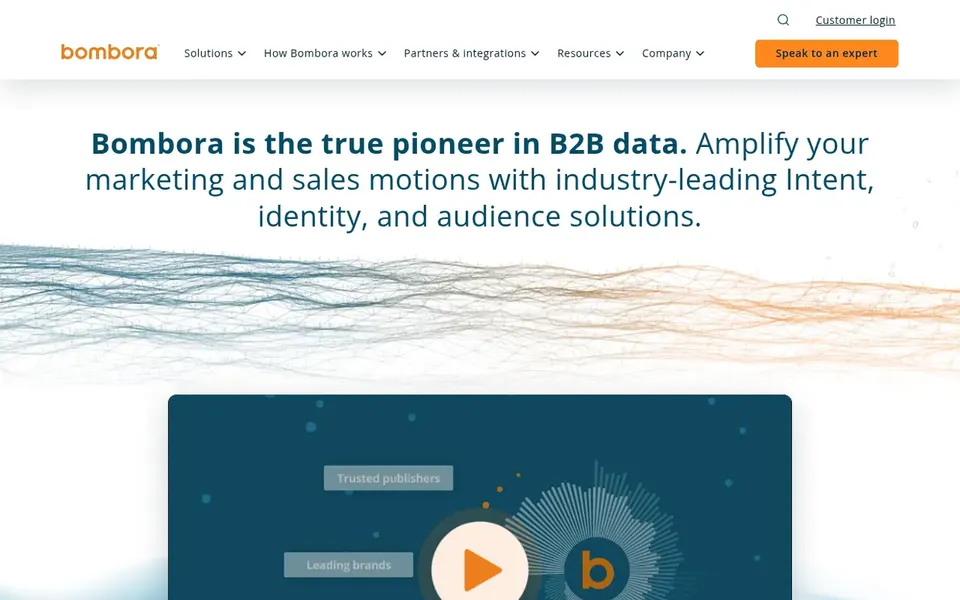
Bombora is designed for B2B intent and audience data. Organizations lacking a solid account data foundation may need a broader provider first, then add Bombora for signal coverage. Bombora describes itself as a B2B data provider for intent, audience and identity, aimed at enterprise brands and their agencies.
Downsides: Intent interpretation needs process.
Intent data is directional, not definitive, and turning signals into action needs clear scoring and routing rules. Instead of acting as a general contact directory, it concentrates on surfacing buying signals and audience segments that feed account-based targeting. Check the vendor site for Bombora pricing; none is listed in this comparison. Free options: Not stated. What Bombora does well: Intent data as core focus.
In short, Leadspace is for live GTM data intelligence. It suits enterprise revenue operations teams that require account data continuously refreshed and pushed into CRM and routing logic instead of sitting in a static list.
Drawbacks to consider: Needs clean CRM foundation.
More specifically, the system relies on well-structured CRM and marketing automation foundations to deliver its value. No starting price is listed for Leadspace here; confirm pricing on the vendor site. Free access: Not stated.
Dun & Bradstreet is built with verified firmographic and risk data in mind. Its homepage frames the offering around confident business decisions across the enterprise.
Points against: Data access can feel complicated.
Beyond that, the emphasis is on verified business data instead of sales outreach tooling, so teams wanting built-in sequencing may have to pair it with an engagement system. This comparison lists no price for Dun & Bradstreet; ask the vendor. Trial and free access: Not stated.
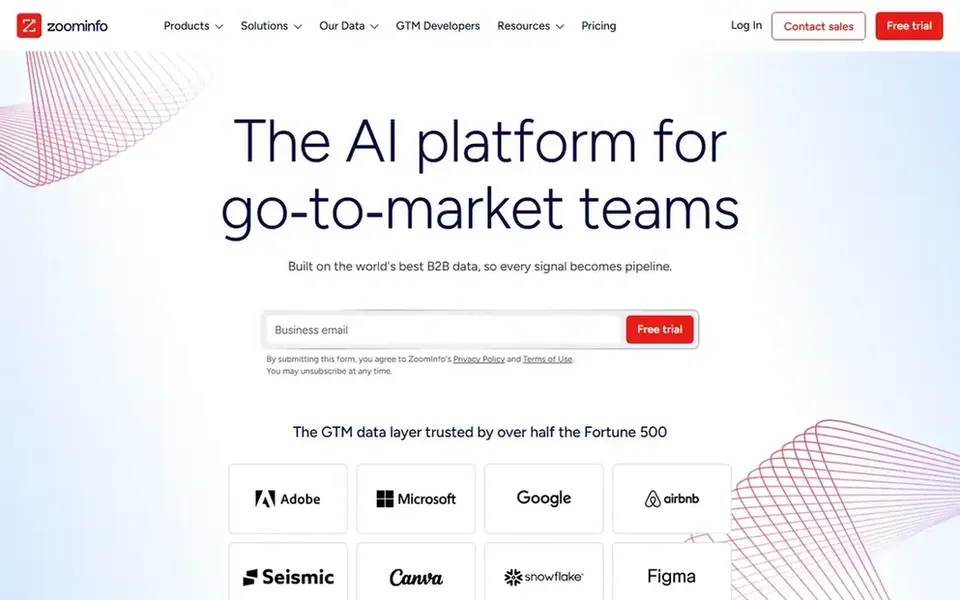
ZoomInfo was built for wide B2B data with GTM AI. ZoomInfo presents itself as a go-to-market system that pairs B2B data with marketing and sales AI. Its homepage flags lead generation, prospecting, market intelligence and account-based marketing in one environment.
The main drawbacks: Contract terms need careful review.
Coverage and accuracy can differ by region, industry and seniority level, so validation against your own records matters before a large rollout. As for the details, for enterprise teams that want contact and company data alongside workflow and intelligence tooling, it is a natural first stop and a typical anchor for ABM programs. Check the vendor site for ZoomInfo pricing; none is listed in this comparison. Free plan details: Free trial.
In short, Apollo.io is for connected data and execution system. Its homepage frames the product around the whole GTM motion rather than data alone. That makes it appealing to enterprise teams that want prospecting data and outreach workflows in one place, reducing the number of tools sales reps switch between.
Trade-offs to know: Enterprise governance needs review.
On top of that, consolidated systems can be capable on workflow but less specialized than dedicated data vendors for niche segments or intent. Also, enterprises with strict data governance and integration requirements should verify administrative controls and data handling before standardizing. No starting price is listed for Apollo.io here; confirm pricing on the vendor site. As for free access: Free trial.
Request quotes from Bombora, Apollo.io and the others; the list shows no fixed prices.
Run a trial of ZoomInfo and Apollo.io with real work before paying for a year; your own workflow is the best test.
Read the limits listed for Bombora first: not a full contact database.
A short pilot of ZoomInfo with your real workflow tells you more than a feature table.
Ask Leadspace about contract length, onboarding fees and user minimums before you sign.
How we picked
Each tool was reviewed on what its vendor publishes: price, plan limits, core features and stated drawbacks. We did not run hands-on tests. Treat prices as a snapshot: vendors change plans often, so check the vendor site for the figure that applies today. The sequence is a judgement call: typical use case first, then pricing transparency, then free access. Use the profiles to check fit. Keep it in mind while reading the 5 Account-Based data software for enterprise profiles on this page.
Every price and plan detail on this page comes from the vendors’ own websites. We did not run hands-on tests unless the text says so, and we do not publish star ratings or review scores. See how we score and our disclosure.
Keep your shortlist in one place
Paste prices, trial dates and notes from this guide into Ainotely, our AI note app. It files them into a topic and pulls out tasks like “cancel trial by Friday”. Free 7-day trial, no card needed.
How do intent data providers fit into ABM programs?
Intent providers like Bombora surface buying signals that help teams prioritize accounts already researching relevant topics. Intent is directional, so pair it with human judgment.
Does any tool for account-based data software for enterprise here have a free plan?
No tool in this list, Bombora and Apollo.io included, has a permanent free plan. ZoomInfo, Apollo.io offer a trial. Trials and quotes are the usual route, so plan a short evaluation period.
How are the tools for account-based data software for enterprise ordered?
The order follows typical fit for account-based data software for enterprise, with Bombora first and Apollo.io last, then price clarity and free access. It is editorial judgement, not a score, so another team could rank the tools differently.
Is Bombora the right pick for everyone comparing account-based data software for enterprise?
No single tool suits every team. Bombora comes first because it fits B2B intent and audience data, while Leadspace suits real-time GTM data intelligence and Dun & Bradstreet suits verified firmographic and risk data. Match the tool to your own size, budget and workflow before deciding.
Can I try these tools before paying?
Often, yes. ZoomInfo and Apollo.io offer a free trial. Use your own data and a real task during the test, and check what the free tier or trial limits before you rely on it. Pricing, free plan details and limits for all 5 tools in this Account-Based data software for enterprise roundup sit on the individual cards above.