Which Account Based Data Software Fits You? 6 Tools Compared

- 1
 ApolloSmall teams running account-based prospecting on a budgetVisit
- 2
 BomboraIntent data that plugs into your existing toolsVisit
- 3
 CognismEMEA-focused teams that require compliant contact dataVisit
- 4
 AdRoll ABMMid-market teams starting account-based advertisingVisit
- 5
 DemandScienceBuyer intelligence without a heavy product rolloutVisit
- Apollo sits first on this list: small teams running account-based prospecting on a budget.
- For enterprise ABM with predictive account intelligence, 6sense is worth a look.
- Apollo stands alone as the one tool in this list with a free plan.
- No starting price is shown for any of the 6 tools, Apollo and 6sense included, so plan time for sales calls.
- One limit worth knowing about AdRoll ABM: ad-centric, so intent and orchestration are thinner than 6sense.
Direct answer
If you need small teams running account-based prospecting on a budget, Apollo is the first tool to look at here. Alternatives: Bombora for intent data that plugs into your existing tools, and Cognism for EMEA-focused teams that require compliant contact data. Prices, free plans and limits for all 6 tools follow.
Quick comparison
| Product | Ideal for | Price from | Free version | |
|---|---|---|---|---|
| Apollo | Small teams running account-based prospecting on a budget | See website | Yes | Visit |
| Bombora | Intent data that plugs into your existing tools | See website | No | Visit |
| Cognism | EMEA-focused teams that require compliant contact data | See website | No | Visit |
| AdRoll ABM | Mid-market teams starting account-based advertising | See website | No | Visit |
| DemandScience | Buyer intelligence without a heavy product rollout | See website | No | Visit |
 6sense | Enterprise ABM with predictive account intelligence | See website | No | Visit |
Every option for account based data software explained
Choosing account based data software usually comes down to price, fit and limits. This Ainotely guide sets 6 tools side by side on those three points, with the facts kept short and checkable.
Apollo
Ideal for: Small teams running account-based prospecting on a budget
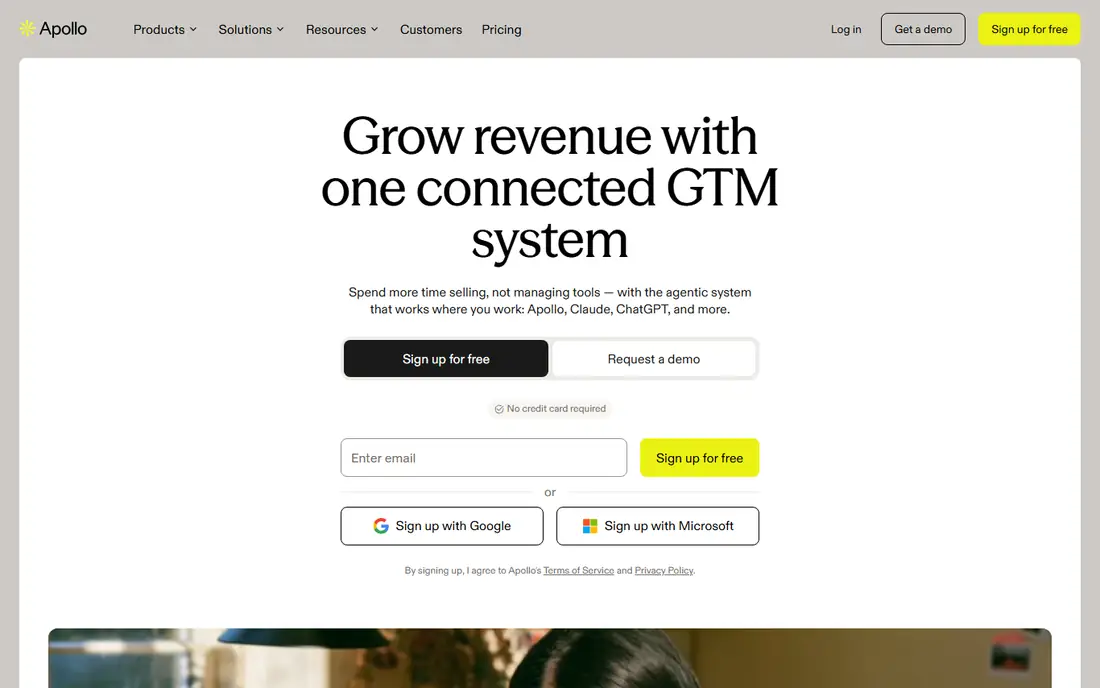
Apollo makes the most sense for small teams running account-based prospecting on a budget. Data accuracy is decent instead of best, and the credit model needs monitoring on bigger teams. With 240 million contacts and 30 million accounts, the database is large enough for most prospecting.
The built-in sequencing and dialing mean a small team can run outreach without a second tool. The trade-offs are real but proportionate to the price. This comparison lists no price for Apollo; ask the vendor. Apollo has a free plan.
Drawbacks to consider: Credit system adds usage math.
- Free Starter plan with no time limit
- Dialing in one tool
- Data quality trails ZoomInfo at the top end
Bombora
Ideal for: Intent data that plugs into your existing tools

Choose Bombora for intent data that plugs into your existing tools. Company Surge intent data tells you which accounts are researching topics related to your product, based on consumption across a co-op of B2B publishers. The key point: Bombora is a data company, not a product.
Drawbacks to consider: Pricing is customized and opaque.
More specifically, you pipe the data into Salesforce, HubSpot, 6sense, or your ad tools and act on it there. That makes Bombora a complement instead of a competitor to the products above. In daily use, if you need the system too, buy the system first. If your stack already has a place to activate intent, Bombora's data quality is the benchmark. Check the vendor site for Bombora pricing; none is listed in this comparison. No free plan comes with Bombora. Strengths: Data co-op model hands wide coverage.
- Activates inside your CRM, MAP
- Ad systems
- Topic taxonomy needs tuning to your business
Cognism
Ideal for: EMEA-focused teams that require compliant contact data

Cognism is built with EMEA-focused teams that require compliant contact data in mind. Cognism built its reputation on compliant B2B data for Europe, where GDPR makes contact data a legal question along with a quality question. On top of that, for a team selling into the UK and EU, that compliance posture matters more than raw database size.
Downsides: Intent features are newer than the contact data.
Pricing is quote-based. But if your ICP sits in Europe and your legal team reviews every data vendor, Cognism's compliance-first approach shortens the procurement conversation substantially. Beyond that, the product merges account and contact data with intent signals, phone-verified mobiles, and do-not-call coverage across European markets. Cognism shows no starting price here, so confirm the cost on the vendor site. Cognism does not include a free plan.
- Compliance-first positioning with capable GDPR coverage
- Aimed at European markets
- Quote-only pricing
AdRoll ABM
Ideal for: Mid-market teams starting account-based advertising
In short, AdRoll ABM is for mid-market teams starting account-based advertising. The product targets the mid-market gap: account-based advertising and buyer insights without the enterprise product commitment. It draws on a large identity graph to find high-fit accounts and runs multi-channel ad campaigns to engage them, with entry-level orchestration into CRM and sales workflows.
Where it is weaker: Pricing is not published.
This is the pragmatic pick when your ABM program starts with premium media. It will not replace 6sense's predictive modeling or Bombora's intent depth. This comparison lists no price for AdRoll ABM; ask the vendor. AdRoll ABM does not include a free plan.
- Account-based ads built on a proven ad product
- Buyer insights from billions of digital identities
- The rename from RollWorks needs a mention in your vendor review
DemandScience
Ideal for: Buyer intelligence without a heavy product rollout
DemandScience works best for buyer intelligence without a heavy product rollout. DemandScience is the new name for the company long known as Terminus, one of the original ABM products. Pricing is customized, so get a scoped proposal before comparing.
Watch-outs: The rebrand from Terminus may confuse long-time buyers.
The rebrand came with a repositioning: rather than selling product licenses that sit half-used, DemandScience sells buyer intelligence plus the execution to turn it into pipeline, including content syndication, programmatic advertising, and web personalization run as services. If you want intelligence and someone to run the programs, it is efficient. Pricing for DemandScience is not stated here, so ask the vendor for current figures. DemandScience has no permanent free option.
- No product license or long implementation
- Merges intent data with done-for-you demand programs
- Pricing is customized
6sense
Ideal for: Enterprise ABM with predictive account intelligence
6sense is a good fit for enterprise ABM with predictive account intelligence. 6sense also fits best when you already have clean CRM data and real website traffic, since its models need signal volume to be accurate. On top of that, the cost is enterprise in every sense.
The main drawbacks: Implementation takes months, not weeks.
Highlights: Predictive intent modeling is among the strongest in the category. Small teams should look at Apollo or AdRoll ABM instead. Also, the newer conversational AI layer answers account research questions in plain language, grounded in the buyer's signal history. 6sense defined the modern ABM system category, and it still sets the pace. 6sense shows no starting price here, so confirm the cost on the vendor site. 6sense has no free plan.
- Orchestration across ads, email
- Sales workflows
- Enterprise pricing with no public numbers
Our selection method
For each of the 6 tools we noted price, free plan or trial, fit for account based data software and the main limit, using vendor pages and documentation. Seat minimums, billing terms and add-ons can move the real cost, so the starting prices here are a guide and not a quote. Position on the page reflects fit for a typical buyer first, with price clarity and free access breaking ties. Treat it as a guide, not a ruling.
Pre-purchase checklist
- Ask each vendor, from Apollo to 6sense, for a written quote; none of them publishes a starting price.
- Look at the free plan from Apollo closely: its caps decide whether it is usable for real work.
- Read the limits listed for Apollo first: data quality trails ZoomInfo at the top end.
- Look at the help docs and support options for Cognism before you commit.
- Ask Apollo about contract length, onboarding fees and user minimums before you sign.
Frequently asked questions
How are the tools for account based data software ordered?
Apollo sits first and 6sense last because the order follows typical fit for account based data software, then price clarity and free access. It is a judgement call, so read each profile for fit and limits.
Can I try these options before paying?
Often, yes. Apollo has a free plan. Use your own data and a real task during the test, and check what the free tier or trial limits before you rely on it.
Which options for account based data software have a free plan?
Apollo is the only tool in this list with a free plan. Free plans usually cap users, projects or features, so check the limits on the vendor page.
Is Apollo the right pick for everyone comparing account based data software?
No single tool suits every team. Apollo comes first because it fits small teams running account-based prospecting on a budget, while Bombora suits intent data that plugs into your existing tools and Cognism suits EMEA-focused teams that need compliant contact data. Match the tool to your own size, budget and workflow before deciding.