Best Accountability Apps in 2026: 8 Apps Compared

- Beeminder and StickK suit people who follow through best when money or a public record is on the line.
- Focusmate and Flown suit people who focus better with a live partner or a guided work session.
- Habitica and GoalsWon suit people who stay on track with points, streaks, and friendly competition.
- Forfeit and Boss as a Service add a human check-in, which helps when self-tracking alone has not worked.
Quick comparison
| Product | Ideal for | Price from | Free version | |
|---|---|---|---|---|
 Beeminder | Data-driven goals with stakes | See website | Yes | Visit |
 Focusmate | Live virtual coworking sessions | $8 per month | Yes | Visit |
 Habitica | Gamified habits and tasks | See website | Yes | Visit |
 StickK | Commitment contracts with stakes | See website | Yes | Visit |
 Forfeit | Photo-proof habit checks | See website | Yes | Visit |
 Flown | Guided deep-work sessions | See website | Yes | Visit |
 GoalsWon | Goal competitions with friends | See website | Yes | Visit |
 Boss as a Service | Human accountability check-ins | $25 per month | No | Visit |
The best accountability apps
We compared official feature pages, pricing pages, app listings, and support pages to find accountability tools that work in October 2026 and suit different styles of follow-through.
Beeminder
Ideal for: Data-driven goals with stakes
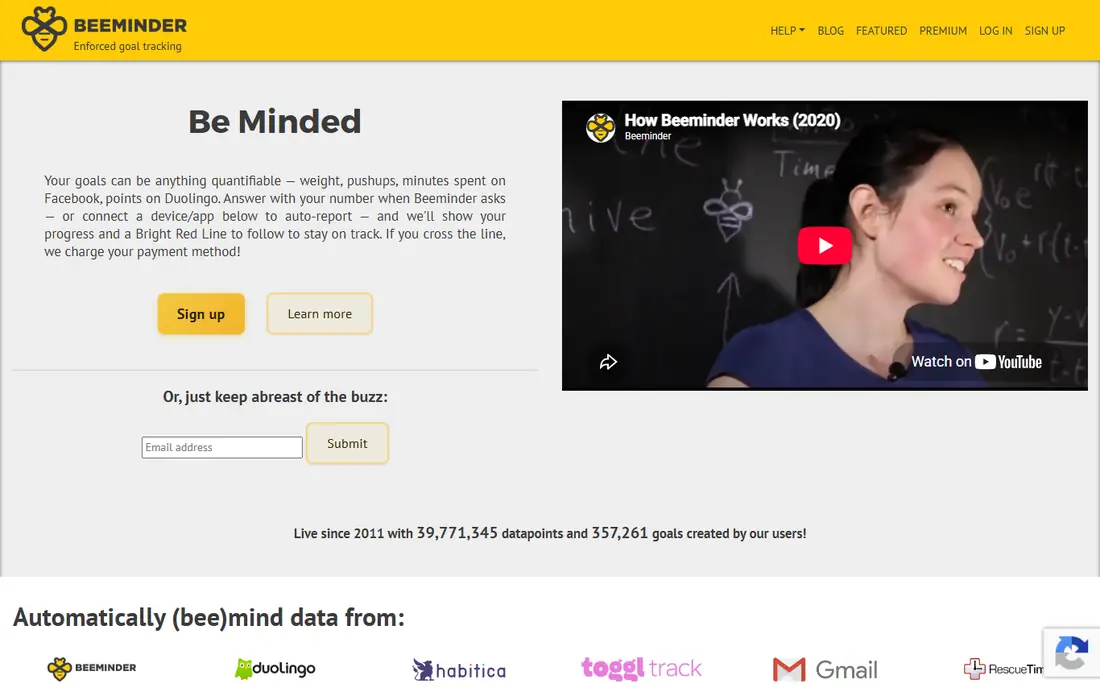
Beeminder turns a goal into a graph with a bright line you must stay on, which makes progress visible day by day. You can track weight, workouts, writing, study time, or almost any number, and many goals update automatically from connected apps and devices. That automatic tracking removes the daily chore of logging, which is where many habit systems break down.
The distinctive part is the pledge. If you go off track, you pay an amount you set, and that amount can rise if you keep missing. That works well for people who respond to real consequences, but it can feel harsh if you set a pledge too high at the start. We would start with a small pledge and a modest goal, then raise the stakes only after a few good weeks.
- Clear graphs and deadlines
- Automatic data from many apps
- Flexible goal types
- Learning curve for new users
- Stakes can feel harsh if set too high
Focusmate
Ideal for: Live virtual coworking sessions
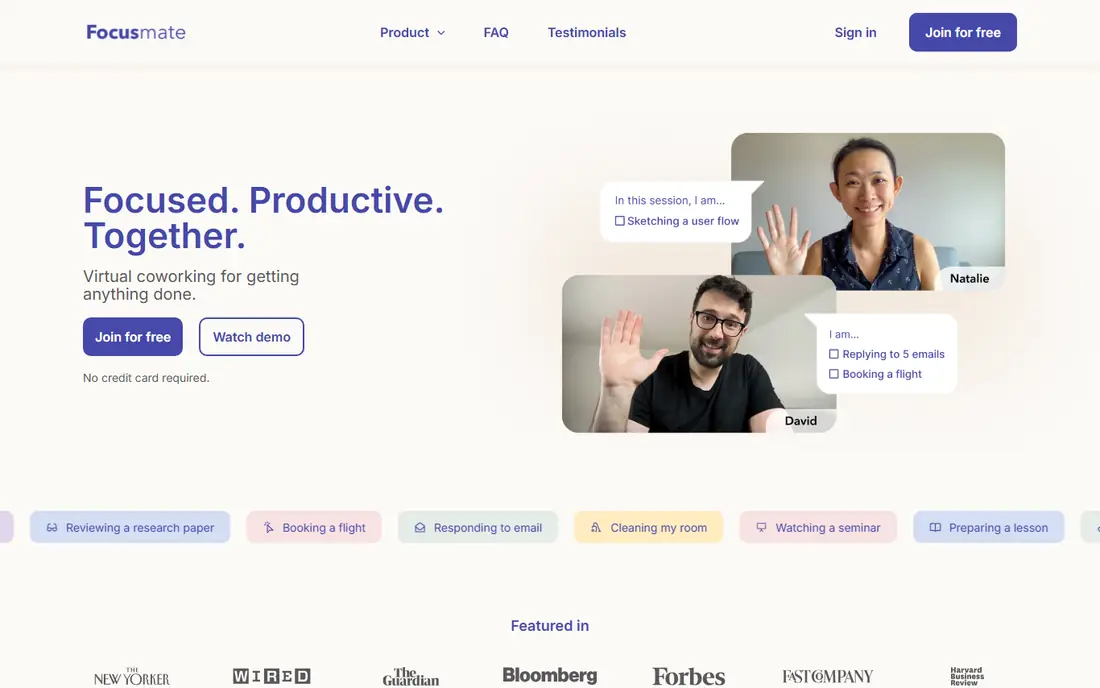
Focusmate pairs you with another person for a short virtual work session. You state your goal at the start, work with cameras on, and report back at the end. That simple structure helps a lot of people start tasks they have been putting off, because someone else is present and expecting a result. Sessions run for 25, 50, or 75 minutes, so you can fit one into a lunch break or a full morning block.
The free plan includes up to three sessions each week, while the Plus plan costs 8 dollars per month billed yearly or 12 dollars per month billed monthly. The main limit is that you need to be comfortable working on camera with a stranger. If that social pressure helps you focus, Focusmate is our pick for live accountability.
- Live partners for 25, 50, and 75 minute sessions
- Free sessions each week
- Simple structure
- Needs a camera-on session
- Partner quality varies
- Time zones matter for booking
Habitica
Ideal for: Gamified habits and tasks
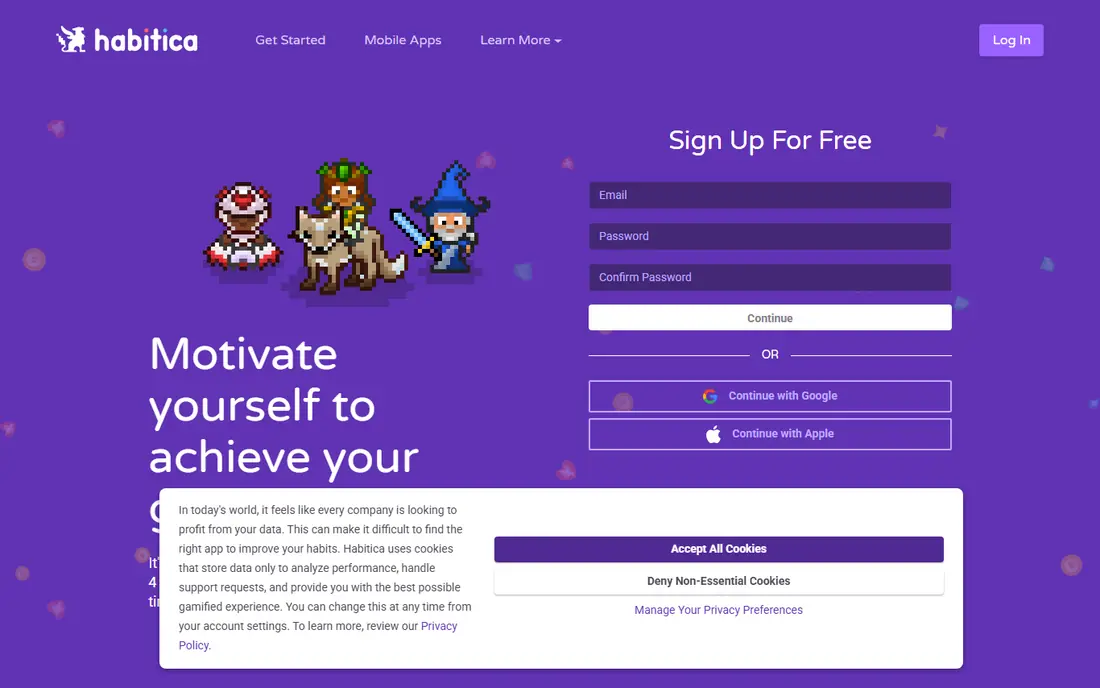
Habitica turns daily habits, to-dos, and longer tasks into a role-playing game, where your character gains experience and items for completing tasks and loses health for missing dailies. That playful layer works well for people who find plain checklists dull, and the party system lets friends tackle quests together. You can also join challenges and guilds for extra structure around fitness, study, or work.
The game can become a distraction if you spend more time on rewards than on the habits themselves. Setting up a long task list also takes a while. Still, for people who enjoy games and social motivation, Habitica is the most fun accountability app in this list, and its free plan covers the core features.
- Turns habits into a role-playing game
- Parties and quests
- Strong free plan
- Game layer can distract
- Setup takes time for large task lists
StickK
Ideal for: Commitment contracts with stakes
StickK lets you write a commitment contract with a goal, a deadline, and a referee who checks your reports. You can add money at stake, and if you fail, the money can go to a charity, a friend, or even an organization you dislike, which sharpens the incentive. That design suits one-off goals with a clear finish line, such as quitting a habit, finishing a course, or saving a set amount.
The weakness is tracking. For many goals, StickK relies on your own reports and your referee, rather than automatic data. That makes a trustworthy referee important. If you want a simple, flexible contract and you have someone willing to check in honestly, StickK is a strong, low-cost choice.
- Simple commitment contracts
- Referee option
- Money can go to charity or a foe
- No built-in tracking for many goals
- Relies on honest self-reporting
Forfeit
Ideal for: Photo-proof habit checks
Forfeit asks you to prove a habit with photo or location evidence by a deadline you set, or pay a forfeit. That proof step solves a common problem with habit apps, where it is easy to tick a box without doing the work. A gym check-in, a photo of a finished workout, or a screenshot of a study session all count, depending on the habit you set.
No proof system is perfect, and a determined user can stage a photo, so the tool works best when you set honest rules for yourself. The app is newer and smaller than Beeminder or Habitica, so its community features are thinner. For habits where proof matters, though, Forfeit is our pick for the most direct check.
- Photo or location proof for habits
- Flexible forfeits
- Works for many habit types
- Proof can be gamed
- Smaller community than older apps
Flown
Ideal for: Guided deep-work sessions
Flown runs facilitated deep-work sessions led by a host, with time for planning, focused work, and reflection. That guidance helps people who like the Focusmate idea but want more structure than a one-to-one session. The sessions also build a routine, since you can join at regular times and work alongside a familiar group.
The schedule is the main limit, because live sessions run at set times that may not suit night owls or shift workers. Full access also requires a paid plan beyond the free tier. If you want guided focus rather than a silent coworking call, Flown is worth trying for a week to see if its session times fit your day.
- Facilitated focus sessions
- Structured day planning
- Supportive community
- Session times may not fit every schedule
- Paid plan needed for full access
GoalsWon
Ideal for: Goal competitions with friends
GoalsWon turns goals into friendly competitions, where you and others check in daily and track who keeps their streak alive. That social pressure is gentler than a money stake but stronger than a private checklist, and it works for fitness, study, language learning, and work habits. You can set your own goals rather than following a fixed program, which keeps the app flexible.
The catch is that it works best with people you know or an active group. On your own, the competition layer adds little. If you can recruit two or three friends with similar goals, GoalsWon gives you a light, social way to stay on track without the harshness of financial stakes.
- Friendly goal competitions
- Daily check-ins
- Works for fitness, study, and work goals
- Needs friends or a group to shine
- Smaller user base
Boss as a Service
Ideal for: Human accountability check-ins
Boss as a Service pairs you with a real human who checks your daily tasks by message and follows up when you fall behind. Plans start at 25 dollars per month, with higher tiers at 100 and 200 dollars per month for more contact, and a 30-day money-back guarantee is stated on the site. That human element is the point: a message from a real person is harder to ignore than a notification from an app.
The service is less automated than Beeminder or Habitica, and the boss style will not suit everyone, so the guarantee matters. Still, if self-tracking apps have failed you before, a human check-in is often the missing piece. We would try the Starter plan first and judge it by whether your completion rate rises in the first month.
- Real human boss checks your tasks
- Daily messages
- Clear plans from $25 per month
- No free plan
- Messaging style may not suit everyone
- Less automation
How we picked these
We compared official feature pages, pricing pages, app listings, and support pages for tools that were live and usable in October 2026. We favored tools with a clear accountability mechanism, whether stakes, live sessions, proof, or human check-ins, rather than plain to-do lists. We left out tools whose sites described a different product or that had no clear accountability feature.
What to check before you choose
Start with what has worked for you before. If social pressure helps, pick a live session tool like Focusmate or Flown. If consequences help, pick a stakes tool like Beeminder or StickK. If fun and friends help, pick Habitica or GoalsWon. Matching the tool to your own pattern matters more than picking the most popular app.
Next, set a goal you can actually keep for two weeks. A pledge that is too high, a session schedule you cannot keep, or a habit list that is too long will all break the system early. Start small, prove the routine, and then raise the difficulty.
Finally, check the cost and the exit terms. Free plans cover most tools here, but paid tiers add sessions or human contact. Try the free version first, and for a paid human service, confirm the refund terms before you commit to a higher tier.
Frequently asked questions
What is the best accountability app overall?
Beeminder is our pick for data-driven goals, while Focusmate is our pick for live work sessions. Habitica suits people who like games, and Boss as a Service suits people who want a human check-in. The best app depends on whether stakes, people, or play motivate you most.
Is there a free accountability app?
Yes, Beeminder, Focusmate, Habitica, StickK, Forfeit, Flown, and GoalsWon all have free plans or free tiers. Focusmate's free plan covers up to three sessions each week. Boss as a Service is the only app here with no free plan.
Do accountability apps with money stakes work?
They work well for people who respond to loss, because a missed goal has a real cost. They work less well if the pledge is so high that it causes stress, or if the goal itself was unrealistic. Start with a small stake and a goal you can keep for two weeks.
What is the best accountability app for studying?
Focusmate and Flown suit study best, since live sessions create a set time to work. Habitica also works for students who like streaks and quests. Pair a session tool with a simple task list so each session has a clear target.
Can I use an accountability app with friends?
Yes, Habitica parties, GoalsWon competitions, and StickK referees all add a social layer. Focusmate and Flown add live partners even if your friends do not join. Pick the social style you will actually use, since a group you ignore adds nothing.