Best Accounting Software For Ecommerce Business in 2026: 8 Picks Compared

- 1
 QuickBooksecommerce sellers with broad needsVisit
- 2
 Xeroclean ecommerce accountingVisit
- 3
 Zoho Booksbudget ecommerce accountingVisit
- 4
 FreshBookssmall direct sellersVisit
- 5
 Wavevery small ecommerce budgetsVisit
- QuickBooks suits many ecommerce sellers who want broad integrations and accountant support.
- Xero suits sellers who want clean bank feeds and a large app ecosystem.
- Zoho Books suits sellers already using Zoho or Shopify on a budget.
- A2X and Link My Books solve the payout reconciliation problem for marketplace sellers.
- FreshBooks and Wave suit smaller sellers with simpler needs.
Quick comparison
| Product | Ideal for | Price from | Free version | |
|---|---|---|---|---|
| QuickBooks | ecommerce sellers with broad needs | See website | Free trial | Visit |
| Xero | clean ecommerce accounting | See website | Free trial | Visit |
| Zoho Books | budget ecommerce accounting | See website | Yes | Visit |
| FreshBooks | small direct sellers | See website | Free trial | Visit |
| Wave | very small ecommerce budgets | See website | Yes | Visit |
 Sage | established small businesses | See website | Free trial | Visit |
 A2X | marketplace payout reconciliation | See website | Free trial | Visit |
 Link My Books | Amazon and marketplace bookkeeping | See website | Free trial | Visit |
The best accounting software for ecommerce businesses
We compared sales channel connections, payout reconciliation, inventory links, tax handling and pricing from official pages and public reviews. Ecommerce accounting is harder than service accounting because payouts, fees, refunds and sales tax arrive in different pieces. This is general information, not tax or financial advice.
QuickBooks
Ideal for: ecommerce sellers with broad needs

QuickBooks is our pick for ecommerce sellers with broad needs. QuickBooks is the safe default many ecommerce accountants already use. We looked at its official feature page, pricing page and public reviews, and the overall picture was consistent with that strength.
What stood out to us was store and marketplace integrations. That matters in daily use, because a tool that is strong on paper still has to feel good when you use it every week. Marketplace sellers should still budget for a reconciliation tool. Check the official pricing page before you pay, since plans, limits and included features change over time.
The catch is pricing rises with features. If that trade-off is acceptable for your needs, QuickBooks is a solid choice. If it is not, another option in this list may fit better, so compare the next two entries before you decide.
- Store and marketplace integrations
- Invoicing
- Reports
- Pricing rises with features
- Payout reconciliation may need an add-on
Xero
Ideal for: clean ecommerce accounting

For clean ecommerce accounting, Xero is a strong choice. Xero gives ecommerce sellers a clean ledger with many connected apps. We looked at its official feature page, pricing page and public reviews, and the overall picture was consistent with that strength.
What stood out to us was bank feeds. That matters in daily use, because a tool that is strong on paper still has to feel good when you use it every week. Check inventory and tax features for your plan before switching. Check the official pricing page before you pay, since plans, limits and included features change over time.
The catch is learning curve for new users. If that trade-off is acceptable for your needs, Xero is a solid choice. If it is not, another option in this list may fit better, so compare the next two entries before you decide.
- Bank feeds
- Integrations
- Inventory on some plans
- Learning curve for new users
- Reconciliation add-ons may be needed
Zoho Books
Ideal for: budget ecommerce accounting
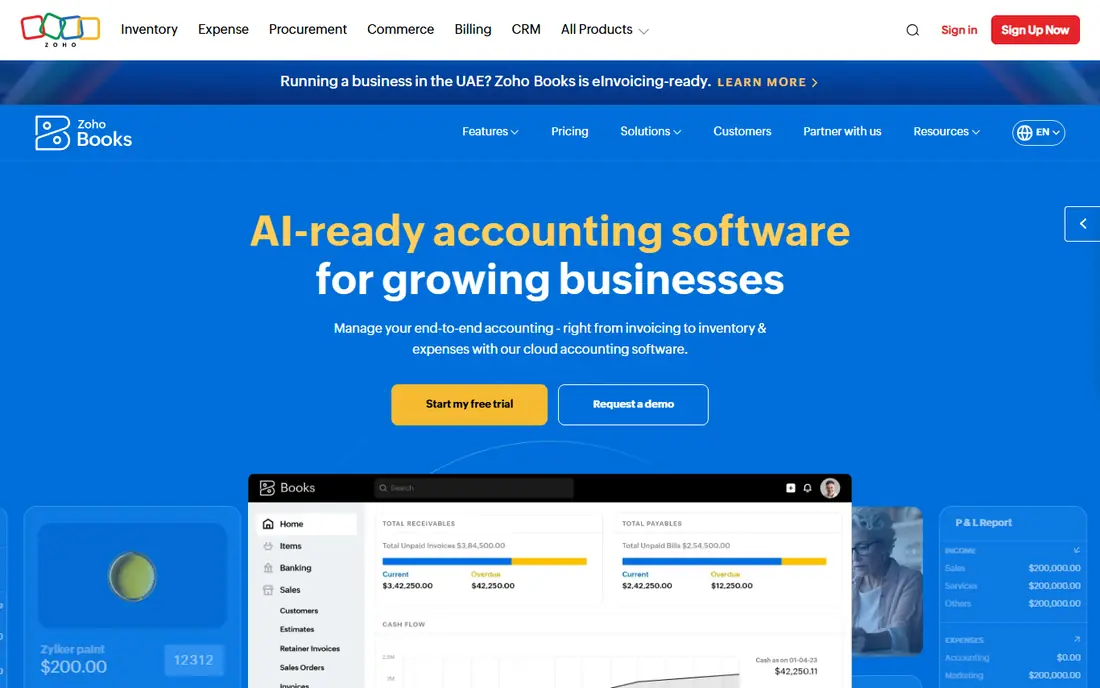
Zoho Books stands out for budget ecommerce accounting. Zoho Books is good value for smaller ecommerce sellers. We looked at its official feature page, pricing page and public reviews, and the overall picture was consistent with that strength.
What stood out to us was invoicing. That matters in daily use, because a tool that is strong on paper still has to feel good when you use it every week. Larger sellers may need the ecosystem depth of QuickBooks or Xero. Check the official pricing page before you pay, since plans, limits and included features change over time.
The catch is free tier limits. If that trade-off is acceptable for your needs, Zoho Books is a solid choice. If it is not, another option in this list may fit better, so compare the next two entries before you decide.
- Invoicing
- Expenses
- Store integrations
- Free tier limits
- Advanced ecommerce features vary
FreshBooks
Ideal for: small direct sellers
If you need small direct sellers, start with FreshBooks. FreshBooks suits sellers who invoice directly and have simple books. We looked at its official feature page, pricing page and public reviews, and the overall picture was consistent with that strength.
What stood out to us was invoicing. That matters in daily use, because a tool that is strong on paper still has to feel good when you use it every week. Marketplace-heavy sellers should pair it with a reconciliation tool. Check the official pricing page before you pay, since plans, limits and included features change over time.
The catch is marketplace reconciliation is lighter than specialist tools. If that trade-off is acceptable for your needs, FreshBooks is a solid choice. If it is not, another option in this list may fit better, so compare the next two entries before you decide.
- Invoicing
- Payments
- Expense tracking
- Marketplace reconciliation is lighter than specialist tools
Wave
Ideal for: very small ecommerce budgets
Wave fits readers who want very small ecommerce budgets. Wave is a free starting point for very small sellers. We looked at its official feature page, pricing page and public reviews, and the overall picture was consistent with that strength.
What stood out to us was free accounting and invoicing. That matters in daily use, because a tool that is strong on paper still has to feel good when you use it every week. Growing sellers will likely need QuickBooks, Xero or a reconciliation add-on. Check the official pricing page before you pay, since plans, limits and included features change over time.
The catch is ecommerce integrations are lighter. If that trade-off is acceptable for your needs, Wave is a solid choice. If it is not, another option in this list may fit better, so compare the next two entries before you decide.
- Free accounting and invoicing
- Bank connections
- Ecommerce integrations are lighter
- Paid add-ons for payments and payroll
Sage
Ideal for: established small businesses
For many readers, Sage is the practical pick for established small businesses. Sage suits established businesses that already use Sage products. We looked at its official feature page, pricing page and public reviews, and the overall picture was consistent with that strength.
What stood out to us was accounting. That matters in daily use, because a tool that is strong on paper still has to feel good when you use it every week. Check its store integrations for your exact channels. Check the official pricing page before you pay, since plans, limits and included features change over time.
The catch is interface and plan structure vary by region. If that trade-off is acceptable for your needs, Sage is a solid choice. If it is not, another option in this list may fit better, so compare the next two entries before you decide.
- Accounting
- Invoicing
- Payroll options
- Interface and plan structure vary by region
- Ecommerce depth varies
A2X
Ideal for: marketplace payout reconciliation
A2X earns its place here for marketplace payout reconciliation. A2X solves the messy payout problem for marketplace sellers. We looked at its official feature page, pricing page and public reviews, and the overall picture was consistent with that strength.
What stood out to us was amazon and Shopify payout reconciliation. That matters in daily use, because a tool that is strong on paper still has to feel good when you use it every week. It is an add-on cost on top of QuickBooks or Xero. Check the official pricing page before you pay, since plans, limits and included features change over time.
The catch is works alongside accounting software, not as a standalone ledger. If that trade-off is acceptable for your needs, A2X is a solid choice. If it is not, another option in this list may fit better, so compare the next two entries before you decide.
- Amazon and Shopify payout reconciliation
- Clean journal entries
- Works alongside accounting software, not as a standalone ledger
Link My Books
Ideal for: Amazon and marketplace bookkeeping
When Amazon and marketplace bookkeeping is the priority, Link My Books deserves a close look. Link My Books breaks marketplace payouts into usable accounting data. We looked at its official feature page, pricing page and public reviews, and the overall picture was consistent with that strength.
What stood out to us was marketplace payout breakdowns. That matters in daily use, because a tool that is strong on paper still has to feel good when you use it every week. Pair it with QuickBooks or Xero for a complete set of books. Check the official pricing page before you pay, since plans, limits and included features change over time.
The catch is channel coverage needs checking. If that trade-off is acceptable for your needs, Link My Books is a solid choice. If it is not, another option in this list may fit better, so compare the next two entries before you decide.
- Marketplace payout breakdowns
- Tax summaries
- Accounting sync
- Channel coverage needs checking
- Works with accounting software
How we picked these
We compared official feature pages, pricing pages, app store listings, privacy policies and public reviews for each option in this list. We checked that each product exists and works in October 2026, that it truly fits the topic, and that its official homepage loads. We did not claim hands-on testing that did not happen, and we avoided products that did not fit, even when they were well known. Where a price or free tier could not be verified from the vendor own site, we wrote See website rather than guessing.
How to choose accounting software for ecommerce
Start with where you sell. A tool that connects cleanly to your store and marketplaces will save more time than any single report. Check how payouts are reconciled: marketplace payouts combine many orders, fees and refunds, and tools like A2X exist for that reason. Confirm sales tax handling for your states or countries, and whether inventory tracking is included or needs an add-on. Test a real month of data, including refunds and fees, before you commit. Finally, confirm your accountant can access the books and that exports are easy if you switch later.
Frequently asked questions
What is the best accounting software for ecommerce?
QuickBooks and Xero are the most common picks, with A2X or Link My Books added for marketplace payout reconciliation.
What is the best bookkeeping software for ecommerce?
For marketplace sellers, QuickBooks or Xero plus A2X or Link My Books is a strong combination. For direct store sellers, QuickBooks, Xero or Zoho Books may be enough alone.
Do I need A2X or Link My Books?
If you sell on Amazon, Shopify or similar channels, these tools reconcile payouts into clean accounting entries. Without them, manual payout matching takes much longer.
Can accounting software handle sales tax?
Many tools help track sales tax, but rules vary by location and channel. Confirm the tax features for your plan and consider professional advice for complex cases.
Is Xero or QuickBooks better for ecommerce?
Both work well. QuickBooks has broader US accountant support, while Xero has a clean interface and strong app ecosystem. Test both with your own sales data.