Best Accounting Software for VAT Returns in 2026: 8 Tools Compared

- 1
 XeroSmall business VAT returnsVisit
- 2
 QuickBooks OnlineVAT and general accountingVisit
- 3
 SageUK VAT and payrollVisit
- 4
 FreeAgentFreelancers and small companiesVisit
- 5
 Zoho BooksAffordable VAT accountingVisit
- Xero, QuickBooks Online, and Sage lead for UK VAT returns, with Making Tax Digital support and VAT scheme handling built in.
- FreeAgent suits freelancers and small limited companies, while Zoho Books and KashFlow offer affordable VAT handling for smaller firms.
- Clear Books and FreshBooks cover simpler VAT needs, but check scheme support and MTD bridging before committing.
- VAT software must connect directly to HMRC for Making Tax Digital, so confirm MTD compatibility, not just VAT calculation, before buying.
Quick comparison
| Product | Ideal for | Price from | Free version | |
|---|---|---|---|---|
| Xero | Small business VAT returns | See website | Free trial | Visit |
| QuickBooks Online | VAT and general accounting | See website | Free trial | Visit |
| Sage | UK VAT and payroll | See website | Free trial | Visit |
| FreeAgent | Freelancers and small companies | See website | Free trial | Visit |
| Zoho Books | Affordable VAT accounting | See website | Free trial | Visit |
 KashFlow | Simple UK VAT software | See website | Free trial | Visit |
 Clear Books | Small business VAT returns | See website | Free trial | Visit |
 FreshBooks | Simple invoicing with VAT | See website | Free trial | Visit |
The best accounting software for vat returns
Accounting software for VAT returns should calculate VAT correctly, handle the VAT scheme you use, and submit returns directly to HMRC under Making Tax Digital rules, without spreadsheets or manual bridging. For UK businesses, MTD compatibility is essential, while businesses elsewhere need local VAT or sales tax handling. We compared official feature pages, pricing pages, and public reviews, focusing on VAT schemes, MTD submission, and ease of use.
This is not tax advice. VAT rules and schemes are complex, and you should check your VAT position with a qualified accountant or HMRC guidance before filing.
Xero
Ideal for: Small business VAT returns
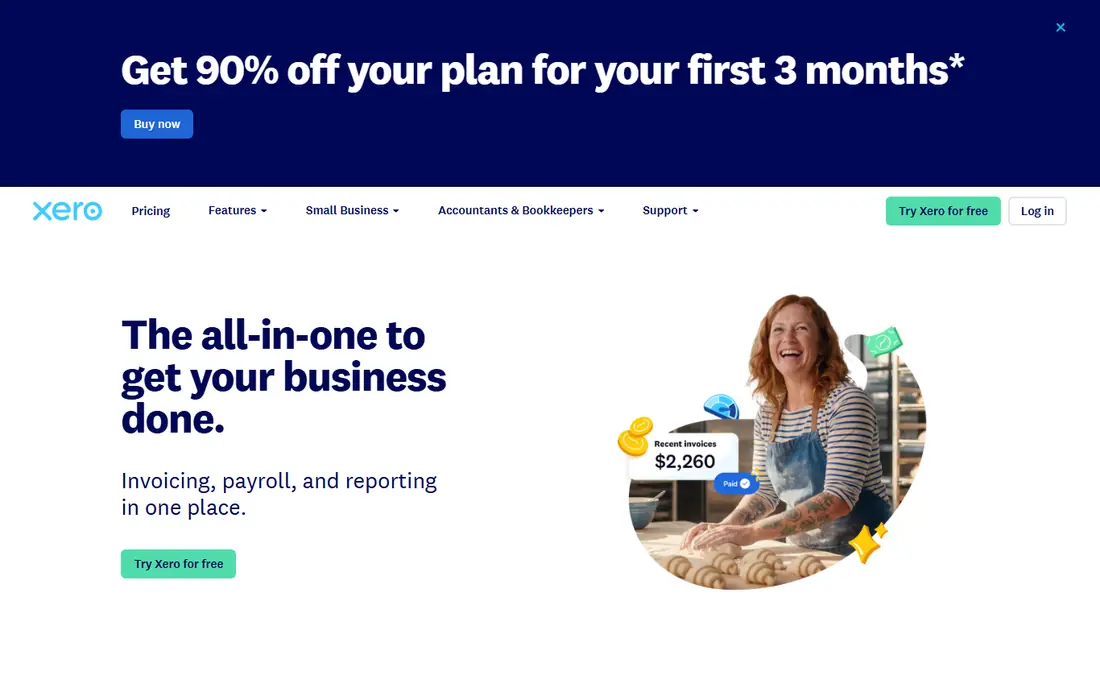
Xero is a leading choice for UK small businesses handling VAT, with direct MTD submission to HMRC, support for standard, flat rate, and cash accounting VAT schemes, and VAT reports that show what is owed and why. Bank feeds and invoice matching reduce manual data entry, and accountants can access the same books, which simplifies year-end work. For VAT-registered businesses, that combination is hard to beat.
Pricing rises with plan features, and payroll may need an add-on depending on plan and region. For most UK VAT-registered small businesses, Xero is our pick, and it is widely supported by accountants.
- Strong MTD VAT submission
- Handles standard, flat rate, and cash accounting schemes
- Good bank feeds
- Pricing scales with features
- Payroll is a separate add-on in some plans
QuickBooks Online
Ideal for: VAT and general accounting

QuickBooks Online covers VAT returns with MTD submission, VAT scheme support, and reports that break down VAT by rate and transaction, alongside invoicing, expenses, payroll add-ons, and bank feeds. Automation for recurring invoices and expense categorization saves time, and its large accountant network means help is easy to find. That breadth suits businesses that want accounting and VAT in one system.
Plan differences matter: VAT features and user counts vary, so check the tier you will actually use. For businesses that want a widely supported, full-featured accounting tool with VAT, QuickBooks Online is a strong choice.
- MTD VAT submission
- Good VAT reports and automation
- Broad accountant support
- Feature depth varies by plan
- Pricing rises with users and features
Sage
Ideal for: UK VAT and payroll
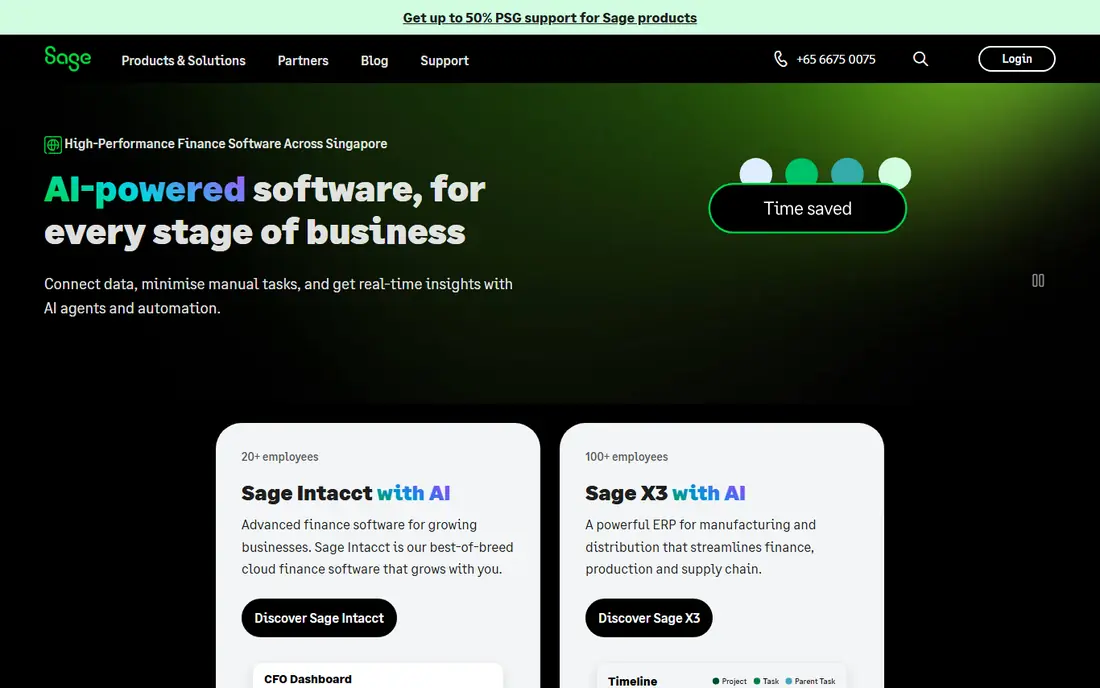
Sage has a long history in UK accounting, and its cloud products cover VAT returns with MTD submission, payroll integration, and reporting for growing businesses. That UK focus shows in VAT scheme handling, payroll, and support for UK rules, which matters for businesses with employees as well as VAT. Sage's product range also scales from small business to larger firms.
The interface feels traditional in places compared with Xero or FreeAgent, and product lines and pricing need care to compare. For UK businesses that want VAT plus payroll from a long-established vendor, Sage is a reliable choice.
- Long UK accounting history
- MTD VAT and payroll integration
- Good for growing firms
- Interface feels traditional in places
- Pricing varies by product line
FreeAgent
Ideal for: Freelancers and small companies
FreeAgent is designed for freelancers, contractors, and small limited companies, with VAT returns, MTD submission, invoicing, expenses, and a clear timeline showing what is due and when. Its simplicity is the appeal: VAT handling is presented in plain terms, and the dashboard keeps tax deadlines visible. That suits small businesses without a finance team.
Larger firms with complex inventory, multi-entity, or payroll needs may outgrow FreeAgent. For freelancers and small companies that need VAT done simply, FreeAgent is an excellent pick.
- Designed for freelancers and small limited companies
- MTD VAT submission
- Clear VAT timeline
- Less suited to larger firms with complex stock or payroll
- Feature range is narrower
Zoho Books
Ideal for: Affordable VAT accounting
Zoho Books offers accounting with VAT handling, invoicing, expenses, and bank feeds at affordable prices, with MTD support for UK businesses and integration across the Zoho suite for CRM, inventory, and payroll. That value suits small businesses that want solid VAT software without Xero or QuickBooks pricing, especially if they already use other Zoho tools.
UK-specific VAT depth and support should be checked against your scheme and filing needs during a trial. For affordable VAT accounting, Zoho Books is a strong value choice.
- Affordable plans
- VAT handling and MTD support
- Zoho ecosystem integration
- UK-specific depth varies by plan
- Support response times vary
KashFlow
Ideal for: Simple UK VAT software
KashFlow is a UK-focused accounting tool built for small businesses that want VAT returns, invoicing, and expenses without complexity. MTD submission is included, and the interface is approachable for owners who are not accountants. That simplicity helps businesses that file VAT themselves and want a clear, low-friction tool.
Feature range is narrower than Xero or Sage, and payroll sits separately. For small UK businesses that value simplicity for VAT, KashFlow is a practical choice.
- Simple UK-focused accounting
- VAT returns and MTD
- Easy for non-accountants
- Smaller feature range than Xero or Sage
- Payroll is separate
Clear Books
Ideal for: Small business VAT returns
Clear Books is a UK accounting platform with VAT returns, MTD submission, invoicing, expenses, and bank feeds, aimed at small businesses and accountants. Its VAT reporting is clear, and pricing is affordable compared with larger rivals. That combination suits small firms that want UK VAT handling without paying for features they will not use.
The ecosystem and integration range are smaller than Xero or QuickBooks, so businesses with many connected tools should check compatibility. For straightforward UK VAT returns, Clear Books is a good value option.
- UK VAT returns with MTD
- Affordable plans
- Clear VAT reporting
- Smaller vendor and ecosystem than Xero
- Integrations are fewer
FreshBooks
Ideal for: Simple invoicing with VAT
FreshBooks is known for easy invoicing, time tracking, and expenses for service businesses, with VAT support on invoices and reporting that helps with returns. Its simplicity suits freelancers and agencies that invoice clients and need VAT handled on those invoices without a full accounting suite. Client-facing invoices look polished, and payment collection is built in.
VAT return depth is lighter than UK specialists such as Xero, Sage, or FreeAgent, so businesses with complex VAT schemes should check filing support carefully. For service businesses with simple VAT needs, FreshBooks is an approachable choice.
- Easy invoicing and expenses
- VAT support on invoices
- Good for service businesses
- VAT return depth is lighter than UK specialists
- Accounting features are simpler
How we picked these
We compared official feature pages, pricing pages, and public reviews for accounting software that supports VAT returns, with emphasis on UK Making Tax Digital submission, VAT scheme support, and VAT reporting. General accounting tools without clear VAT return features were left out, and we noted where VAT depth is lighter. Pricing varies by plan and region, so we marked most as plan-based rather than quoting a single figure.
What to check before you choose VAT accounting software
Start with your VAT scheme and MTD needs. Confirm that the software supports your scheme, whether standard, flat rate, or cash accounting, and that it submits directly to HMRC under MTD, not through a spreadsheet bridge. Test a return with your real transactions, since scheme handling and partial exemption can trip up simpler tools.
Next, check bank feeds, invoice matching, and accountant access, since those features determine how much manual work remains each quarter. Ask your accountant which tools they support, since their familiarity will save time at year end. Finally, confirm total cost, including users, payroll add-ons, and filing features, and set calendar reminders for VAT deadlines even with software handling submission, since filing responsibility remains yours.
Frequently asked questions
What is the best accounting software for VAT returns?
Xero, QuickBooks Online, and Sage lead for UK VAT returns with MTD submission, while FreeAgent suits freelancers and small companies. Zoho Books and KashFlow offer affordable alternatives, so the best choice depends on business size and VAT scheme.
What is Making Tax Digital for VAT?
Making Tax Digital, or MTD, is HMRC's requirement that VAT-registered businesses keep digital records and submit VAT returns through compatible software, rather than through the HMRC website alone. Compatible software connects directly to HMRC for submission.
Which VAT schemes do these tools support?
Most tools in this list support standard VAT accounting, with Xero, QuickBooks, Sage, and FreeAgent also supporting flat rate and cash accounting schemes. Confirm your specific scheme, including any partial exemption or special rules, with the vendor and your accountant before buying.
Can I file VAT returns from accounting software?
Yes, MTD-compatible software such as Xero, QuickBooks Online, Sage, FreeAgent, Zoho Books, KashFlow, and Clear Books can submit VAT returns directly to HMRC. You should still review the return before submitting, since filing responsibility remains with your business.
Is accounting software enough for VAT compliance?
Software helps calculate and submit VAT, but it does not replace professional advice for complex VAT questions, such as place of supply, partial exemption, or scheme eligibility. Check complex questions with a qualified accountant or HMRC guidance.