Best Accounting Software With Online File Storage in 2026: 7 Tools Compared

- 1
 QuickBooksAll-round accounting and storageVisit
- 2
 XeroReceipt capture and cloud filesVisit
- 3
 FreshBooksSimple invoicing and receiptsVisit
- 4
 WaveFree basics with file accessVisit
- 5
 Zoho BooksValue accounting and storageVisit
- Accounting software with online file storage keeps receipts, bills, and statements attached to transactions in the cloud, not in paper folders.
- QuickBooks, Xero, and Sage suit businesses that want full accounting plus document capture and cloud access for owners and accountants.
- FreshBooks, Wave, and Zoho Books suit small firms that want simple invoicing, expenses, and receipt storage at lower cost.
- NetSuite suits larger firms that need document storage tied to ERP, inventory, and multi-entity finance.
- Our pick for most small businesses is a tool whose mobile capture is fast and whose stored files link clearly to each transaction.
Quick comparison
| Product | Ideal for | Price from | Free version | |
|---|---|---|---|---|
| QuickBooks | All-round accounting and storage | See website | Free trial | Visit |
| Xero | Receipt capture and cloud files | See website | Free trial | Visit |
| FreshBooks | Simple invoicing and receipts | See website | Free trial | Visit |
| Wave | Free basics with file access | Free | Yes | Visit |
| Zoho Books | Value accounting and storage | See website | Yes | Visit |
 Sage | Scaling finance with documents | See website | Free trial | Visit |
 NetSuite | Enterprise finance and files | See website | Free trial | Visit |
The best accounting software with online file storage
Receipts and bills used to live in folders, drawers, and email inboxes, and finding one at tax time took hours. Accounting software with online file storage changes that by attaching each receipt, bill, and statement to its transaction in the cloud, so owners, bookkeepers, and accountants see the same document from anywhere. The best tools capture files fast on mobile, read key details, and keep storage organized by vendor, date, and transaction.
We compared official product pages for accounting software used in the US, looking at document capture, attachment to transactions, cloud access, mobile apps, and pricing. The list below covers freelancers, small firms, and larger companies, so readers can compare storage depth against accounting needs.
QuickBooks
Ideal for: All-round accounting and storage

QuickBooks is the best-known small business accounting platform in the US, and its cloud storage strength comes from tying documents to the full accounting workflow: receipts and bills captured on mobile or desktop attach to expenses, vendors, and transactions, while owners and accountants access the same books online. That link matters at tax time, when each deduction should trace to a receipt without hunting through email. Invoicing, payroll add-ons, sales tax, and reporting sit in the same system.
The trade-off is plan gating. Document capture, storage limits, and user access vary by plan, so buyers should confirm what their tier includes. Setup also rewards care for multi-user firms. For most small businesses that want accounting plus cloud document storage in one place, QuickBooks remains the default comparison point.
- Broad accounting with receipt and bill capture
- Accountant access
- Cloud files tied to transactions
- Storage and feature limits vary by plan
- Setup takes care
- Pricing tiers can confuse
Xero
Ideal for: Receipt capture and cloud files
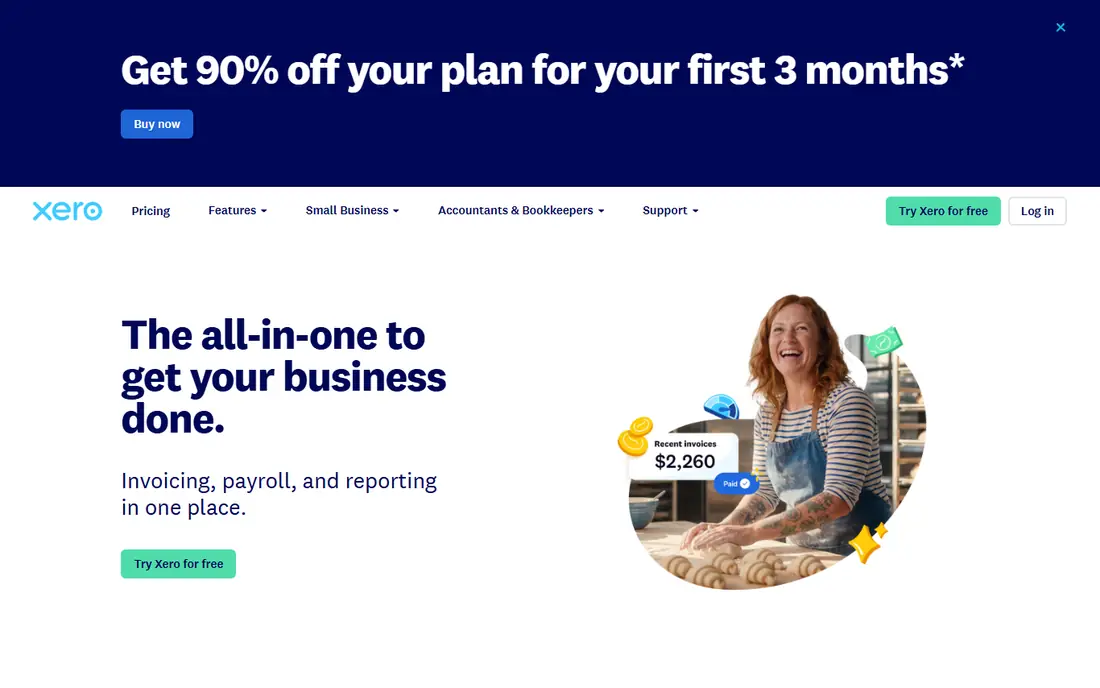
Xero suits firms that want fast receipt capture tied to clean books. Its homepage highlights Smart Document Capture that pulls bills and receipts straight into Xero, so records stay organized, plus bank reconciliation, invoicing, real-time reports, and advisor access in the cloud. Captured documents attach to transactions, which helps owners and accountants verify expenses without separate file folders.
The catch is plan scope. Document and dashboard depth vary by tier, and payroll features differ, so buyers should check limits for their plan. Xero also suits owners comfortable with cloud accounting. For firms that prize clean capture and cloud access, Xero is a leading choice.
- Smart document capture for bills and receipts
- Cloud access for owners and advisors
- Bank feeds keep files current
- Storage and dashboard features vary by plan
- Payroll scope varies
- Higher plans needed for richest views
FreshBooks
Ideal for: Simple invoicing and receipts
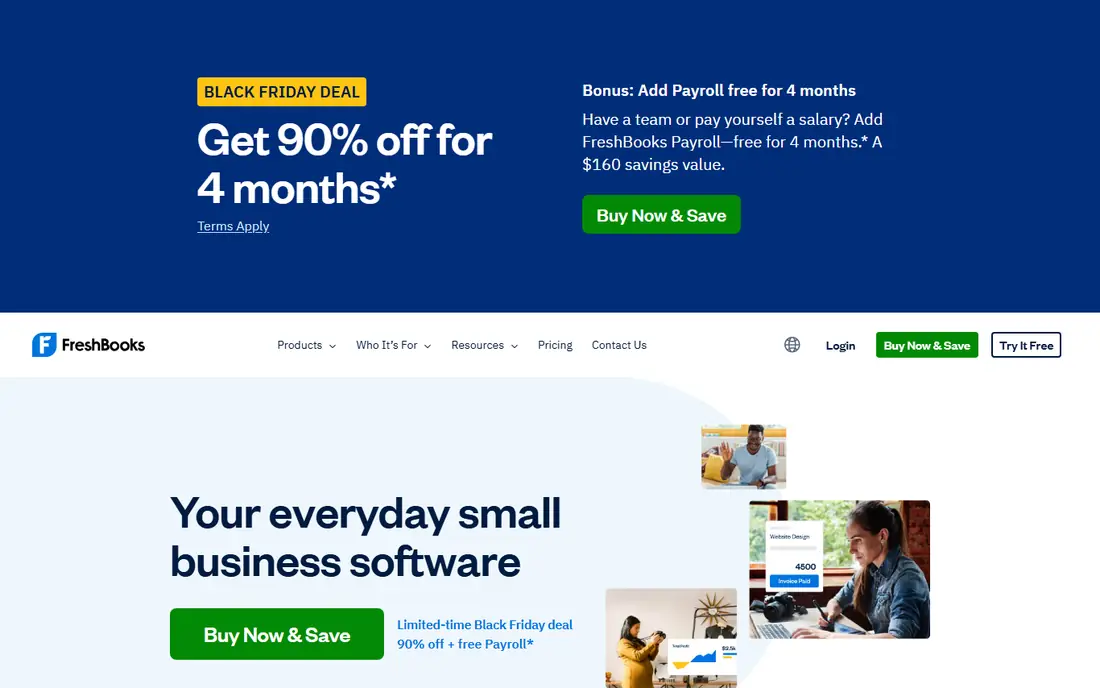
FreshBooks suits service businesses and freelancers who want simple books with receipts and expenses stored online alongside invoices and payments. Its homepage stresses invoicing, expense tracking, faster payments, and onboarding support, plus an app store with more than 100 integrations. For owners who bill clients and track expenses on the go, having receipts stored with each expense in one cloud system beats separate folders and spreadsheets.
The limit is accounting depth. Firms with inventory, multi-entity books, or complex reporting will find QuickBooks, Xero, or Sage a better fit, and storage limits vary by plan. For small service firms that prize simplicity, FreshBooks is a strong pick.
- Simple invoicing and expense tracking with receipts
- Clear interface
- Many app integrations
- Less deep for complex accounting
- Storage limits vary by plan
- Larger firms may outgrow it
Wave
Ideal for: Free basics with file access
Wave offers free web-based accounting, invoicing, and payments for small businesses, with a mobile app for invoice and payment checks on the go. Its homepage positions Wave as a single source of truth for business finances, keeping accounting, invoicing, and payments in one unified system with reports and cash flow views. For a freelancer or micro-business, that free cloud starting point makes Wave an easy way to keep receipts and books together without paying for a full suite.
The trade-off is depth and paid extras. Payroll, bookkeeping help, and some features cost extra, and firms with complex accounting will outgrow Wave. Bank connections and feature scope should be checked for your bank and state. For small firms that want free basics with cloud access, Wave is the best starting point.
- Free accounting and invoicing basics
- Web-based with mobile app
- Receipts and reports in one system
- Payroll and expert help are paid
- Fewer advanced features
- Storage and feature scope vary
Zoho Books
Ideal for: Value accounting and storage
Zoho Books is a cloud accounting tool with invoicing, expenses, bank feeds, and reports, plus document attachment that keeps receipts and bills tied to transactions. Its value case is strong for businesses already using Zoho CRM, inventory, or other Zoho apps, since data and files can flow between apps without extra tools. Automation for recurring invoices, payment reminders, and bank rules helps keep books current with less manual entry.
The trade-off is ecosystem and accountant fit. Firms whose accountants prefer QuickBooks or Xero may face a learning curve, and the richest features sit on paid plans. Buyers should confirm bank feed support, storage limits, and plan scope. For value-minded firms, especially Zoho users, Zoho Books is a smart pick.
- Free plan for small firms
- Document attachment to transactions
- Fits well with other Zoho apps
- Accountant familiarity varies
- Advanced features need higher plans
- Storage limits vary by plan
Sage
Ideal for: Scaling finance with documents
Sage, through Sage Intacct, targets scaling and midsized finance teams with real-time visibility, automated multi-entity accounting, and built-in audit trails and controls. Its homepage stresses AI automation, connected workflows, and dashboards that help finance leaders see performance across entities without waiting for month-end close. For document storage, that audit-trail focus matters: files, approvals, and transactions stay linked in a controlled system, which suits firms with compliance and audit needs.
The catch is scope and cost. Sage Intacct is priced by quote and needs implementation planning, so it is not a light choice for a solo firm. Smaller businesses should compare Xero or QuickBooks first. For growing firms that need multi-entity finance with controlled document storage, Sage is a strong enterprise pick.
- Real-time visibility and multi-entity accounting
- Document and audit trails
- Strong fit for growing firms
- Enterprise pricing by quote
- Implementation takes planning
- Overkill for very small firms
NetSuite
Ideal for: Enterprise finance and files
NetSuite is an AI cloud ERP that connects ERP and financials with CRM, ecommerce, and more in one suite. Its homepage stresses a single source of truth so finance, operations, and documents reflect the whole business, with built-in intelligence, workflows, and natural-language search in newer releases. For companies with inventory, orders, and multiple channels, that unified file and finance view is the main advantage over standalone accounting tools.
The catch is enterprise scope. NetSuite pricing is by quote, implementation takes planning, and small firms will find it far heavier than needed. A free product tour and test drive can help buyers judge fit. For larger firms that need finance and document storage tied to operations, NetSuite is a leading choice.
- Documents tied to ERP, finance, CRM, and ecommerce
- Unified source of truth
- Strong fit for complex operations
- Enterprise pricing and implementation
- Heavy for small firms
- Needs admin and training
How we picked these
We compared official product pages for accounting software used in the US, looking at document capture, attachment to transactions, cloud access, mobile apps, and pricing. We favored tools that attach files to transactions over tools that only store files separately, and we kept a range from free tools to enterprise ERP. We also favored tools with current homepages and active development in 2026.
We did not test these tools on live company books, and we did not review private contracts. Pricing, trial terms, storage limits, and capture features can change, so check the vendor site and trial each tool with your own receipts before buying.
What to check before you choose
Start with capture speed. Photograph ten real receipts in a trial, including faded, crumpled, and multi-page bills, and check how fast each tool captures, reads, and attaches them to expenses. A capture tool that needs constant correction will not get used.
Next, check linking and search. Confirm that each receipt links to its transaction, vendor, and date, and that owners and accountants can search by vendor, amount, or date without exporting files. Also check how long files are retained and how they export for tax or audit use.
Finally, check access and limits. Confirm who can view, upload, and delete files, whether accountants get access without extra seats, and what storage limits apply by plan. A tool with tight limits will push files back into email and folders.
Frequently asked questions
Why does accounting software need online file storage?
Online storage keeps receipts, bills, and statements attached to transactions in the cloud, so owners and accountants can verify expenses, prepare taxes, and pass audits without hunting through paper or email.
Which accounting tool has the best receipt capture?
Xero's Smart Document Capture and QuickBooks receipt capture both suit small businesses well, while FreshBooks and Wave cover simpler needs. Test capture with your own faded and multi-page receipts before choosing.
How long should accounting files be kept?
Retention depends on tax and legal rules for your business and state, and many firms keep records for several years. Confirm retention and export options in your chosen tool, and ask your accountant for guidance.
Can accountants access stored files?
Most tools offer accountant access or collaboration features, but seat limits and permissions vary by plan. Confirm whether your accountant can view files and books without buying a full extra seat.
Is free accounting software enough for file storage?
Wave and Zoho Books offer free plans that cover basics well for freelancers and micro-businesses. Firms with high document volume, multi-entity books, or audit needs usually need a paid plan from QuickBooks, Xero, Sage, or NetSuite.