7 Strong Advertising Platforms for Small Businesses in 2026

- 1
 Microsoft AdvertisingLower cost search clicksVisit
- 2
 Meta AdsCheap reach and retargetingVisit
- 3
 Amazon AdsProduct searches on AmazonVisit
- 4
 YouTube AdsVideo views and product demosVisit
- 5
 LinkedIn AdsB2B targeting by job titleVisit
- Microsoft Advertising takes the first slot, best suited to lower cost search clicks.
- TikTok Ads fits short video reach with younger buyers.
- One limit worth knowing about YouTube Ads: needs real video production effort at the start, skips make the first five seconds carry the entire message, view counts flatter results if nobody clicks through, remarketing lists take time to build.
- None of the 7 tools, from Microsoft Advertising to TikTok Ads, has a free plan, so budget for a subscription or use a trial.
Direct answer
For lower cost search clicks, Microsoft Advertising is where this list starts. Alternatives: Meta Ads for cheap reach and retargeting, and Amazon Ads for product searches on Amazon. All 7 tools are compared below on price, free plan and limits.
Quick comparison
| Product | Ideal for | Price from | Free version | |
|---|---|---|---|---|
| Microsoft Advertising | Lower cost search clicks | Pay per click, no minimum | No | Visit |
| Meta Ads | Cheap reach and retargeting | Pay per click, about $1 per day minimum | No | Visit |
| Amazon Ads | Product searches on Amazon | Pay per click, no minimum | No | Visit |
| YouTube Ads | Video views and product demos | Pay per view, no minimum | No | Visit |
| LinkedIn Ads | B2B targeting by job title | Pay per click, about $10 per day minimum | No | Visit |
 Google Ads | Capturing existing search demand | Pay per click, no minimum | No | Visit |
 TikTok Ads | Short video reach with younger buyers | Pay per click or per mille | No | Visit |
The best advertising platforms for small businesses
Ainotely compared 7 advertising platforms for small businesses. The goal is a practical shortlist: published prices, free plan facts, best-fit use cases and honest limits for every entry.
Microsoft Advertising
Ideal for: Lower cost search clicks
Choose Microsoft Advertising for lower cost search clicks. Microsoft Advertising sells search adverts on Bing and its partner network. Also, volume is the limit.
Highlights: click prices often 30 to 50 percent below Google for similar terms.
Bing deals with a small share of searches, so a campaign that would spend $1,000 per month on Google may spend a tenth of that here. In daily use, the mechanics mirror Google Ads closely enough that campaigns import in minutes, and benchmark comparisons consistently price its clicks well below Google's for the same terms, around $2.71 median in one Q4 2026 set against $5.42 on Google. Beyond that, treat it as cheap additional reach layered over a Google campaign, especially for older, desktop heavy audiences, instead of as a primary channel. Starting cost for Microsoft Advertising: Pay per click, no minimum. No free plan comes with Microsoft Advertising.
The main drawbacks: fewer automation features and slower feature releases.
- Same search intent model as Google with less auction competition
- Campaigns import straight from Google Ads
- Local coverage is thinner outside the US
Meta Ads
Ideal for: Cheap reach and retargeting
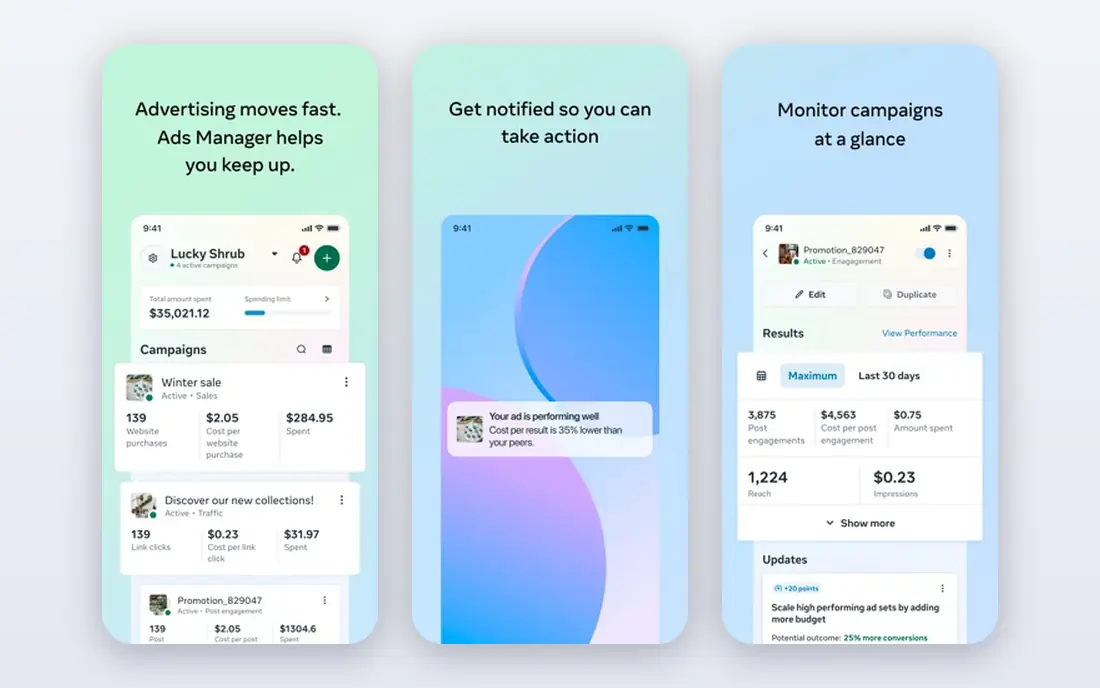
Pick Meta Ads if this describes you: cheap reach and retargeting. You are buying attention instead of intent, which makes Meta the natural home for provides, retargeting and local awareness.
Beyond that, Meta runs Facebook and Instagram advertising from one manager. Its economics suit small budgets: pooled small business data from AdPlus in late 2026 presents a median click near $0.49 on Meta against $2.90 on Google Search. On cost, Meta Ads starts like this: Pay per click, about $1 per day minimum. Meta Ads has no permanent free option.
What to check first: account bans and ad rejections are common and support is thin; lead quality from wide targeting can be poor.
- Creative tools now draft variants automatically
- Targeting by interest
- Clicks are interruptions, not searches, so conversion rates run lower than Google
Amazon Ads
Ideal for: Product searches on Amazon
Choose Amazon Ads for product searches on Amazon. For a business that sells physical products on Amazon, this is the closest thing to advertising at the shelf edge.
From a buyer's view, sellers who work backwards from margin per unit, instead of forwards from a monthly budget, survive here. Amazon Ads cost at the entry level: Pay per click, no minimum. Amazon Ads has no free tier.
What to check first: competition inside widely used categories bids clicks up quick; no value at all for services or local firms.
- Promoted products need no design work beyond the listing itself
- Retail data closes the loop from click to sale inside one report
- Fees stack on top of referral and fulfilment charges
YouTube Ads
Ideal for: Video views and product demos
YouTube Ads makes the most sense for video views and product demos. 2026 guides put usual costs between a handful of cents and $0.30 per view, cheap for the amount of explanation a view can carry.
Points against: view counts flatter results if nobody clicks through; skips make the first five seconds carry the entire message.
In daily use, a two minute honest walkthrough of a job well done will outsell any banner. YouTube Ads pricing: Pay per view, no minimum. YouTube Ads has no free tier.
What YouTube Ads does well: targeting borrows all of Google's search and audience data.
- Usual costs run a handful of cents to about $0.30 per view
- Skippable adverts charge only when a viewer watches 30 seconds or engages
- Remarketing lists take time to build
LinkedIn Ads
Ideal for: B2B targeting by job title
Where LinkedIn Ads fits: B2B targeting by job title. It is a different purchase: fewer, dearer clicks from identifiable professionals. Keep audiences tight, expect small numbers, and judge on meetings booked instead of click rate.
Where it is weaker: The most pricey click here; consumer gives you waste money entirely.
For everyday use, for a cafe, it never will. Small B2B advertisers get the best of LinkedIn with narrow targeting and a concrete offer, a report, a webinar, an assessment, instead of a generic brand advert. The starting price for LinkedIn Ads: Pay per click, about $10 per day minimum. There is no free plan with LinkedIn Ads.
- Clicks convert to high value B2B leads when the offer suits
- Campaign manager reporting ties spend to professional segments
- Benchmarked near $5.58 for promoted content in 2026
Google Ads
Ideal for: Capturing existing search demand
Google Ads is designed for capturing existing search demand. Performance Max can widen reach once conversion tracking is proven.
Beyond that, for a small business, the working route is a tight search campaign on buying terms, a call extension, and a page that answers the search. Price to start with Google Ads: Pay per click, no minimum. Google Ads does not include a free plan.
Drawbacks to consider: The most costly mass click in most benchmarks; a weak landing page wastes the entire spend.
Where it shines: The only product where customers announce what they want to buy.
- Conversion tracking displays which clicks turned into calls
- Performance Max and search campaigns in one account
- Competitive trades pay far above the average
TikTok Ads
Ideal for: Short video reach with younger buyers
Pick TikTok Ads if this describes you: short video reach with younger buyers. TikTok sells attention in video form.
What you pay to start with TikTok Ads: Pay per click or per mille. No free plan comes with TikTok Ads.
Drawbacks to consider: brand safety controls are improving but still need watching; audience age profile rules out numerous trades and professional services.
- Native looking creative is cheap to produce on a phone
- Solid for products that demo well in 15 seconds
- Conversion data is noisier than on Google or Meta
How we chose
Pricing pages, product documentation and feature lists were the main sources, and every entry carries at least one honest drawback. Seat minimums, billing terms and add-ons can move the real cost, so the starting prices here are a guide and not a quote. The sequence is a judgement call: typical use case first, then pricing transparency, then free access. Use the profiles to check fit.
Questions to settle before buying
- Check the current price for Microsoft Advertising, TikTok Ads and the rest on each vendor page, since seats and billing terms change the total.
- Read the limits listed for Microsoft Advertising first: far smaller search volume, so it seldom replaces Google on its own, fewer automation features and slower feature releases, local coverage is thinner outside the US.
- Total up the real monthly cost of Amazon Ads, including add-ons, extra users and usage-based fees.
- Ask TikTok Ads how an export works before you move any records in; an easy exit lowers the risk.
- Ask Google Ads which support channels and response times come with the plan you would buy.
Frequently asked questions
How much should a small business spend on ads a month?
Guides put usual small business PPC spend anywhere from a handful of hundred to $5,000 per month, but the right figure comes from your maths: customer value times conversion rate sets the click price you can afford. The budget is that price times the clicks you need.
How are the tools for advertising platforms for small businesses ordered?
Microsoft Advertising sits first and TikTok Ads last because the order follows typical fit for advertising platforms for small businesses, then price clarity and free access. It is a judgement call, so read each profile for fit and limits.
Should I run Google Ads or Meta Ads first?
If people already search for what you sell by name or trade, start with Google and capture that demand. Plenty of small companies end up running both, with Meta feeding retargeting audiences that Google then closes.
Can I try these tools before paying?
Not by default. None of the tools, from Microsoft Advertising to TikTok Ads, lists a free plan or a free trial here, so ask each vendor for a demo before committing.
Does any tool for advertising platforms for small businesses here have a free plan?
No tool in this list, Microsoft Advertising and TikTok Ads included, has a permanent free plan. Trials and quotes are the usual route, so plan a short evaluation period.
Do these tools publish their prices?
Yes. Every tool from Microsoft Advertising to TikTok Ads shows a starting price, though seats, add-ons and billing terms still change the final cost.