Best Agriculture Software in 2026: 8 Tools Compared

- 1
 GranularFull farm management for crop operationsVisit
- 2
 Trimble AgriculturePrecision farm managementVisit
- 3
 John Deere Operations CenterFarms using John Deere equipmentVisit
- 4
 CropXSoil sensing and irrigation decisionsVisit
- 5
 AgworldFarm planning and season recordsVisit
- Granular and Trimble Agriculture are our top picks for full farm management, covering fields, inputs, finances and equipment.
- John Deere Operations Center suits farms already using Deere equipment, since machine data flows in automatically.
- CropX leads for irrigation and soil sensing, while Agworld is strong for planning and record keeping across a season.
- Pricing is often quote based and varies by acres and modules, so request a quote for your farm size before committing.
- Start with the job that costs you most time, such as record keeping or irrigation, rather than buying every module at once.
Quick comparison
| Product | Ideal for | Price from | Free version | |
|---|---|---|---|---|
| Granular | Full farm management for crop operations | See website | No | Visit |
| Trimble Agriculture | Precision farm management | See website | No | Visit |
| John Deere Operations Center | Farms using John Deere equipment | Free | Yes | Visit |
| CropX | Soil sensing and irrigation decisions | See website | No | Visit |
| Agworld | Farm planning and season records | See website | Free trial | Visit |
 Conservis | Farm operations and workflow management | See website | No | Visit |
 FarmERP | Agribusiness and plantation management | See website | No | Visit |
 AgriWebb | Livestock and mixed farm records | See website | Free trial | Visit |
The best agriculture software
Farm software helps growers plan fields, track inputs, manage equipment and keep records that buyers and regulators ask for. The tools below cover crop farms, mixed farms and agribusiness, so match the tool to your operation type and size.
Granular
Ideal for: Full farm management for crop operations
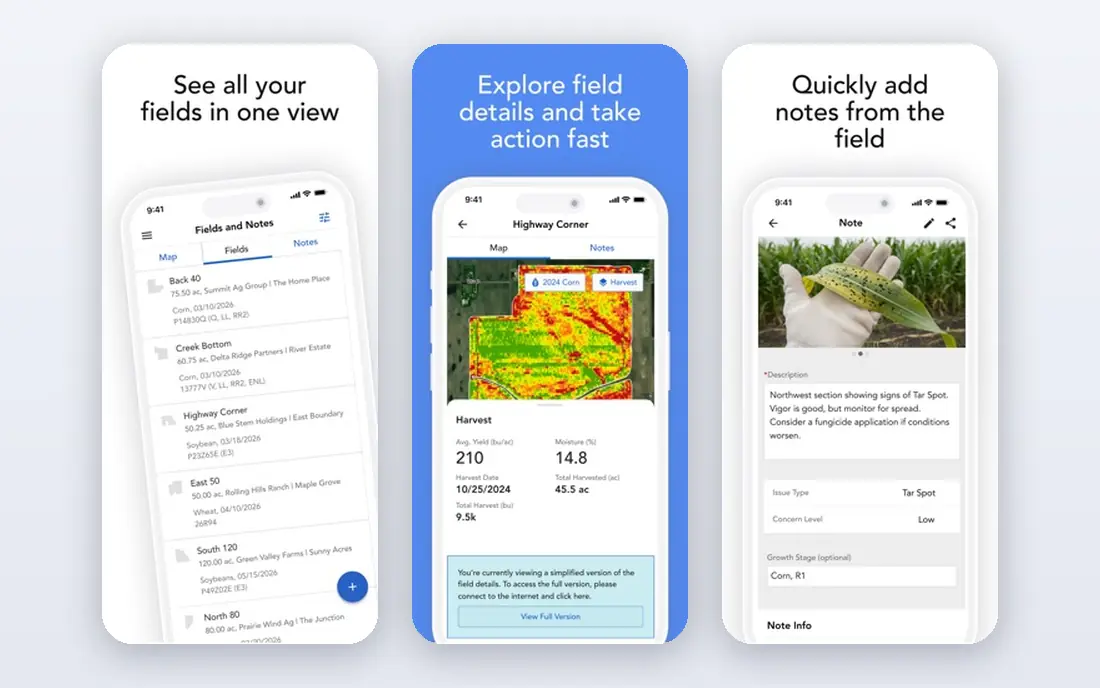
Granular is a farm management platform that brings field plans, input records, inventory and financials into one system. That breadth matters at harvest, when you need to know what went into each field, what it cost, and what it yielded, without digging through spreadsheets and paper notes. Reporting tools help you compare fields and seasons, which supports better decisions next year.
Setup takes effort, especially for a large operation with many fields and years of history to import. Pricing is quote based, so request a figure for your acreage and modules. For a midsize or large crop farm that wants one system for operations and business, Granular is a strong first choice.
- Covers fields, inputs, finances and inventory
- Good reporting
- Integrates with equipment data
- Pricing is quote based
- Setup takes time for large operations
Trimble Agriculture
Ideal for: Precision farm management
Trimble Agriculture covers farm management with a strong precision angle, including field mapping, guidance, variable rate application and data from connected equipment. That precision focus helps farms apply seed, fertilizer and chemicals where they are needed, rather than evenly across a field, which can save inputs and improve yields.
The system can involve both software and hardware, so costs vary and the learning curve is real for precision features. Trimble works with many equipment brands, which helps mixed fleets. For a farm investing in precision agriculture, Trimble is one of the most capable platforms available.
- Strong precision ag tools
- Guidance and mapping
- Works with many equipment brands
- Cost varies by hardware and software
- Learning curve for precision features
John Deere Operations Center
Ideal for: Farms using John Deere equipment
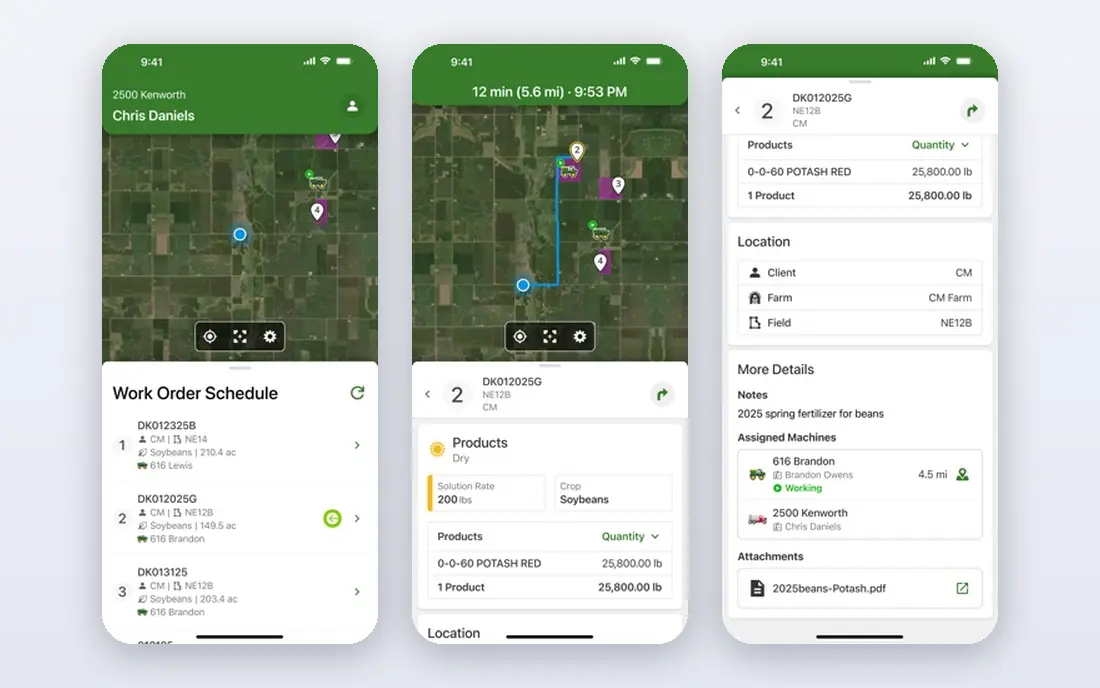
John Deere Operations Center is the natural hub for farms running Deere machines. Yield, moisture, speed and location data flow from the cab into the system automatically, giving you field maps and harvest analysis without manual entry. The basic tools are free, which makes it easy to start.
The value drops if your fleet is mostly other brands, though the system does accept some outside data. Advanced features and connected services may need subscriptions. For a Deere farm, Operations Center is the obvious starting point, and it pairs well with a broader farm management tool for finances.
- Machine data flows in automatically
- Free basic tools
- Field and yield analysis
- Best with Deere equipment
- Advanced features need connected subscriptions
CropX
Ideal for: Soil sensing and irrigation decisions
CropX uses soil sensors to show what is actually happening below the surface, then recommends when and how much to irrigate. That data replaces guesswork, which matters because both overwatering and underwatering cost yield and money. The system also tracks soil conditions over the season, helping you spot patterns.
You need sensor hardware, so cost depends on acres and sensor count. For irrigated farms, the water and energy savings can justify the investment quickly. CropX is the best choice in this list for a farm whose main question is irrigation timing.
- Soil sensors show real moisture data
- Irrigation recommendations
- Saves water and energy
- Needs sensor hardware
- Pricing depends on acres and sensors
Agworld
Ideal for: Farm planning and season records
Agworld focuses on planning a season and keeping clean records of what happened in each field. You can plan inputs, track applications, and share plans with your agronomist, suppliers and team, so everyone works from the same record. That shared record is valuable when a buyer or auditor asks what was applied and when.
Financial tools are lighter than Granular, so farms that need deep cost analysis may pair Agworld with accounting software. Pricing is quote based, with a trial to test the workflow. For a farm that wants better planning and records without a full enterprise system, Agworld is an excellent fit.
- Clear season planning
- Good record keeping
- Collaboration with agronomists and suppliers
- Less financial depth than Granular
- Pricing is quote based
Conservis
Ideal for: Farm operations and workflow management
Conservis manages farm operations, from work orders and harvest tracking to inventory and contracts. It suits large farms and farm businesses that need to coordinate crews, equipment and grain movement across many fields. The workflow tools help managers see what is done, what is pending, and where bottlenecks sit.
Pricing is enterprise level and implementation takes time, so Conservis fits larger operations rather than small family farms. For a farm business that has outgrown spreadsheets and needs real operational control, Conservis is a serious option worth a demo.
- Strong operations workflows
- Harvest and inventory tracking
- Good for large farms
- Enterprise pricing
- Implementation takes time
FarmERP
Ideal for: Agribusiness and plantation management
FarmERP is built for agribusiness rather than a single family farm, covering plantations, packhouses, procurement and supply chain. Its traceability tools help businesses track produce from field to buyer, which matters for export and retail customers who demand proof of origin and handling.
Setup is a project, and the platform fits larger operations best. For an agribusiness managing many growers, sites or product lines, FarmERP gives structure that generic farm apps cannot. Smaller farms should start with Agworld or Granular instead.
- Covers plantations, packhouses and supply chain
- Strong for agribusiness
- Traceability tools
- Best for larger agribusiness
- Setup is a project
AgriWebb
Ideal for: Livestock and mixed farm records
AgriWebb suits livestock and mixed farms that need solid records for animals, paddocks and tasks. You can log treatments, movements and weights, map your farm, and work offline in the field, which matters where signal is poor. That offline ability is a real advantage over tools that assume constant connectivity.
Crop planning tools are lighter than crop specialists such as Granular, so a pure cropping farm may prefer a different tool. For a livestock or mixed operation, AgriWebb is a practical choice, and the trial lets you test the field workflow before committing.
- Good livestock records
- Farm mapping
- Works offline in the field
- Crop tools are lighter than specialists
- Pricing varies by operation
How we picked these
We compared official feature pages, pricing pages and public reviews for each tool, focusing on software that is still maintained and works in October 2026. We favored tools with a clear farm job, a track record with real operations, and data tools that work in the field, including offline use where it matters. We left out discontinued tools, generic business software with no farm features, and tools that only served one small region. Prices are often quote based, so request a quote for your acreage and modules.
How to choose farm software without overbuying
Start with your biggest pain point. If irrigation decisions cost you yield, start with CropX. If record keeping for buyers eats your evenings, start with Agworld. If you need operations and finances in one place, demo Granular or Conservis. Buying the biggest platform first often leads to modules you never use.
Test the field workflow, not just the dashboard. Ask for a trial, take the app to a field, and try logging a task, an application and a harvest load with gloves on and poor signal. A tool that fails in the field will fail everywhere, no matter how good its reports look in the office.
Finally, check data ownership and export. Make sure you can export your field history, yield data and input records if you switch tools later. Your farm data is an asset built over seasons, and you should never be locked out of it by a software contract.
Weather data integration is worth checking during any farm software trial, since rain, frost, and heat change spray windows, irrigation timing, and harvest plans. A tool that pulls local forecasts and historical weather into field records helps you explain a season later, for example why a spray was delayed or a harvest moved. Ask vendors which weather sources they use and how local the data is, since a forecast for a town fifty miles away can differ sharply from conditions in your fields.
Frequently asked questions
What is the best agriculture software overall?
Granular is the best all round choice for crop farms, while Trimble Agriculture leads for precision work. John Deere Operations Center is best for Deere fleets, and Agworld is best for planning and records. Match the tool to your operation type.
How much does farm software cost?
Pricing varies by acres, modules and hardware, and many vendors use quote based pricing. Basic tools such as John Deere Operations Center are free, while full platforms are a business investment. Request a quote for your exact farm size.
Can farm software work offline?
Some tools, such as AgriWebb, offer offline field use, which matters on farms with poor signal. Check offline support before buying, and test it in your actual fields during a trial.
Do I need sensors to use farm software?
No, most farm management tools work with manual entry and equipment data. Sensors such as CropX add value for irrigation, but they are optional. Start with software, then add sensors for the decisions that need real time data.
What is the best agriculture app for small farms?
Agworld and AgriWebb suit smaller operations well, with trials to test the fit. Start with one job, such as record keeping, and expand only when the first job is working smoothly.