Best AI accounting software in 2026: 8 Options Compared

- 1
 QuickBookssmall business accounting with AI helpVisit
- 2
 Xerocloud accounting for small businessesVisit
- 3
 Zoho Booksaffordable accounting inside ZohoVisit
- 4
 Sageaccounting for growing businessesVisit
- 5
 FreshBooksinvoicing first accounting for freelancersVisit
- QuickBooks is our pick for small business accounting with AI help, with starting price See website and free plan Free trial.
- Xero is our pick for cloud accounting for small businesses, with starting price See website and free plan Free trial.
- Zoho Books is our pick for affordable accounting inside Zoho, with starting price See website and free plan Yes.
- Sage is our pick for accounting for growing businesses, with starting price See website and free plan Free trial.
- Prices and free tiers change often, so confirm the current plan on the official site before you subscribe.
This is general business information, not financial or tax advice. Consult an accountant for tax and compliance decisions.
Quick comparison
| Product | Ideal for | Price from | Free version | |
|---|---|---|---|---|
| QuickBooks | small business accounting with AI help | See website | Free trial | Visit |
| Xero | cloud accounting for small businesses | See website | Free trial | Visit |
| Zoho Books | affordable accounting inside Zoho | See website | Yes | Visit |
| Sage | accounting for growing businesses | See website | Free trial | Visit |
| FreshBooks | invoicing first accounting for freelancers | See website | Free trial | Visit |
 Puzzle | AI accounting for startups | See website | Free trial | Visit |
 Vic.ai | AI invoice processing for finance teams | See website | No | Visit |
 Docyt | AI bookkeeping automation | See website | Free trial | Visit |
The best AI accounting software
We compared official feature pages, pricing, app store listings, privacy policies, and public reviews to build this list of 8 AI accounting software. The options below cover well known leaders and strong smaller choices, so you can match one to your budget and your main need.
QuickBooks
Ideal for: small business accounting with AI help
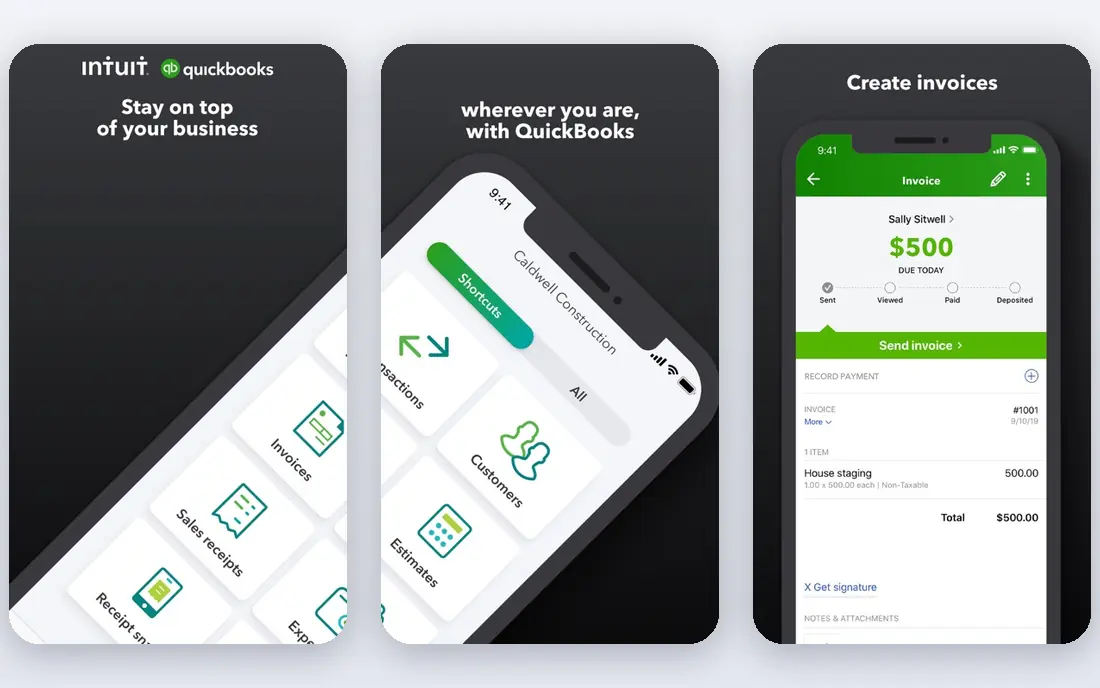
QuickBooks is the most widely used small business accounting platform, with AI assisted categorization, invoicing, and reconciliation. Payroll options and a wide app ecosystem add depth. Pricing scales with features, and some AI tools sit on higher tiers.
What we like about QuickBooks for small business accounting with AI help comes down to this: ai assisted categorization and invoicing; payroll options; wide app ecosystem No option here is perfect, and the limit to note is that pricing scales with features; some ai tools need higher tiers If that limit touches your main use, look at the next option in this list instead.
Skip QuickBooks if that drawback is a deal breaker, and pick a rival whose strengths fit your daily work better.
- AI assisted categorization and invoicing
- Payroll options
- Wide app ecosystem
- Pricing scales with features
- Some AI tools need higher tiers
Xero
Ideal for: cloud accounting for small businesses

Xero offers cloud accounting with AI assisted bank reconciliation, invoicing, and a large app marketplace. It suits small businesses and their accountants. Payroll depth varies by region, so check your country before committing.
Our view is that Xero earns its place for cloud accounting for small businesses through ai bank reconciliation; invoicing; large app marketplace The drawback is real too, since payroll depth varies by region; pricing is per organization That balance is worth a trial run with your own files, schedule, or team before you pay for a full plan.
Skip Xero if that drawback is a deal breaker, and pick a rival whose strengths fit your daily work better.
- AI bank reconciliation
- Invoicing
- Large app marketplace
- Payroll depth varies by region
- Pricing is per organization
Zoho Books
Ideal for: affordable accounting inside Zoho

Zoho Books offers affordable cloud accounting with AI assisted categorization, invoicing, and expenses. Zoho integrations suit firms already in that ecosystem. Payroll sits in other Zoho apps, and depth trails QuickBooks in some markets.
Choose Zoho Books when affordable accounting inside Zoho is your main need, because ai assisted categorization; invoicing and expenses; zoho integrations Keep in mind that payroll needs other zoho apps; depth trails quickbooks in some markets A short trial will show quickly whether those strengths matter more to you than that limit.
Skip Zoho Books if that drawback is a deal breaker, and pick a rival whose strengths fit your daily work better.
- AI assisted categorization
- Invoicing and expenses
- Zoho integrations
- Payroll needs other Zoho apps
- Depth trails QuickBooks in some markets
Sage
Ideal for: accounting for growing businesses
Sage offers accounting for growing businesses with AI assisted invoicing, reconciliation, and reporting. Payroll options and industry versions add depth. Pricing varies by product, so compare the Sage version that fits your size.
For accounting for growing businesses, Sage stands out because ai assisted invoicing and reconciliation; payroll options; reporting That combination explains why it appears near the top of this list for that use. The honest catch is that pricing varies by product; interface varies by version Weigh that trade against your own priorities before you commit, since the best choice here depends on which limit you can live with.
Skip Sage if that drawback is a deal breaker, and pick a rival whose strengths fit your daily work better.
- AI assisted invoicing and reconciliation
- Payroll options
- Reporting
- Pricing varies by product
- Interface varies by version
FreshBooks
Ideal for: invoicing first accounting for freelancers
FreshBooks suits freelancers and service businesses that prioritize invoicing. Expenses, time tracking, and a client portal cover daily needs. Full accounting depth trails QuickBooks, so larger firms may need more.
What we like about FreshBooks for invoicing first accounting for freelancers comes down to this: easy invoicing and expenses; time tracking; client portal No option here is perfect, and the limit to note is that full accounting depth trails quickbooks; some features need higher tiers If that limit touches your main use, look at the next option in this list instead.
Skip FreshBooks if that drawback is a deal breaker, and pick a rival whose strengths fit your daily work better.
- Easy invoicing and expenses
- Time tracking
- Client portal
- Full accounting depth trails QuickBooks
- Some features need higher tiers
Puzzle
Ideal for: AI accounting for startups
Puzzle offers AI assisted bookkeeping and month end close built for startups. Metrics and integrations suit venture backed firms. As a newer platform, its ecosystem is smaller than QuickBooks or Xero.
Our view is that Puzzle earns its place for AI accounting for startups through ai assisted bookkeeping and close; startup focused metrics; integrations The drawback is real too, since newer platform; pricing scales with use That balance is worth a trial run with your own files, schedule, or team before you pay for a full plan.
Skip Puzzle if that drawback is a deal breaker, and pick a rival whose strengths fit your daily work better.
- AI assisted bookkeeping and close
- Startup focused metrics
- Integrations
- Newer platform
- Pricing scales with use
Vic.ai
Ideal for: AI invoice processing for finance teams
Vic.ai focuses on AI invoice processing for finance teams, with capture, approval workflows, and ERP integrations. It suits firms with high invoice volume. It is enterprise focused and needs an existing accounting or ERP system to work with.
Choose Vic.ai when AI invoice processing for finance teams is your main need, because ai invoice capture and approval; erp integrations; audit trails Keep in mind that enterprise focus; needs an existing accounting or erp system A short trial will show quickly whether those strengths matter more to you than that limit.
Skip Vic.ai if that drawback is a deal breaker, and pick a rival whose strengths fit your daily work better.
- AI invoice capture and approval
- ERP integrations
- Audit trails
- Enterprise focus
- Needs an existing accounting or ERP system
Docyt
Ideal for: AI bookkeeping automation
Docyt automates bookkeeping with AI document capture and real time financials. Accountant collaboration helps small firms and their advisers. Pricing is quote based in places, and the ecosystem is smaller than QuickBooks or Xero.
For AI bookkeeping automation, Docyt stands out because ai document capture and bookkeeping; real time financials; accountant collaboration That combination explains why it appears near the top of this list for that use. The honest catch is that pricing is quote based in places; smaller ecosystem than leaders Weigh that trade against your own priorities before you commit, since the best choice here depends on which limit you can live with.
Skip Docyt if that drawback is a deal breaker, and pick a rival whose strengths fit your daily work better.
- AI document capture and bookkeeping
- Real time financials
- Accountant collaboration
- Pricing is quote based in places
- Smaller ecosystem than leaders
How we picked these
We started from the topic itself and shortlisted products that exist and work today, then checked each one against its official feature pages and pricing. We compared free tiers, starting prices, core features, and honest limits, and we read public reviews to catch problems that marketing pages skip. We did not claim hands-on testing that did not happen, and we left out products that did not truly fit the topic, even when they were popular in a nearby category.
We also weighed who each product is really for. A tool that suits a large team can be a poor pick for a solo user, and a free plan that covers casual use may not suit heavy daily work. That is why each write-up names a best fit and a clear drawback, so you can judge the trade for yourself.
How to choose the right AI accounting software
Start with your business type, since freelancer invoicing, small business accounting, and enterprise invoice processing need different tools. Check bank connections, payroll, and accountant access before paying, and test AI categorization with your real transactions, since accuracy varies by industry. Confirm pricing per organization or user, and keep an accountant involved for tax and compliance decisions. This is general business information, not financial or tax advice.
Start with your main need
Write down the one job this AI accounting software must do well for you, then judge every option on that job first. Extra features look tempting in a demo, but they rarely make up for a weak core fit. If two options tie on your main need, let price and ease of use break the tie.
Check the total cost
Look past the headline monthly price and check seat counts, usage limits, add ons, and renewal terms. A cheap plan that caps the feature you use most can cost more than a mid priced plan that includes it. Free trials help, but set a reminder to review the plan before the trial ends.
Test before you commit
Run a real task through your top two choices, using your own files, schedule, or team, rather than sample data alone. Check support response times, export options, and how easy it is to cancel. A tool you can leave easily is often a safer bet than one that locks your data in.
Frequently asked questions
What is the best AI accounting software?
QuickBooks is the best all round pick for small businesses, while Xero suits cloud focused firms and Vic.ai leads for enterprise invoice processing.
Is there a free AI accounting software?
Zoho Books offers a free tier, and most rivals offer trials, though full AI features usually need paid plans.
What does AI do in accounting software?
AI categorizes transactions, reconciles bank feeds, captures invoice data, and flags anomalies for review.
Can AI accounting replace an accountant?
No, AI speeds bookkeeping, but accountants remain important for tax, compliance, and judgment calls.
Which tool is best for freelancers?
FreshBooks suits freelancers who prioritize invoicing, while QuickBooks and Xero suit growing service businesses.