Best AI Cloud Security Services in 2026: 8 Services Compared

- 1
 WizAgentless cloud securityVisit
- 2
 Palo Alto Prisma CloudEnterprise cloud securityVisit
- 3
 Orca SecurityAgentless cloud visibilityVisit
- 4
 Microsoft Defender for CloudAzure cloud securityVisit
- 5
 CrowdStrike Falcon Cloud SecurityEndpoint plus cloud securityVisit
- AI cloud security tools find misconfigurations, vulnerabilities, and threats across cloud accounts, using AI to prioritize what actually matters.
- Wiz and Orca lead on agentless cloud security, while Palo Alto Prisma Cloud and Microsoft Defender suit companies already invested in those ecosystems.
- CrowdStrike and SentinelOne extend endpoint security into cloud workloads, which suits companies that want one security vendor.
- AI prioritization helps cut alert noise, but security teams should still verify critical findings before acting on them.
- Our pick for most companies is Wiz, with Microsoft Defender for Cloud as the pick for Azure-centric organizations.
Disclaimer: This is general information only and is not professional security advice for your specific systems.
Quick comparison
| Product | Ideal for | Price from | Free version | |
|---|---|---|---|---|
| Wiz | Agentless cloud security | See website | Free trial | Visit |
| Palo Alto Prisma Cloud | Enterprise cloud security | See website | Free trial | Visit |
| Orca Security | Agentless cloud visibility | See website | Free trial | Visit |
| Microsoft Defender for Cloud | Azure cloud security | See website | Free trial | Visit |
| CrowdStrike Falcon Cloud Security | Endpoint plus cloud security | See website | Free trial | Visit |
 SentinelOne | AI-powered cloud workload protection | See website | Free trial | Visit |
 Aqua Security | Container and cloud security | See website | Free trial | Visit |
 Sysdig | Container and cloud runtime security | See website | Free trial | Visit |
The best AI cloud security services
Cloud security has grown complex: misconfigurations, exposed storage, vulnerable containers, and identity risks hide across many accounts. The services below were compared on cloud coverage, AI prioritization, runtime protection, ease of deployment, and fit for different company sizes.
Wiz
Ideal for: Agentless cloud security
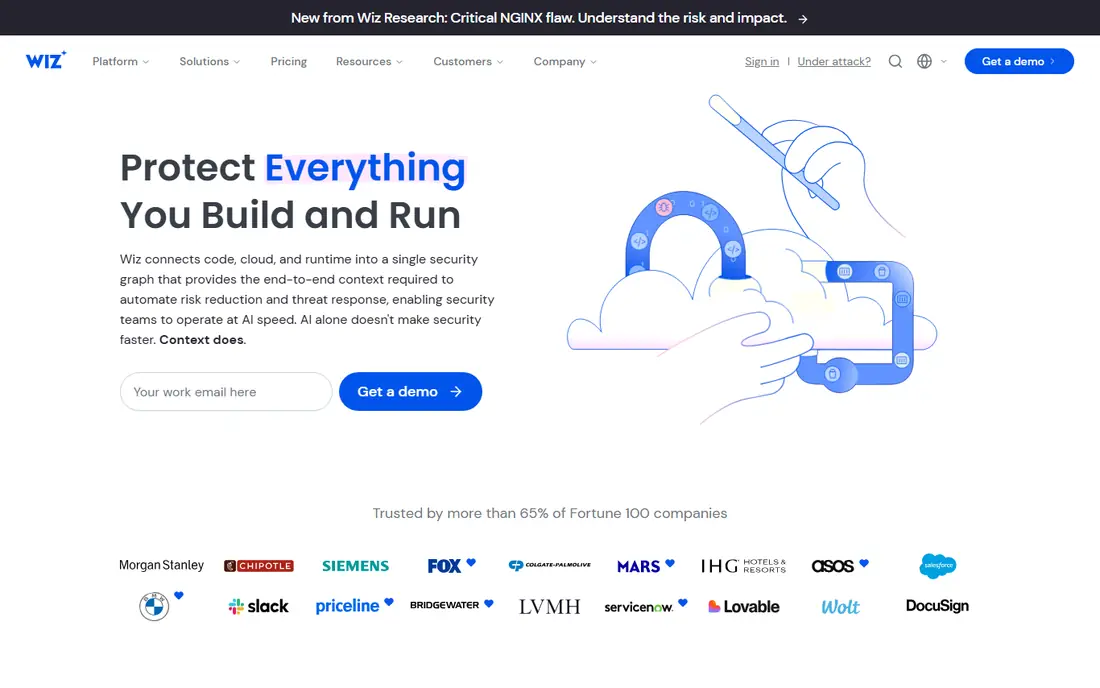
Wiz scans cloud environments without agents, giving security teams a full view of misconfigurations, vulnerabilities, exposed data, and identity risks across AWS, Azure, and Google Cloud. Its AI-assisted prioritization highlights the combinations that create real attack paths, cutting through the noise of thousands of low-risk findings. Deployment is fast, since no agents need installing on every workload.
Agentless scanning misses some runtime detail that agent-based tools catch, so companies with deep runtime needs may pair it with another tool. For a clear, prioritized view of cloud risk, Wiz is a leading choice.
- Agentless scanning across clouds
- Clear risk prioritization
- Fast deployment
- Enterprise pricing
- Agentless view misses some runtime detail
Palo Alto Prisma Cloud
Ideal for: Enterprise cloud security
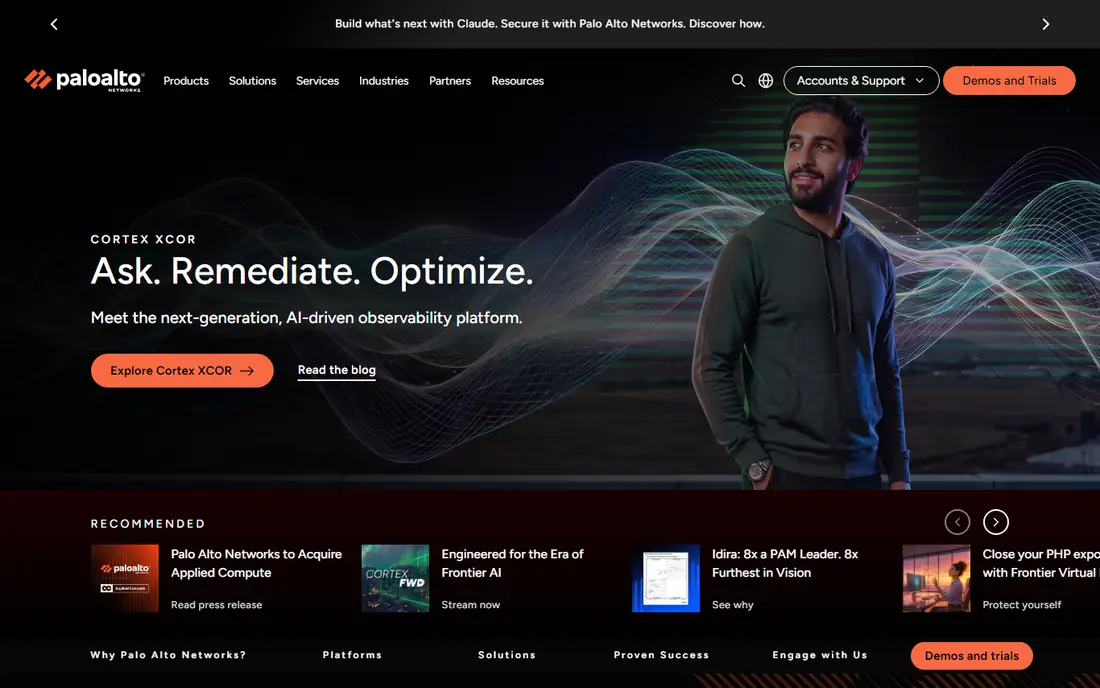
Palo Alto Prisma Cloud, now part of Palo Alto's Cortex Cloud platform, offers broad cloud security covering posture management, workload protection, and network security in one system. Its compliance features help regulated companies meet standards, and its integration with other Palo Alto tools benefits existing customers. For an enterprise that wants one vendor for cloud security, it is a comprehensive option.
Its breadth takes learning, and pricing is enterprise-grade. For large organizations, especially those already using Palo Alto products, Prisma Cloud offers depth and integration that point tools cannot match.
- Broad cloud security platform
- Strong compliance features
- Palo Alto ecosystem benefits
- Broad platform takes learning
- Pricing is enterprise-grade
Orca Security
Ideal for: Agentless cloud visibility
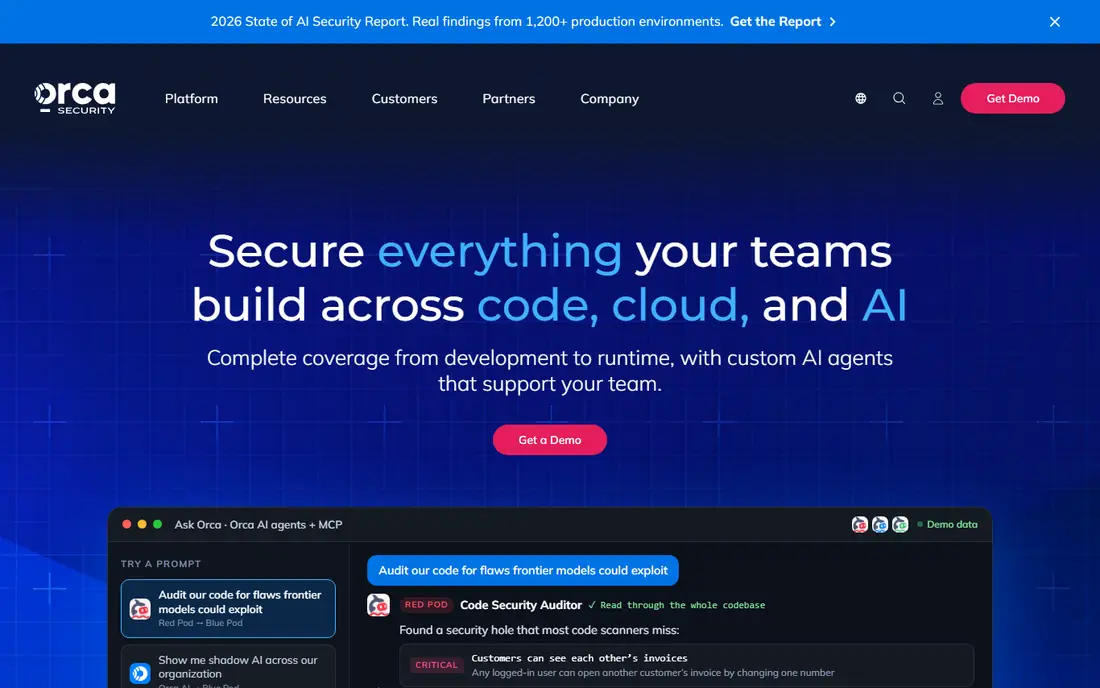
Orca Security provides agentless cloud security with full-stack visibility, scanning cloud workloads, configurations, and data without installing agents. Its risk engine prioritizes findings by attack path, helping teams focus on the issues that matter most. Like Wiz, its deployment is fast, and its coverage spans major clouds.
Pricing is enterprise-grade, and its ecosystem is smaller than Palo Alto. For a fast, agentless view of cloud risk with strong prioritization, Orca is a top contender.
- Agentless full-stack visibility
- Strong risk prioritization
- Fast deployment
- Enterprise pricing
- Smaller ecosystem than Palo Alto
Microsoft Defender for Cloud
Ideal for: Azure cloud security
Microsoft Defender for Cloud provides cloud security posture management and threat protection deeply integrated with Azure, plus multi-cloud support for AWS and Google Cloud. Its AI-assisted alerts help security teams spot threats, and its integration with Microsoft Sentinel and Defender products suits Microsoft-centric organizations. For an Azure-heavy company, it is the natural security platform.
Multi-cloud features are improving but less mature than on Azure, so companies with equal AWS and Azure footprints should compare carefully. For Microsoft shops, Defender for Cloud offers strong value and integration.
- Deep Azure integration
- AI-assisted threat protection
- Good value for Microsoft shops
- Best on Azure
- Multi-cloud features are improving but less mature
CrowdStrike Falcon Cloud Security
Ideal for: Endpoint plus cloud security
CrowdStrike Falcon Cloud Security extends its well-known endpoint platform into cloud workloads, containers, and posture management, with AI-assisted detection backed by strong threat intelligence. Companies already using Falcon for endpoints get a unified view of devices and cloud workloads, which simplifies security operations. Its detection quality is widely respected.
Pricing is enterprise-grade, and its value is highest for existing CrowdStrike customers. For a company that wants endpoint and cloud security from one vendor, Falcon Cloud Security is a strong choice.
- Extends leading endpoint protection to cloud
- Strong threat intelligence
- AI-assisted detection
- Enterprise pricing
- Best value for existing CrowdStrike customers
SentinelOne
Ideal for: AI-powered cloud workload protection
SentinelOne offers AI-powered protection for cloud workloads, with autonomous response features that can isolate threats without waiting for a human analyst. Its platform covers endpoints, cloud workloads, and containers, giving security teams a unified view. For companies that value fast, automated response, SentinelOne is appealing.
Pricing is enterprise-grade, and platform breadth varies by tier, so teams should check which features their plan includes. For AI-driven workload protection with autonomous response, SentinelOne is a leading option.
- AI-powered workload protection
- Autonomous response features
- Good cloud coverage
- Enterprise pricing
- Platform breadth varies by product tier
Aqua Security
Ideal for: Container and cloud security
Aqua Security focuses on container and Kubernetes security, with cloud posture features added around that core. Its tools scan container images, enforce runtime policies, and secure Kubernetes clusters, which suits companies running containerized applications at scale. Its open-source roots, including Trivy, give it community credibility.
Teams that do not run containers get less value, since its strength is container-specific. For container-heavy cloud environments, Aqua is one of the most focused and capable security platforms.
- Strong container and Kubernetes security
- Cloud posture features
- Open-source roots
- Container-focused, less of a general cloud posture tool
- Learning curve for non-container teams
Sysdig
Ideal for: Container and cloud runtime security
Sysdig provides runtime security and visibility for containers and cloud workloads, showing what is actually running and detecting threats in real time. Its roots in system visibility give it deep runtime insight, which suits DevOps and security teams that need to understand live behavior, not just static configuration. Cloud posture features round out the platform.
Its runtime focus means posture management is secondary to tools like Wiz, and pricing for larger plans is quote-based. For runtime security in containerized clouds, Sysdig is a strong choice.
- Strong runtime security and visibility
- Container and cloud coverage
- Good for DevOps teams
- Runtime focus means posture features are secondary
- Pricing is quote-based for larger plans
How we picked these
We compared official product pages, documentation, and pricing pages for AI cloud security platforms, focusing on cloud coverage, AI prioritization, runtime protection, deployment effort, and fit for different company sizes. We favored platforms with real production use in cloud environments and included both general cloud security and container-focused options.
What to check before you choose
Map your cloud footprint first: which clouds, how many accounts, and whether workloads are virtual machines, containers, or serverless. That map decides whether you need a general posture tool, a container specialist, or both. Also test AI prioritization on your real findings, since a tool that cries wolf on every minor issue will be ignored by your team.
Check deployment effort and runtime coverage, since agentless tools deploy fast but miss some runtime detail, while agent-based tools need more work. Finally, confirm compliance reporting for your standards, since audit-ready reports save significant effort.
Another practical step is to test support before you depend on it. Send a question during the trial and note how fast and how helpfully the team responds, since that response is a preview of what you will get when something breaks at an awkward moment. Also check the documentation and community: clear guides and an active user community can solve many problems without waiting for support at all. If the service handles important data or money, review its security and privacy pages too, and confirm that its practices match your requirements. A product that is strong on features but weak on support or security can cost far more in stress and risk than it saves in subscription fees.
It is also worth checking recent reviews and community discussion before you commit, since products and services change faster than any single guide can track. Look for patterns rather than single complaints: repeated mentions of billing surprises, poor support, or declining quality are more telling than one angry review. At the same time, remember that every popular service attracts some negative feedback, so weigh the overall picture, including how the company responds to criticism. A vendor that answers problems openly and fixes them promptly is usually a safer bet than one that stays silent. Use that broader picture, together with your trial experience, to make a final decision you can feel good about.
Frequently asked questions
What is AI cloud security?
It is cloud security that uses AI to find risks, prioritize findings by real attack paths, and sometimes respond automatically, rather than listing every misconfiguration with equal urgency.
Is agentless cloud security enough?
Agentless scanning gives a fast, broad view of cloud risk, but it misses some runtime detail. Many companies pair an agentless posture tool with a runtime or endpoint tool for full coverage.
Which cloud security tool is best for a small business?
Microsoft Defender for Cloud suits small Microsoft-based businesses, while Wiz and Orca offer strong value for multi-cloud startups as they scale. Check trial options and pricing at your account count before committing.
How does AI reduce alert fatigue in cloud security?
AI correlates findings into attack paths and prioritizes the combinations that create real risk, so teams see fewer, more important alerts instead of thousands of isolated low-risk findings.
Do I need cloud security if my cloud provider handles security?
Yes. Cloud providers secure the infrastructure, but customers remain responsible for their configurations, data, identities, and workloads. That shared responsibility gap is exactly what these tools cover.
Should I try a free plan or trial first for best ai cloud security services?
Yes, whenever one is available. A trial with your real data and real tasks reveals fit, speed, and ease of use in a way no sales page can, and it often surfaces deal-breakers early, such as a missing integration or a confusing workflow. Use the trial actively rather than just browsing: complete a typical task end to end, contact support once, and check how easy it is to export your work if you decide to leave.