Credo AI comes first here, mainly for Operationalizing AI governance policies. Holistic AI is better for end-to-end AI governance at scale, and IBM watsonx.governance is better for lifecycle AI governance with GRC. The other 3 tools in the list cover narrower or pricier cases.
If you are comparing AI compliance tools for enterprise teams, this page covers 6 tools in one place: what each is best for, what it costs to start, whether it has a free plan, and the main limit to know about.
Key takeaways
Number one here is Credo AI, a fit for Operationalizing AI governance policies.
Check the limits for Credo AI before you commit: centred on AI instead of general privacy.
No starting price is shown for any of the 6 tools, Credo AI and Vanta included, so plan time for sales calls.
None of the 6 tools, from Credo AI to Vanta, has a free plan, so budget for a subscription or use a trial.
For automatic compliance certification readiness, Vanta is worth a look.
Think of Credo AI for Operationalizing AI governance policies. Credo AI helps teams operationalize trusted AI governance by discovering AI systems, enforcing policies, proving compliance, and managing risk across models, agents, and applications.
Watch-outs: Needs cross-team coordination.
For everyday use, teams whose central obligation is traditional data privacy may prefer a broader product. For everyday use, Credo AI is specialized for AI governance, so it may not replace a full privacy management suite. Credo AI shows no starting price here, so confirm the cost on the vendor site. Trial and free access: Not stated.
Best features of Credo AI: Compliance evidence generation.
Holistic AI makes the most sense for end-to-end AI governance at scale. Holistic AI is an enterprise AI governance system that offers one end-to-end tool to identify, protect, and enforce AI governance at scale.
Where it is weaker: AI-specific scope.
Pricing for Holistic AI is not stated here, so ask the vendor for current figures. As for free access: Not stated.
IBM watsonx.governance makes the most sense for lifecycle AI governance with GRC. IBM watsonx.governance helps enterprises govern AI across the lifecycle by offering visibility, control, and accountability across any AI, anywhere.
No starting price is listed for IBM watsonx.governance here; confirm pricing on the vendor site. Free options: Not stated.
Best for: Privacy management and continuous compliance
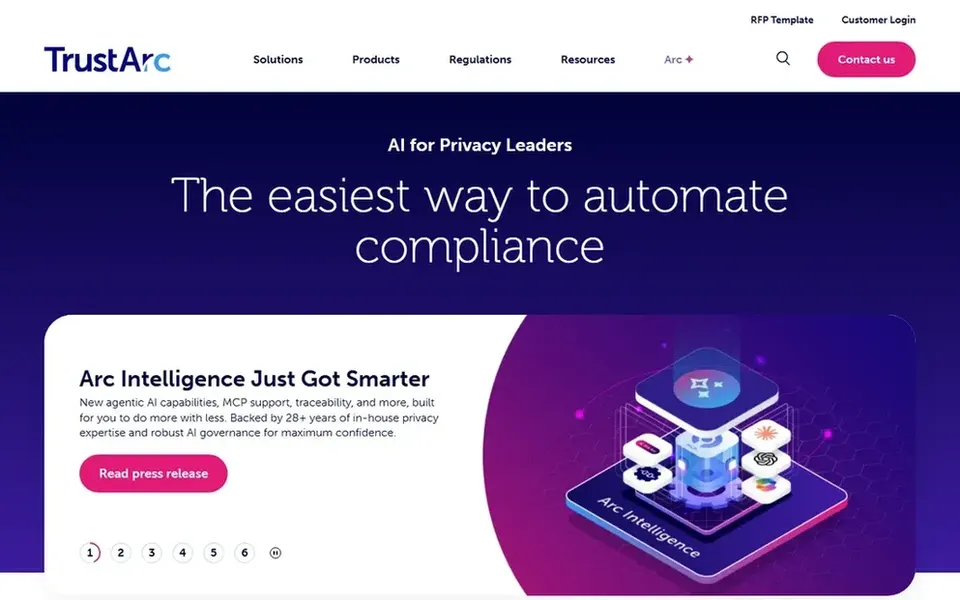
Think of TrustArc for privacy management and continuous compliance. It is targeted at privacy teams that require to handle data protection obligations and demonstrate continuing compliance. Enterprises with established privacy operations can use it to centralize assessments, data mapping, and regulatory workflows.
TrustArc is centered on privacy management instead of AI-specific governance, so teams building AI risk programs may need complementary tooling. It is a better fit when privacy compliance is the core requirement. TrustArc shows no starting price here, so confirm the cost on the vendor site. On free options: Not stated.
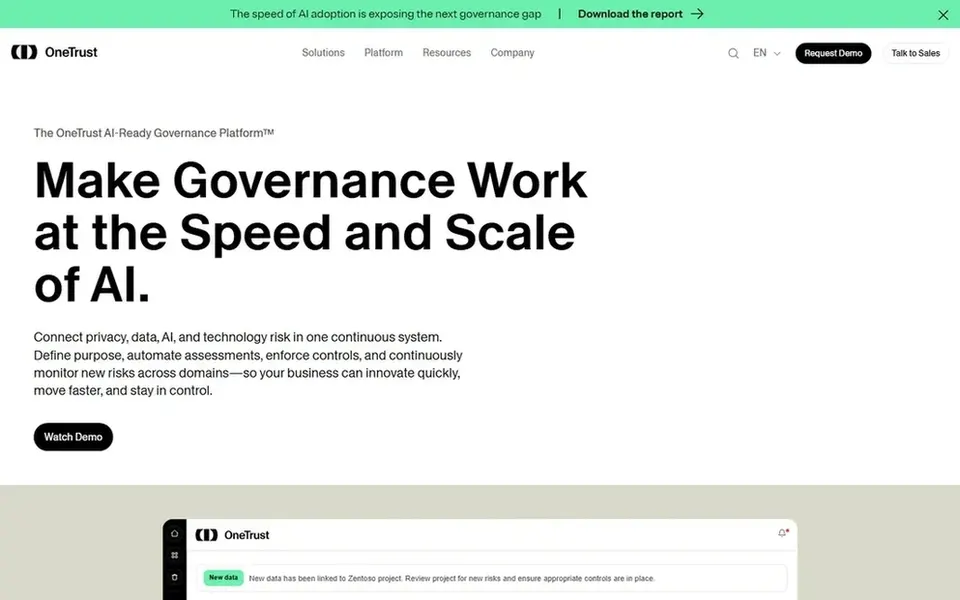
OneTrust was built for integrated privacy and AI governance. Organizations with narrow, single-framework needs may find a focused compliance automation tool more straightforward to adopt. It is built for enterprises that want a single system to link privacy operations with responsible AI oversight.
In practice, the breadth of the platform can mean longer setup and more configuration effort. Teams with mature privacy programs frequently use it to extend governance into AI initiatives without adding separate point tools. OneTrust does not show a starting price in this comparison, so check the vendor site for current pricing. As for free access: Not stated.
Where it falls short: Product breadth can add complexity.
Best for: Automatic compliance certification readiness
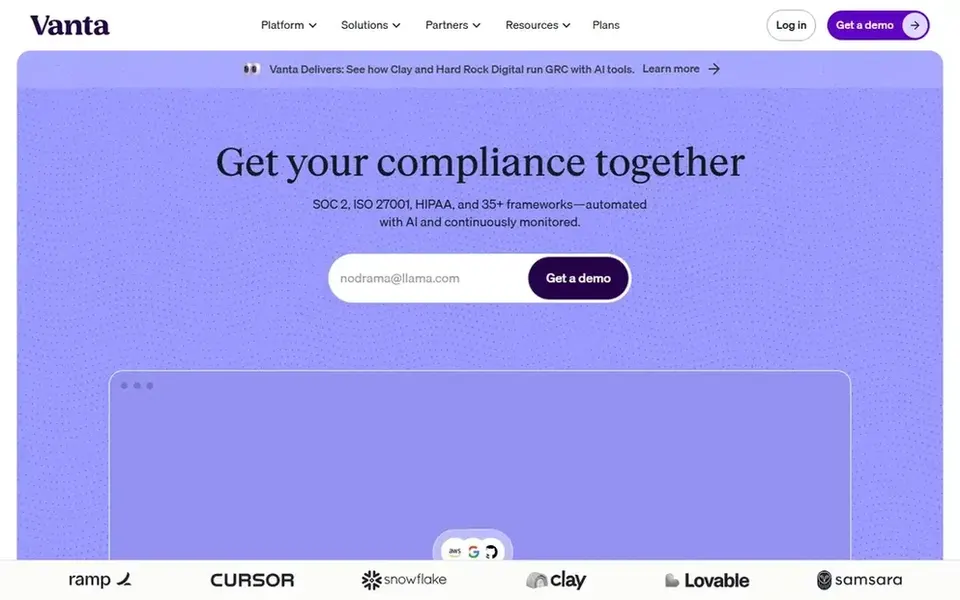
In short, Vanta is for automatic compliance certification readiness. Vanta is built around certification workflows rather than deep AI model governance. So teams needing model-level risk assessment may need a dedicated AI governance layer.
Vanta centres on automating the compliance certification process for frameworks such as SOC 2, HIPAA, and GDPR. It continuously watches security controls and collects evidence, helping teams move from readiness to audit in less time. Choose something else if your primary goal is discovering and managing AI systems instead of proving security compliance. Vanta shows no starting price here, so confirm the cost on the vendor site. Free access: Not stated.
Limits to weigh: AI governance features are narrower.
Ask each vendor, from Credo AI to Vanta, for a written quote; none of them publishes a starting price.
Before choosing Credo AI, weigh its main limit: concentrated on AI instead of general privacy.
Verify that exporting from OneTrust is possible on your plan and covers all your records.
Look at the renewal terms for Credo AI: auto-renewal, notice periods and price changes can matter more than the first-year price.
Find out what support Holistic AI includes on your plan, and whether onboarding help costs extra.
How we picked
Ainotely used vendor pricing pages and product documentation as the base, then compared plans, free access and documented limits for 6 tools. Prices and plan limits come from vendor pages and can change, so confirm them on the vendor site before you buy. Position on the page reflects fit for a typical buyer first, with price clarity and free access breaking ties. Treat it as a guide, not a ruling. The same method was used for each of the 6 AI compliance tools for enterprise teams picks on this page.
Every price and plan detail on this page comes from the vendors’ own websites. We did not run hands-on tests unless the text says so, and we do not publish star ratings or review scores. See how we score and our disclosure.
Keep your shortlist in one place
Paste prices, trial dates and notes from this guide into Ainotely, our AI note app. It files them into a topic and pulls out tasks like “cancel trial by Friday”. Free 7-day trial, no card needed.
How long does it take to implement an AI compliance tool?
Implementation time varies with scope, integrations, and organizational readiness. Focused tools may be quicker to deploy, whereas wide products frequently need more configuration. Ask vendors for an usual implementation outline during evaluation.
Can I try these tools before paying?
Not by default. None of the tools, from Credo AI to Vanta, lists a free plan or a free trial here, so ask each vendor for a demo before committing.
How are the tools for AI compliance tools for enterprise teams ordered?
The order follows typical fit for AI compliance tools for enterprise teams, with Credo AI first and Vanta last, then price clarity and free access. It is editorial judgement, not a score, so another team could rank the tools differently.
Does any tool for AI compliance tools for enterprise teams here have a free plan?
A permanent free plan is not offered by Credo AI, Vanta or the other tools here. Plan a short evaluation period instead.
What should enterprise teams look for in an AI compliance tool?
Look for coverage of your regulatory frameworks, the capacity to inventory AI systems, and workflows for policy enforcement and evidence collection. Worth adding: integration with existing security and data platforms also matters for keeping governance consistent.
Is Credo AI the right pick for everyone comparing AI compliance tools for enterprise teams?
No single tool suits every team. Credo AI comes first because it fits Operationalizing AI governance policies, while Holistic AI suits end-to-end AI governance at scale and IBM watsonx.governance suits lifecycle AI governance with GRC. Match the tool to your own size, budget and workflow before deciding.