Best AI Consulting Services in the IT Industry in 2026: 8 Services Compared

- 1
 AccentureEnterprise AI transformationVisit
- 2
 DeloitteEnterprise AI strategyVisit
- 3
 IBM ConsultingEnterprise AI and dataVisit
- 4
 McKinsey QuantumBlackAI tied to business outcomesVisit
- 5
 BCG XAI product and venture buildingVisit
- AI consulting firms differ sharply: large firms suit enterprise transformation, while specialists suit focused engineering and product work.
- Accenture, Deloitte, and IBM Consulting lead on enterprise AI strategy and large-scale implementation.
- McKinsey QuantumBlack, BCG X, and Thoughtworks suit companies that want AI tied closely to business outcomes or engineering quality.
- Check a firm's real delivery record in your industry, not just its marketing, and ask who will actually staff your project.
- Our pick for most large companies is Accenture, with Thoughtworks as the pick for engineering-led organizations.
Quick comparison
| Product | Ideal for | Price from | Free version | |
|---|---|---|---|---|
| Accenture | Enterprise AI transformation | See website | No | Visit |
| Deloitte | Enterprise AI strategy | See website | No | Visit |
| IBM Consulting | Enterprise AI and data | See website | No | Visit |
| McKinsey QuantumBlack | AI tied to business outcomes | See website | No | Visit |
| BCG X | AI product and venture building | See website | No | Visit |
 Cognizant | Large-scale AI delivery | See website | No | Visit |
 Thoughtworks | Engineering-led AI work | See website | No | Visit |
 Slalom | Practical AI implementation | See website | No | Visit |
The best AI consulting services in the IT industry
AI consulting helps companies move from experiments to production systems, covering strategy, data foundations, model building, and change management. The firms below were compared on scale, industry depth, engineering quality, delivery record, and fit for different company sizes.
Accenture
Ideal for: Enterprise AI transformation
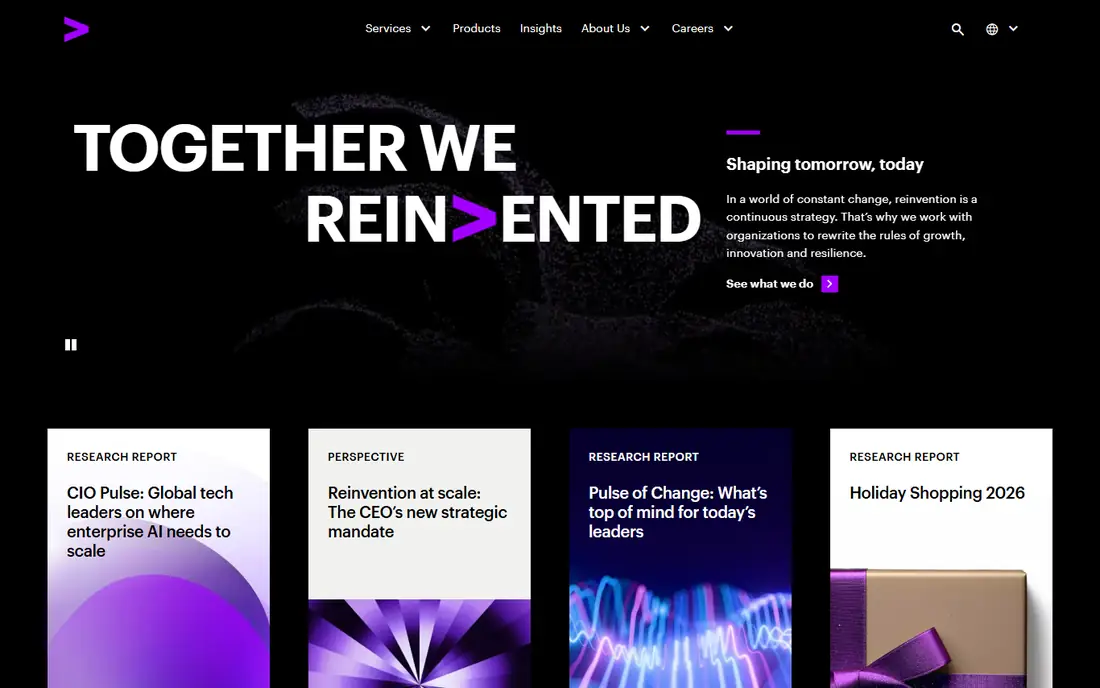
Accenture runs one of the largest AI consulting practices in the world, with services spanning strategy, data modernization, model development, and managed AI operations. Its scale lets it staff large, multi-country programs and cover nearly every industry, from finance to manufacturing. Companies planning enterprise-wide AI transformation often start with Accenture because it can handle both the strategy and the long implementation.
Pricing is premium, and its processes suit large programs better than small experiments. A company with a narrow, short project may find a specialist faster and cheaper. For enterprise transformation, though, Accenture's breadth and delivery capacity are hard to match.
- Very large AI practice
- Broad industry coverage
- End-to-end delivery from strategy to operations
- Premium pricing
- Large-firm processes can feel slow for small projects
Deloitte
Ideal for: Enterprise AI strategy
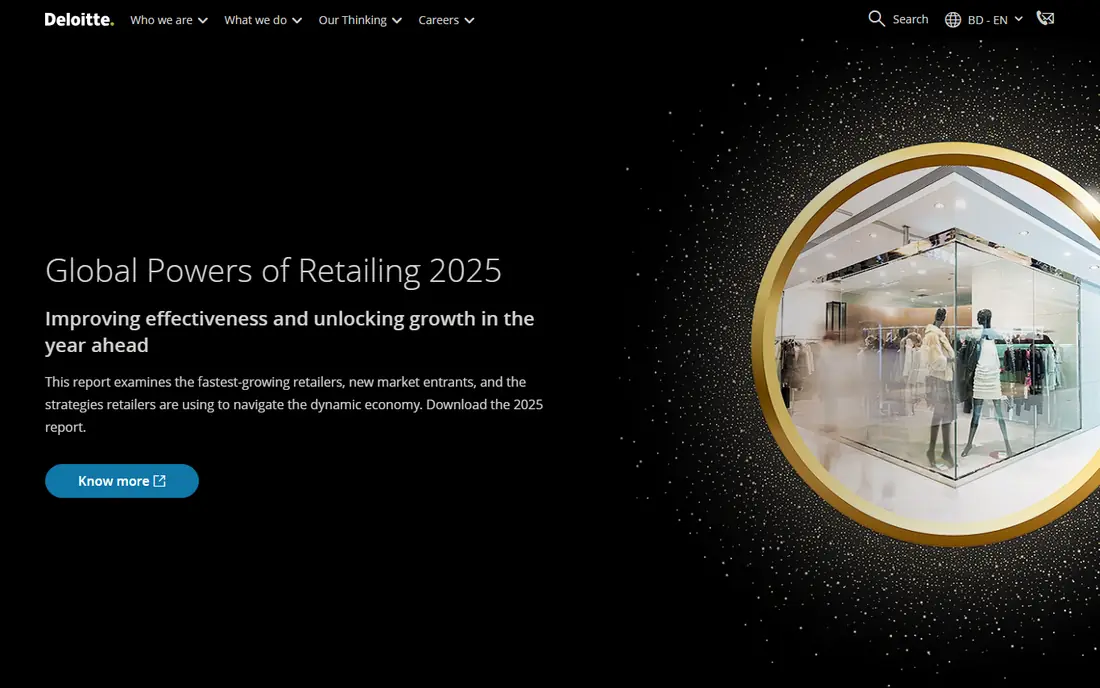
Deloitte combines AI strategy with risk, compliance, and industry expertise, which suits enterprises that must deploy AI under regulatory scrutiny. Its consultants help boards and executives set AI direction, then its delivery teams build and govern the systems. That combination of strategy and trust is valuable in finance, healthcare, and government work.
Its approach is consulting-heavy, so clients need internal teams to carry work forward after the engagement. Pricing is also premium. For a company that needs AI strategy grounded in risk and governance, Deloitte is a strong choice.
- Strong strategy and risk capabilities
- Deep industry practices
- Large delivery network
- Premium pricing
- Consulting-heavy approach needs internal follow-through
IBM Consulting
Ideal for: Enterprise AI and data
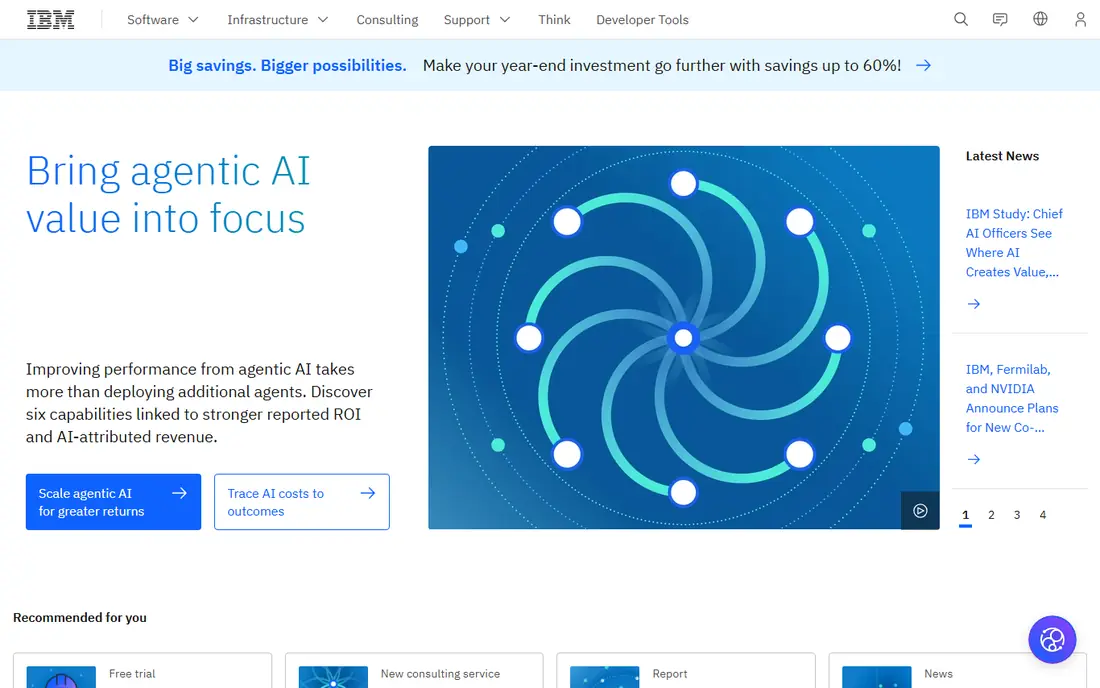
IBM Consulting brings deep experience in enterprise data and AI, including its watsonx platform, and it integrates AI with existing enterprise systems that many large companies already run. Its consultants handle data foundations, model development, and governance, with a focus on production systems rather than demos. Companies with complex legacy estates benefit from that integration skill.
Its closeness to IBM products can raise questions about neutrality, so clients should check how platform choices are made. For enterprise AI grounded in data and existing systems, IBM Consulting is a credible and capable partner.
- Deep data and AI platform expertise
- Watsonx and enterprise integration
- Large delivery capacity
- Product ties to IBM may limit neutrality
- Large-firm pace for small projects
McKinsey QuantumBlack
Ideal for: AI tied to business outcomes
McKinsey QuantumBlack, the AI arm of McKinsey, focuses on analytics and AI work tied to measurable business outcomes, from pricing and operations to customer analytics. Its teams combine data science, engineering, and business consulting, which helps clients connect a model to a profit or efficiency result rather than a technical demo. Senior talent and a rigorous approach are its hallmarks.
Pricing is premium, and it is selective about engagements, favoring large, high-impact programs. Smaller companies may find it out of reach. For a large company that wants AI justified in business terms, QuantumBlack is a leading choice.
- Strong analytics and AI delivery
- Ties AI work to measurable business results
- Senior talent
- Premium pricing
- Selective about engagements
BCG X
Ideal for: AI product and venture building
BCG X is the tech and design arm of Boston Consulting Group, building AI products, platforms, and new ventures rather than only advising on them. Its teams combine strategy, design, and engineering to ship working products, which suits companies that want AI as a new business, not just an efficiency tool. That builder mindset distinguishes it from pure strategy firms.
Pricing is premium, and it suits ambitious product programs better than small pilots. For a company ready to invest in an AI product or venture, BCG X offers a rare mix of strategy backing and real delivery.
- Builds AI products and ventures, not just advice
- Strong design and engineering
- BCG strategy backing
- Premium pricing
- Best for ambitious product programs, not small pilots
Cognizant
Ideal for: Large-scale AI delivery
Cognizant provides large-scale AI and technology delivery, with a broad industry footprint and a large global workforce. Its services cover AI strategy, data engineering, model development, and managed operations, making it a practical partner for companies that need scale at competitive prices. Enterprises with many systems and ongoing delivery needs benefit from that capacity.
Quality can vary by team and location, so clients should vet the specific team proposed, not just the firm. For large-scale delivery where capacity and price matter, Cognizant is a solid option.
- Large delivery capacity
- Broad industry coverage
- Competitive pricing for scale work
- Quality varies by team and region
- Less boutique than specialist firms
Thoughtworks
Ideal for: Engineering-led AI work
Thoughtworks is known for engineering quality, agile delivery, and pragmatic technology choices, and its AI work reflects that culture. Its teams build production AI systems with modern engineering practices, help clients modernize data platforms, and avoid hype in favor of working software. Technology-led companies that value code quality often prefer it to larger strategy firms.
Its teams are premium-priced, and its scale is smaller than Accenture or Deloitte, so very large global programs may need a bigger partner. For engineering-led AI work where quality matters most, Thoughtworks is an excellent choice.
- High engineering standards
- Pragmatic delivery
- Strong agile and modernization practice
- Premium pricing for senior teams
- Smaller scale than the big firms
Slalom
Ideal for: Practical AI implementation
Slalom offers practical AI implementation with a local delivery model, placing consultants close to clients and working collaboratively rather than from a distance. Its cloud partnerships, including with major providers, support real implementations, and its culture emphasizes usable results over slide decks. Mid-size companies and regional enterprises often find it a good fit.
Its global footprint is smaller than the largest firms, so huge multinational programs may need a bigger partner. For a company that wants hands-on, local AI implementation, Slalom is a strong and approachable choice.
- Practical, local delivery model
- Strong cloud partnerships
- Good client collaboration
- Smaller global footprint than the big firms
- Less suited to huge multinational programs
How we picked these
We compared official service pages, practice descriptions, and industry coverage for AI consulting firms, focusing on scale, delivery record, industry depth, engineering quality, and fit for different company sizes. We favored firms with real production AI work and included both large enterprises and engineering-led specialists.
What to check before you hire
Define the outcome before choosing a firm. A strategy engagement, a production system, and a venture build are different jobs, and firms excel at different ones. Ask for case studies in your industry, with measurable results, and ask who will actually staff your project, since senior people who pitch may not be the team that delivers.
Check how the firm handles data, governance, and handover, since an AI system your team cannot run after the consultants leave is a liability. Finally, agree on success measures up front, so the engagement is judged on business results, not on deliverables produced.
It also pays to think about total cost, not just the headline price. Many services charge extra for additional users, higher usage, premium support, or features that turn out to be essential once you start using the product seriously. Add those extras to your comparison before deciding, and check whether discounts for annual billing are worth the commitment. A second cost is time: the hours your team spends learning, configuring, and maintaining a tool are real, even when they do not appear on an invoice. A slightly more expensive option that saves ten hours a month is often the cheaper choice in practice. Weigh both kinds of cost together, and pick the option whose full price, in money and time, you are comfortable paying for at least a year.
Frequently asked questions
How much does AI consulting cost?
Costs vary widely, from focused projects to large transformation programs, and most firms price by engagement rather than publishing rates. Request a scoped proposal with clear deliverables and success measures before comparing firms on price.
Should a small company hire a large AI consulting firm?
Usually not. Large firms suit enterprise programs, while smaller companies get better value from specialists, boutiques, or cloud partner firms that work at their scale and pace.
What is the difference between AI strategy and AI implementation?
Strategy sets direction, priorities, and governance, while implementation builds and deploys working systems. Some firms excel at one, others at both, so match the firm to the job you actually need.
How do I judge an AI consulting firm's real quality?
Ask for industry case studies with measurable outcomes, speak to past clients, and meet the team that will deliver your project. A firm's marketing matters less than its delivery record on similar work.
How long does an AI consulting engagement take?
Focused pilots can run in weeks, while enterprise programs run for months or longer. A clear scope, good data, and internal ownership shorten timelines considerably.
How do I avoid picking the wrong option for best ai consulting services in it industry?
Avoid deciding on price or popularity alone, since the cheapest option can cost more in workarounds and the most popular option may be built for a different kind of user. Instead, test your top choices against your real workload, check the total cost including add-ons, and read recent user reviews for complaints that keep repeating. A pattern of complaints about support, billing, or reliability is a warning worth taking seriously before you commit.