8 Best AI Essay Writing Tools for Students

- QuillBot is the cheapest entry point here, at $8.33 a month on annual billing, and it covers paraphrasing and summarizing.
- Jasper and Copy.ai cost $39 and $49 a month, and they suit long-form drafting rather than short essays.
- Grammarly Pro at $12 a month is the best pick for editing and citations, not for generating a first draft.
- Every tool on this list needs a human edit, and none of them replaces research, argument, or original thought.
- Check your school or university policy before you submit any AI-assisted work, since rules vary widely.
Quick comparison
| Product | Ideal for | Price from | Free version | |
|---|---|---|---|---|
 Jasper | Long-form drafts with brand voice | $39 per month (billed annually) | Free trial (7 days) | Visit |
 Writesonic | AI chat and drafting with web search | $16 per month (billed annually) | Yes | Visit |
 QuillBot | Paraphrasing and summarizing | $8.33 per month (billed annually) | Yes | Visit |
 Grammarly | Editing, tone, and citations | $12 per month (billed annually) | Yes | Visit |
 Wordtune | Rewriting sentences for clarity | $6.99 per month (billed annually) | Yes | Visit |
 Rytr | Short essays on a small budget | $7.50 per month (billed annually) | Yes | Visit |
 Copy.ai | Structured outlines and drafts | $49 per month (billed annually) | Yes | Visit |
 Sudowrite | Creative and narrative writing | $22 per month (billed annually) | Free trial | Visit |
The best ai essay writing tools
Jasper
Ideal for: Long-form drafts with brand voice
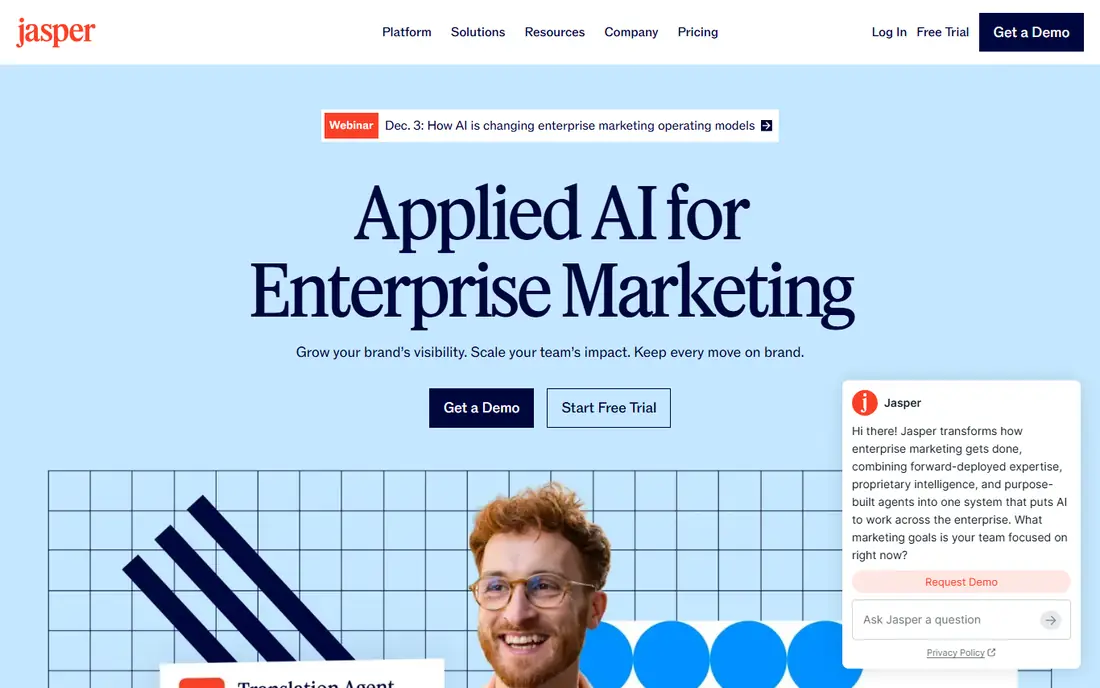
Jasper is a marketing-focused AI writing platform, and its Creator plan costs $39 a month on annual billing, or $49 month to month. For essay work, its value is in long-form drafting: the document editor, the template library, and Jasper Chat help a writer move from an outline to a full draft, and the brand voice feature keeps the tone consistent across sections. One seat, one brand voice, and three knowledge assets come with Creator, which is enough for a single student or freelancer, and the 7-day free trial gives a fair test before subscribing.
The limits matter for students. Jasper has no permanent free plan, so the trial is the only way to test it without paying, and the Creator plan is built for marketers, not for academic writing, so it has no citation manager and no plagiarism report. Output needs fact-checking, since Jasper can produce confident-sounding claims that are wrong, and any essay built from its drafts needs sources checked by hand. For a student who writes long essays every week and wants a structured drafting workflow, Jasper is a capable pick, and for a student who needs one short essay, it is more tool than the job needs.
- Unlimited word generation on Creator
- Templates cover essays, outlines, and summaries
- Creator plan allows only one brand voice
- No permanent free plan
Writesonic
Ideal for: AI chat and drafting with web search
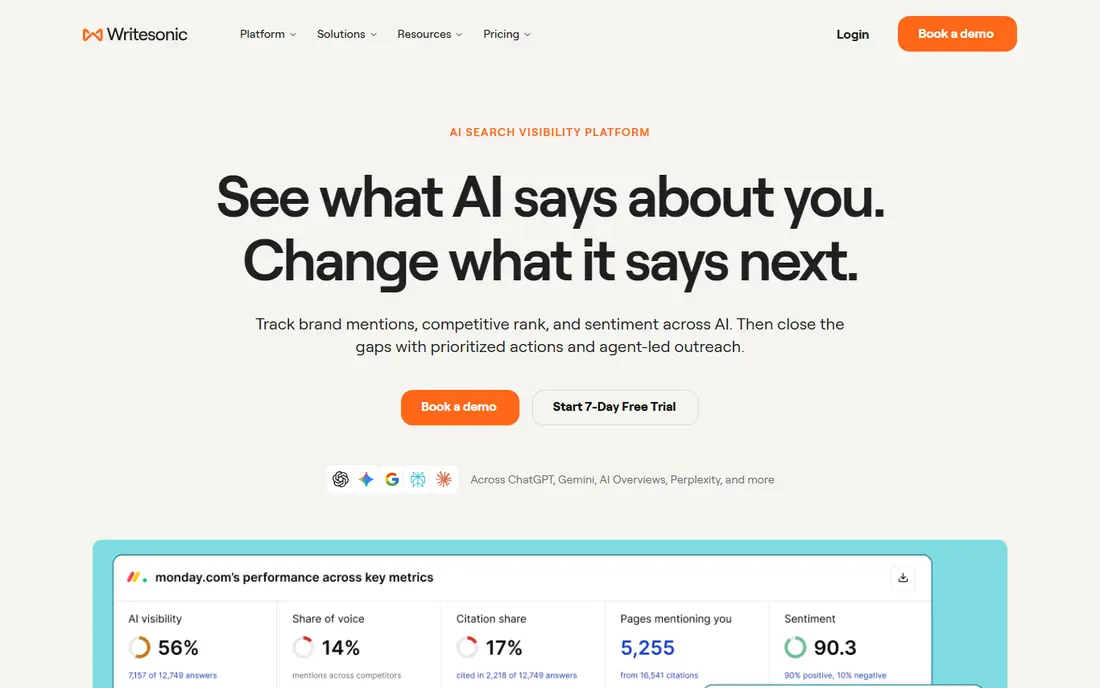
Writesonic sells its Chatsonic assistant as a separate product, with a free plan and an Individual plan at $16 a month on annual billing. Chatsonic works as an AI chat interface with live web search, so it can pull current facts and sources into a draft instead of relying only on training data. It also includes an article writer, brand voice controls, and file analysis, which makes it useful for research-heavy essays where the writer needs to check a claim against a live source.
The pricing split is the part to understand before subscribing. The $16 Individual plan covers the Chatsonic assistant, while Writesonic's main AI visibility platform starts at $79 a month on annual billing, with article quotas and SEO tools that most students will never use. The free plan covers limited generations, which is enough to test the chat and the drafting flow. The drawback is accuracy. Web-connected answers still need checking, since the model can misread a source or cite a page that does not support the claim, and essays need a reference list built by hand.
- Chatsonic searches the web for current facts
- Free plan covers basic use
- Main platform plans start at $79 a month
- Article writer sits outside the chat plan
QuillBot
Ideal for: Paraphrasing and summarizing
QuillBot is the cheapest subscription tool on this list, with Premium at $8.33 a month on annual billing, or $99.95 a year, and $19.95 month to month. It is built for rewriting rather than drafting from scratch: the Paraphraser rewrites a passage in nine modes, from Formal to Creative, the Summarizer condenses long texts up to 6,000 words, and the Plagiarism Checker covers 25,000 words a month on Premium. The free plan allows paraphrasing of 125 words per input in two modes, which covers short passages and quick edits.
For essay work, QuillBot fits the revision stage better than the drafting stage. A student can draft in their own words, then use QuillBot to tighten a paragraph, vary sentence structure, or check a passage for originality. The risk is meaning drift. Rewriting can change the nuance of an argument, and a paraphrase that looks clean can still sit too close to the source, so every rewritten passage needs a careful read. QuillBot also includes an AI detector and a citation generator, which help a student check a draft, though no detector can prove authorship, and citations still need verification against the original source.
- Nine paraphrase modes on Premium
- Plagiarism checker with 25,000 words a month
- Free paraphrasing caps at 125 words per input
- Rewriting can shift meaning
Grammarly
Ideal for: Editing, tone, and citations
Grammarly Pro costs $12 a month on annual billing, or $144 a year, and $30 a month on monthly billing, with a free plan that covers basic spelling and grammar. Pro adds full-sentence rewrites, tone adjustments, plagiarism detection, AI-generated text detection, and 2,000 AI prompts a month. The browser extension and desktop apps check writing wherever a student types, from Google Docs to email, which makes it the most convenient editor on this list.
Grammarly is an editing tool first and a drafting tool second, and that is its strength for essays. It catches grammar, clarity, and tone issues, and the plagiarism checker compares a draft against web pages and academic databases, which helps a student avoid accidental copying. The citation feature supports common styles, though the formatting still needs a check against the style guide. The drawback is price on monthly billing, since $30 a month is steep for a student, and the annual plan is the only sensible way to buy it. Grammarly will not write an essay from a prompt, and that limit is also a benefit, since the draft stays the student's own work.
- Full-sentence rewrites and tone checks
- Plagiarism detection on Pro
- Pro costs $30 a month on monthly billing
- AI prompts cap at 2,000 a month
Wordtune
Ideal for: Rewriting sentences for clarity
Wordtune is a rewriting assistant, and its Advanced plan costs $6.99 a month on annual billing, or $13.99 month to month. Unlimited costs $9.99 a month on annual billing, or $19.99 month to month, and the Basic plan is free. Wordtune suggests rewrites for a selected sentence, offering formal, casual, short, and expanded versions, and it works inside Google Docs, Microsoft Word, and the browser, so a student can rewrite without leaving the document. The tool also summarizes long text and explains grammar choices, which helps a writer learn from the edits.
For essays, Wordtune fits the same revision stage as QuillBot, and the two overlap enough that most students need only one. Wordtune's edge is sentence-level rewriting that stays close to the original meaning, and its weakness is scope: it has no citation manager, no plagiarism checker, and no long-form drafting mode. The Advanced plan covers the rewriting most students need, and Unlimited adds more rewrites per day plus the summarizer. Students should compare the rewrite limits on each plan before subscribing, since the daily cap is the main difference between the tiers.
- Rewrite suggestions keep the writer's meaning
- Works inside Google Docs and Word
- No Plus plan, so the jump from Advanced to Unlimited is steep
- No citation tools
Rytr
Ideal for: Short essays on a small budget
Rytr is a budget AI writing tool, with Premium at $7.50 a month on annual billing, or $9 month to month, and a free plan that covers 10,000 characters a month. It offers more than 40 use cases, including essay outlines, blog ideas, and cover letters, plus tone settings and support for more than 30 languages. The interface is simple: pick a use case, add a topic and keywords, choose a tone, and generate a draft to edit.
For short essays, Rytr is a fair pick at the price, and the free plan is enough for a student who writes occasionally. The drawback is quality. Output on unfamiliar topics can be generic or repetitive, and the tool has no built-in fact-checking, so every claim needs verification. Rytr also lacks a plagiarism checker on the entry plan, which means a student should run the draft through a separate checker before submitting. The Premium plan raises the character limit to unlimited, which suits a student who drafts often, and the price stays low enough that it can sit alongside Grammarly or QuillBot without stretching a student budget.
- Low price with a generous free tier
- 40-plus use cases and 30-plus languages
- Output quality varies by topic
- No plagiarism checker on the entry plan
Copy.ai
Ideal for: Structured outlines and drafts
Copy.ai is a marketing AI platform, and its Starter plan costs $49 a month, with a free plan that covers basic generations. The platform is built around workflows: a user describes the task, and Copy.ai runs a multi-step process that researches, outlines, and drafts the content. For essays, the workflow approach helps a writer who struggles with structure, since the tool produces an outline, then expands each section into paragraphs that follow the outline.
The price is the main drawback for students, since $49 a month is the highest entry price on this list after Jasper, and the platform is built for marketing teams rather than academic work. There is no citation manager, no plagiarism checker, and no academic template set, so a student must handle references by hand. The free plan gives a useful test of the workflow builder, and the subscription tiers add seats, brand voices, and API access that a student will not use. Copy.ai fits a student who writes long, structured pieces every week and wants the outlining done for them, and it is overkill for a single short essay.
- Workflow templates turn a brief into a structured draft
- Free plan covers basic use
- Starter price is high for students
- Built for marketing teams, not academic writing
Sudowrite
Ideal for: Creative and narrative writing
Sudowrite is built for fiction writers, and its Professional plan costs $22 a month on annual billing, with a Hobby plan at $10 a month below it. The tool helps with the parts of writing that stall most often: brainstorming, expanding a scene, describing a character, and finding the next paragraph. For narrative essays, personal statements, and creative assignments, those features map well onto the work, and the tone is more natural than the marketing copy that general tools produce.
The limits are clear. Sudowrite has no citation tools, no plagiarism checker, and no academic templates, and its free option is a trial rather than a permanent free plan. The Hobby plan covers 30,000 words a month, and Professional raises the limit and adds more features, so a student should count their monthly output before choosing a tier. Sudowrite is the right pick for a student whose essays are personal or narrative, and the wrong pick for a research essay that needs citations and data. Check the trial terms before subscribing, since the trial word allowance is the best way to test whether the style fits.
- Story tools help with narrative essays
- Brainstorming features beat a blank page
- Built for fiction, so academic features are thin
- No free plan, only a trial
How we chose
We compared vendor pricing pages read on 13 November 2026, plus vendor-page reads that cite the pricing page. Prices shown are the annual-billing monthly rates on each vendor's pricing page, with month-to-month rates noted where the gap is large. We checked free tiers, trial terms, word limits, citation and plagiarism features, and whether each tool drafts, rewrites, or edits. We did not test any tool with a live essay, and we did not count promotional discounts as list prices. Rytr, Copy.ai, and Sudowrite prices are corroborated from vendor-page reads, and all three should be confirmed at checkout before subscribing.
What to check before you buy
Read your school or university policy first, since some institutions allow AI-assisted drafting with disclosure, and others treat any AI-generated text as misconduct. Count your monthly output, because word and character caps decide the tier more than the feature list does. Check whether the tool includes a plagiarism checker, since several on this list do not, and a separate checker adds cost. Test the free plan or trial with a real assignment, and read the output for invented facts, since every tool on this list can produce confident claims that are wrong. Finally, keep your own notes and sources, because an essay built from AI output still needs a reference list that you verified by hand.
| Monthly writing volume | Best pick | Cost to plan |
|---|---|---|
| Occasional short essays | QuillBot Premium or Rytr Premium | $7.50 to $8.33 a month |
| Weekly essays with editing | Grammarly Pro | $12 a month |
| Rewriting and clarity | Wordtune Advanced | $6.99 a month |
| Long-form drafting | Jasper Creator or Writesonic Individual | $16 to $39 a month |
| Narrative and personal essays | Sudowrite Professional | $22 a month |
Frequently asked questions
What is the best AI essay writing tool for students?
QuillBot is the best starting point for most students, at $8.33 a month on annual billing, because it covers paraphrasing, summarizing, and plagiarism checks at the lowest price. Add Grammarly Pro at $12 a month for editing, and use Jasper or Writesonic only if you draft long essays every week.
Can I use AI tools to write my essay?
You can use them for brainstorming, outlining, and editing, and many schools allow that with disclosure. Submitting AI-generated text as your own work is treated as misconduct at many institutions, so read your school policy, disclose any AI help where required, and keep the argument and the sources your own.
Which tool is best for paraphrasing an essay?
QuillBot is the best pick for paraphrasing, with nine modes on Premium and a 125-word free limit per input. Wordtune is a close second for sentence-level rewriting, and both tools can shift meaning, so read every rewritten passage and check it against your source before you submit.
Is there a free AI essay writing tool?
Yes, QuillBot, Grammarly, Rytr, Writesonic, Wordtune, and Copy.ai all have free plans, and Jasper and Sudowrite offer free trials. Free plans cap words, rewrites, or features, so they suit occasional use, and a student who writes every week will usually need a subscription tier.
How much does an AI essay writing tool cost?
A capable tool costs $6.99 to $12 a month on annual billing, with Wordtune Advanced at $6.99, QuillBot Premium at $8.33, and Grammarly Pro at $12. Long-form drafting tools cost more, with Writesonic Individual at $16, Jasper Creator at $39, and Copy.ai Starter at $49 a month.
Do AI essay tools check for plagiarism?
Some do and some do not. QuillBot Premium includes a plagiarism checker with 25,000 words a month, and Grammarly Pro includes plagiarism detection. Jasper, Writesonic, Wordtune, Rytr, Copy.ai, and Sudowrite do not include a plagiarism checker on their entry plans, so run those drafts through a separate checker.