Best AI Face Swap Tools in 2026: 7 Tools Compared

- Face swap tools should only be used with consent from the people pictured, and never to create deceptive, non-consensual or harmful content.
- FaceSwap, DeepFaceLab and Roop suit technical users who run tools locally, while web tools suit casual creators.
- Video face swapping needs more processing power and time than photo swapping, so check hardware or cloud costs.
- Our pick for casual creators is a web tool with clear consent and moderation policies, and our pick for technical users is DeepFaceLab.
- Check each tool's terms on consent, watermarking and misuse prevention before using it for any public content.
Quick comparison
| Product | Ideal for | Price from | Free version | |
|---|---|---|---|---|
 FaceSwap | Free open source face swapping | Free | Yes | Visit |
 DeepFaceLab | Advanced local face swapping | Free | Yes | Visit |
 Roop | Simple local face swap | Free | Yes | Visit |
 HeyGen | AI video avatars and swapping | Free | Yes | Visit |
 Akool | Web face swap for creators | Free | Yes | Visit |
 Vidnoz Face Swap | Fast web photo and video swap | Free | Yes | Visit |
 Reface | Fun mobile face swap | Free | Yes | Visit |
The best AI face swap tools
AI face swap tools replace a face in a photo or video with another face, for creative projects, filmmaking, memes and marketing. Because this technology can be misused for deception and non-consensual content, responsible use matters more than features: only swap faces with consent, label synthetic content where required, and follow each platform's rules. The tools below are listed for lawful, consensual creative use only. We compared official feature pages, pricing and public reviews.
FaceSwap
Ideal for: Free open source face swapping
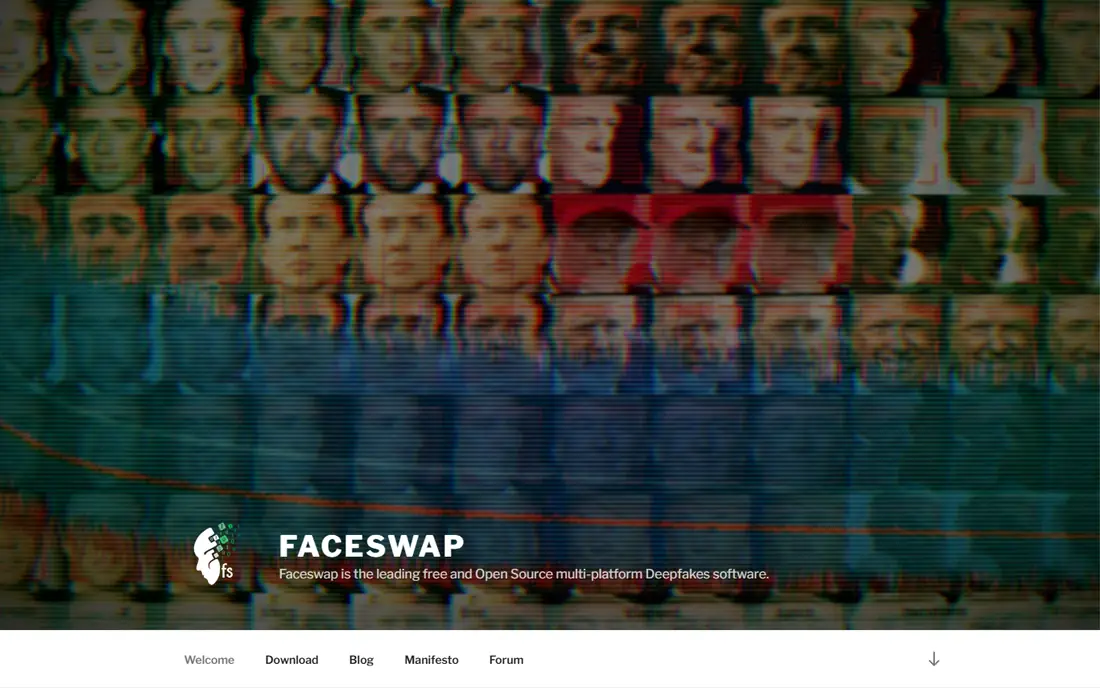
FaceSwap is the open source standard for face swapping, used by hobbyists, researchers and filmmakers for lawful projects. It supports photo and video swapping, with models you train on your own consented footage. The community offers guides and support, and the software costs nothing.
Setup is technical, requiring a capable graphics card and time to train models for good results. Quality depends heavily on the quality and consent of source footage. For a technical user who wants full control and no subscription, FaceSwap is the starting point.
- Free and open source
- Active community
- Photo and video support
- Needs technical setup and a capable GPU
- Quality depends on training data and time
DeepFaceLab
Ideal for: Advanced local face swapping
DeepFaceLab is the advanced tool behind many high-quality face swap videos, used in film production, research and education with consented footage. It offers detailed control over training, blending and output, producing results that simpler tools cannot match for video. Running it locally keeps your footage on your own machine.
The learning curve is steep, a powerful GPU is needed, and training a good model takes hours or days. It is not a casual app. For a filmmaker, researcher or technical creator who needs the best local video quality and has consented source material, DeepFaceLab is the professional choice.
- High-quality video results
- Widely used in film and research
- Full local control
- Steep learning curve
- Needs a powerful GPU
- Training takes hours or days
Roop
Ideal for: Simple local face swap

Roop offers a simpler local face swap: provide a source face image and a target photo or video, and it swaps without training a full model. That simplicity suits a technical user who wants a quick test or a single swap without DeepFaceLab's training time. Running locally keeps processing on your machine.
Quality depends on matching angles, lighting and resolution between source and target, so results vary. Project maintenance and support vary over time, so check the current repository status before relying on it. For a quick, local, consented swap, Roop is a useful tool.
- Simple one-image face swap
- Runs locally
- No training needed for basic swaps
- Quality varies by source images
- Project status and support vary
HeyGen
Ideal for: AI video avatars and swapping
HeyGen is a web AI video platform that includes avatar creation, lip-sync and face-related video tools for marketing, training and content creators. Its strength is turning a script into a presenter video quickly, with avatars and voices, rather than pure face swapping. A free tier lets creators test basic video creation.
Identity features come with consent and verification checks, which responsible creators should expect. Pricing for full commercial use sits on paid plans. For a business creator who needs presenter videos with AI avatars, HeyGen is a polished, commercial option.
- Easy web video creation
- Avatar and voice features
- Commercial use options
- Face swap is part of a broader video platform
- Consent and identity verification apply
Akool
Ideal for: Web face swap for creators
Akool offers web-based face swapping for creators who want results without installing software or training models. Upload a consented source and target, choose photo or video, and download the result from the browser. That ease suits marketers, filmmakers and social creators testing a concept quickly.
Free tier limits on resolution and volume mean serious work needs a paid plan, and users must follow Akool's consent and misuse policies. For a casual creator who wants a fast, web-based swap with consented material, Akool is convenient.
- Web-based face swap without install
- Photo and video options
- Creator-friendly interface
- Free tier limits resolution and volume
- Misuse policies must be followed
Vidnoz Face Swap
Ideal for: Fast web photo and video swap
Vidnoz Face Swap suits a creator who wants a quick web swap without setup. It handles photos and short videos from the browser, with a free tier for testing. For a meme, a creative project or a quick demo with consented images, it is fast and accessible.
Free limits on quality and usage apply, and results vary with source image matching. As with all web tools, upload only images you have rights and consent to use, and check the platform's terms on synthetic content labeling. For speed and simplicity, Vidnoz is a practical web pick.
- Fast web swapping
- Photo and video support
- No install needed
- Free tier limits quality and usage
- Output quality varies by source images
Reface
Ideal for: Fun mobile face swap
Reface is the fun, mobile-first face swap app, known for swapping your face into popular video clips, GIFs and memes. It is very easy to use: take a selfie, pick a template, and share the result. For personal entertainment with your own face and consented friends, it is the most accessible app in this list.
Quality is entertainment-grade, not professional, and full templates and ad-free use need a subscription. Never use Reface or any tool to swap someone else's face without their clear consent, and do not present swapped content as real. For fun, personal use with consent, Reface is the easiest start.
- Very easy mobile face swap
- Fun templates and videos
- Large template library
- Entertainment focus, not professional quality
- Subscription needed for full features
How we picked these
We compared official feature pages, pricing and public reviews for face swap tools available in October 2026. We favored tools with a live product, clear consent or moderation policies, and a working official homepage. We left out tools we could not verify as live, and we exclude any tool marketed for non-consensual or deceptive use.
What to check before you use a face swap tool
Consent comes first. Only use faces of people who have clearly agreed to that specific use, including yourself, and get that agreement in writing for commercial or public work. Do not create content that impersonates a real person, misleads viewers about what is real, or depicts someone in a sexual or harmful context without consent, which is illegal in many places.
Label synthetic content
Label swapped videos and images as synthetic or AI-generated where platform rules or laws require it, and do not present them as genuine footage. Watermarking, captions and platform labels help viewers understand what they are seeing. When in doubt, label clearly and do not publish.
Try before you commit to a full rollout
Most tools in this list offer a free tier or a trial, and the smartest use of that trial is a small, realistic test rather than a tour of every feature. Pick one real job, such as a single project, a single campaign, or a single workflow your team runs every week, and run it end to end in the trial. Invite the people who will actually use the tool daily, not just the person choosing it, and ask them to complete that job without help. Note where they get stuck, how long the job takes compared with your current method, and whether the result is good enough to share with a client or a manager. Check support response times during the trial too, since a fast answer during a trial often predicts the help you will get later. At the end of the trial, compare the real time saved and the real cost per user against the plan you would buy, and only then decide whether the upgrade is worth it for your team.
Frequently asked questions
What is the best AI face swap tool?
For technical users, DeepFaceLab offers the highest-quality local video swapping, while FaceSwap offers a free open source alternative. For casual creators, Akool and Vidnoz offer fast web swapping, and Reface offers fun mobile swaps.
Is face swapping legal?
It depends on consent, purpose and location. Swapping your own face, or another person's face with their clear consent for a lawful creative purpose, is generally allowed. Non-consensual, deceptive or sexual face swaps can be illegal and harmful, and several US states and other countries now restrict them.
Do I need consent to face swap someone?
Yes, for any identifiable real person, get clear consent for that specific use before creating or sharing the swap. Consent for one project does not imply consent for another, and consent can be withdrawn for future use.
Can face swap tools work on video?
Yes, though video swapping needs more processing time and power than photo swapping. Local tools such as DeepFaceLab produce the best video results with training, while web tools offer faster video swaps at lower quality.
Should I label AI face swapped content?
Yes, label swapped content as synthetic or AI-generated where required by platform rules or law, and always when it could mislead viewers. Clear labeling protects viewers and the people pictured.