Best AI Grading Tools for Teachers in 2026: 8 Tools Compared

- 1
 Gradescopeteachers grading exams and problem sets at scaleVisit
- 2
 CoGraderteachers grading essays with AI assistanceVisit
- 3
 Class Companionteachers giving instant feedback on written workVisit
- 4
 EssayGraderteachers grading essays and short answersVisit
- 5
 MagicSchoolteachers who want grading plus planning toolsVisit
- Gradescope is our pick for most buyers focused on teachers grading exams and problem sets at scale, because it pairs a clear core workflow with broad support.
- CoGrader suits buyers who need teachers grading essays with AI assistance, while Class Companion is stronger for teachers giving instant feedback on written work.
- 2 of the 8 options offer a free plan, so you can test the basics before paying, but check the limits on the free tier first.
- Pricing is listed as See website where the vendor uses quote-based pricing, so ask for a quote based on your exact team size and use case.
- Test your top two choices on a real task from your own work before committing, because fit for your workflow matters more than a feature count.
Quick comparison
| Product | Ideal for | Price from | Free version | |
|---|---|---|---|---|
| Gradescope | teachers grading exams and problem sets at scale | See website | Free trial | Visit |
| CoGrader | teachers grading essays with AI assistance | See website | Free trial | Visit |
| Class Companion | teachers giving instant feedback on written work | See website | Free trial | Visit |
| EssayGrader | teachers grading essays and short answers | See website | Free trial | Visit |
| MagicSchool | teachers who want grading plus planning tools | See website | Yes | Visit |
 Brisk Teaching | teachers grading inside Google Docs | See website | Yes | Visit |
 Crowdmark | teachers grading handwritten and digital work at scale | See website | Free trial | Visit |
 Graide | teachers grading maths and science work | See website | Free trial | Visit |
The best AI Grading Tools for Teachers in 2026
Here are our picks for AI grading tools for teachers, in an order that balances fit, breadth and value. Each entry notes who it suits, what stands out and where it falls short, so you can compare on facts rather than marketing claims.
Gradescope
Ideal for: teachers grading exams and problem sets at scale
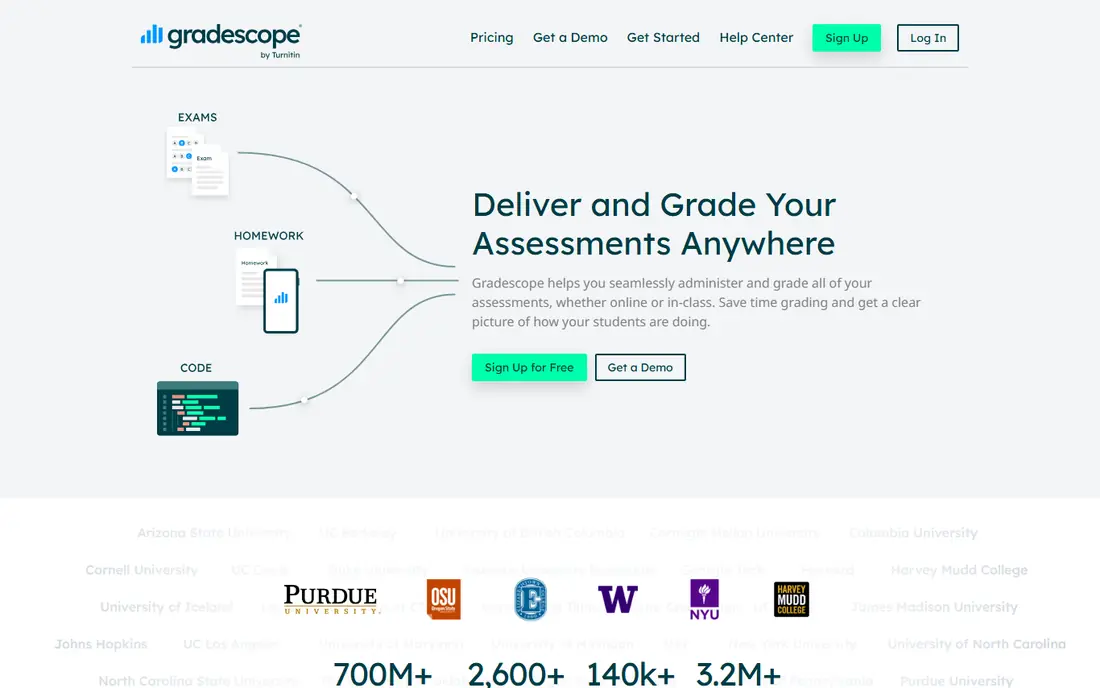
For teams weighing options, Gradescope is worth a close look because it is built for teachers grading exams and problem sets at scale. In day-to-day use, the appeal comes down to rubric-based grading and grouping, which matters more than a long feature list. It also offers aI grouping of similar answers, which helps once the basics are covered and the team grows. A third strength, analytics, adds further depth for buyers who need more than the basics.
The catch is pricing varies by institution, so check that limit against your real workload before committing. A second limit is best for structured assessments, so read the plan details carefully. For AI grading tools for teachers, the question to ask during a trial is whether Gradescope handles your most common task without workarounds, because that daily experience decides whether the tool stays in use. If it passes that test, it is a strong candidate for your shortlist, and if it does not, the next option on this list may fit better.
- Rubric-based grading and grouping
- AI grouping of similar answers
- Analytics
- Pricing varies by institution
- Best for structured assessments
CoGrader
Ideal for: teachers grading essays with AI assistance
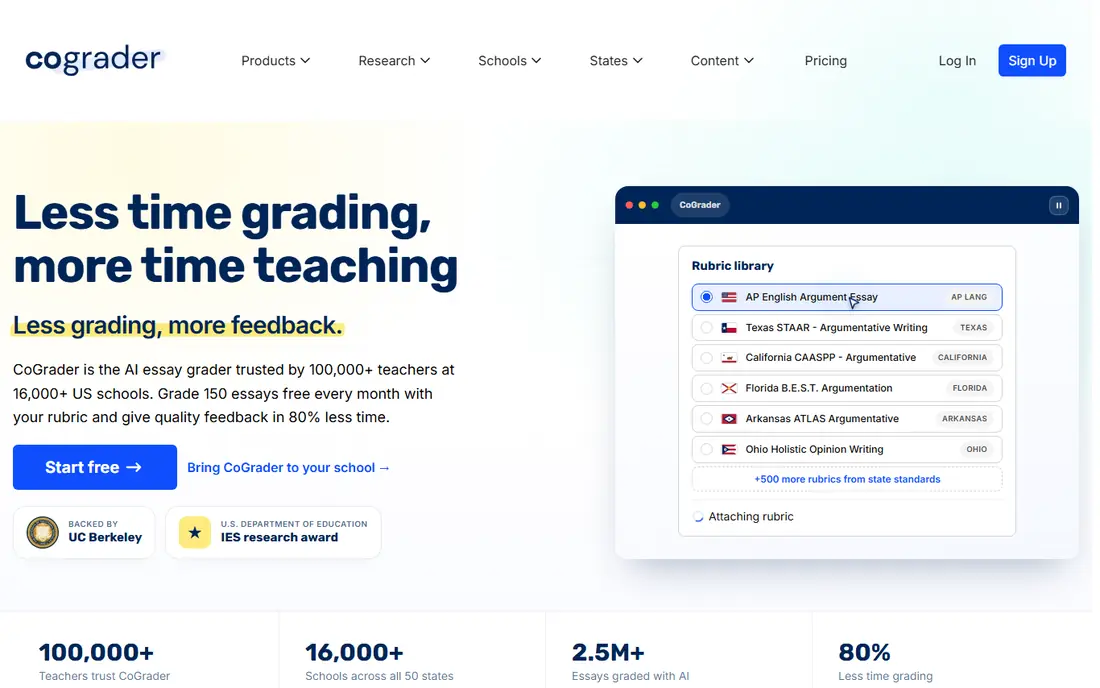
CoGrader earns its place here mainly because it fits teachers grading essays with AI assistance well. The practical strength is aI essay feedback with rubrics, and that shapes how the tool feels after the first week. A second strength is class analytics, and it pairs well with the core use case above. A third strength, google Classroom links, adds further depth for buyers who need more than the basics.
The honest downside is output needs teacher review, which may matter more than the strengths if it hits your main use case. A second limit is pricing varies by plan, so read the plan details carefully. For AI grading tools for teachers, the question to ask during a trial is whether CoGrader handles your most common task without workarounds, because that daily experience decides whether the tool stays in use. If it passes that test, it is a strong candidate for your shortlist, and if it does not, the next option on this list may fit better.
- AI essay feedback with rubrics
- Class analytics
- Google Classroom links
- Output needs teacher review
- Pricing varies by plan
Class Companion
Ideal for: teachers giving instant feedback on written work
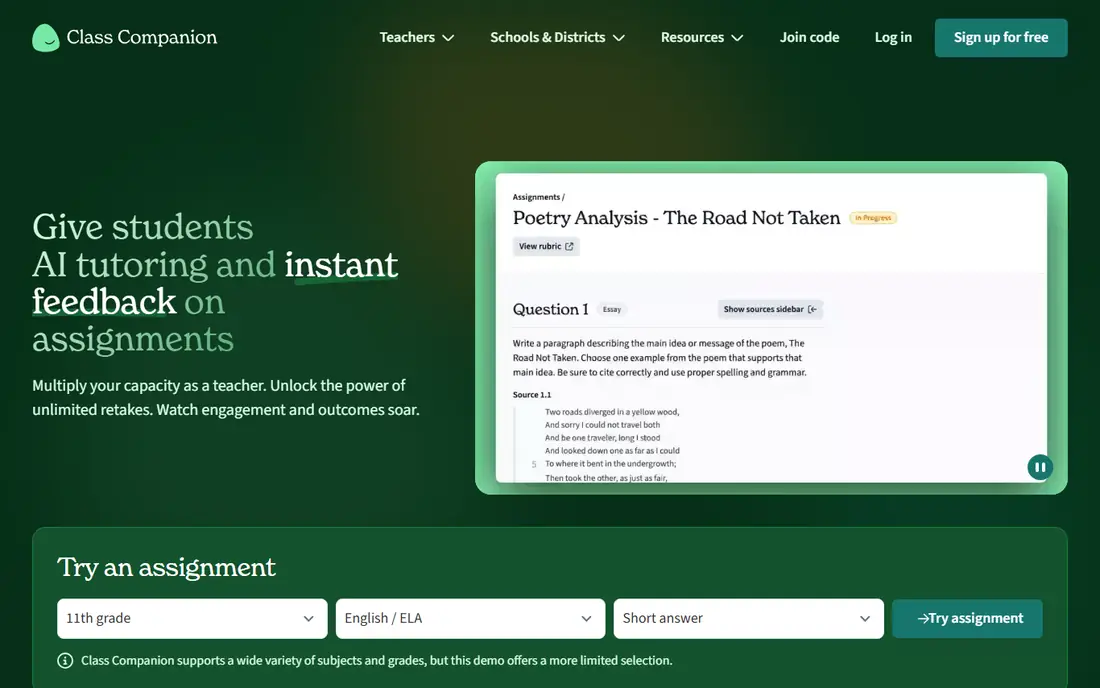
If your main need is teachers giving instant feedback on written work, Class Companion deserves attention early in your shortlist. What we liked most in the documentation was instant AI feedback for students, because it addresses a real daily task. Beyond the headline feature, teacher rubrics adds value for teams that need more than a basic setup. A third strength, progress views, adds further depth for buyers who need more than the basics.
Watch out for student data and privacy policies should be reviewed, and test that exact scenario during a trial. A second limit is free tier limits, so read the plan details carefully. For AI grading tools for teachers, the question to ask during a trial is whether Class Companion handles your most common task without workarounds, because that daily experience decides whether the tool stays in use. If it passes that test, it is a strong candidate for your shortlist, and if it does not, the next option on this list may fit better.
- Instant AI feedback for students
- Teacher rubrics
- Progress views
- Student data and privacy policies should be reviewed
- Free tier limits
EssayGrader
Ideal for: teachers grading essays and short answers
EssayGrader stands out in this group for buyers focused on teachers grading essays and short answers. The strongest point for most buyers is bulk essay grading with rubrics, which shows up in everyday workflows. It also brings feedback reports to the table, which can save time as requirements change. A third strength, simple uploads, adds further depth for buyers who need more than the basics.
The main trade-off is accuracy varies by prompt and rubric, so weigh it against the strengths above. A second limit is teacher review remains essential, so read the plan details carefully. For AI grading tools for teachers, the question to ask during a trial is whether EssayGrader handles your most common task without workarounds, because that daily experience decides whether the tool stays in use. If it passes that test, it is a strong candidate for your shortlist, and if it does not, the next option on this list may fit better.
- Bulk essay grading with rubrics
- Feedback reports
- Simple uploads
- Accuracy varies by prompt and rubric
- Teacher review remains essential
MagicSchool
Ideal for: teachers who want grading plus planning tools
Start your shortlist with MagicSchool if teachers who want grading plus planning tools describes your situation. Look closely at grading and feedback tools alongside planning, since that is where this option earns its keep. Another plus is school controls, useful when the tool becomes part of a wider workflow. A third strength, templates, adds further depth for buyers who need more than the basics.
Be aware of free tier has limits, and ask the vendor how it applies to your team size and use case. A second limit is grading depth varies by tool, so read the plan details carefully. For AI grading tools for teachers, the question to ask during a trial is whether MagicSchool handles your most common task without workarounds, because that daily experience decides whether the tool stays in use. If it passes that test, it is a strong candidate for your shortlist, and if it does not, the next option on this list may fit better.
- Grading and feedback tools alongside planning
- School controls
- Templates
- Free tier has limits
- Grading depth varies by tool
Brisk Teaching
Ideal for: teachers grading inside Google Docs
Among the options here, Brisk Teaching is a natural fit for teachers grading inside Google Docs. The headline benefit is targeted feedback in Google Docs, and it is backed by the other strengths in the list above. You also get rubric tools, which matters when the tool is used daily rather than occasionally. A third strength, admin controls, adds further depth for buyers who need more than the basics.
The limitation to plan around is google-focused workflow, particularly if you expect heavy use. A second limit is some features need a paid plan, so read the plan details carefully. For AI grading tools for teachers, the question to ask during a trial is whether Brisk Teaching handles your most common task without workarounds, because that daily experience decides whether the tool stays in use. If it passes that test, it is a strong candidate for your shortlist, and if it does not, the next option on this list may fit better.
- Targeted feedback in Google Docs
- Rubric tools
- Admin controls
- Google-focused workflow
- Some features need a paid plan
Crowdmark
Ideal for: teachers grading handwritten and digital work at scale
Crowdmark is best understood as a tool for teachers grading handwritten and digital work at scale, and it shows in how it is organized. In practice, grading workflows for paper and online work is the reason teams stick with this option after the trial. A further strength is rubric support, and it helps explain why this option appears on many shortlists. A third strength, analytics, adds further depth for buyers who need more than the basics.
The drawback worth noting is pricing varies by institution, so confirm it does not block your core workflow. A second limit is setup needs course planning, so read the plan details carefully. For AI grading tools for teachers, the question to ask during a trial is whether Crowdmark handles your most common task without workarounds, because that daily experience decides whether the tool stays in use. If it passes that test, it is a strong candidate for your shortlist, and if it does not, the next option on this list may fit better.
- Grading workflows for paper and online work
- Rubric support
- Analytics
- Pricing varies by institution
- Setup needs course planning
Graide
Ideal for: teachers grading maths and science work
For buyers whose priority is teachers grading maths and science work, Graide is one of the first names to test. The most useful strength is aI-assisted marking for STEM, especially when the workload grows. It also delivers feedback tools, which rounds out the package for its target buyers. A third strength, school controls, adds further depth for buyers who need more than the basics.
Finally, remember uK-focused product, and factor that cost or limit into your comparison. A second limit is subject coverage should be checked, so read the plan details carefully. For AI grading tools for teachers, the question to ask during a trial is whether Graide handles your most common task without workarounds, because that daily experience decides whether the tool stays in use. If it passes that test, it is a strong candidate for your shortlist, and if it does not, the next option on this list may fit better.
- AI-assisted marking for STEM
- Feedback tools
- School controls
- UK-focused product
- Subject coverage should be checked
How we picked these
We started with the topic itself and kept only products that truly fit AI grading tools for teachers and work in October 2026. We compared official feature pages, pricing pages, app-store listings where relevant, privacy policies and public reviews, and we left out products that were discontinued, unrelated or impossible to verify. We did not claim hands-on testing we did not do. Instead, we judged each option on fit for its stated audience, breadth of the core workflow, pricing transparency and honest limits.
We also favored products with clear documentation and support, and we noted where pricing is quote based rather than inventing a number. Where a free plan exists, we noted it, but we also flagged its limits, since a free tier that blocks your main task is not really free for your use case.
Using AI grading without losing teacher judgment
Start with a clear rubric written in student-friendly language, because AI grading follows the rubric you give it, including its gaps. Test the tool on past student work across ability levels, and compare AI marks with teacher marks before using it live. Pay special attention to unusual answers, non-standard English and creative approaches, since those are where AI marking is most likely to miss merit. Keep a human review step for borderline grades, appeals and any high-stakes decision, and tell students how AI feedback is used in your class. Also check privacy, data retention and school policy before uploading student work. Finally, use saved time for teaching, such as targeted feedback conversations, rather than simply marking more work. The best AI grading tool is the one that gives students faster, clearer feedback while teachers keep control of final judgments.
Frequently asked questions
Can AI grade essays fairly?
AI can apply a rubric consistently and give fast feedback, but fairness depends on rubric quality, prompt design and teacher review. Bias, language variation and unusual answers still need human judgment.
Should students see AI feedback directly?
Direct feedback can help revision, but teachers should review it first for accuracy and tone. Clear labels that feedback came from AI help students treat it as guidance, not a final judgment.
Does AI grading save teachers time?
It often saves time on first-pass feedback and routine marking, while final grades, appeals and complex work still need teacher time. Net savings depend on how much review each output needs.
What about student privacy?
Check data handling, retention and whether student work is used for training. School approval and parent communication matter before student work is uploaded.
Which assessments suit AI grading best?
Structured work, short answers and rubric-based essays suit AI assistance best. Open creative work, oral assessments and high-stakes exams need stronger human oversight.