Memgraph leads the list, best for in-memory graph for AI context. Listed starting prices: Neo4j from $0.09 per GB per hour. ArangoDB is the stronger choice for unified context for AI applications, while Google Cloud Spanner Graph suits Graph plus relational in one database. Details, prices and limits for the rest of the 6 tools are below.
This Ainotely guide covers 6 AI graph databases. Each profile lists a starting price, free plan details, strengths and drawbacks, so you can drop poor fits quickly.
Key takeaways
Memgraph is the opening pick, best for in-memory graph for AI context.
A free plan is available from 2 of the 6 tools: ArangoDB, Neo4j.
For mature graph platform for AI context, Neo4j is worth a look.
Pricing for Memgraph, ArangoDB, Google Cloud Spanner Graph and others is quote-based, which adds a sales step before you can compare cost.
Memgraph is designed for in-memory graph for AI context. An in-memory approach means you should plan capacity and persistence carefully against your workload.
As for the details, Memgraph bills itself as an in-memory graph engine for AI context, handling GraphRAG, AI memory, agentic AI and live analytics for example fraud detection. Pricing for Memgraph is not stated here, so ask the vendor for current figures. Free options: Free trial.
What to check first: In-memory design shapes capacity planning.
ArangoDB is built with unified context for AI applications in mind. ArangoDB now describes itself as a contextual data system, arguing that AI agents, assistants and apps need unified, current and trusted business context to reason, decide and act.
Watch-outs: Fit relies on your data model.
Also, if you want a narrowly focused graph engine with a long track record, Neo4j or Memgraph may be a more direct choice. This comparison lists no price for ArangoDB; ask the vendor. You can start on ArangoDB without paying.
For Graph plus relational in one database, Google Cloud Spanner Graph is a natural candidate. Google Cloud Spanner is described as an always-on database with virtually unlimited scale that merges relational, graph, key value and search capabilities in a single system, with no maintenance windows for uninterrupted apps. On top of that, the graph capability is one part of a broader database, so highly specialized graph analytics may call for a dedicated engine.
Where it falls short: Best fit for Google Cloud users.
Also, if you are not on Google Cloud or want a graph-first product, Neo4j, Memgraph or TigerGraph are more direct starting points. Also, Spanner Graph suits teams that want graph queries without adding a separate graph store, particularly those already building on Google Cloud. This comparison lists no price for Google Cloud Spanner Graph; ask the vendor. Free options: Not stated.
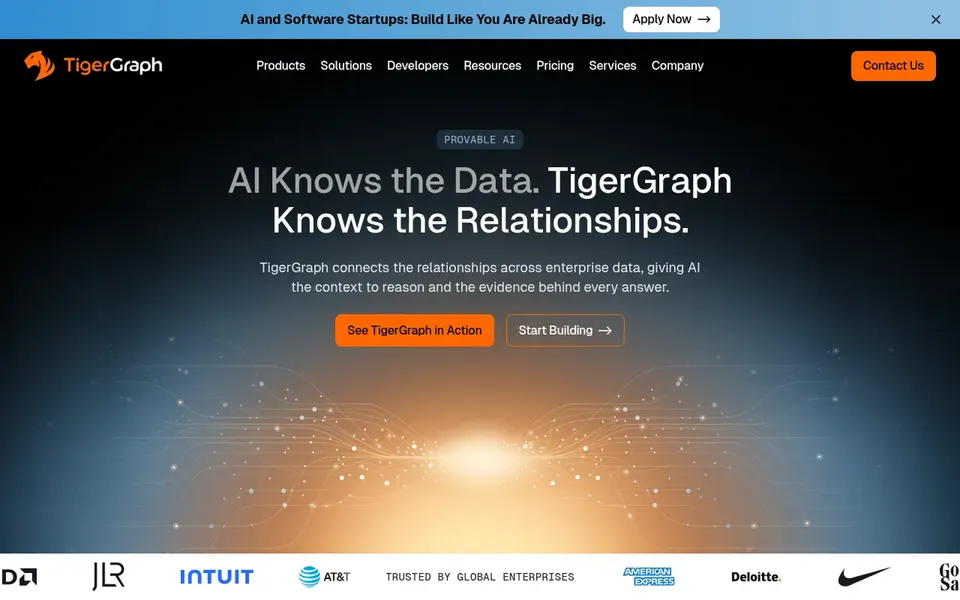
Where TigerGraph fits: live AI and analytics at scale. TigerGraph positions its graph database for live AI and analytics, with stated uses in fraud detection, entity resolution and uncovering hidden connections at enterprise scale.
Limits to weigh: Specialized product to learn.
The enterprise orientation can mean a steeper setup and more specialized skills than a light project needs. In daily use, teams wanting a more straightforward in-memory engine for AI context or a general-purpose product may prefer Memgraph or Neo4j instead. Check the vendor site for TigerGraph pricing; none is listed in this comparison. Trial and free access: Free trial.
Azure Cosmos DB for Apache Gremlin is aimed squarely at Graph on a managed Azure NoSQL system. Azure Cosmos DB is Microsoft's completely managed NoSQL database, and its Apache Gremlin API supplies a graph interface within that product.
The main drawbacks: Best value inside the Azure ecosystem.
It suits teams standardized on Azure that want graph traversal alongside other data models, with the product emphasizing high availability, scalability and low latency for modern application development. This comparison lists no price for Azure Cosmos DB for Apache Gremlin; ask the vendor. Trial and free access: Not stated.
Think of Neo4j for mature graph product for AI context. It fits teams that want a well-established graph foundation for knowledge graphs, recommendations, or AI features that rely on relationships between entities.
Trade-offs to know: Needs graph modeling skills.
Its breadth means more concepts to learn, and smaller teams may find the system bigger than their first project needs. The starting price for Neo4j: $0.09 per GB per hour. Neo4j offers a free plan.
Confirm the entry price on the vendor page. For Memgraph, ArangoDB, Google Cloud Spanner Graph and others that means a quote rather than a fixed price.
Check what the free option really includes: ArangoDB and Neo4j offer a free plan, and usage caps differ.
Use real work to test the free trial from Memgraph and TigerGraph, rather than a demo project.
Before choosing Memgraph, weigh its main limit: in-memory design shapes capacity planning.
Ask Memgraph whether prices are locked for the first term and what happens at renewal.
Make sure Neo4j lets you export your data in a format another tool can read.
How we picked
Ainotely looked at what each vendor publishes: pricing, plan limits, feature coverage for AI graph databases and stated drawbacks. No hands-on testing is claimed. Prices and plan limits come from vendor pages and can change, so confirm them on the vendor site before you buy. Position on the page reflects fit for a typical buyer first, with price clarity and free access breaking ties. Treat it as a guide, not a ruling.
Every price and plan detail on this page comes from the vendors’ own websites. We did not run hands-on tests unless the text says so, and we do not publish star ratings or review scores. See how we score and our disclosure.
Keep your shortlist in one place
Paste prices, trial dates and notes from this guide into Ainotely, our AI note app. It files them into a topic and pulls out tasks like “cancel trial by Friday”. Free 7-day trial, no card needed.
Should I choose a dedicated graph database or a multi-model system?
A dedicated engine like Neo4j, TigerGraph or Memgraph concentrates on graph workloads and graph-specific tooling. The right choice relies on how central graph is to your application.
Can I try these tools before paying?
Often, yes. ArangoDB and Neo4j have a free plan and Memgraph and TigerGraph offer a free trial. Use your own data and a real task during the test, and check what the free tier or trial limits before you rely on it.
How does in-memory graph processing help AI workloads?
In-memory engines like Memgraph keep graph data in memory, which can support low-latency lookups for interactive AI features and agent memory. The trade-off is that capacity planning and persistence need more attention. Confirm that the documented behavior matches your workload before committing.
What makes a graph database a good match for AI applications?
A graph database keeps those relationships straight, which helps retrieval, agent memory and link analysis. Look for query language support, integration with your AI stack and predictable latency.
Is Memgraph the right pick for everyone comparing AI graph databases?
No single tool suits every team. Memgraph comes first because it fits in-memory graph for AI context, while ArangoDB suits unified context for AI applications and Google Cloud Spanner Graph suits Graph plus relational in one database. Match the tool to your own size, budget and workflow before deciding.
Do these tools publish their prices?
Not all of them. Memgraph, ArangoDB, Google Cloud Spanner Graph and others publish no starting price, so expect a quote request for those. The rest, Neo4j included, show a starting price, though seats and billing terms still change the final cost.