Best AI Investing Apps in 2026: 8 Apps Compared

- 1
 MagnifiConversational AI investing researchVisit
- 2
 ComposerAutomated no-code strategiesVisit
- 3
 WealthfrontHands-off robo-advisorVisit
- 4
 BettermentHands-off robo-advisorVisit
- 5
 AcornsMicro-investing for beginnersVisit
- Magnifi suits investors who want to ask questions in plain English, while Composer suits investors who want to automate rules-based strategies.
- Wealthfront and Betterment remain the low-cost robo-advisor picks for hands-off, diversified investing.
- This is not financial advice, and AI tools cannot predict markets or guarantee returns. Trading and investing carry risk, including loss of principal.
- Check whether an app is a registered adviser, a research tool, or a broker, since that changes what it can do for you.
- Our pick for AI research is Magnifi, and our pick for hands-off investing is Wealthfront.
Quick comparison
| Product | Ideal for | Price from | Free version | |
|---|---|---|---|---|
| Magnifi | Conversational AI investing research | Free | Yes | Visit |
| Composer | Automated no-code strategies | Free | Yes | Visit |
| Wealthfront | Hands-off robo-advisor | 0.25% per year | No | Visit |
| Betterment | Hands-off robo-advisor | 0.25% per year | No | Visit |
| Acorns | Micro-investing for beginners | $4 per month | No | Visit |
 Trade Ideas | Active traders and AI scanning | $89 per month | Free trial | Visit |
 Danelfin | Explainable AI stock scores | Free | Yes | Visit |
 Interactive Brokers | Full broker with AI tools | Free | Yes | Visit |
The best AI investing apps
AI investing apps split into research tools that help you decide, robo-advisors that manage a diversified portfolio, and trading tools that automate strategies. The right pick depends on whether you want help deciding, hands-off management, or active trading. We compared official pricing pages, feature lists and public reviews. This article is general information, not financial advice, and investing carries risk.
Magnifi
Ideal for: Conversational AI investing research
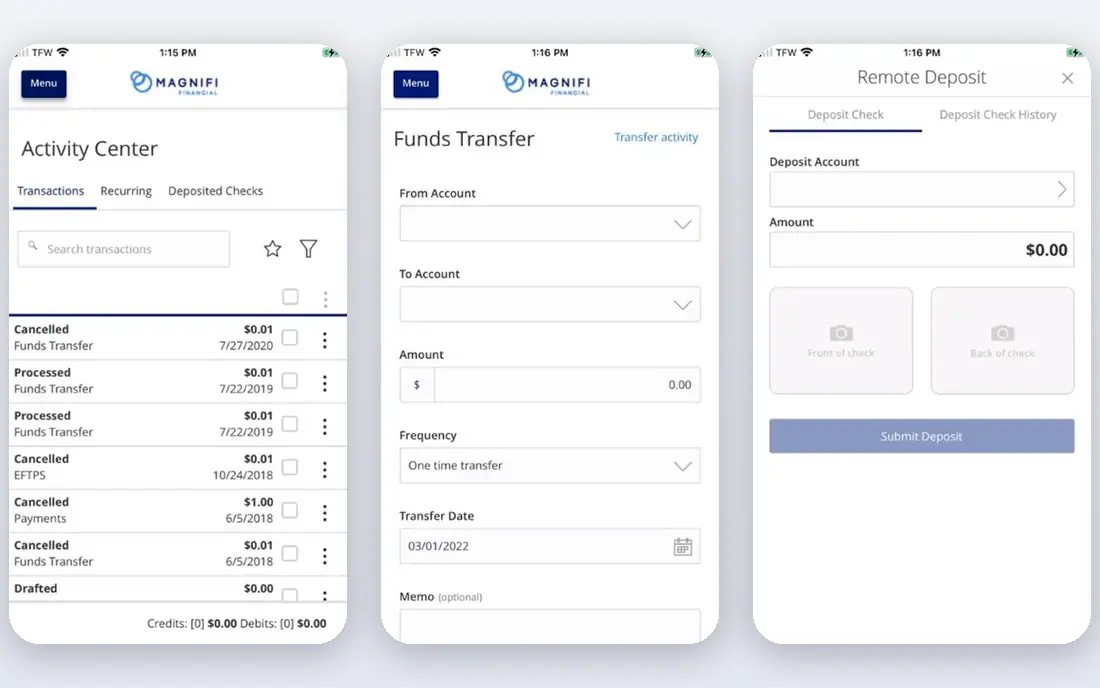
Magnifi is our pick for AI investing research because it lets you ask questions in everyday language, such as whether you are diversified enough or which ETFs match a theme, and get answers tied to your holdings. It aggregates portfolios across many brokerages, supports goal-based research, and offers a free tier for basic use. Premium, listed at $99 per year, adds scenario testing, forecasts and deeper research.
The free tier covers a useful dashboard and basic analysis, but the deeper Premium features are where the AI research pays off. Magnifi is a research and adviser platform, not a guarantee of returns, so treat its answers as a starting point for your own judgment, not as a recommendation to buy.
- Ask investing questions in plain English
- Portfolio aggregation
- Goal-based research
- Premium insights need a paid plan
- Research quality depends on connected accounts
Composer
Ideal for: Automated no-code strategies

Composer, now part of SoFi, lets investors build rules-based strategies, called symphonies, without code, backtest them on historical data, and automate trading. Building and backtesting are free in the basic tier, while automated trading requires a Trading Pass, recently listed around $32 per month billed annually or $40 monthly. For a DIY investor who wants disciplined, rules-based execution, it removes the emotion from rebalancing.
Backtests show what would have happened in the past, not what will happen next, and automated strategies can lose money. Start with a small allocation, understand every rule in a strategy before automating it, and review performance regularly rather than setting it and forgetting it.
- No-code strategy builder
- Backtesting
- Automated trade execution
- Automated trading needs a Trading Pass
- Strategies can lose money like any investing
Wealthfront
Ideal for: Hands-off robo-advisor

Wealthfront is our pick for hands-off investing. It builds a diversified ETF portfolio for your goals, rebalances automatically, and offers tax-loss harvesting, all for an advisory fee of 0.25 percent per year. The minimum is $500 for investing, and a cash account is available alongside investing. For an investor who wants a sound, diversified plan without picking stocks, Wealthfront is a strong default.
Control is the trade-off. You choose a risk level and goals, not individual stocks, so active stock pickers will feel constrained. Fees are low, but ETF expense ratios and taxes still apply. For long-term, diversified investing, that simplicity is a feature, not a flaw.
- Automated diversified portfolios
- Rebalancing and tax-loss harvesting
- Low advisory fee
- Less control than a DIY broker
- Cash account rate varies
Betterment
Ideal for: Hands-off robo-advisor
Betterment matches Wealthfront on the headline advisory fee of 0.25 percent per year for Digital, with no minimum, though small balances pay $5 per month instead. It offers goal-based planning, automated rebalancing and tax-loss harvesting, plus a Premium tier with human adviser access at a higher fee. For a new investor starting small, the no-minimum Digital plan is welcoming.
The $5 monthly fee on small Digital balances means a tiny account pays a higher effective rate, so check the math at your balance. Betterment and Wealthfront are close on price and features, so choose by the planning tools and interface you prefer, or by whether you want human advice access.
- Automated diversified portfolios
- No minimum on Digital
- Goal-based planning tools
- Premium human advice costs more
- Small balances pay a monthly fee instead on Digital
Acorns
Ideal for: Micro-investing for beginners
Acorns suits a beginner who struggles to save regularly. Round-Ups invest spare change from card purchases into a diversified ETF portfolio, and plans start at $4 per month for Bronze, with Silver and Gold adding IRA and checking features. For someone starting from zero, the habit matters more than the amount.
The monthly fee is high relative to a very small balance, so Acorns makes most sense once Round-Ups and deposits build a balance that justifies $4 to $12 per month. Control over individual investments is limited by design. Use Acorns to build the habit, and consider a low-fee robo-advisor as the balance grows.
- Round-Ups turn spare change into investing
- Simple portfolios
- IRA and checking options
- Monthly fee is high relative to a tiny balance
- Limited control over investments
Trade Ideas
Ideal for: Active traders and AI scanning
Trade Ideas is built for active traders, with Holly, an AI assistant that scans the market in real time, plus backtesting and broker-connected automation on higher plans. The Standard plan is listed around $89 per month billed annually, with Premium higher. For a trader who lives in intraday charts and scanners, it is a powerful toolkit.
Cost and risk are the catches. $89 per month is steep for a casual investor, and active trading can lose money quickly, especially with borrowed money or concentrated positions. This tool suits experienced traders with a tested strategy, not beginners looking for a shortcut to returns.
- Holly AI assistant and real-time scanners
- Backtesting
- Broker integration for automation
- High monthly cost
- Active trading carries high risk
- Learning curve is steep
Danelfin
Ideal for: Explainable AI stock scores
Danelfin gives each stock and ETF an AI score with an explanation of the factors behind it, such as technical, fundamental and sentiment signals. The free limited plan lets an investor test the approach, and paid plans add more coverage and features. For a DIY investor who wants a second opinion on a stock, the explainable breakdown is more useful than a black-box pick.
A score is not a recommendation, and high-scored stocks can still fall. Use Danelfin to shortlist ideas for your own research, check the underlying company and valuation, and avoid buying on a score alone.
- Explainable AI scores for stocks and ETFs
- Free limited plan
- Clear factor breakdowns
- Scores are research aids, not recommendations
- Paid plans rise with usage
Interactive Brokers
Ideal for: Full broker with AI tools
Interactive Brokers is the full-service broker in this list, now with AI tools such as Ask IBKR, an AI portfolio assistant, plus AI news summaries and theme discovery, included with an account at no extra charge. It covers global stocks, ETFs, options and more, with low commissions for active traders. Experienced investors who want one broker for research and execution will find it comprehensive.
Complexity is the downside. The platform has a learning curve that can overwhelm a beginner, and the breadth of markets and order types is more than most new investors need. Start with a robo-advisor or Magnifi for research if you are new, and move to Interactive Brokers when you want full broker control.
- Full broker with global markets
- AI portfolio assistant and news summaries
- Low commissions
- Platform complexity suits experienced investors
- Interface can overwhelm beginners
How we picked these
We compared official pricing pages, feature lists and regulatory disclosures, plus public reviews, for AI investing apps available in the US in October 2026. We favored apps with clear fees, a live product, and a stated role as adviser, broker or research tool. We left out apps we could not verify as live products. This is not financial advice.
What to check before you invest
Check what the app actually is. A registered adviser can manage money for you, a broker executes your orders, and a research tool only informs your decisions. That distinction changes fees, protections and what the app can promise. Read the disclosures, check registration where claimed, and never invest money you cannot afford to lose.
AI does not remove risk
AI research, scores and backtests describe the past and present, not the future. Diversify, keep costs low, match risk to your time horizon, and be wary of any tool that implies guaranteed returns. For a long-term plan, a diversified robo-advisor portfolio often beats chasing AI stock picks.
Frequently asked questions
What is the best AI investing app?
Magnifi is our pick for AI research, because it answers questions in plain English tied to your holdings. Wealthfront is our pick for hands-off diversified investing, and Composer suits DIY investors who want to automate rules-based strategies.
Can AI investing apps guarantee returns?
No. No AI tool can predict markets or guarantee returns, and any tool that implies otherwise should be avoided. AI helps with research and disciplined execution, but investing always carries risk, including loss of principal.
How much do AI investing apps cost?
Magnifi offers a free tier with Premium at $99 per year, Composer offers free building with a paid Trading Pass for automation, and robo-advisors such as Wealthfront and Betterment charge 0.25 percent per year. Active trading tools such as Trade Ideas cost around $89 per month.
Should I use a robo-advisor or pick stocks with AI?
A robo-advisor suits most long-term investors who want diversification without stock picking. AI research tools suit investors who enjoy researching and want help shortlisting ideas, but they require more time and discipline.
Is Magnifi a registered investment adviser?
Magnifi states that it operates as an investment adviser platform, but registration and services can change, so check the current disclosures on its official site before relying on that status. Research tools that are not advisers cannot manage money or give personalized advice.