Comparing 8 AI Legal Assistant Software Options in 2026

- Top of the list is Definely, which targets structured review of complicated contracts.
- Before buying Luminance, weigh this: enterprise pricing, centred on contracts instead of general legal AI, implementation needs training data.
- Neither Definely nor Contractbook, nor any of the other 6 tools, has a permanent free plan; trials and quotes are the norm.
- No starting price is shown for any of the 8 tools, Definely and Contractbook included, so plan time for sales calls.
- For contract management with AI assistance, Contractbook is worth a look.
Direct answer
This list puts Definely first for structured review of complicated contracts. Luminance is better for contract intelligence at enterprise scale, and Eve is better for AI designed for plaintiff law businesses. The remaining 5 options are covered below with prices and limits.
Quick comparison
| Product | Ideal for | Price from | Free version | |
|---|---|---|---|---|
 Definely | Structured review of complicated contracts | See website | Demo available | Visit |
 Luminance | Contract intelligence at enterprise scale | See website | Demo available | Visit |
 Eve | AI made for plaintiff law businesses | See website | Demo available | Visit |
 CoCounsel | Legal AI backed by Thomson Reuters content | See website | Demo available | Visit |
 Spellbook | Transactional lawyers who live in Word | See website | Free trial | Visit |
 Harvey | Law businesses deploying firm-wide legal AI | See website | Demo available | Visit |
 Paxton | Litigation teams needing AI research and drafting | See website | Demo available | Visit |
 Contractbook | Contract management with AI assistance | See website | Free trial | Visit |
Tool-by-tool breakdown
Short on time? The summary and table above give the quick view of 8 tools for AI legal assistant software, and the profiles that follow give the detail behind each entry.
Definely
Ideal for: Structured review of complicated contracts
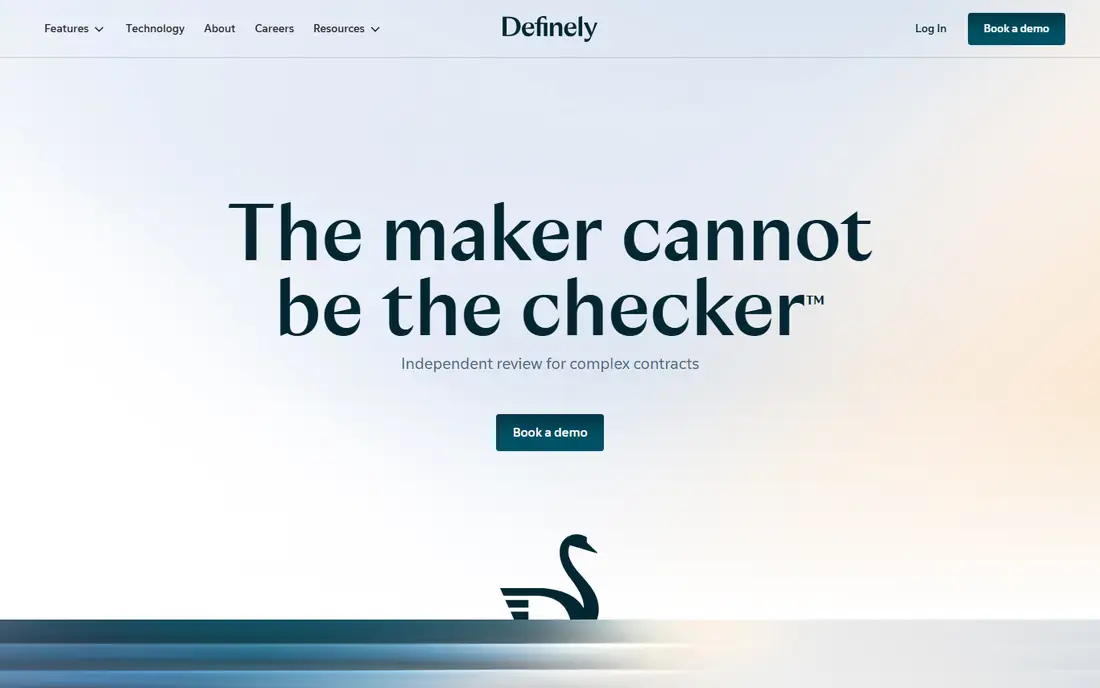
Definely is a good fit for structured review of complicated contracts. Definely takes the precise approach: structured tools for navigating defined terms, cross-references, and clauses in complicated contracts, inside Word.
But lawyers reviewing hundred-page agreements get the navigation and consistency tools that prevent the missed definitions and broken references that produce liability. Pricing for Definely is not stated here, so ask the vendor for current figures. Free options: Demo available.
- Well suited to complicated agreements
- Precise instead of generative
- Narrower scope than AI products, less generative drafting, smaller vendor
Luminance
Ideal for: Contract intelligence at enterprise scale
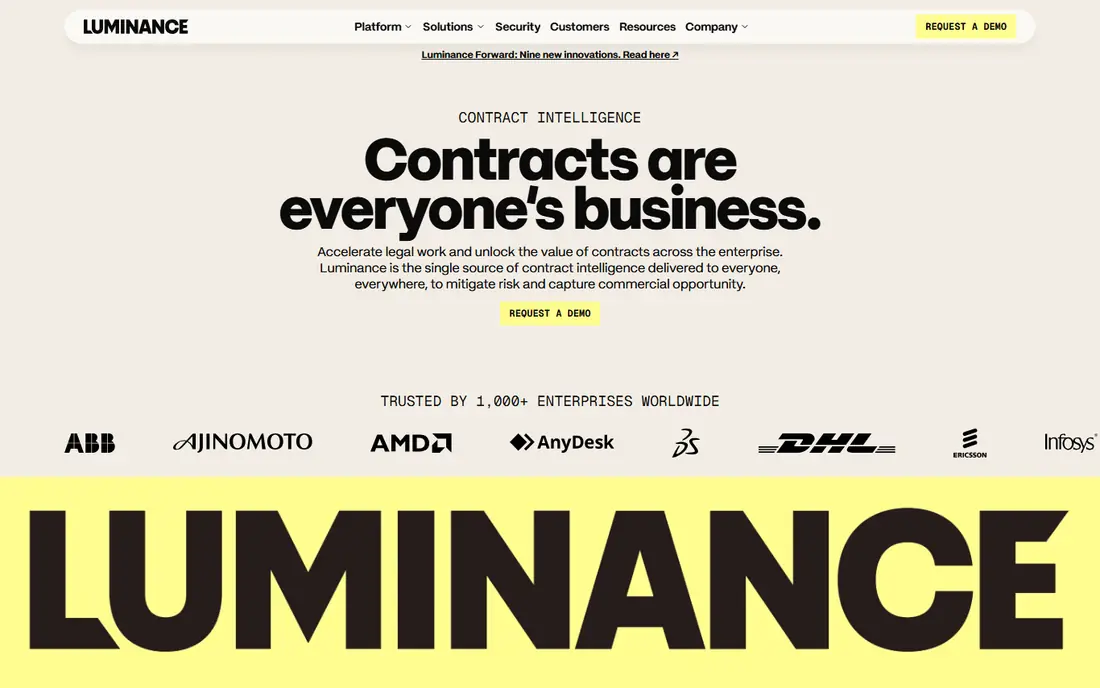
Luminance targets contract intelligence at enterprise scale. Due diligence, compliance, and contract management teams process volumes humans cannot.
Where it shines: proven at large enterprises.
The contract focus is both strength and boundary; general legal research needs other tools. This comparison lists no price for Luminance; ask the vendor. On free options: Demo available.
Drawbacks to consider: Enterprise pricing.
- Well suited to due diligence and compliance
- Multilingual capabilities
- Concentrated on contracts instead of general legal AI
Eve
Ideal for: AI made for plaintiff law businesses
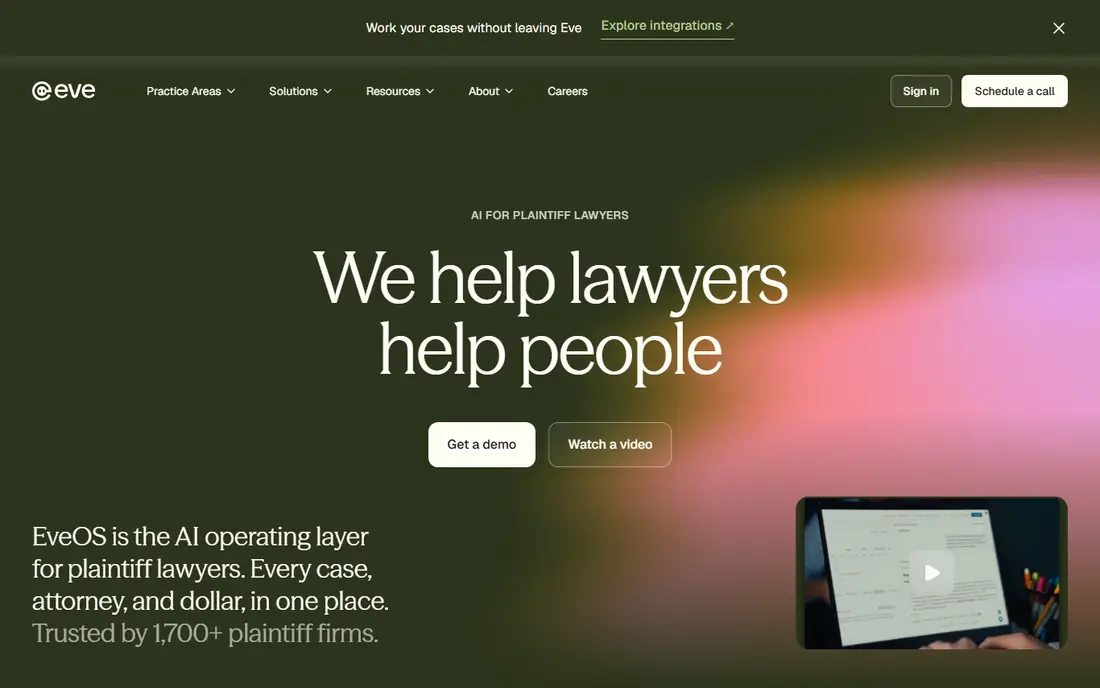
For AI made for plaintiff law businesses, Eve is a natural candidate. The specialization displays in features general legal AI misses.
Also, defense firms and transactional practices need different tools. But plaintiff businesses, often underserved by legal tech, get AI made for their economics and workflows. Pricing for Eve is not stated here, so ask the vendor for current figures. Trial and free access: Demo available.
Where it shines: Purpose-built for plaintiff-side workflows; decent intake and case work automation.
- Focused feature set
- Understands contingency practice economics
- Plaintiff focus limits other practices, smaller vendor, newer category entrant
CoCounsel
Ideal for: Legal AI backed by Thomson Reuters content
CoCounsel serves legal AI backed by Thomson Reuters content. CoCounsel, born from Casetext and now Thomson Reuters' flagship legal AI, pairs generative AI with the trusted content lawyers depend on: Westlaw, Practical Law, and document intelligence.
Check the vendor site for CoCounsel pricing; none is listed in this comparison. Free plan details: Demo available.
Where it shines: professional-grade accuracy focus.
Drawbacks to consider: Enterprise pricing.
- Thomson Reuters integration
- Merges AI with trusted legal content
- Best inside Thomson Reuters ecosystem, implementation scope significant
Spellbook
Ideal for: Transactional lawyers who live in Word
Spellbook works best for transactional lawyers who live in Word. Clause suggestions, risk flagging, and benchmarking appear in the document workflow without switching applications. Also, note the URL: spellbook.legal now resolves to spellbook.com.
Beyond that, Spellbook brings AI to where transactional lawyers actually draft: inside Microsoft Word. From a buyer's view, the scope centers on drafting and review instead of research or litigation. But for the daily work of reviewing and drafting contracts, meeting lawyers in Word drives the adoption other tools struggle to earn. This comparison lists no price for Spellbook; ask the vendor. Free access: Free trial.
Highlights: fast to adopt. Where it is weaker: less of a research product.
- Works inside Microsoft Word where drafting happens
- Good clause suggestions and review
- Advanced features need higher levels
Harvey
Ideal for: Law businesses deploying firm-wide legal AI
Harvey serves law firms deploying firm-wide legal AI. Harvey built the AI system for law businesses: assistants for research, drafting, document review, and due diligence that businesses customize to their practice areas.
Drawbacks to consider: implementation needs change management.
The Big Law adoption hands it the deepest enterprise legal footprint. Harvey shows no starting price here, so confirm the cost on the vendor site. As for free access: Demo available.
- Purpose-built for legal and professional services
- Decent workflow customization
- Enterprise pricing
Paxton
Ideal for: Litigation teams needing AI research and drafting
Choose Paxton for litigation teams needing AI research and drafting. Paxton AI serves litigation teams: legal research, motion drafting, document analysis, and the workflows litigators run. More specifically, the litigation focus produces deeper functionality for disputes than general legal AI.
Reasons to shortlist it: decent legal research capabilities.
Worth adding: transactional lawyers should look to Spellbook or Luminance. But litigation practices wanting AI tuned to their work get a purpose-built alternative to generalist products. This comparison lists no price for Paxton; ask the vendor. Free access: Demo available. Watch-outs: Litigation focus, smaller vendor.
- Document drafting assistance
- Litigation-focused AI workflows
- Newer entrant compared with established players
Contractbook
Ideal for: Contract management with AI assistance
Think of Contractbook for contract management with AI assistance. Contractbook merges contract lifecycle management with AI: drafting, signing, storing, and managing contracts with AI assistance for review and data extraction.
More specifically, teams get the management system plus intelligence in one. Contractbook shows no starting price here, so confirm the cost on the vendor site. Free access: Free trial.
Drawbacks to consider: smaller than enterprise CLM giants.
- Decent automation
- Full contract lifecycle management
- CLM focus instead of pure AI assistant
Worth knowing about AI legal assistant software
Junior lawyers and paralegals spend years on document review that AI now deals with in minutes, drafting, summarizing, and surfacing the clauses that matter whereas humans focus on judgment and client counsel. In practice, AI legal assistants embed into legal workflows: research, contract review, drafting, and litigation support with the security and privilege protections the profession demands.
How these tools were picked
Ainotely used vendor pricing pages and product documentation as the base, then compared plans, free access and documented limits for 8 tools. Where a vendor does not publish a price, the entry says quote. Where a price depends on seats or billing term, the entry says so. Order on the page follows fit for the typical buyer first, then price transparency and free access. Your own requirements should decide the final pick.
What to confirm before you sign up
- Ask each vendor, from Definely to Contractbook, for a written quote; none of them publishes a starting price.
- Take the trial from Spellbook and Contractbook and push a live task through it before you pay.
- Read the limits listed for Definely first: narrower scope than AI systems, less generative drafting, smaller vendor.
- Ask Paxton how an export works before you move any records in; an easy exit lowers the risk.
- Look at which plan of Spellbook unlocks the features you need; entry tiers are often cut down.
Frequently asked questions
Does any tool for AI legal assistant software here have a free plan?
No tool in this list, Definely and Contractbook included, has a permanent free plan. Spellbook, Contractbook offer a trial. Trials and quotes are the usual route, so plan a short evaluation period.
Is Definely the right pick for everyone comparing AI legal assistant software?
No single tool suits every team. Definely comes first because it fits structured review of complex contracts, while Luminance suits contract intelligence at enterprise scale and Eve suits AI built for plaintiff law firms. Match the tool to your own size, budget and workflow before deciding.
Can I try these options before paying?
Often, yes. Spellbook and Contractbook offer a free trial. Use your own data and a real task during the test, and check what the free tier or trial limits before you rely on it.
How are the tools for AI legal assistant software ordered?
Definely sits first and Contractbook last because the order follows typical fit for AI legal assistant software, then price clarity and free access. It is a judgement call, so read each profile for fit and limits.