Retool comes first here, mainly for internal tools with adaptable connections. Listed starting prices: Retool from $10 per builder a month. Appian is better for process orchestration across the enterprise, and Microsoft Power Apps is better for organizations inside the Microsoft ecosystem. Details, prices and limits for the rest of the 5 tools are below.
Choosing AI Low-Code development platforms usually comes down to price, fit and limits. This Ainotely guide sets 5 tools side by side on those three points, with the facts kept short and checkable.
Key takeaways
Retool is the opening pick, best for internal tools with adaptable connections.
Retool, Microsoft Power Apps: these are the 2 tools out of 5 that offer a free plan.
Check the limits for Microsoft Power Apps before you commit: best value inside Microsoft stack.
Salesforce Platform fits teams already on Salesforce data.
Best for: Internal tools with adaptable connections
Retool works best for internal tools with adaptable connections. Check connector and deployment requirements against your environment.
It suits teams that require practical internal tools and admin interfaces instead of large-scale enterprise process platforms. What you pay to start with Retool: $10 per builder per month. Retool has a free plan.
Best for: Process orchestration across the enterprise
Appian is built with process orchestration across the enterprise in mind. Appian centres on AI-powered process orchestration across the enterprise.
What to check first: Enterprise scope may be more than needed.
Its homepage describes AI automation for critical processes, orchestrating AI agents, systems and people on an enterprise product without replacing existing systems. On top of that, the process-orchestration emphasis means it may be more than a team needs for straightforward app building. No starting price is listed for Appian here; confirm pricing on the vendor site. Free access: Not stated.
Best for: Organizations inside the Microsoft ecosystem
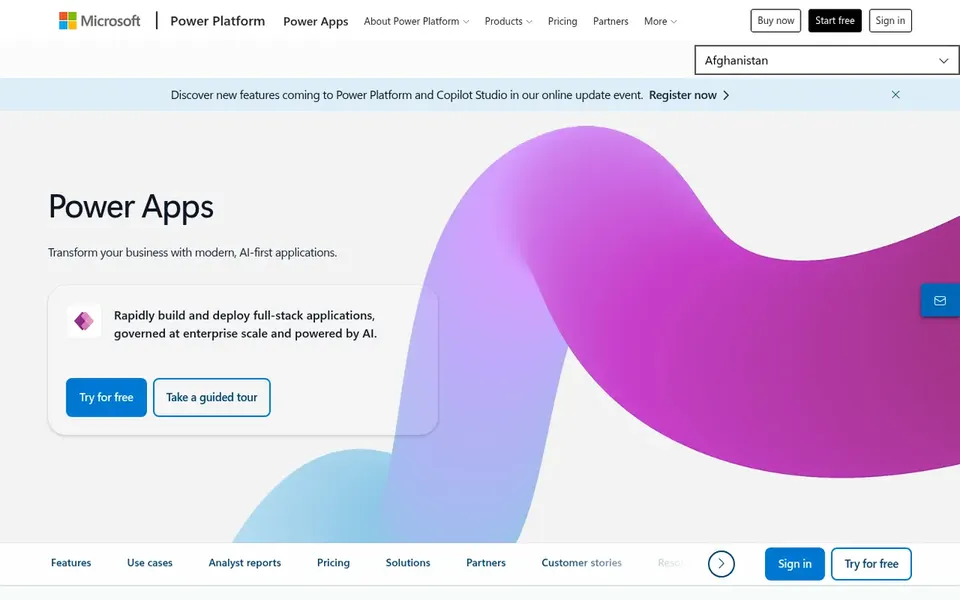
Microsoft Power Apps is designed for organizations inside the Microsoft ecosystem. The emphasis is on business apps built by makers with less hand coding.
The main drawbacks: Best value inside Microsoft stack.
Its strengths are tied to the Microsoft environment, so organizations running other stacks may find the fit less natural. Pricing for Microsoft Power Apps is not stated here, so ask the vendor for current figures. Microsoft Power Apps has a free plan.
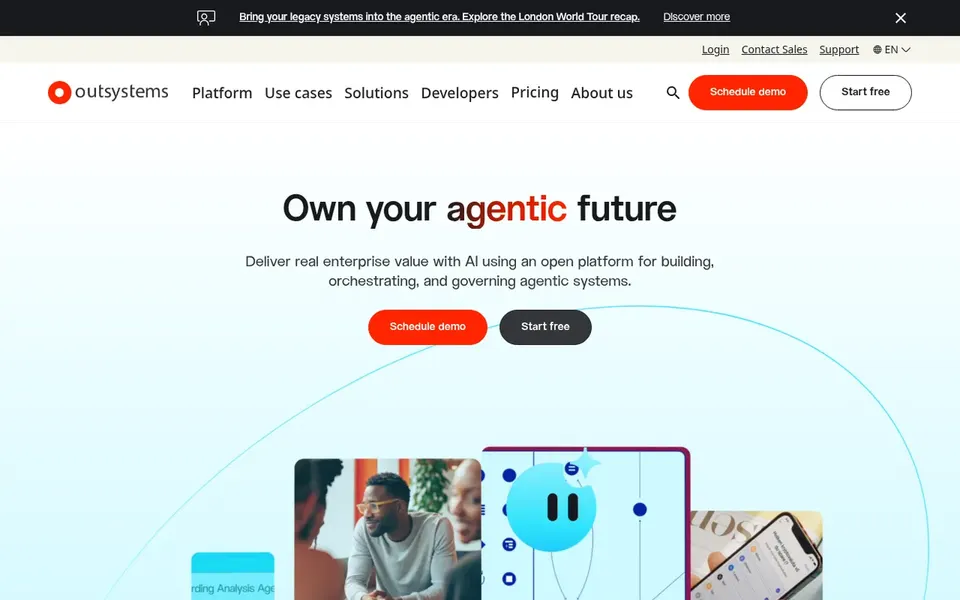
OutSystems was built for enterprises modernizing legacy systems. OutSystems is presented as a system for building apps and AI agents with confidence.
What to check first: Enterprise-oriented complexity.
Also, confirm product requirements and governance features straight with the vendor. Teams that primarily want to link databases and APIs rapidly may prefer Retool. OutSystems shows no starting price here, so confirm the cost on the vendor site. Free options: Not stated.
Where Salesforce Platform fits: teams already on Salesforce data. Planning is needed to use the broader product well. For everyday use, Salesforce Platform is described as powering the agentic enterprise, combining metadata, governance, MuleSoft and Data Cloud.
Where it falls short: Tied closely to Salesforce context.
Its value is closely tied to the Salesforce ecosystem, so teams outside it may find other systems a better match. In daily use, if you want to link to any database or API for internal tools, compare Retool instead. This comparison lists no price for Salesforce Platform; ask the vendor. On free options: Not stated.
Get a written quote from Appian, Microsoft Power Apps, OutSystems and Salesforce Platform; the list shows no starting price for them.
Look at free plan limits closely: Retool and Microsoft Power Apps have one, and the caps decide whether it is usable for real work.
Read the limits listed for Retool first: centred on internal software.
Make sure Salesforce Platform lets you export your data in a format another tool can read.
Confirm the exact Appian plan that includes your must-have features.
How we picked
Each tool was reviewed on what its vendor publishes: price, plan limits, core features and stated drawbacks. We did not run hands-on tests. Seat minimums, billing terms and add-ons can move the real cost, so the starting prices here are a guide and not a quote. We ordered the tools by general fit, then by how clearly pricing is shown, then by free access. A buyer with unusual needs may reorder them. Keep it in mind while reading the 5 AI Low-Code development platforms profiles on this page.
Every price and plan detail on this page comes from the vendors’ own websites. We did not run hands-on tests unless the text says so, and we do not publish star ratings or review scores. See how we score and our disclosure.
Keep your shortlist in one place
Paste prices, trial dates and notes from this guide into Ainotely, our AI note app. It files them into a topic and pulls out tasks like “cancel trial by Friday”. Free 7-day trial, no card needed.
Is Retool the right pick for everyone comparing AI Low-Code development platforms?
No single tool suits every team. Retool comes first because it fits internal tools with flexible connections, while Appian suits process orchestration across the enterprise and Microsoft Power Apps suits organizations inside the Microsoft ecosystem. Match the tool to your own size, budget and workflow before deciding.
Should I pick a system tied to my existing software stack?
Platforms for example Microsoft Power Apps and Salesforce Platform work best when you already use those ecosystems. Teams outside those stacks may prefer a more neutral system.
How are the tools for AI Low-Code development platforms ordered?
Retool sits first and Salesforce Platform last because the order follows typical fit for AI Low-Code development platforms, then price clarity and free access. It is a judgement call, so read each profile for fit and limits.
What is the cheapest option for AI Low-Code development platforms in this list?
On published monthly entry prices, Retool is the lowest here at $10 per builder per month. Entry price is only part of the cost, because seats, add-ons and billing terms can change the total.
What makes a low-code system AI-ready?
AI-ready products usually let you build AI agents and workflows alongside apps, commonly inside governed processes. Worth adding: look for documented support for connecting to models and data sources. Confirm the specifics on each vendor site.
Do these tools publish their prices?
Not all of them. Appian, Microsoft Power Apps, OutSystems and Salesforce Platform publish no starting price, so expect a quote request for those. The rest, Retool included, show a starting price, though seats and billing terms still change the final cost.