AI Optimization Tools: 7 Options Side by Side (2026)

- 1
 Ahrefs Brand RadarInbound link led brand researchVisit
- 2
 AthenaHQStructured GEO workflowsVisit
- 3
 Otterly AIBudget friendly monitoringVisit
- 4
 ProfoundEnterprise AI visibilityVisit
- 5
 Peec AIClear mid-market visibility reportsVisit
- Ahrefs Brand Radar is the opening pick, best for inbound link led brand research.
- Writesonic GEO fits content plus GEO tracking.
- A permanent free plan is missing from all 7 tools, Ahrefs Brand Radar and Writesonic GEO included; plan for a trial or a premium start.
- No starting price is shown for any of the 7 tools, Ahrefs Brand Radar and Writesonic GEO included, so plan time for sales calls.
Direct answer
Ahrefs Brand Radar leads the list, best for inbound link led brand research. AthenaHQ fits structured GEO workflows; Otterly AI fits budget friendly monitoring. The remaining 4 options are covered below with prices and limits.
Quick comparison
| Product | Ideal for | Price from | Free version | |
|---|---|---|---|---|
| Ahrefs Brand Radar | Inbound link led brand research | See website | No | Visit |
| AthenaHQ | Structured GEO workflows | See website | No | Visit |
| Otterly AI | Budget friendly monitoring | See website | Free trial | Visit |
| Profound | Enterprise AI visibility | See website | No | Visit |
| Peec AI | Clear mid-market visibility reports | See website | Free trial | Visit |
 Semrush AI Visibility Toolkit | Existing Semrush users | See website | Free trial | Visit |
 Writesonic GEO | Content plus GEO tracking | See website | Free trial | Visit |
Our 7 AI optimization tools
Choosing AI optimization tools usually comes down to price, fit and limits. This Ainotely guide sets 7 tools side by side on those three points, with the facts kept short and checkable.
Ahrefs Brand Radar
Ideal for: Inbound link led brand research
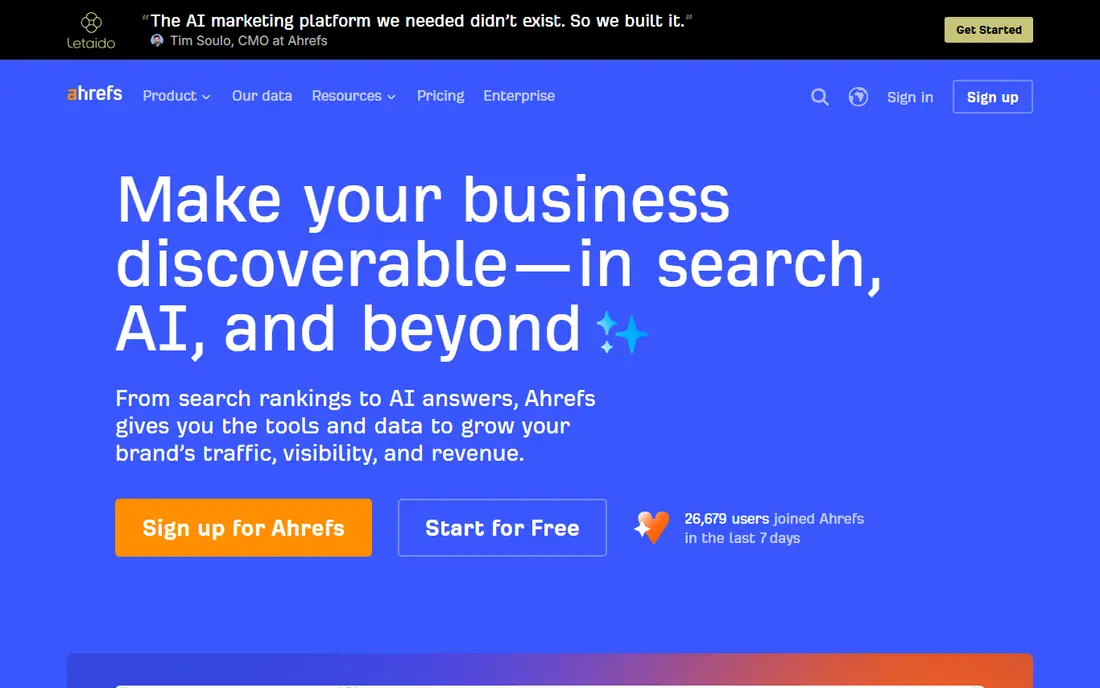
Ahrefs Brand Radar is designed for inbound link led brand research. Ahrefs Brand Radar brings Ahrefs inbound link strength into AI visibility. It measures share of voice and cited URLs across AI systems, which helps a team that already trusts Ahrefs data for link and content research.
Points against: Newer GEO product with less depth than some dedicated tools.
the main limit is add-on pricing. For a team that seldom uses Ahrefs, a dedicated tool like Peec AI may be more straightforward and less expensive. For everyday use, if your SEO workflow is built around Ahrefs, adding Brand Radar keeps your reporting in one place. Beyond that, check the total monthly cost, including the base plan, before you compare it with a standalone GEO tool. No starting price is listed for Ahrefs Brand Radar here; confirm pricing on the vendor site. There is no free plan with Ahrefs Brand Radar.
- Tracks ChatGPT
- Capable brand and share of voice research
- Needs an Ahrefs base plan
AthenaHQ
Ideal for: Structured GEO workflows

In short, AthenaHQ is for structured GEO workflows. AthenaHQ is aimed at teams that want a workflow, not just a dashboard.
It tracks AI visibility, then guides optimisation work through structured steps and a content agent, which helps an agency run GEO for multiple clients in a consistent way. For everyday use, live reporting also makes client reviews simpler, since the client can see movement without waiting for a monthly PDF. No starting price is listed for AthenaHQ here; confirm pricing on the vendor site. No free plan comes with AthenaHQ.
Where it is weaker: Less suited to a single small brand.
- Live client reporting for agencies
- Structured optimisation workflows
- Credit limits can slow heavy workflows
Otterly AI
Ideal for: Budget friendly monitoring
Otterly AI is a good fit for budget friendly monitoring. Do not buy a large plan before you have run Otterly AI or a similar budget tool for per month and seen a real report for your brand.
No starting price is listed for Otterly AI here; confirm pricing on the vendor site. Free plan details: Free trial.
The main drawbacks: Restricted engine coverage on lower plans.
- Low starting price compared to enterprise tools
- Handy first step into GEO
- Fewer diagnostic features than mid-tier and enterprise tools
Profound
Ideal for: Enterprise AI visibility
Profound is a good fit for enterprise AI visibility. Profound is the name that comes up most frequently for enterprise AI visibility, and for decent reason.
Pricing for Profound is not stated here, so ask the vendor for current figures. There is no free plan with Profound.
Points against: Onboarding can feel heavy for a small team.
- Brand and citation analytics for large teams
- Broad AI engine coverage
- Aimed at teams with a dedicated analyst
Peec AI
Ideal for: Clear mid-market visibility reports
In short, Peec AI is for clear mid-market visibility reports. Peec AI is a decent middle ground between a budget tracker and an enterprise product. Beyond that, start with the models that matter for your audience, and expand only if the report displays gaps you have to fill.
Worth adding: the interface is simpler to read than some enterprise dashboards, which helps when you have to share a monthly report with a client or a manager who does not live in SEO data. As for the details, the limit is coverage on lower plans, where you may have to choose a small set of models to track. That is fine if you know your customers use ChatGPT and Google AI Overviews most, but less handy if you need every engine at once. This comparison lists no price for Peec AI; ask the vendor. As for free access: Free trial.
What to check first: Pricing varies by region and currency.
- Prompt level tracking
- Works across multiple AI models
- No full content creation suite
Semrush AI Visibility Toolkit
Ideal for: Existing Semrush users
Semrush AI Visibility Toolkit is designed for existing Semrush users. Dedicated GEO tools may also offer deeper prompt analysis or citation detail.
That shared workflow saves time, notably for an agency that already reports from Semrush each month. For everyday use, pricing is frequently per domain, so an agency with ten clients pays far more than a single brand. No starting price is listed for Semrush AI Visibility Toolkit here; confirm pricing on the vendor site. On free options: Free trial.
Honest limits: Per domain pricing adds up for agencies with numerous clients.
- Tracks ChatGPT
- Per domain reporting
- Needs a Semrush base plan in numerous cases
Writesonic GEO
Ideal for: Content plus GEO tracking
Choose Writesonic GEO for content plus GEO tracking. If your primary problem is producing the content that AI engines cite, Writesonic is a practical combined choice.
Beyond that, plenty of GEO tools only tell you where you are missing, whereas Writesonic also provides the writing workflow to close the gap. No starting price is listed for Writesonic GEO here; confirm pricing on the vendor site. On free options: Free trial.
Where Writesonic GEO stands out: not just measure them.
What to check first: Enterprise plans need a sales conversation.
- Multiple AI systems covered
- Handy for content teams that require to fix gaps
- Content focus can dilute pure GEO depth
Worth knowing about AI optimization tools
Write ten to twenty questions a customer would actually ask an AI assistant about your product, your competitors, and your category. On top of that, run those prompts through the tool for per month, and look for patterns, for example a competitor being cited where you are missing, or a page that is cited for the wrong reason. In practice, then fix the underlying content.
No tool can force a citation, and buying a tool without fixing content is like buying a thermometer and expecting it to cure a fever. These tools cannot guarantee a mention, a citation, or a ranking in an AI answer.
What went into this list
We compared the tools on published pricing, free plan or trial availability, feature coverage for AI optimization tools, and the limits each vendor documents. Plan names, prices and limits change often. Treat the figures here as a starting point and verify them with the vendor. The order reflects how well each tool fits the most common buying scenario for AI optimization tools, then price clarity, then free plan access. It is a starting point, not a verdict.
Pre-purchase checklist
- Confirm the entry price with every vendor: no tool from Ahrefs Brand Radar to Writesonic GEO shows a fixed starting price.
- Use real work to test the free trial from Otterly AI, Peec AI, Semrush AI Visibility Toolkit and Writesonic GEO, rather than a demo project.
- Read the limits listed for Ahrefs Brand Radar first: premium add-on with per index costs in numerous cases.
- Look at the help docs and support options for Profound before you commit.
- Check whether the features you need in Otterly AI sit on the entry plan or only on higher tiers.
Frequently asked questions
Which AI engines should I track first?
Track ChatGPT and Google AI Overviews first, since they reach the largest audiences, then add Gemini and Perplexity if your customers use them. Start with the engines your customers actually mention, and expand only when your reports display a gap that affects real traffic or enquiries.
Is Ahrefs Brand Radar the right pick for everyone comparing AI optimization tools?
No single tool suits every team. Ahrefs Brand Radar comes first because it fits inbound link led brand research, while AthenaHQ suits structured GEO workflows and Otterly AI suits budget friendly monitoring. Match the tool to your own size, budget and workflow before deciding.
What is GEO and how is it different from SEO?
GEO tracks mentions, citations, and share of voice across AI engines like ChatGPT, Gemini, and Perplexity. SEO and GEO overlap, since clear, factual, well structured content helps in both, but GEO needs prompt based measurement that traditional rank tracking does not offer.
Can I try these options before paying?
Often, yes. Otterly AI, Peec AI, Semrush AI Visibility Toolkit and Writesonic GEO offer a free trial. Use your own data and a real task during the test, and check what the free tier or trial limits before you rely on it.
Do these tools publish their prices?
No. None of the tools, from Ahrefs Brand Radar to Writesonic GEO, shows a fixed starting price here, so budget time for quotes.
How are the tools for AI optimization tools ordered?
Ahrefs Brand Radar sits first and Writesonic GEO last because the order follows typical fit for AI optimization tools, then price clarity and free access. It is a judgement call, so read each profile for fit and limits.