8 Best AI Overview SEO Rank Tracking Software Tools

- 1
 AhrefsTeams that want AI Overview tracking inside a full SEO platformVisit
- 2
 SemrushMarketing teams that need AI visibility plus full SEO toolsVisit
- 3
 SE RankingAgencies that want SEO and AI visibility at good valueVisit
- 4
 AccuRankerAgencies that need fast, accurate rankings with AI featuresVisit
- 5
 ZipTieBrands that want to track AI answers across engines with clear scoresVisit
- Google AI Overviews now sit above classic results for many queries, so tracking only blue-link rankings misses a large part of visibility.
- Ahrefs, Semrush, SE Ranking, and AccuRanker add AI Overview and AI visibility tracking to classic rank tracking.
- ZipTie, Peec AI, Profound, and Otterly.AI focus on AI answers themselves, tracking mentions, citations, and sentiment across chat engines.
- The most useful metric is citation share: how often AI answers cite your pages versus competitors.
- AI answers change from run to run, so judge tools on trends across many prompts, not single answers.
Quick comparison
| Product | Ideal for | Price from | Free version | |
|---|---|---|---|---|
| Ahrefs | Teams that want AI Overview tracking inside a full SEO platform | See website | No | Visit |
| Semrush | Marketing teams that need AI visibility plus full SEO tools | See website | No | Visit |
| SE Ranking | Agencies that want SEO and AI visibility at good value | See website | No | Visit |
| AccuRanker | Agencies that need fast, accurate rankings with AI features | See website | No | Visit |
| ZipTie | Brands that want to track AI answers across engines with clear scores | See website | No | Visit |
 Peec AI | Marketing teams that want AI search analytics by prompt | See website | No | Visit |
 Profound | Large brands that need an enterprise AI search platform | See website | No | Visit |
 Otterly.AI | Marketing teams that want AI monitoring plus optimization guidance | $29 per month | No | Visit |
The best AI overview SEO rank tracking software
Ahrefs
Ideal for: Teams that want AI Overview tracking inside a full SEO platform
Ahrefs remains a default SEO platform, and its AI visibility reporting now sits next to its classic rank tracking. That combination helps teams see both where their pages rank and whether AI answers mention or cite them. Because the same platform holds keyword research, backlinks, and audits, it is easy to connect an AI visibility change to the content behind it.
Ahrefs suits teams that already use it for SEO and want AI tracking without adding a separate subscription. Teams that only need AI answer tracking may find a focused tool simpler and cheaper.
- Large SEO dataset, AI visibility features alongside rank tracking, strong competitor analysis, frequent updates
- No free plan, AI features vary by plan, costs rise with keyword limits
Semrush
Ideal for: Marketing teams that need AI visibility plus full SEO tools
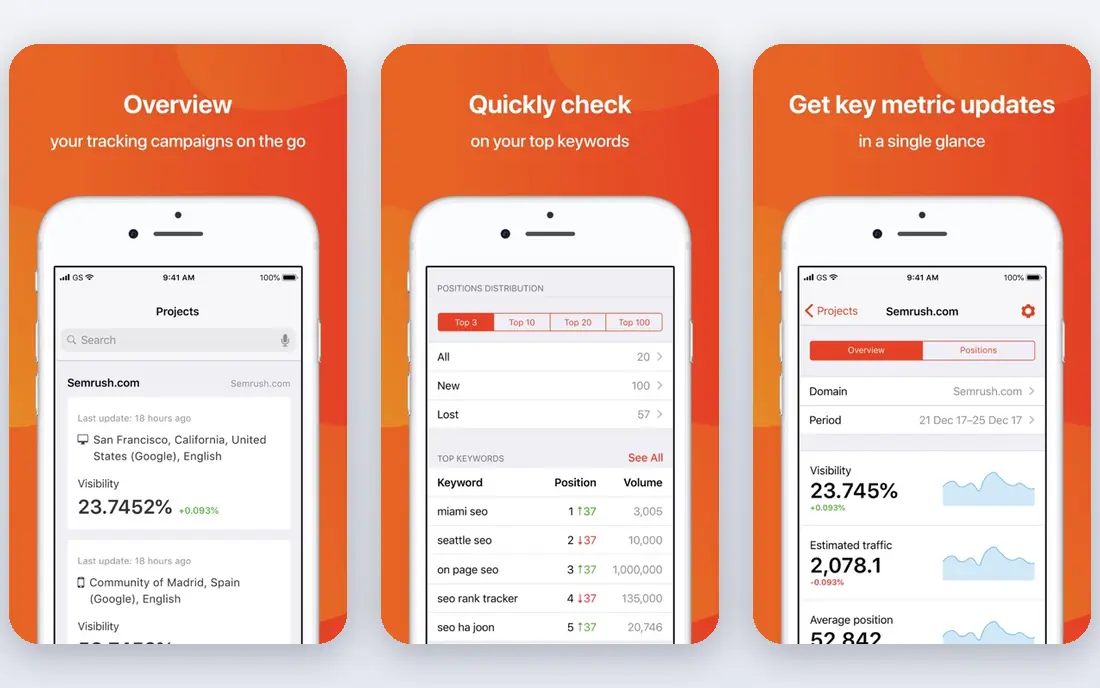
Semrush pairs position tracking with AI visibility reporting, so teams can follow classic rankings and AI Overview presence in one dashboard. Its reporting tools suit agencies that need to show clients both kinds of visibility, and its keyword and content tools help act on what the data shows.
Semrush is best for teams that want breadth. If AI answer tracking is your only need, a dedicated tool like ZipTie or Otterly.AI may be a tighter fit, but Semrush wins when SEO, content, and AI reporting must live together.
- Broad SEO and content toolset, AI visibility reporting, strong reporting and dashboards, large keyword database
- No free plan, large interface for beginners, AI features may need higher tiers
SE Ranking
Ideal for: Agencies that want SEO and AI visibility at good value
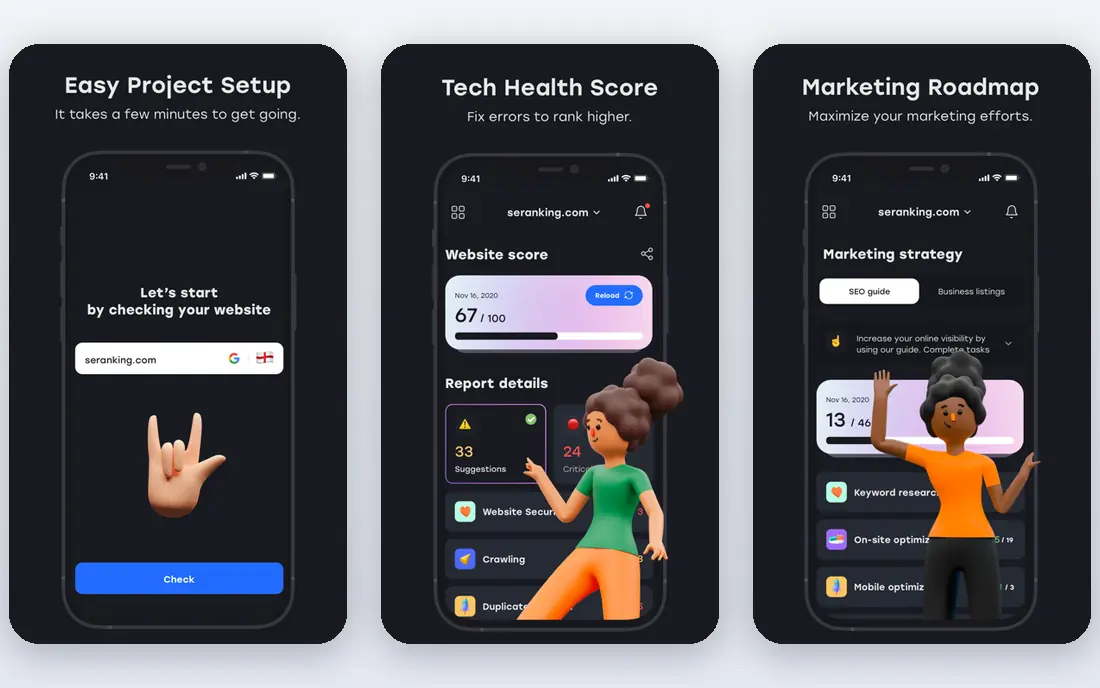
SE Ranking's SE Visible tool tracks brand mentions, sentiment, and share of voice across major AI search engines, including ChatGPT, Gemini, AI Overviews, and AI Mode, alongside its classic rank tracking. That makes it one of the most complete options for agencies that must report both classic and AI visibility to clients.
A 14-day trial gives full access without a credit card, which makes it easy to test against your own keywords. For value and coverage together, SE Ranking is a strong pick in this category.
- Dedicated AI visibility tool, classic rank tracking, agency reporting, 14-day full-access trial
- No free plan, some AI features are paid add-ons, higher tiers needed for large lists
AccuRanker
Ideal for: Agencies that need fast, accurate rankings with AI features
AccuRanker is known for ranking speed and accuracy, and it has added AI search visibility features to keep pace with how search results now look. Its reports are clean enough to share with clients directly, and its local and mobile tracking is precise.
Teams that need audits or backlink research will pair AccuRanker with another tool, but as a rank tracker with AI coverage, it is a dependable choice for agencies whose reporting centers on rankings.
- Fast and accurate rank updates, clean client reporting, local and mobile tracking, AI search features
- No free plan, ranking-focused rather than full SEO suite, pricing scales with keywords
ZipTie
Ideal for: Brands that want to track AI answers across engines with clear scores
ZipTie, at ziptie.ai, tracks what AI engines say about your brand across up to 7 engines, including ChatGPT, Google AI Overviews, Perplexity, and Copilot. It measures three signals on every answer: citations of your pages, mentions of your brand, and sentiment, then rolls them into an AI Success Score trend. Its Action Center turns gaps into a ranked queue of fixes, and every number traces back to the answers behind it.
Note that ziptie.dev is the same team's original product, still running for existing users, while ziptie.ai is the newer AI search platform. Pricing runs about a cent per engine check, with no seat, project, or competitor fees. For brands that want AI answer tracking with clear scoring, ZipTie is a strong dedicated pick.
- Tracks up to 7 AI engines, AI Success Score combines citations, mentions, and sentiment, unlimited seats and projects, 7-day free trial
- No free plan, pricing follows prompts and engines, newer platform than the big SEO suites
Peec AI
Ideal for: Marketing teams that want AI search analytics by prompt
Peec AI is an AI search analytics platform for marketing teams. It tracks how AI models rank and mention your brand across the prompts that matter, shows which sources shape your visibility, and reports on visibility, position, and sentiment. Its reports turn complex AI data into summaries teams and clients can read.
Peec AI suits teams that already run classic SEO elsewhere and need a dedicated view of AI search. Its prompt-first approach fits brands that know which questions their buyers ask AI engines.
- Tracks rankings across major AI models, finds citation sources, visibility, position, and sentiment metrics, shareable reports
- No free plan, focused on AI search rather than classic SEO, pricing varies by plan
Profound
Ideal for: Large brands that need an enterprise AI search platform
Profound is an AI marketing platform that tracks brand visibility in ChatGPT, Perplexity, Claude, Gemini, Google AI Overviews, and AI Mode, and goes further by deploying AI agents that draft, optimize, and stage content changes for approval. It also tracks sentiment, verifies claims AI makes about your brand, and benchmarks against peers.
A note on the name: profound.com is a different company selling market research reports, while the AI search platform lives at tryprofound.com, which is the address listed here. Profound suits large brands with serious AI search budgets; small teams will find ZipTie, Peec AI, or Otterly.AI more approachable.
- Tracks visibility across answer engines, AI agents that draft and optimize pages, sentiment and citation analysis, enterprise governance
- No free plan, enterprise pricing, more platform than small teams need
Otterly.AI
Ideal for: Marketing teams that want AI monitoring plus optimization guidance
Otterly.AI monitors how AI search engines mention and cite your brand across the major engines, then adds optimization help: crawlability checks, content audits with predictive scores, and briefs that turn invisible pages into cited sources. It also tracks share of AI voice against competitors and offers an API for pulling data into your own reports.
Pricing starts at 29 dollars per month, and a 7-day free trial needs no credit card. For marketing teams that want both monitoring and clear next steps, Otterly.AI is a well-rounded pick.
- Tracks ChatGPT, Perplexity, AI Overviews, AI Mode, Gemini, Claude, and Copilot, content audits and briefs, 7-day free trial, API access
- No free plan, pricing rises with prompts and engines, AI answers vary run to run
How we picked these
We compared official feature pages, pricing pages, and public reviews for AI Overview and AI search tracking tools live in October 2026. We favored tools that track Google AI Overviews specifically, not just chat engines in general, plus citation and mention data that shows which pages AI answers use. We kept only tools whose official homepages we could load and confirm, and we corrected two addresses during checks: Profound's AI platform is at tryprofound.com, not profound.com, and ZipTie's current AI platform is at ziptie.ai. Pricing is listed as "See website" where plans depend on prompts, engines, or keyword counts. We did not claim hands-on testing of tracking accuracy, and we treated vendor visibility claims as claims, not verified results.
What to look for in AI overview rank tracking software
Start with the engines your buyers use. Google AI Overviews matter most for search-driven traffic, while ChatGPT, Perplexity, and Copilot matter for buyers who ask chatbots first. A tool should cover the engines that shape your market, not just the ones it markets best.
Next, check what it measures. The useful signals are citation rate, mention rate, sentiment, and share of voice against competitors, plus which of your pages get cited. A tool that only reports a single visibility score hides the detail you need to act on. Also confirm whether it stores full answers, so you can read what AI actually said rather than trusting a summary.
Then weigh prompt coverage and cost. AI answers vary from run to run, so a tool needs enough prompts and repeat checks to show real trends. Compare pricing on your real prompt list and engine set, not on a demo plan. Finally, trial the tool on your own brand and top competitors for a week, and check whether its findings match what you see when you ask the same questions yourself.
Frequently asked questions
What is AI Overview rank tracking?
AI Overview rank tracking measures whether Google AI Overviews and other AI answers mention or cite your brand and pages for the queries your buyers ask. It complements classic rank tracking, which measures where your pages appear in standard search results.
How is this different from classic rank tracking?
Classic tracking records a position in a list of links. AI tracking records whether an answer names your brand, cites your pages, and describes you positively, and how that compares with competitors. Both matter, because searchers now see AI answers before or instead of classic results.
Which AI engines should I track?
Track Google AI Overviews and AI Mode first if search traffic drives your business, then add ChatGPT, Perplexity, Gemini, Claude, and Copilot if your buyers use chatbots. Tools like ZipTie and Otterly.AI cover up to 7 engines, while the big SEO suites cover AI visibility alongside classic rankings.
Why do AI answers change between checks?
AI engines generate answers fresh each time, so the same prompt can name different brands on different runs. Good tools run prompts repeatedly and report trends across many checks, which is why you should judge results over weeks, not single answers.
Can these tools improve my AI visibility?
Tracking alone does not change answers, but it shows which prompts you lose, which pages get cited, and which sources shape answers. Otterly.AI and Profound add content briefs and optimization guidance, while ZipTie's Action Center ranks the gaps worth closing first.
Do I need a separate AI tracking tool if I use Ahrefs or Semrush?
Not always. Ahrefs, Semrush, SE Ranking, and AccuRanker all add AI visibility to classic tracking. A dedicated tool is worth adding when AI search is a core channel for you and you need deeper prompt coverage, sentiment detail, or citation-level data.