Best AI Overview Tracking Tools in 2026: 7 Tools Compared

- 1
 Semrush AI Visibility ToolkitSEO teams tracking OverviewsVisit
- 2
 Ahrefs Brand RadarPrompt indexes and citationsVisit
- 3
 Peec AIMid-market Overview trackingVisit
- 4
 Otterly.AIBudget Overview trackingVisit
- 5
 ProfoundEnterprise Overview programsVisit
- Semrush AI Visibility Toolkit is our pick for teams that want AI Overview tracking inside a full SEO suite.
- Ahrefs Brand Radar suits teams that want large prompt indexes and citation data linked to backlinks.
- Peec AI suits mid-market teams that want clean AI Overview and chatbot tracking with unlimited seats.
- Otterly.AI is the budget pick for daily mention tracking across AI surfaces including AI Overviews.
- AI Overviews change frequently and vary by query, location and user, so track trends over weeks, not single-day snapshots.
Quick comparison
| Product | Ideal for | Price from | Free version | |
|---|---|---|---|---|
| Semrush AI Visibility Toolkit | SEO teams tracking Overviews | $99 per month | No | Visit |
| Ahrefs Brand Radar | Prompt indexes and citations | $199 per month | No | Visit |
| Peec AI | Mid-market Overview tracking | $95 per month | Free trial | Visit |
| Otterly.AI | Budget Overview tracking | $29 per month | Free trial | Visit |
| Profound | Enterprise Overview programs | See website | Free trial | Visit |
 Scrunch | Site readiness for Overviews | $250 per month | Free trial | Visit |
 BrightEdge | Enterprise SEO plus AI | See website | No | Visit |
The best AI overview tracking tools
Google AI Overviews appear above traditional results for many queries, summarizing answers with cited sources. Tracking them means watching whether your pages get cited, which competitors appear, and how Overview presence affects clicks. The tools below track AI Overviews alongside other AI surfaces, since no serious tool tracks Overviews alone, and they differ in prompt scale, citation depth and price.
Semrush AI Visibility Toolkit
Ideal for: SEO teams tracking Overviews
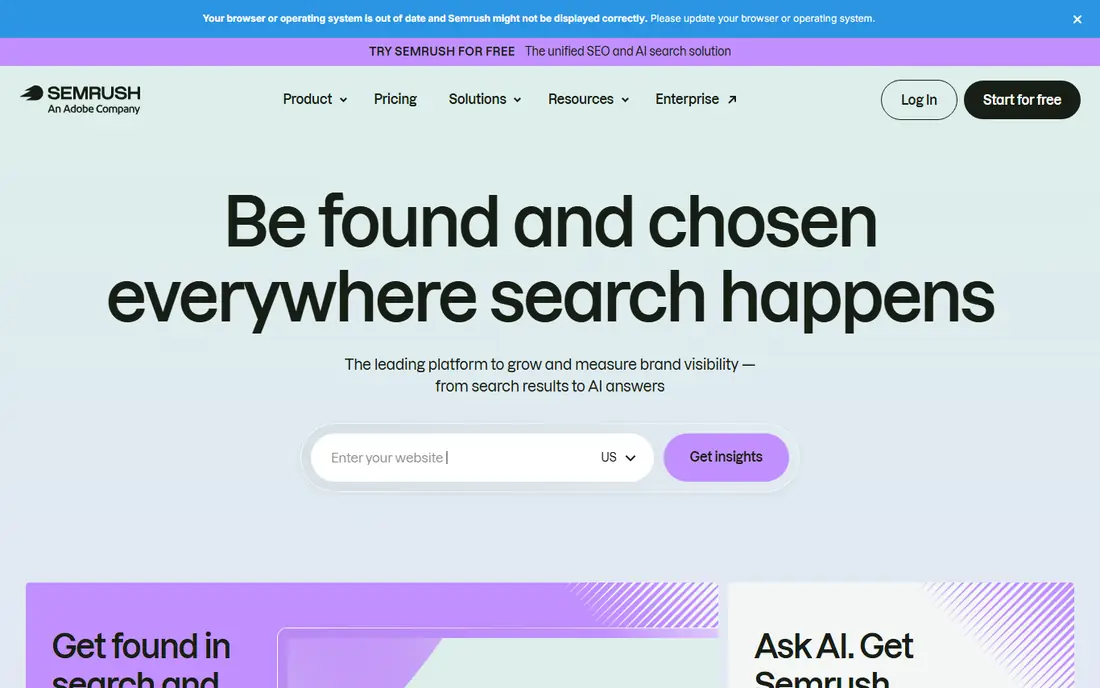
Semrush AI Visibility Toolkit is our pick for SEO teams that already work in Semrush. It tracks brand presence across AI surfaces including Google AI Overviews and AI Mode, with prompt data, citation views and competitor comparisons in the same platform as keyword and rank data. That integration helps teams connect Overview citations to the pages and keywords they already optimize.
Pricing is per domain at the entry level, billed annually, and total cost depends on your base Semrush plan, so confirm the full figure. For teams without Semrush, a standalone tracker may be cheaper. For Semrush users, the toolkit is the natural way to add Overview tracking.
- AI Overview tracking inside a full SEO suite
- Large prompt database
- Competitor citation views
- Price is per domain billed annually
- Toolkit may sit on top of a base Semrush plan
Ahrefs Brand Radar
Ideal for: Prompt indexes and citations

Ahrefs Brand Radar suits teams that want research depth on AI Overviews and other AI answers. Large prebuilt indexes of real prompts show which questions trigger AI answers in your market, and citation views link those answers to backlink data, helping SEO teams understand why certain pages get cited. For market research, that depth is hard to match.
Cost is the limit, since pricing is per AI index and a base Ahrefs plan may be required, so covering every surface multiplies the bill. For ongoing simple tracking, cheaper tools suffice. For research-led teams that want prompt scale and citation analysis, Brand Radar is powerful.
- Large prebuilt prompt indexes
- Citation data linked to backlink profiles
- Strong for research and competitor analysis
- Price is per AI index, so full coverage costs more
- Base Ahrefs plan may be required
Peec AI
Ideal for: Mid-market Overview tracking
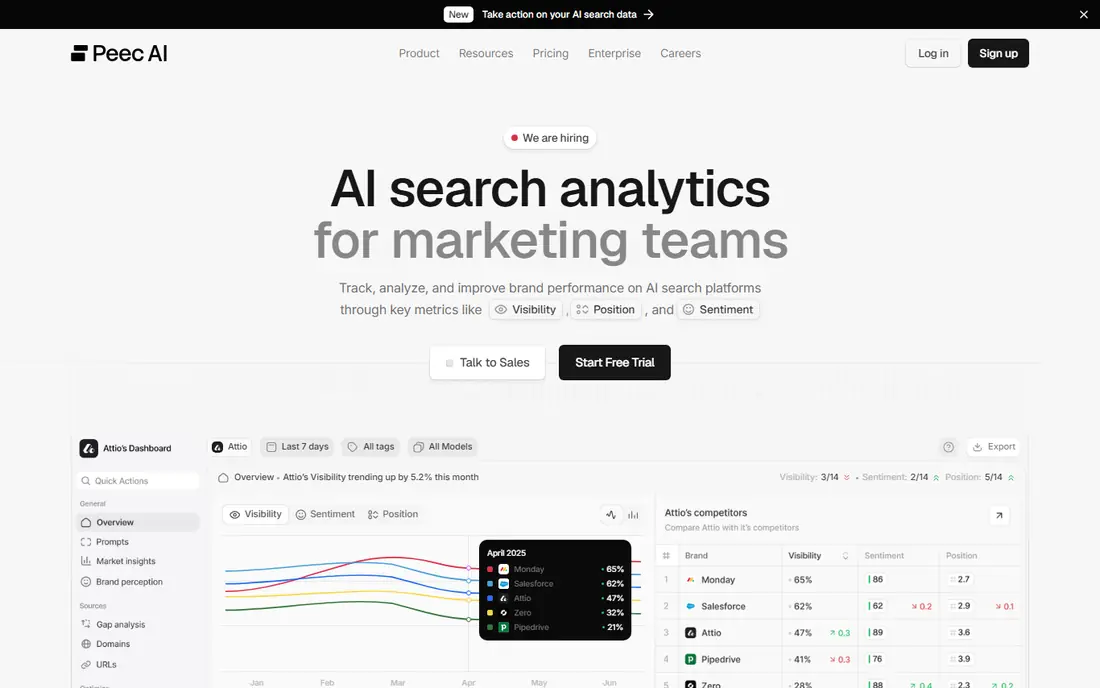
Peec AI suits mid-market teams that want clear AI Overview tracking without enterprise complexity. It monitors brand mentions, position and sentiment per prompt across several AI engines, including Google AI surfaces, with unlimited seats for the whole team. Setup is straightforward, and the interface stays readable as prompt counts grow.
Engine coverage on the entry plan is limited, so check that Google AI Overviews and AI Mode are included at the tier you choose. For lean teams that want reliable Overview and chatbot tracking at a mid-market price, Peec AI is a strong pick.
- Clean tracking across AI surfaces including AI Overviews
- Unlimited seats
- Prompt, position and sentiment views
- Entry plan covers a limited engine set
- Higher tiers needed for full engine coverage
Otterly.AI
Ideal for: Budget Overview tracking
Otterly.AI is the budget pick for AI Overview tracking. Daily prompts check whether AI answers, including Google AI surfaces, mention your brand, with a built-in audit highlighting basic site readiness issues. The low entry price makes it practical for startups and small teams to start measuring Overview presence.
Prompt limits are tight at entry level, and some engines cost extra, so growing programs need a higher tier. For a first Overview tracker that answers the basic question, are we cited, Otterly.AI is the cheapest honest start.
- Lowest entry price on this list
- Daily tracking across AI surfaces
- Built-in GEO audit
- Entry prompt count is limited
- Some engines cost extra
Profound
Ideal for: Enterprise Overview programs
Profound suits enterprise teams running AI Overview programs at scale. Reporting is polished, prompt-demand data shows what buyers actually ask, and workflows turn findings into assigned actions. For multi-brand programs where reporting quality matters to leadership, Profound is a strong choice.
Smaller teams face custom pricing and a sales process, with a free trial for evaluation. Budget trackers cover the core Overview measurement job for far less. For enterprise programs, Profound reporting and scale justify the conversation.
- Polished enterprise reporting
- Prompt-demand data
- Projects and action workflows for larger teams
- Custom enterprise pricing now dominates
- Small teams face a sales process
Scrunch
Ideal for: Site readiness for Overviews
Scrunch helps teams that want to fix why they are missing from AI Overviews, not just measure it. Real AI crawler logs show how AI bots visit and read your site, while prompt tracking shows citation presence across major engines. Site readiness features highlight blocked pages, missing structured data and other technical gaps that keep pages out of Overviews.
The entry price is higher, and the tool is more technical than a simple tracker. For teams that own both SEO and site engineering, Scrunch connects Overview measurement to the fixes that actually change citations.
- Prompt tracking plus real AI crawler logs
- Site readiness features for AI answers
- Covers major engines on entry tiers
- Higher entry price
- More technical than simple mention trackers
BrightEdge
Ideal for: Enterprise SEO plus AI
BrightEdge suits large enterprises that already need an enterprise SEO platform and want AI Overview tracking inside it. Overview presence, citations and content performance sit alongside traditional rank, content and site data, which helps large teams manage search as one program rather than as separate tools.
Pricing is enterprise and quote-based, and the platform is more than small teams need. For large organizations with complex SEO programs, BrightEdge offers Overview tracking with the scale and reporting enterprise teams expect.
- Enterprise SEO platform with AI Overview tracking built in
- Large-scale data and reporting
- Content performance integration
- Enterprise pricing with a sales process
- Overkill for small teams
How we picked these
We compared official pricing pages, feature documentation and public reviews for AI visibility tools that track Google AI Overviews in October 2026. We kept tools that query live AI surfaces on chosen prompts, show citations, and name competitors, and we checked entry prices and engine coverage as vendors state them. Overview availability varies by query and market, so tools report trends rather than exact real-time results. We did not claim hands-on testing.
How to track AI Overviews well
Start with the queries that matter commercially, not with vanity terms. List the questions buyers ask before purchasing, the comparison queries in your category, and the problem queries your content answers, then track those consistently. A stable prompt set measured weekly tells you more than a large prompt set measured once.
Then separate citation from clicks. An Overview citation does not guarantee a click, and Overview presence can reduce clicks even while it raises brand visibility. Pair Overview tracking with Search Console data on impressions and clicks for the same queries, and judge success by a mix of citations, brand mentions and traffic, not by citations alone.
Because AI Overviews vary by location, device and user history, treat any single snapshot as a sample rather than a fact, and judge performance by trends across many queries over several weeks. A page that appears in an Overview on one device may not appear on another, which is normal rather than a tracking error. Pair Overview data with Search Console impressions for the same queries, so you can see whether visibility changes actually affect clicks.
Frequently asked questions
What are Google AI Overviews?
AI Overviews are AI-generated summaries that appear above traditional search results for some queries, with cited sources linking to web pages. They summarize answers from multiple pages, which can reduce clicks to individual sites even when a page is cited.
How do AI overview tracking tools work?
They run a fixed set of prompts against Google AI surfaces and other AI engines on a schedule, then record whether your brand or pages appear, which sources are cited, and which competitors appear. Results are tracked over time to show trends, since Overviews vary by query, location and user.
How much do AI overview tracking tools cost?
Standalone trackers start around $29 to $99 per month, mid-market tools run around $95 to $250 per month, and enterprise platforms use custom pricing. Entry plans often limit prompts and engines, so confirm coverage before comparing prices.
Can I track AI Overviews for free?
For a first look, yes, through free tiers, free credit samplers or one-off graders from some vendors. Ongoing daily tracking with competitor views and citation history needs a paid plan, starting around $29 per month.
Do AI Overviews reduce website traffic?
They can, since users may get an answer from the Overview without clicking through, even when sources are cited. Tracking citations alongside Search Console click data helps you see the net effect for your important queries, rather than guessing from citations alone.