Best AI Overviews Checking Tools in 2026: 7 Tools Compared

- 1
 Otterly AILow-cost AI Overviews trackingVisit
- 2
 ProfoundEnterprise AI visibilityVisit
- 3
 Peec AIAgency AI Overviews reportingVisit
- 4
 Semrush AI Visibility ToolkitSemrush users tracking OverviewsVisit
- 5
 Ahrefs Brand RadarCitation source trackingVisit
- Otterly AI and Peec AI offer the most accessible dedicated AI Overviews tracking, while Semrush and Ahrefs suit teams already in those suites.
- AI Overviews change frequently, so daily or weekly tracking matters more than a one-time check.
- Check whether a tool tracks your target markets and languages, not just US English results.
- Our pick for small teams is Otterly AI, with Profound as the pick for enterprise visibility programs.
- A citation in an AI Overview does not guarantee traffic, so track clicks and conversions alongside visibility.
Quick comparison
| Product | Ideal for | Price from | Free version | |
|---|---|---|---|---|
| Otterly AI | Low-cost AI Overviews tracking | $29 per month | Free trial | Visit |
| Profound | Enterprise AI visibility | $99 per month | Free trial | Visit |
| Peec AI | Agency AI Overviews reporting | See website | Free trial | Visit |
| Semrush AI Visibility Toolkit | Semrush users tracking Overviews | See website | Free trial | Visit |
| Ahrefs Brand Radar | Citation source tracking | See website | No | Visit |
 Scrunch AI | Prompt plus crawler checking | $250 per month | No | Visit |
 ZipTie | Budget AI search tracking | Free | Yes | Visit |
The best AI Overviews checking tools
Google AI Overviews appear above classic results for many informational queries, and they can send traffic to cited sources or answer the question without a click. Checking tools track whether your pages are cited, which competitors are cited, and how Overviews change over time. We compared official feature pages, pricing pages and public reviews.
Otterly AI
Ideal for: Low-cost AI Overviews tracking
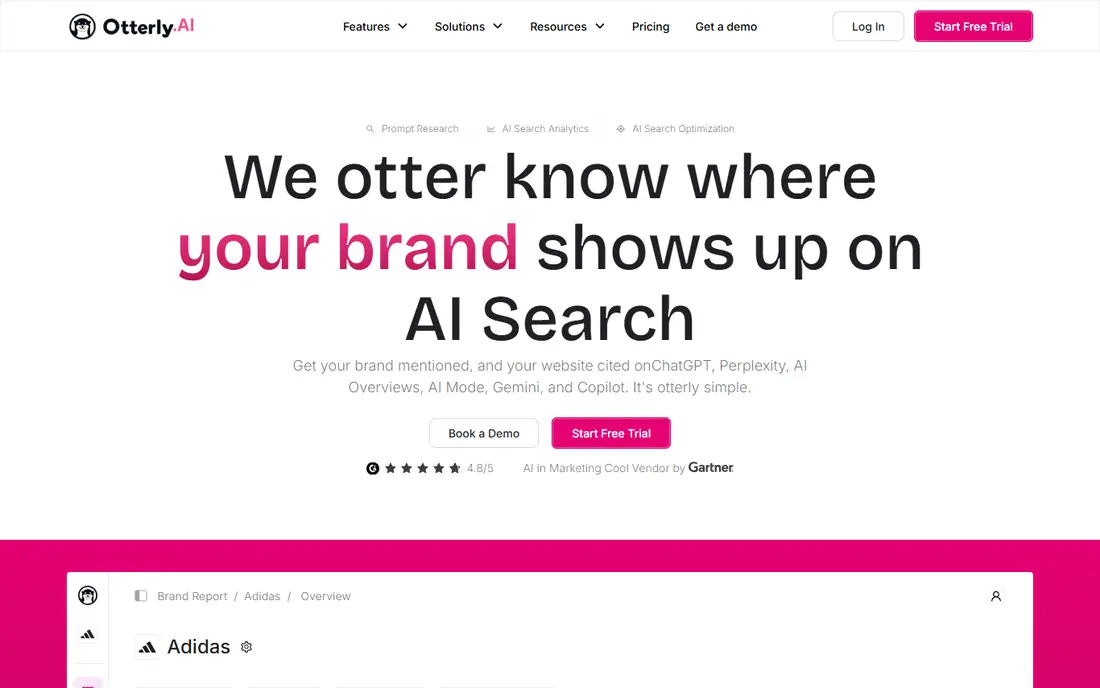
Otterly AI is our pick for a small team that wants to check AI Overviews without an enterprise budget. It tracks brand mentions and citations across AI answers, including AI Overviews, with daily monitoring on higher plans and workspaces for agencies managing several clients. Setup is quick, and reports focus on mentions and changes.
Lower plans refresh weekly on some tiers and gate some engines behind add-ons, so confirm AI Overviews coverage on the plan you buy. For a small team tracking a focused set of topics, Otterly AI offers the best value in this list.
- Low entry price
- Daily monitoring
- Multi-client workspaces
- Some engines are paid add-ons
- Weekly refresh on some core plans
Profound
Ideal for: Enterprise AI visibility

Profound suits a larger company where AI Overviews and AI search visibility affect revenue. It tracks mentions, citations and sentiment across major engines, with prompt demand data that shows which questions people actually ask. Enterprise reporting helps a team present AI visibility to leadership.
The Starter plan covers fewer engines and prompts than Growth, so the headline price is not the price of full coverage. Smaller teams should compare Otterly AI or Peec AI first, and larger teams should price the Growth tier for realistic coverage.
- Deep prompt and citation data
- Sentiment and demand data
- Enterprise reporting
- Useful Growth tier costs much more than Starter
- Enterprise pricing at scale
Peec AI
Ideal for: Agency AI Overviews reporting

Peec AI suits agencies that need to report AI Overviews performance across clients and engines. It distinguishes retrieval, where your page is found as a source, from citation, where it actually appears in the answer, which helps explain why visibility and traffic can diverge. Multi-country reporting and reporting connectors support agency workflows.
Entry plans cover fewer engines, so confirm AI Overviews and Google coverage on your plan. Agency plans are priced differently from brand plans, so get a written quote for your brand and engine count.
- Separates citation from retrieval
- Multi-engine reporting
- Reporting connectors
- Starter plans cover fewer engines
- Pricing varies by plan and region
Semrush AI Visibility Toolkit
Ideal for: Semrush users tracking Overviews
Semrush is the practical pick for a team already using Semrush for SEO. The AI Visibility Toolkit tracks AI Overviews and other AI answers alongside classic rankings, so you can see whether a page that ranks well is also cited in AI answers. Prompt insights show the real questions behind Overviews, helping content teams target them.
As a standalone checker it is expensive, since the toolkit is an add-on to a Semrush subscription. Teams that do not use the rest of Semrush will find better value in a dedicated checker.
- AI Overviews tracking inside a full SEO suite
- Classic rank data alongside
- Prompt insights
- Add-on pricing on top of a Semrush plan
- Not a cheap standalone checker
Ahrefs Brand Radar
Ideal for: Citation source tracking
Ahrefs Brand Radar appeals to SEO teams that care which exact pages get cited in AI Overviews. Ahrefs link and content data help explain why a source won a citation, and the tool tracks AI mentions alongside web mentions in a familiar interface. For a team focused on earning citations from strong pages, that source detail matters.
Brand Radar is an add-on to an Ahrefs plan, and covering every platform costs more than one platform. Teams that only need a simple citation count will find cheaper checkers, but Ahrefs users who want source-level detail will find it a logical extension.
- Strong source URL data
- AI mentions alongside web mentions
- Familiar Ahrefs workflow
- Add-on pricing
- Full multi-platform coverage costs more
Scrunch AI
Ideal for: Prompt plus crawler checking
Scrunch AI combines AI answer checking with data on how AI crawlers visit and read your site. That pairing helps technical teams find pages that AI systems misread, block or misunderstand, not just pages that lose citations. Agency workspaces suit teams managing several brands.
The entry price of $250 per month puts it beyond a solo blogger, and the crawler data only pays off if someone fixes what it finds. For a mid-size company with a technical SEO owner, the combined view can replace two separate tools.
- Combines prompt checks with real crawler data
- All engines included on paid plans
- Agency workspaces
- Higher entry price
- Needs a team to act on crawler findings
ZipTie
Ideal for: Budget AI search tracking
ZipTie suits a startup or solo marketer who wants to start checking AI search visibility for free. It offers AI search tracking with a free tier, making it easy to test which queries trigger AI answers for your brand before committing to a paid tool. For a first check on AI Overviews, that low barrier matters.
Features are thinner than Profound or Scrunch, and plan limits change, so check the current free tier limits on the official site. Use ZipTie to learn the category, then move to Otterly AI or Peec AI when you need deeper reporting.
- Free tier available
- Focused AI search tracking
- Low-cost entry
- Smaller feature set than enterprise tools
- Check current plan limits
How we picked these
We compared official feature pages, pricing pages and public reviews for AI Overviews checking tools available in October 2026. We favored tools with real AI Overviews or AI answer tracking, published pricing or a free tier, and a working official homepage. We left out tools we could not verify as live products.
What to check before you buy
Confirm AI Overviews coverage specifically, not just generic AI tracking. Some tools track chatbots well but cover Google AI Overviews only on higher plans or as an add-on. Ask for a demo on your own target queries, and check how often results refresh, since Overviews change frequently.
Track outcomes, not just citations
A citation does not guarantee a click, since an AI Overview may answer the question fully. Pair citation tracking with Search Console and analytics data to see whether cited pages gain or lose traffic. That combined view tells you whether AI visibility helps your business or only your ego.
Try before you commit to a full rollout
Most tools in this list offer a free tier or a trial, and the smartest use of that trial is a small, realistic test rather than a tour of every feature. Pick one real job, such as a single project, a single campaign, or a single workflow your team runs every week, and run it end to end in the trial. Invite the people who will actually use the tool daily, not just the person choosing it, and ask them to complete that job without help. Note where they get stuck, how long the job takes compared with your current method, and whether the result is good enough to share with a client or a manager. Check support response times during the trial too, since a fast answer during a trial often predicts the help you will get later. At the end of the trial, compare the real time saved and the real cost per user against the plan you would buy, and only then decide whether the upgrade is worth it for your team.
Frequently asked questions
What is an AI Overviews checking tool?
It is a tool that tracks whether your brand or pages are cited in Google AI Overviews and other AI-generated answers, which competitors are cited instead, and how those answers change over time.
How is AI Overviews checking different from rank tracking?
Rank tracking measures your position in classic link results. AI Overviews checking measures whether an AI answer mentions or cites you, which source it cites, and how the answer reads, which is a different visibility signal.
How often should I check AI Overviews?
Weekly checks suit most teams, with daily checks for fast-moving topics, product launches or news cycles. A one-time check quickly goes stale, since AI answers change as models and sources update.
Can a tool guarantee a citation in AI Overviews?
No. Tools show which pages get cited and why competitors win, but citations depend on content quality, authority, structure and relevance. The improvement comes from content and technical fixes based on that data.
Do I need a separate tool if I use Semrush or Ahrefs?
Not always. Both suites offer AI visibility add-ons that suit existing users. A dedicated checker makes sense when you want lower cost, agency workspaces, or deeper AI-only reporting.