For open-source self-hosted search engine, Typesense is where this list starts. Alternatives: Coveo for enterprise AI relevance across channels, and Constructor for ecommerce search and product discovery. Details, prices and limits for the rest of the 5 tools are below.
Ainotely compared 5 AI-Powered search analytics tools. The goal is a practical shortlist: published prices, free plan facts, best-fit use cases and honest limits for every entry.
Key takeaways
This list starts with Typesense, which is built for open-source self-hosted search engine.
Before buying Typesense, weigh this: you run hosting and operations.
Algolia stands alone as the one tool in this list with a free plan.
Pricing across the list, from Typesense to Algolia, is by quote only.
Typesense targets open-source self-hosted search engine. Typesense is an open-source search engine for quick, typo-tolerant site and app search, with straightforward APIs, vector search, and self-hosting, and it positions itself as an open-source alternative to Algolia and Pinecone. On top of that, pick Typesense when openness and infrastructure control outweigh convenience.
From a buyer's view, teams building search into applications and comfortable running their own servers are the clearest fit. On top of that, self-hosting means your team deals with deployment, scaling, and monitoring, and analytics capabilities rely on what you build around it. This comparison lists no price for Typesense; ask the vendor. As for free access: Not stated.
Drawbacks to consider: Fewer managed analytics features.
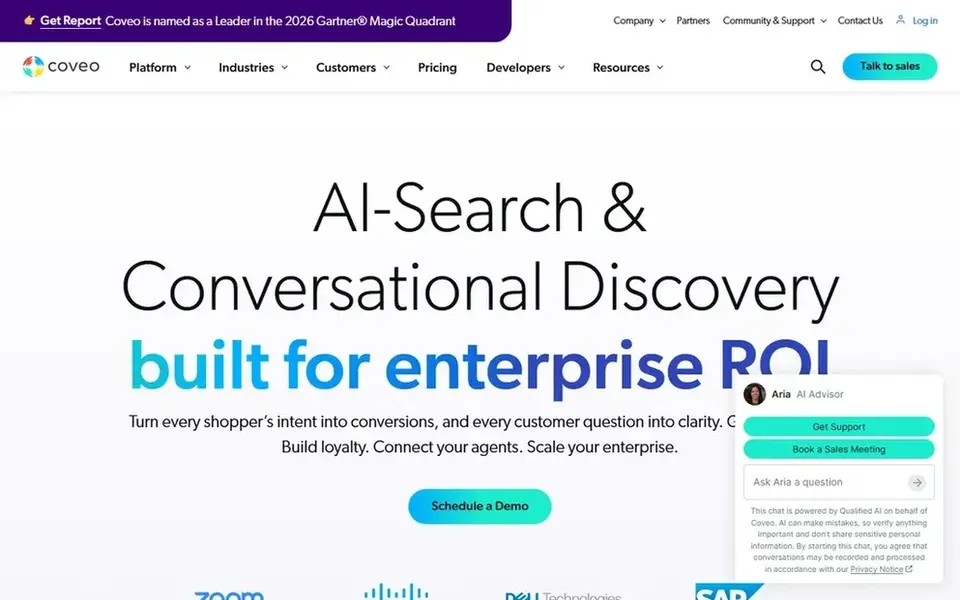
Where Coveo fits: enterprise AI relevance across channels. Organizations with more straightforward requirements might prefer a lighter search tool. In daily use, teams seeking a single relevance layer over plenty of content sources are the natural audience.
Worth adding: consider Coveo when cross-channel relevance and generative search are central to your plans. It spans commerce, customer service, workplace, and website experiences, which makes it a fit for bigger organizations that want consistent relevance across multiple digital channels. The enterprise orientation means implementation and governance can be substantial, and smaller teams may find the scope heavier than needed. Pricing for Coveo is not stated here, so ask the vendor for current figures. Free options: Free trial.
Drawbacks to consider: Enterprise focus may overwhelm small teams.
Where Constructor fits: ecommerce search and product discovery. Results also rely on the quality and completeness of your product data.
Teams wanting discovery experiences tuned to shopper behavior and catalog structure are the clearest match. From a buyer's view, Constructor provides AI ecommerce search and product discovery, describing itself as made for ecommerce KPIs and delivering experiences through AI, natural language processing, data, and personalization. Check the vendor site for Constructor pricing; none is listed in this comparison. As for free access: Not stated.
Best for: Search database with AI and observability
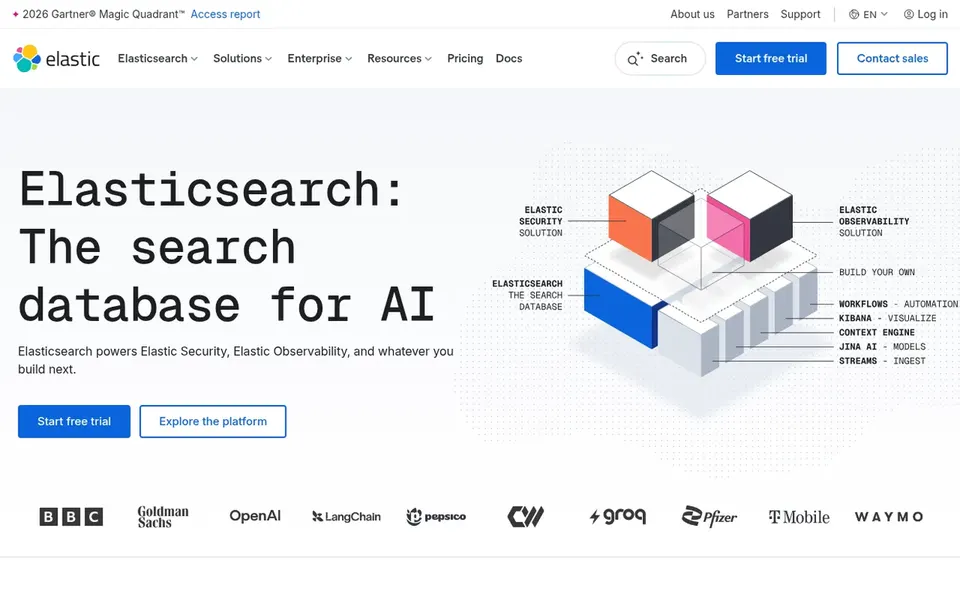
Elastic Search serves Search database with AI and observability. It fits engineering teams that want deep control over indexing, querying, and the data behind their search analytics.
In daily use, organizations already comfortable running and tuning search infrastructure will find the breadth handy, since search, monitoring, and security concerns can be addressed within one ecosystem. Check the vendor site for Elastic Search pricing; none is listed in this comparison. Trial and free access: Free trial.
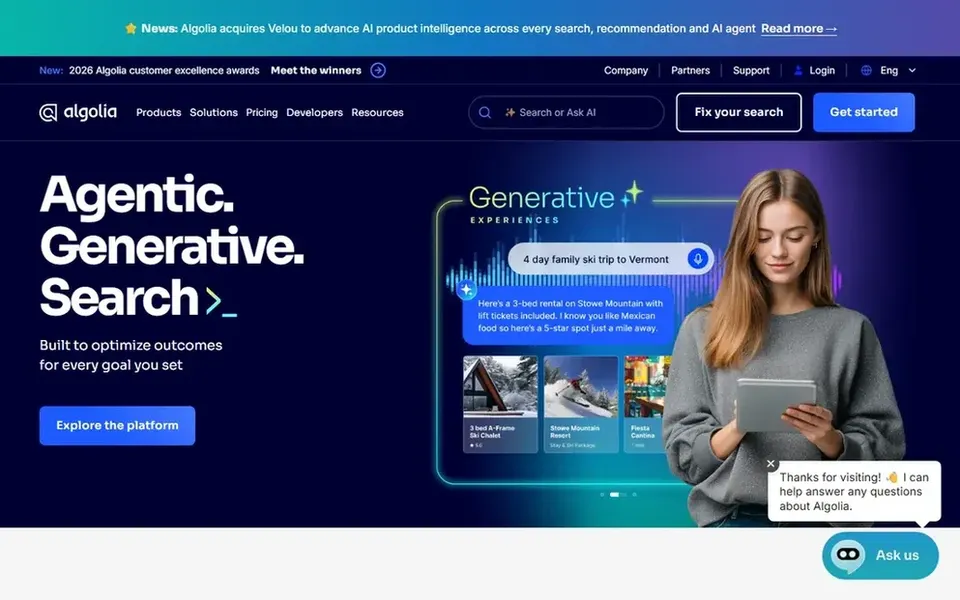
Algolia was built for unified AI search and retrieval system. It is geared toward organizations building easy-to-learn, adaptive search experiences across sites and applications. Consider Algolia when a managed, unified retrieval system aligns with your roadmap and internal skills.
In daily use, teams that need a completely self-hosted or open-source engine may prefer a different choice. As for the details, since the system spans numerous capabilities, getting the most from it relies on thoughtful configuration and a clear understanding of your search goals. Pricing for Algolia is not stated here, so ask the vendor for current figures. You can start on Algolia without paying.
What to check first: Less suited to completely self-hosted setups.
Request quotes from Typesense, Algolia and the others; the list shows no fixed prices.
Look at the free plan from Algolia closely: its caps decide whether it is usable for real work.
Run a trial of Coveo and Elastic Search with real work before paying for a year; your own workflow is the best test.
Read the limits listed for Typesense first: you run hosting and operations.
Check whether the features you need in Typesense sit on the entry plan or only on higher tiers.
Let daily users try Constructor on real work; their feedback beats any feature checklist.
How we picked
We compared the tools on published pricing, free plan or trial availability, feature coverage for AI-Powered search analytics tools, and the limits each vendor documents. Plan names, prices and limits change often. Treat the figures here as a starting point and verify them with the vendor. We ordered the tools by general fit, then by how clearly pricing is shown, then by free access. A buyer with unusual needs may reorder them.
Every price and plan detail on this page comes from the vendors’ own websites. We did not run hands-on tests unless the text says so, and we do not publish star ratings or review scores. See how we score and our disclosure.
Keep your shortlist in one place
Paste prices, trial dates and notes from this guide into Ainotely, our AI note app. It files them into a topic and pulls out tasks like “cancel trial by Friday”. Free 7-day trial, no card needed.
Is Typesense the right pick for everyone comparing AI-Powered search analytics tools?
No single tool suits every team. Typesense comes first because it fits open-source self-hosted search engine, while Coveo suits enterprise AI relevance across channels and Constructor suits ecommerce search and product discovery. Match the tool to your own size, budget and workflow before deciding.
Do these tools publish their prices?
No. None of the tools, from Typesense to Algolia, shows a fixed starting price here, so budget time for quotes.
Is open-source search a realistic choice for analytics?
Yes, tools like Typesense can power quick, typo-tolerant search and vector search when self-hosted, but analytics normally rely on what you build around the engine. Beyond that, open source fits teams with engineering capacity who want infrastructure control instead of a completely managed system.
Can I try these options before paying?
Often, yes. Algolia has a free plan and Coveo and Elastic Search offer a free trial. Use your own data and a real task during the test, and check what the free tier or trial limits before you rely on it.
What should I look for in an AI-powered search analytics tool?
Focus on the analytics you actually need, for example query reporting, relevance signals, and conversion tracking, plus how the tool takes care of AI features like vector search or generative results.
Which options for AI-Powered search analytics tools have a free plan?
Algolia is the only tool in this list with a free plan. Free plans usually cap users, projects or features, so check the limits on the vendor page. Several others offer a trial instead. Each of the 5 options in this AI-Powered search analytics tools guide has its own card above with the price, free plan and limits.