6 Best AI Prospecting Tools for 2026

- 1
 LushaReps who require verified emails and phone numbers quick, commonly from LinkedInVisit
- 2
 LeadIQSales teams that prospect primarily from LinkedIn and Sales NavigatorVisit
- 3
 RocketReachTeams that require wide contact search with email and phone coverageVisit
- 4
 ApolloSmall and mid-sized teams that want prospecting, data, and outreach in one placeVisit
- 5
 ClayRevOps and growth teams building custom prospecting workflowsVisit
- Top of the list is Lusha, which targets reps who require verified emails and phone numbers fast, commonly from LinkedIn.
- Lusha has the lowest monthly starting price in this list: $37.45 per month.
- For bigger sales and marketing teams that require deep account intelligence, ZoomInfo is worth a look.
- 6 of the 6 tools have a free plan, including Lusha, LeadIQ, RocketReach and Apollo.
Direct answer
Our first pick is Lusha, best for reps who require verified emails and phone numbers quick, commonly from LinkedIn. Alternatives: LeadIQ for sales teams that prospect chiefly from LinkedIn and Sales Navigator, and RocketReach for teams that require wide contact search with email and phone coverage. All 6 tools are compared below on price, free plan and limits.
Quick comparison
| Product | Ideal for | Price from | Free version | |
|---|---|---|---|---|
| Lusha | Reps who require verified emails and phone numbers quick, commonly from LinkedIn | $37.45 a month | Yes | Visit |
| LeadIQ | Sales teams that prospect primarily from LinkedIn and Sales Navigator | $200 a month | Yes | Visit |
| RocketReach | Teams that require wide contact search with email and phone coverage | See website | Yes | Visit |
| Apollo | Small and mid-sized teams that want prospecting, data, and outreach in one place | $49 per user/month | Yes | Visit |
| Clay | RevOps and growth teams building custom prospecting workflows | See website | Yes | Visit |
 ZoomInfo | Bigger sales and marketing teams that require deep account intelligence | See website | Yes | Visit |
The full AI prospecting tools list
If you are comparing AI prospecting tools, this page covers 6 tools in one place: what each is best for, what it costs to start, whether it has a free plan, and the main limit to know about.
Lusha
Ideal for: Reps who require verified emails and phone numbers quick, commonly from LinkedIn
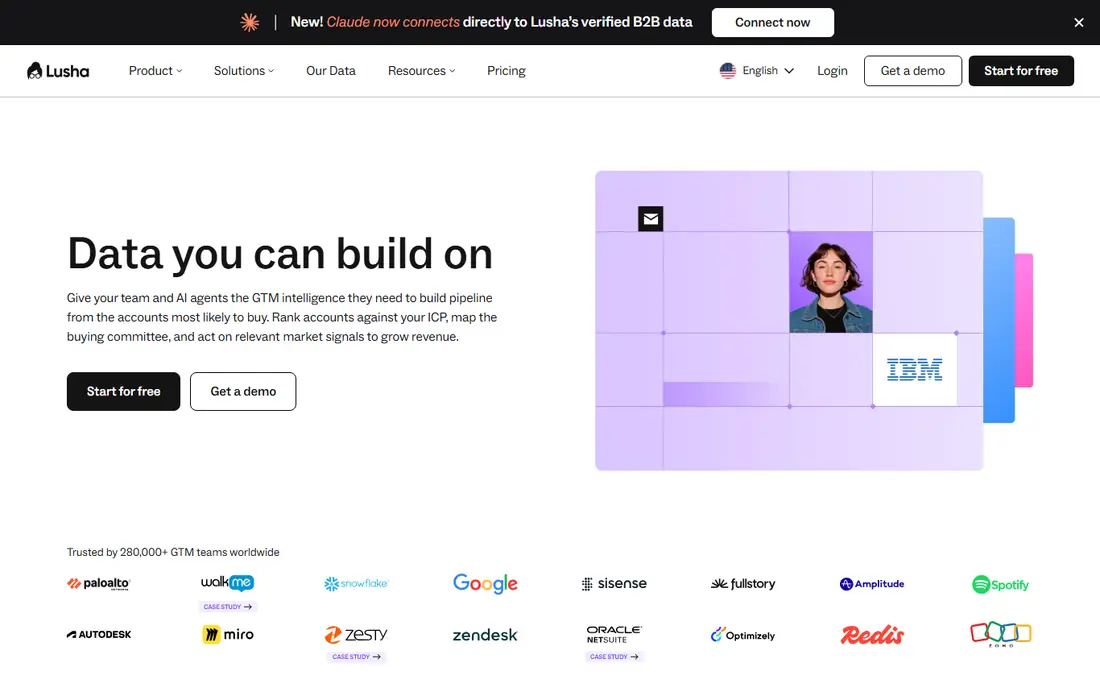
Lusha is built with reps who require verified emails and phone numbers quick, commonly from LinkedIn in mind. Lusha keeps prospecting close to where reps already work. From a buyer's view, credits are the detail to watch.
Points against: Phone numbers cost more credits than emails.
The free plan comes with a small monthly credit allowance, Starter costs $37.45 a month billed yearly, Pro costs $52.45 a month billed yearly, and Premium costs $299.95 a month billed annually. In daily use, a browser extension reveals contact details on LinkedIn and company websites. The web system layers on search across more than 515 million contacts, buying signals, account scoring, and lookalike firms. Each email carries a confidence score and a last-update date, which helps reps judge whether a record is fresh. On top of that, an email generally costs one credit whereas a phone number costs five, so phone-heavy teams burn through allowances quicker than the headline credit count recommends. Entry price for Lusha: $37.45 per month. Lusha has a free plan.
- Dated buying signals
- Confidence scores on emails
- Free plan credits are restricted
LeadIQ
Ideal for: Sales teams that prospect primarily from LinkedIn and Sales Navigator
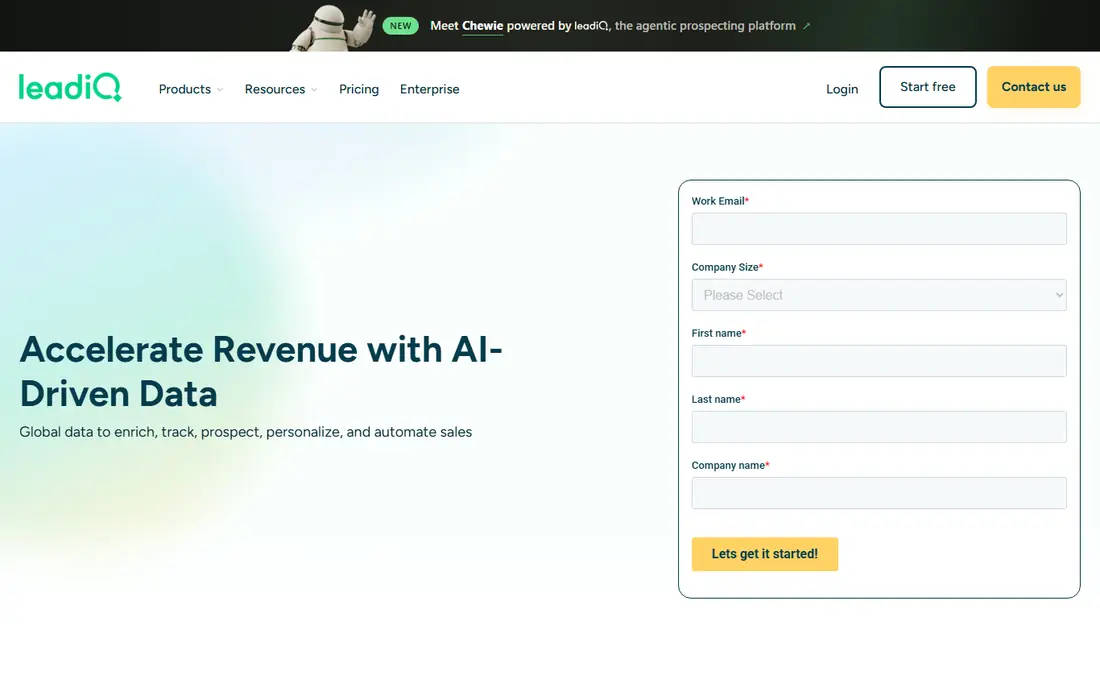
Think of LeadIQ for sales teams that prospect primarily from LinkedIn and Sales Navigator. LeadIQ is built around the rep workflow that starts on LinkedIn. Its browser extension records contact details from profiles and Sales Navigator searches, then pushes prospects straight into Salesforce, Outreach, Salesloft, or a similar tool, frequently in one click.
Where it is weaker: Older low price levels found online are out of date.
AI features draft personalised messages and track job changes so reps can re-engage champions who move businesses. Teams should confirm current seat and credit limits on the pricing page before purchase, since the plan structure differs from the older model. Recent vendor material prices the Pro plan at $200 per month for up to five users, with a free level offering a small monthly credit allowance. In practice, for LinkedIn-heavy teams, the time saved on capture and syncing frequently justifies the price, but list builders who work primarily from databases may prefer Apollo or RocketReach. On cost, LeadIQ starts like this: $200 per month. LeadIQ includes a free tier.
- One-click capture to CRM and sequences
- Solid LinkedIn and Sales Navigator workflow
- Best value includes team plans
RocketReach
Ideal for: Teams that require wide contact search with email and phone coverage
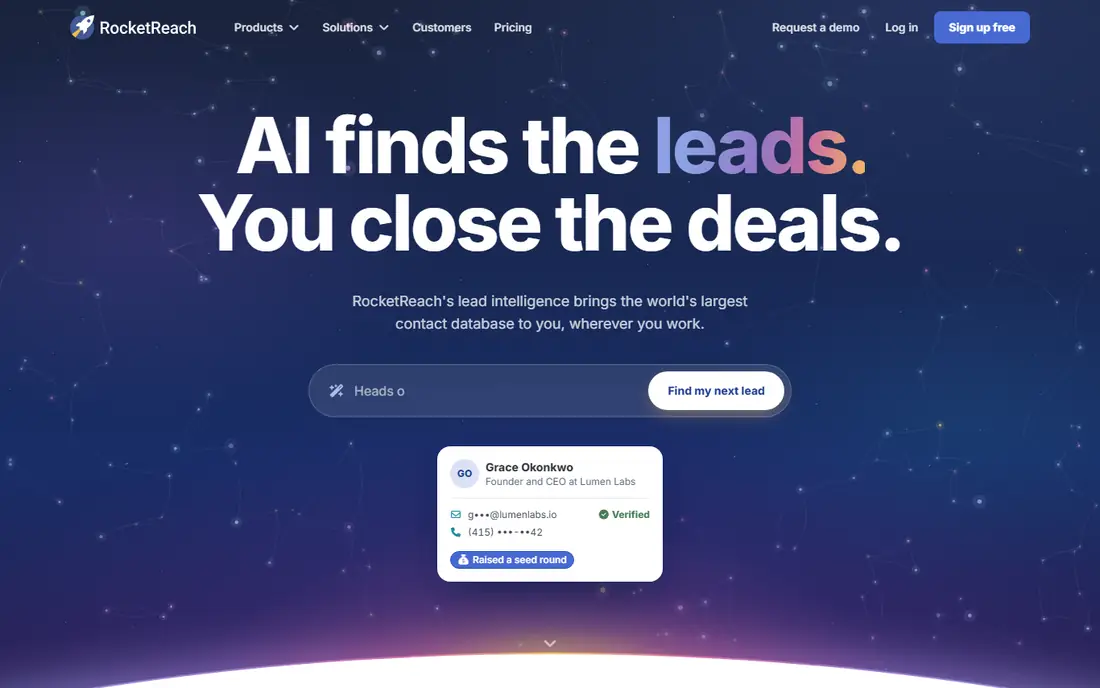
RocketReach serves teams that need broad contact search with email and phone coverage. RocketReach merges a large database of more than 700 million profiles and 60 million businesses with a browser extension, bulk lookup, and CRM integrations.
From a buyer's view, external pages quote multiple different price sets for the same plan names, reflecting changes over time. So a single figure copied from an old roundup would be unreliable. RocketReach shows no starting price here, so confirm the cost on the vendor site. RocketReach includes a free tier.
- Email and phone finder in one search
- Large global database
- Published prices vary between sources, so the current price must be checked on the site
Apollo
Ideal for: Small and mid-sized teams that want prospecting, data, and outreach in one place
Pick Apollo if this describes you: small and mid-sized teams that want prospecting, data, and outreach in one place. Reps search a database of more than 240 million contacts and 30 million accounts, filter by title, industry, company size, and technology, then launch email sequences and calls from the same workspace. The main limit is credits.
Honest limits: advanced plans rise rapidly in price.
Prospecting credits are pooled and expire, so a team that burns through contacts in a busy month cannot always roll the balance forward. AI features research accounts, score prospects, and draft outreach, and buying signals like job changes and website visits help reps time their first message. What you pay to start with Apollo: $49 per user/month. Apollo offers a free plan.
- Large contact database
- Built-in sequences and dialer
- Credit limits can bite on higher-volume teams
Clay
Ideal for: RevOps and growth teams building custom prospecting workflows
For RevOps and growth teams building custom prospecting workflows, Clay is a natural candidate. Users build tables of firms and people, enrich them from more than 200 data providers, run AI agents to research accounts and write personalised notes, and push finished lists to a CRM or outreach tool. From a buyer's view, there is a free level for trying the product.
Older articles still quote the retired Starter and Explorer prices, so any fixed figure copied from an external roundup risks being wrong. Teams that adopt Clay should budget for data credits separately from the subscription and expect a handful of weeks of setup before workflows run smoothly. For everyday use, pricing is the reason this entry says See website. No starting price is listed for Clay here; confirm pricing on the vendor site. Clay includes a free tier.
The main drawbacks: ramp-up time is steep for new users.
- Access to numerous data sources in one table
- AI research agents
- Pricing changed in 2026, so older price lists are out of date
ZoomInfo
Ideal for: Bigger sales and marketing teams that require deep account intelligence
Pick ZoomInfo if this describes you: larger sales and marketing teams that require deep account intelligence. ZoomInfo Lite is a permanent free plan with no credit card required, which hands small teams a way to try the data before talking to sales. More specifically, ZoomInfo suits best where data quality, coverage, and compliance documentation matter more than the lowest monthly bill.
ZoomInfo positions itself as a full go-to-market product instead of a straightforward lead list. Its database spans more than 500 million contacts and 100 million businesses. Its AI layer explains why an account is moving, using intent data, org changes, and engagement signals. This comparison lists no price for ZoomInfo; ask the vendor. Free access exists with ZoomInfo.
Where it falls short: can be pricey for small teams.
- Very large database
- Intent and signal data
- Full product pricing is quoted, not published
What went into this list
Each tool was reviewed on what its vendor publishes: price, plan limits, core features and stated drawbacks. We did not run hands-on tests. Where a price is missing, the vendor does not list one publicly or ties it to a quote. Always confirm before budgeting. The sequence is a judgement call: typical use case first, then pricing transparency, then free access. Use the profiles to check fit.
Things to verify first
- Get a written quote from RocketReach, Clay and ZoomInfo; the list shows no starting price for them.
- Check what the free option really includes: Lusha, LeadIQ, RocketReach and others offer a free plan, and usage caps differ.
- Before choosing Lusha, weigh its main limit: phone numbers cost more credits than emails, free plan credits are restricted.
- Find out what support Lusha includes on your plan, and whether onboarding help costs extra.
- Check whether RocketReach bills monthly or annually, and what cancelling early costs.
Frequently asked questions
What is an AI prospecting tool?
An AI prospecting tool helps sales teams find, enrich, and prioritise potential buyers. Reps still qualify leads and run conversations, but the tool removes much of the manual research and list building that used to fill the start of the sales day.
Is Lusha the right pick for everyone comparing AI prospecting tools?
No single tool suits every team. Lusha comes first because it fits reps who need verified emails and phone numbers fast, often from LinkedIn, while LeadIQ suits sales teams that prospect mainly from LinkedIn and Sales Navigator and RocketReach suits teams that need broad contact search with email and phone coverage. Match the tool to your own size, budget and workflow before deciding.
What is the cheapest option for AI prospecting tools in this list?
On published monthly entry prices, Lusha is the lowest here at $37.45 per month. Entry price is only part of the cost, because seats, add-ons and billing terms can change the total.
Are the contact details from these tools accurate?
Accuracy varies by vendor, region, and industry, and no database is perfect. Tools that display confidence scores, last-update dates, or credit-back protection make that testing simpler, since bad records cost less and are simpler to spot.
How much do AI prospecting tools cost?
Prices range from free plans with small credit allowances to quoted enterprise contracts. All-in-one and enterprise systems commonly cost more, and credit use can raise the real monthly cost above the headline subscription price.
Do these tools publish their prices?
Not all of them. RocketReach, Clay and ZoomInfo publish no starting price, so expect a quote request for those. The rest, Lusha included, show a starting price, though seats and billing terms still change the final cost.