This list puts Nuance Precision Imaging Network first for Imaging workflow and productivity. For a different need, Riverain Technologies covers Chest CT and X-ray detection and Lunit INSIGHT covers cancer detection and precision oncology. The remaining 3 options are covered below with prices and limits.
Ainotely compared 6 tools for AI radiology software. The goal is a practical shortlist: published prices, free plan facts, best-fit use cases and honest limits for every entry.
Key takeaways
Nuance Precision Imaging Network is the opening pick, best for Imaging workflow and productivity.
Lunit INSIGHT comes with a trade-off: narrower than general radiology suites.
For clinical AI decision support for imaging, Aidoc is worth a look.
Neither Nuance Precision Imaging Network nor Aidoc, nor any of the other 4 tools, has a permanent free plan; trials and quotes are the norm.
Every tool from Nuance Precision Imaging Network to Aidoc works by quote, with no list price shown.
Nuance Precision Imaging Network was built for Imaging workflow and productivity. Nuance, now part of Microsoft, frames its offering around transforming workflows and boosting productivity using AI, security and infrastructure.
Points against: Radiology-specific depth varies by module.
In practice, within imaging, the Precision Imaging Network concept targets communication and workflow across the imaging chain. Nuance Precision Imaging Network does not show a starting price in this comparison, so check the vendor site for current pricing. Free access: Not stated.
Riverain Technologies works best for Chest CT and X-ray detection. The narrow focus makes it simple to evaluate against a specific clinical need.
Limits to weigh: Centred on chest imaging only.
Beyond that, chest imaging is the whole scope, so organizations needing body-wide coverage must look elsewhere or combine vendors. Check the vendor site for Riverain Technologies pricing; none is listed in this comparison. Trial and free access: Not stated.
Lunit INSIGHT is designed for cancer detection and precision oncology. Lunit INSIGHT is presented as medical AI software centered on early detection and precision oncology, with the goal of transforming cancer care.
Organizations building a cancer-focused AI strategy commonly consider it alongside broader products. For everyday use, the oncology emphasis means it is not a general-purpose radiology suite, so departments needing broad modality coverage may need extra tools. Check the vendor site for Lunit INSIGHT pricing; none is listed in this comparison. Free plan details: Not stated.
Drawbacks to consider: Oncology focus may not fit all departments.
icometrix targets AI-powered neuroimaging and neurology. icometrix supplies icobrain, described as AI-powered neuroimaging software that gives insights from MRI and CT scans for neurology care. The scope is deliberately narrow: brain imaging and neurology.
The vendor states its insights are FDA-cleared and CE-marked and clinically validated for disease-specific use. From a buyer's view, a department seeking wide modality coverage will need other tools alongside it. No starting price is listed for icometrix here; confirm pricing on the vendor site. Trial and free access: Not stated.
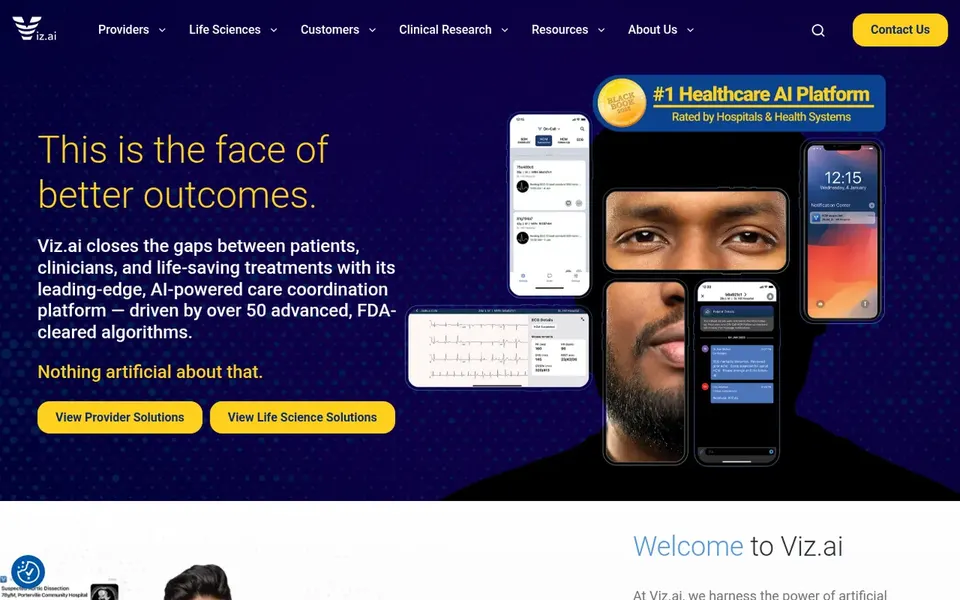
Viz.ai is aimed squarely at care coordination and disease detection. If your priority is purely image interpretation support without cross-team workflows, a narrower detection tool could be a more straightforward fit.
Viz.ai does not show a starting price in this comparison, so check the vendor site for current pricing. Free options: Not stated.
Trade-offs to know: Emphasis on coordination may not suit every team.
Best for: Clinical AI decision support for imaging
For clinical AI decision support for imaging, Aidoc is a natural candidate. Aidoc presents itself as a provider of clinical AI options for healthcare organizations, with an emphasis on quicker and more accurate decision support. It is targeted at radiology and clinical teams that want AI assistance woven into existing imaging and care workflows instead of a single narrow detection task.
From a buyer's view, organizations evaluating enterprise-level AI support commonly place Aidoc on their shortlist. In practice, teams wanting a tightly scoped tool for one modality should confirm which modules apply to them, and compare against more specialized choices before committing. Check the vendor site for Aidoc pricing; none is listed in this comparison. On free options: Not stated.
What users get: more accurate decisions.
The main drawbacks: Wide scope can need workflow planning.
Request quotes from Nuance Precision Imaging Network, Aidoc and the others; the list shows no fixed prices.
Before choosing Nuance Precision Imaging Network, weigh its main limit: wide product may need configuration.
Ask Viz.ai whether prices are locked for the first term and what happens at renewal.
Make sure Nuance Precision Imaging Network lets you export your data in a format another tool can read.
List the apps you already depend on and check that Aidoc supports each one on the plan you would buy.
How we picked
Ainotely looked at what each vendor publishes: pricing, plan limits, feature coverage for AI radiology software and stated drawbacks. No hands-on testing is claimed. Figures are shown as the vendors publish them. Billing terms, seat minimums and add-ons can change the real cost. We ordered the tools by general fit, then by how clearly pricing is shown, then by free access. A buyer with unusual needs may reorder them.
Every price and plan detail on this page comes from the vendors’ own websites. We did not run hands-on tests unless the text says so, and we do not publish star ratings or review scores. See how we score and our disclosure.
Keep your shortlist in one place
Paste prices, trial dates and notes from this guide into Ainotely, our AI note app. It files them into a topic and pulls out tasks like “cancel trial by Friday”. Free 7-day trial, no card needed.
Is Nuance Precision Imaging Network the right pick for everyone comparing AI radiology software?
No single tool suits every team. Nuance Precision Imaging Network comes first because it fits Imaging workflow and productivity, while Riverain Technologies suits Chest CT and X-ray detection and Lunit INSIGHT suits cancer detection and precision oncology. Match the tool to your own size, budget and workflow before deciding.
How are the tools for AI radiology software ordered?
Nuance Precision Imaging Network sits first and Aidoc last because the order follows typical fit for AI radiology software, then price clarity and free access. It is a judgement call, so read each profile for fit and limits.
How do detection tools differ from care coordination products?
Detection tools focus on flagging or quantifying findings in images, whereas coordination products emphasize moving those findings rapidly between teams. Viz.ai, for instance, is positioned around care coordination, whereas Lunit INSIGHT and Riverain focus on detection for specific clinical areas.
Does any tool for AI radiology software here have a free plan?
A permanent free plan is not offered by Nuance Precision Imaging Network, Aidoc or the other tools here. Plan a short evaluation period instead.
Do these tools publish their prices?
No. None of the tools, from Nuance Precision Imaging Network to Aidoc, shows a fixed starting price here, so budget time for quotes.
Can these tools replace radiologist judgment?
Treat outputs as one input in the diagnostic process and confirm how each tool is intended to be used in your setting.