AI Resume Screening Software: 6 Tools Worth Comparing in 2026

- Workable takes the first slot, best suited to small teams wanting ATS plus AI.
- For the cheapest start, look at Manatal: $15 per user per month.
- Greenhouse is the one to check for structured hiring at scale.
- None of the 6 tools, from Workable to Greenhouse, has a free plan, so budget for a subscription or use a trial.
Direct answer
Workable leads the list, best for small teams wanting ATS plus AI. HireVue is the stronger choice for assessments and video screening, while Ashby suits data driven recruiting teams. Prices, free plans and limits for all 6 tools follow.
Quick comparison
| Product | Ideal for | Price from | Free version | |
|---|---|---|---|---|
 Workable | Small teams wanting ATS plus AI | $169 per month | No | Visit |
 HireVue | Assessments and video screening | See website | No | Visit |
 Ashby | Data driven recruiting teams | See website | No | Visit |
 Manatal | AI scoring on a budget | $15 per user a month | No | Visit |
 Paradox | High volume frontline hiring | See website | No | Visit |
 Greenhouse | Structured hiring at scale | See website | No | Visit |
The best AI resume screening software
Ainotely put together this guide to AI resume screening software for readers who want a clear shortlist without reading every vendor page. It compares 6 tools on starting price, free plans, who each one suits and where each one falls short.
Workable
Ideal for: Small teams wanting ATS plus AI
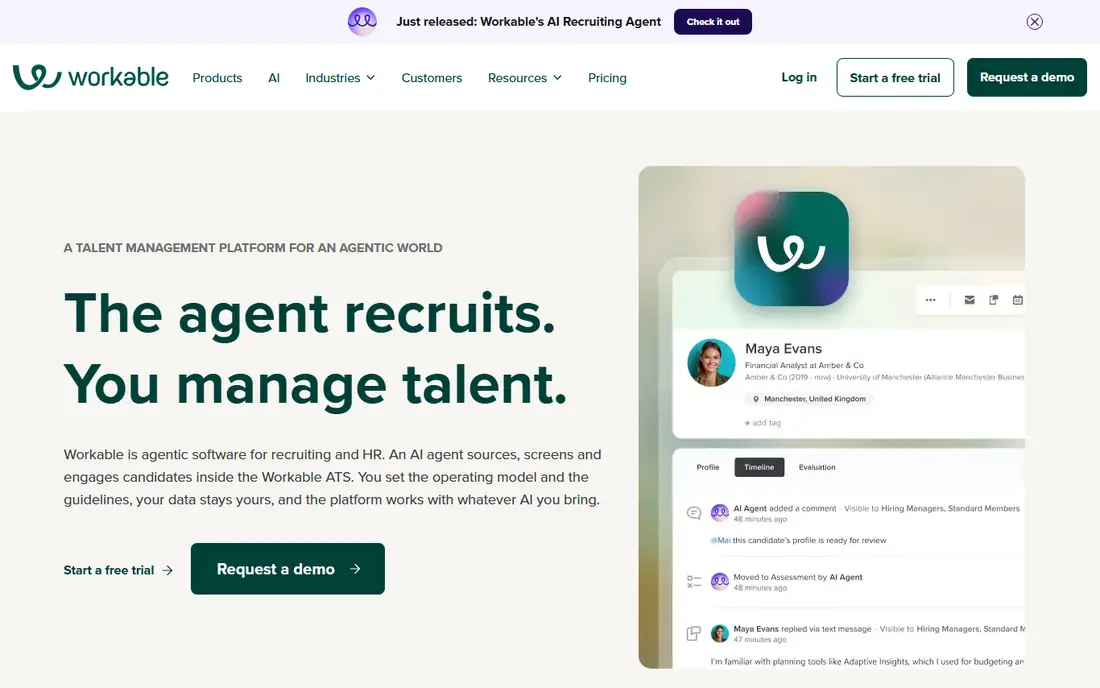
Workable targets small teams wanting ATS plus AI. Workable wraps AI screening inside an applicant tracking system small teams genuinely enjoy: post once to plenty of job boards, let the AI surface and score applicants, and move people through a clean pipeline.
Trade-offs to know: Per job pricing history confuses comparisons.
The trade off is ease against ceiling. On cost, Workable starts like this: $169 per month. No free plan comes with Workable.
- Video and assessments available
- Capable job board distribution
- AI features deepen on higher levels
HireVue
Ideal for: Assessments and video screening

Think of HireVue for assessments and video screening. It dropped facial analysis from its assessments years ago under that scrutiny, and it documents bias testing as part of the product.
The main drawbacks: The most legally scrutinised category in this guide.
For everyday use, the trade off is assessment depth against perception and governance load. This comparison lists no price for HireVue; ask the vendor. HireVue does not include a free plan.
- AI scored assessments validated by industrial psychologists
- Structured video interviews and game based assessments
- Pricing by quote at enterprise level
Ashby
Ideal for: Data driven recruiting teams
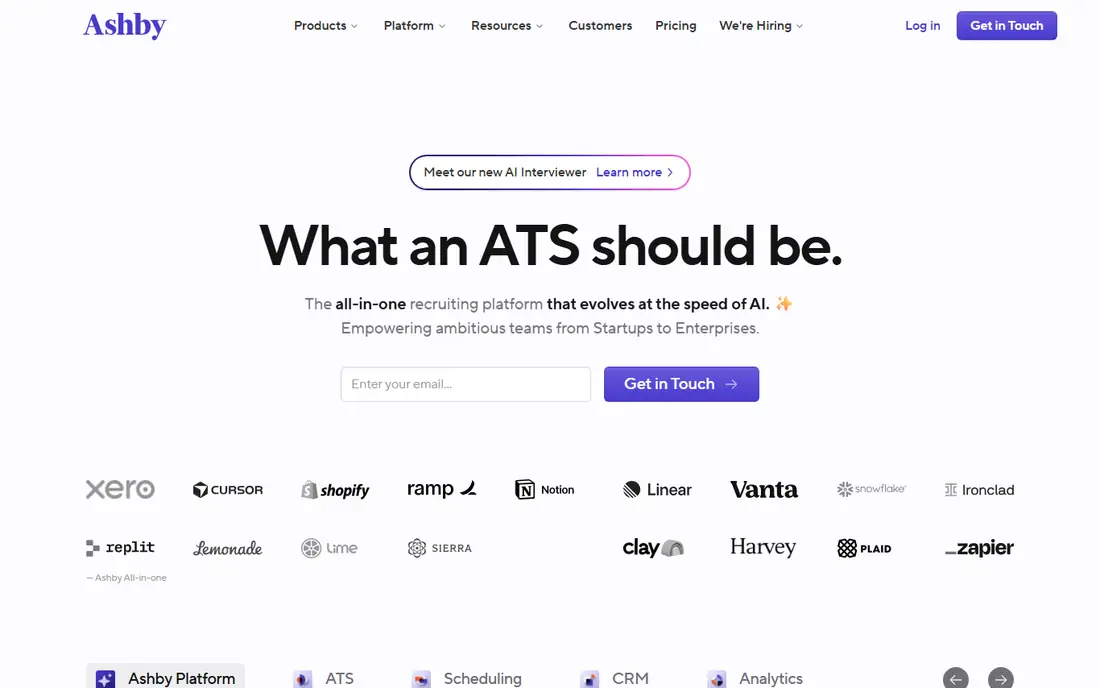
Ashby is a good fit for data driven recruiting teams. Ashby suits scaling firms, roughly a hundred hires per year and up, that treat recruiting as an operation to be measured and improved.
Reasons to shortlist it: quick interface.
Drawbacks to consider: Quote based pricing. No starting price is listed for Ashby here; confirm pricing on the vendor site. No free plan comes with Ashby.
- Loved by technology company recruiting teams
- Analytics are the most solid in this group
- Younger system than Greenhouse or Lever
Manatal
Ideal for: AI scoring on a budget
Manatal targets AI scoring on a budget. Manatal brings AI screening to small teams: it parses resumes into profiles, enriches them from public sources, and scores each candidate against the role so recruiters read the most solid matches first. Manatal will not run a global multi brand hiring operation, and its AI needs your past decent hires to learn from.
Also, at a reported $15 per user a month entry price, it is a fraction of enterprise ATS cost. The trade off is depth against price. Manatal pricing: $15 per user per month. Manatal has no permanent free option.
Downsides: AI scoring quality relies on your job data; not a built in audit.
- AI recommendations score candidates against the job
- Fast to set up for a small team
- Smaller ATS feature set than enterprise tools
Paradox
Ideal for: High volume frontline hiring
Paradox was built for high volume frontline hiring. For employers hiring hundreds of frontline staff, the bottleneck Paradox removes is scheduling and first contact, not resume nuance.
Drawbacks to consider: Fit is narrow by design.
Olivia answers candidate questions, screens against your criteria, and books interviews by text, around the clock. No starting price is listed for Paradox here; confirm pricing on the vendor site. No free plan comes with Paradox.
- Conversational assistant, Olivia
- Used by large restaurant, retail
- Screening is conversational and criteria based instead of deep resume analysis
Greenhouse
Ideal for: Structured hiring at scale
Greenhouse targets structured hiring at scale. The trade off is rigour against cost and effort.
Beyond that, Greenhouse sells discipline: structured scorecards, defined rubrics, and reporting that lets you see where candidates fall out of the process and whether that fallout is even across groups. Its AI features assist sourcing and summarising instead of deciding alone, which is the posture employment lawyers prefer. Greenhouse does not show a starting price in this comparison, so check the vendor site for current pricing. No free plan comes with Greenhouse.
Highlights: Capable reporting for fairness monitoring; The benchmark for structured hiring process.
Where it is weaker: Implementation takes real change management.
- Interview kits
- Screening summaries
- Quote based pricing at the premium end
How we compared the tools
Pricing pages, product documentation and feature lists were the main sources, and every entry carries at least one honest drawback. Prices and plan limits come from vendor pages and can change, so confirm them on the vendor site before you buy. The ranking is editorial: typical fit first, then clear pricing, then free access. If your needs are unusual, read the profiles rather than relying on position.
What to check before you buy
- Confirm the entry price on the vendor page. For HireVue, Ashby, Paradox and Greenhouse that means a quote rather than a fixed price.
- Before choosing Workable, weigh its main limit: AI features deepen on higher levels.
- Ask whether Workable integrates with your current software, and whether that comes standard or as an add-on.
- Ask Greenhouse whether prices are locked for the first term and what happens at renewal.
- Look at the help docs and support options for Ashby before you commit.
Frequently asked questions
Does AI screening actually save time?
Yes, on the mechanical work: parsing, matching keywords and experience to the role, deduplication, and scheduling can cut first pass review time dramatically in high volume hiring.
Is Workable the right pick for everyone comparing AI resume screening software?
No single tool suits every team. Workable comes first because it fits small teams wanting ATS plus AI, while HireVue suits assessments and video screening and Ashby suits data driven recruiting teams. Match the tool to your own size, budget and workflow before deciding.
Is AI resume screening legal for US employers?
It is legal to use, and completely subject to anti discrimination law. The EEOC applies Title VII to algorithmic tools, New York City needs bias audits and candidate notice under Local Law 144, and Illinois has its own AI hiring rules.
Do these tools publish their prices?
Not all of them. HireVue, Ashby, Paradox and Greenhouse publish no starting price, so expect a quote request for those. The rest, Workable included, show a starting price, though seats and billing terms still change the final cost.
What should I ask a vendor about fairness?
Ask for validation evidence for the specific feature you will use, the data the model trains on, adverse impact results, whether protected class data or its proxies are inputs, and what audit exports exist. Note the answers in your procurement file; regulators and courts both respect a paper trail.
What is the cheapest option for AI resume screening software in this list?
On published monthly entry prices, Manatal is the lowest here at $15 per user per month. Entry price is only part of the cost, because seats, add-ons and billing terms can change the total.