7 Best AI Roleplay Tools for Corporate Training Options for 2026

- 1
 ZenarateContact center agent trainingVisit
- 2
 Tough Tongue AINegotiation practiceVisit
- 3
 MindtickleEnablement with roleplayVisit
- 4
 YoodliIndividual speech practiceVisit
- 5
 VirtualSpeechPresentation and interview practiceVisit
- Zenarate is the opening pick, best for contact center agent training.
- A fair warning about Yoodli: less depth for enterprise scenario management.
- Pricing across the list, from Zenarate to Hyperbound, is by quote only.
- For revenue team voice practice, Hyperbound is worth a look.
Direct answer
Start with Zenarate if you need contact center agent training. If your case is different, Tough Tongue AI suits negotiation practice and Mindtickle suits Enablement with roleplay. All 7 tools are compared below on price, free plan and limits.
Quick comparison
| Product | Ideal for | Price from | Free version | |
|---|---|---|---|---|
| Zenarate | Contact center agent training | See website | No | Visit |
| Tough Tongue AI | Negotiation practice | See website | Free trial | Visit |
| Mindtickle | Enablement with roleplay | See website | No | Visit |
| Yoodli | Individual speech practice | See website | Yes | Visit |
| VirtualSpeech | Presentation and interview practice | See website | Free trial | Visit |
 Second Nature | Sales onboarding practice | See website | No | Visit |
 Hyperbound | Revenue team voice practice | See website | Free trial | Visit |
AI Roleplay Tools for Corporate Training compared in detail
Ainotely put together this guide to AI roleplay tools for corporate training for readers who want a clear shortlist without reading every vendor page. It compares 7 tools on starting price, free plans, who each one suits and where each one falls short.
Zenarate
Ideal for: Contact center agent training

Zenarate serves contact center agent training. Zenarate is built for contact center training, where agents have to deal with numerous call types before they speak with real customers. On top of that, if your training problem is agent readiness at scale, Zenarate is a specialist worth reviewing.
On top of that, AI simulations let new agents practice greetings, problem solving and compliance steps, and managers can track readiness before live work. That can shorten ramp time and cut early call errors. This comparison lists no price for Zenarate; ask the vendor. Zenarate has no free tier.
Watch-outs: Concentrated on contact centers.
- AI coach for contact center conversations
- Agent readiness tracking
- Enterprise pricing by quote
Tough Tongue AI
Ideal for: Negotiation practice
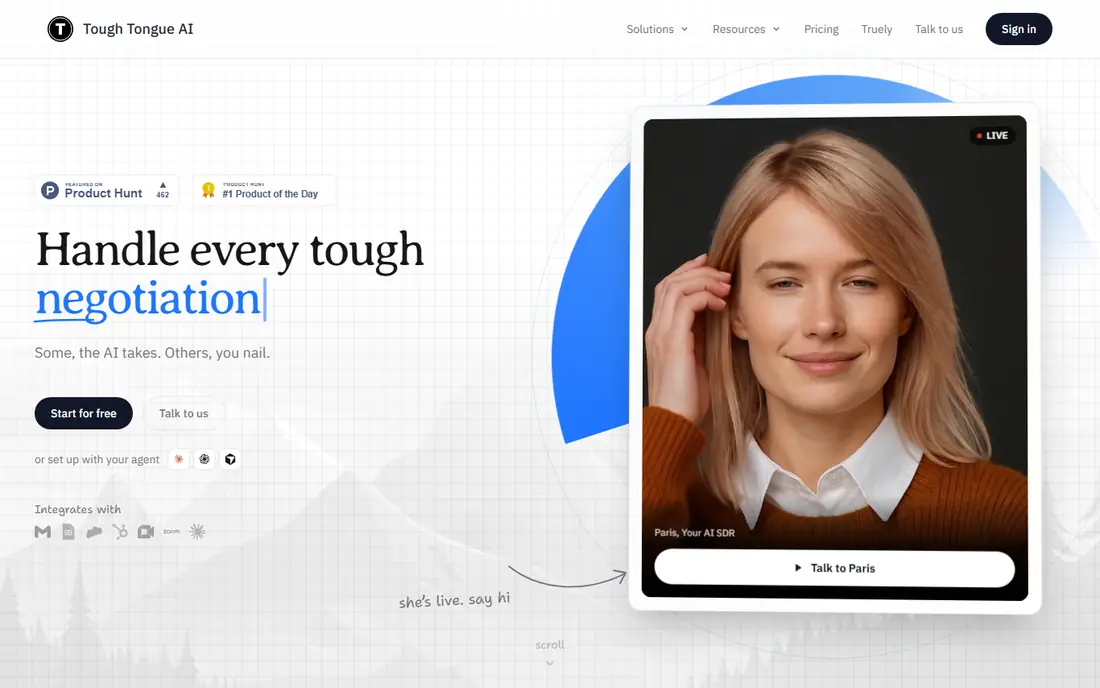
Pick Tough Tongue AI if this describes you: negotiation practice. Check language coverage and meeting integrations before a pilot.
Drawbacks to consider: Newer and narrower than wide enablement suites.
From a buyer's view, you can practice price objections, renewals and supplier talks in voice or video, then review a report card against a rubric you define. That structure helps managers see which skills improved and which still need work. This comparison lists no price for Tough Tongue AI; ask the vendor. Free options: Free trial.
- Voice and video practice
- Negotiation scenarios for sales and procurement
- Check language and integration fit
Mindtickle
Ideal for: Enablement with roleplay
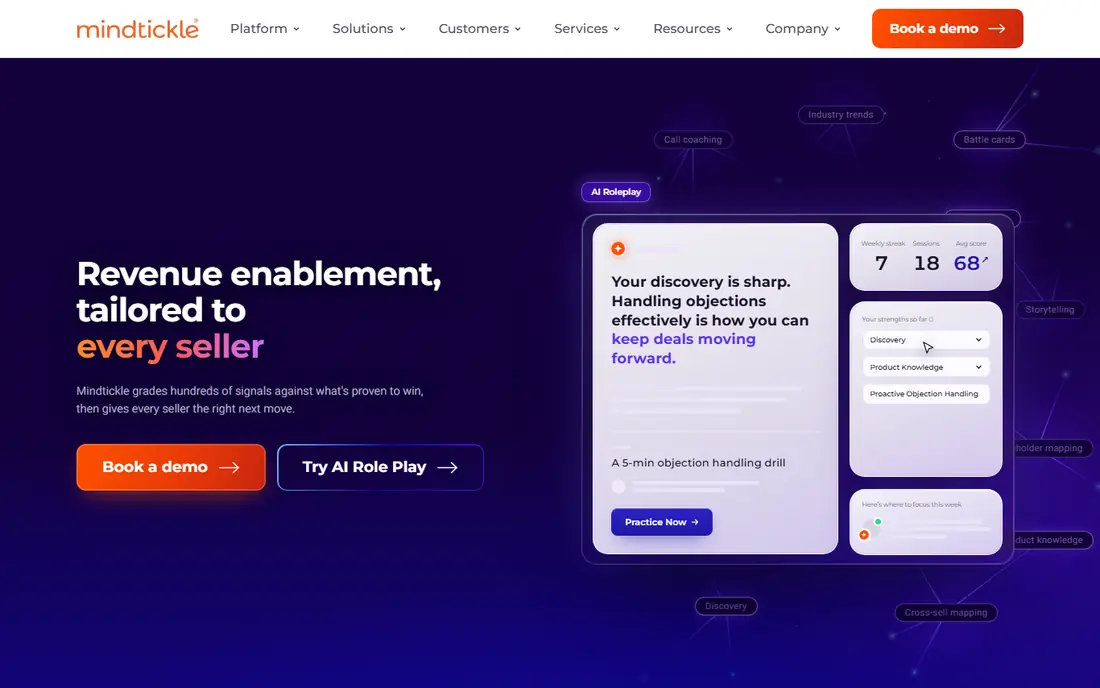
Choose Mindtickle for Enablement with roleplay. Mindtickle is a full sales enablement product that bundles AI roleplay beside content, coaching and analytics. On top of that, setup takes time, pricing is enterprise, and smaller teams may find the system more than they need.
In daily use, the trade off is size and cost. Also, managers can link practice results to content and pipeline work. If you already need enablement, content and coaching together, Mindtickle lets roleplay sit inside that wider program. Mindtickle does not show a starting price in this comparison, so check the vendor site for current pricing. Mindtickle has no free plan.
What Mindtickle does well: Full enablement system with roleplay. Trade-offs to know: Roleplay is one part of a bigger system.
- Coaching and analytics in one place
- Solid for large sales teams
- Large system cost and setup
Yoodli
Ideal for: Individual speech practice
Yoodli works best for individual speech practice. Yoodli is a decent starting point for individuals and small teams. It hands feedback on speech, pacing, filler words and delivery, and it lets users practice sales roleplays, interviews and presentations.
Trade-offs to know: Less depth for enterprise scenario management.
A free plan makes it simple to try before you ask an entire team to adopt it. More specifically, for low cost, low friction practice, Yoodli is hard to ignore. Yoodli does not show a starting price in this comparison, so check the vendor site for current pricing. Yoodli includes a free tier.
- Free plan for individuals
- Speech and delivery feedback
- Coaching features vary by plan
VirtualSpeech
Ideal for: Presentation and interview practice
VirtualSpeech makes the most sense for presentation and interview practice. VirtualSpeech helps people practice speaking in front of an audience without a real audience. Sales scenario depth is also lighter than tools built only for revenue teams.
For everyday use, online and virtual reality rooms simulate meetings, interviews and presentations, and feedback includes pace, pauses and eye contact. For presentation, interview and public speaking training, VirtualSpeech provides a distinct and handy format. Beyond that, built in courses help learners understand why a habit matters, not just that it happened. This comparison lists no price for VirtualSpeech; ask the vendor. Free access: Free trial.
Points against: Less sales scenario depth.
- Virtual reality and online practice rooms
- Feedback on pace and eye contact
- Virtual reality needs compatible hardware for full use
Second Nature
Ideal for: Sales onboarding practice
Second Nature serves sales onboarding practice. Second Nature describes itself as a virtual pitch partner, and that framing suits how it is used. Reps can practice pitches, discovery and objection handling, then get scored feedback soon after each session.
Trade-offs to know: Does not score live customer calls.
It also grades simulations, not live calls, so managers still need a separate way to review real conversations. More specifically, for onboarding and ramp, where repetition matters most, Second Nature is a capable lead choice. No starting price is listed for Second Nature here; confirm pricing on the vendor site. There is no free plan with Second Nature.
- Video avatars and multi persona meetings
- Instant scoring
- Pricing is not published
Hyperbound
Ideal for: Revenue team voice practice
Where Hyperbound fits: revenue team voice practice. Reps talk with AI buyers, work through objections and pricing pushback, and get scored against scorecards their managers define.
In daily use, Hyperbound is made for revenue teams that require plenty of voice practice in a short time. Also, Leaderboards can help keep practice regular, which is frequently the hardest part of any training program. This comparison lists no price for Hyperbound; ask the vendor. Free access: Free trial.
Where it is weaker: Pricing varies by scope.
- Custom scorecards
- Leaderboards for team practice
- Focused primarily on revenue roles
Choosing AI roleplay tools for corporate training: what matters
Start with the conversation you have to boost. From a buyer's view, next, check scoring and follow up. Decent feedback names what went well, what to change and how to practice next.
It should be usable in a one to one without a manager having to translate a dashboard. Also check language support, data handling and integrations with your learning system or CRM, since those details decide whether a pilot can grow into a program. For everyday use, Finally, plan for practice habits.
Beyond that, a pilot with a small group, real scenarios and a clear measure of success will tell you more than a long feature list.
Our selection method
Ainotely looked at what each vendor publishes: pricing, plan limits, feature coverage for AI roleplay tools for corporate training and stated drawbacks. No hands-on testing is claimed. Prices and plan limits come from vendor pages and can change, so confirm them on the vendor site before you buy. Position on the page reflects fit for a typical buyer first, with price clarity and free access breaking ties. Treat it as a guide, not a ruling.
What to confirm before you sign up
- Confirm the entry price with every vendor: no tool from Zenarate to Hyperbound shows a fixed starting price.
- Test the free plan from Yoodli against your real workload before relying on it.
- Take the trial from Tough Tongue AI, VirtualSpeech and Hyperbound and push a live task through it before you pay.
- Before choosing Zenarate, weigh its main limit: concentrated on contact centers.
- Before you load data into Zenarate, check what an export looks like and who can run it.
- Confirm the exact Yoodli plan that includes your must-have features.
Frequently asked questions
Can I try these tools before paying?
Often, yes. Yoodli has a free plan and Tough Tongue AI, VirtualSpeech and Hyperbound offer a free trial. Use your own data and a real task during the test, and check what the free tier or trial limits before you rely on it.
How does AI roleplay help corporate training?
That repetition helps new hires ramp quicker and helps experienced staff prepare for tough talks. It fits best when managers review results and coach on the patterns they see.
How much does AI roleplay software cost?
Plenty of enterprise tools are quote based, with price driven by seats, scenarios and implementation. Individual tools like Yoodli offer a free plan and lower premium levels.
Which options for AI roleplay tools for corporate training have a free plan?
Yoodli is the only tool in this list with a free plan. Free plans usually cap users, projects or features, so check the limits on the vendor page. Several others offer a trial instead.
How are the tools for AI roleplay tools for corporate training ordered?
The order follows typical fit for AI roleplay tools for corporate training, with Zenarate first and Hyperbound last, then price clarity and free access. It is editorial judgement, not a score, so another team could rank the tools differently.
What are the best AI tools for corporate training roleplays?
The first pick on this list is Zenarate, because it suits contact center agent training. Tough Tongue AI is better for negotiation practice, and Mindtickle for Enablement with roleplay. Check price and limits against your own needs before choosing.