8 Best AI SEO Rank Tracking Software Tools

- 1
 AhrefsTeams that want rank tracking inside a full SEO platformVisit
- 2
 SemrushMarketing teams that need SEO, content, and competitor tools togetherVisit
- 3
 SE RankingAgencies and businesses that want SEO plus AI visibility in one platformVisit
- 4
 AccuRankerAgencies that need fast, accurate daily rankingsVisit
- 5
 NightwatchSpecialists and agencies that want detailed rank data and reportsVisit
- Ahrefs and Semrush are the strongest all-round picks, combining rank tracking with keyword research, audits, and competitor data.
- SE Ranking and Advanced Web Ranking add dedicated AI search visibility tracking alongside classic rankings.
- AccuRanker and Nightwatch suit agencies and specialists who need fast, accurate daily ranking data.
- SERPWatcher is the simplest and most affordable option for small sites with modest keyword lists.
- Nozzle is built for large teams that need deep SERP data, including AI Overview citations and warehouse exports.
- Classic rankings alone no longer tell the full story, so check whether a tool tracks AI Overviews and AI chat answers too.
Quick comparison
| Product | Ideal for | Price from | Free version | |
|---|---|---|---|---|
| Ahrefs | Teams that want rank tracking inside a full SEO platform | See website | No | Visit |
| Semrush | Marketing teams that need SEO, content, and competitor tools together | See website | No | Visit |
| SE Ranking | Agencies and businesses that want SEO plus AI visibility in one platform | See website | No | Visit |
| AccuRanker | Agencies that need fast, accurate daily rankings | See website | No | Visit |
| Nightwatch | Specialists and agencies that want detailed rank data and reports | See website | No | Visit |
 SERPWatcher | Small sites and beginners who want simple, affordable rank tracking | See website | No | Visit |
 Advanced Web Ranking | Teams that need deep rank data plus AI search visibility | See website | No | Visit |
 Nozzle | Large teams that need full SERP data and AI Overview citation tracking | See website | No | Visit |
The best AI SEO rank tracking software
Ahrefs
Ideal for: Teams that want rank tracking inside a full SEO platform
Ahrefs is one of the two default choices for serious SEO work, and rank tracking is a core part of its platform. You can track keywords by location and device, watch SERP features, and connect ranking changes to backlinks, content, and competitor moves in the same dashboard. Its data depth is the reason many agencies standardize on it.
The main drawback is price, which rises with keyword limits and features. Small sites may find the entry tier enough, but agencies tracking thousands of keywords will pay more. If you already use Ahrefs for research, its rank tracker is the natural home for your keyword lists.
- Large keyword and backlink data, accurate rank tracking, strong competitor analysis, regular product updates
- No free plan, higher tiers needed for large keyword lists, AI visibility features vary by plan
Semrush
Ideal for: Marketing teams that need SEO, content, and competitor tools together
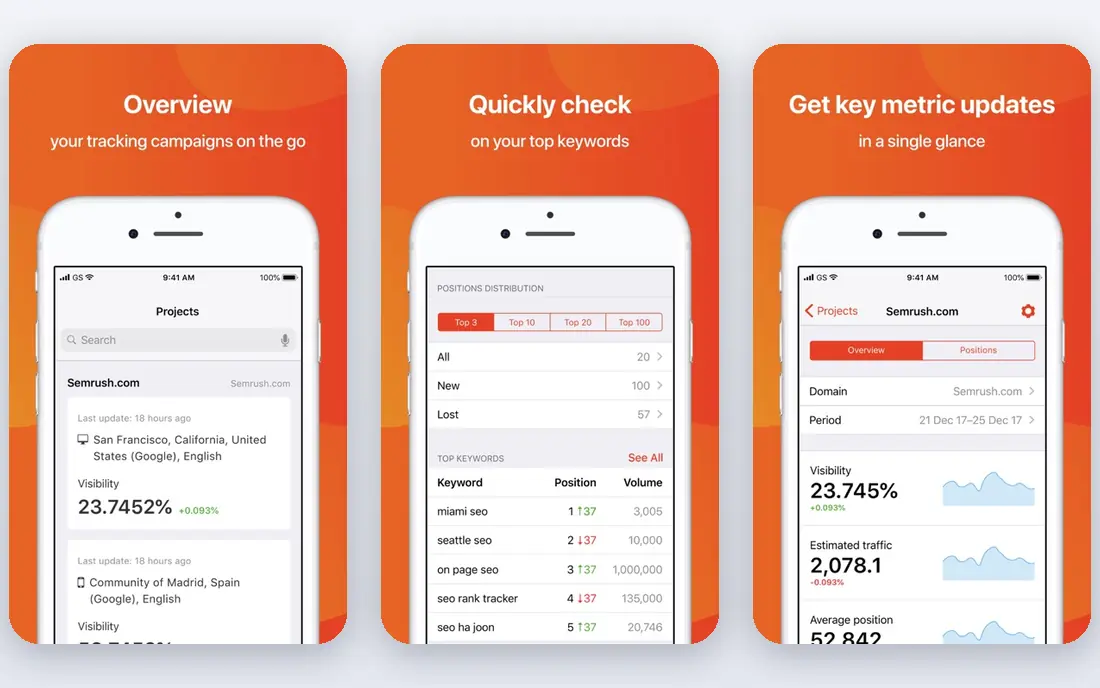
Semrush pairs rank tracking with keyword research, site audits, content tools, and advertising research, so one subscription covers much of a marketing team's needs. Its position tracking tool follows rankings by location and device, flags SERP feature changes, and now sits alongside AI visibility reporting for search experiences that cite your pages.
Semrush suits teams that want breadth. If you only need rank tracking and nothing else, a focused tool may cost less. But if your team already reports on SEO, content, and competitors together, Semrush keeps that work in one place.
- Broad toolset beyond rank tracking, AI visibility tracking, strong reporting, large keyword database
- No free plan, interface can feel large for beginners, costs rise with projects and limits
SE Ranking
Ideal for: Agencies and businesses that want SEO plus AI visibility in one platform
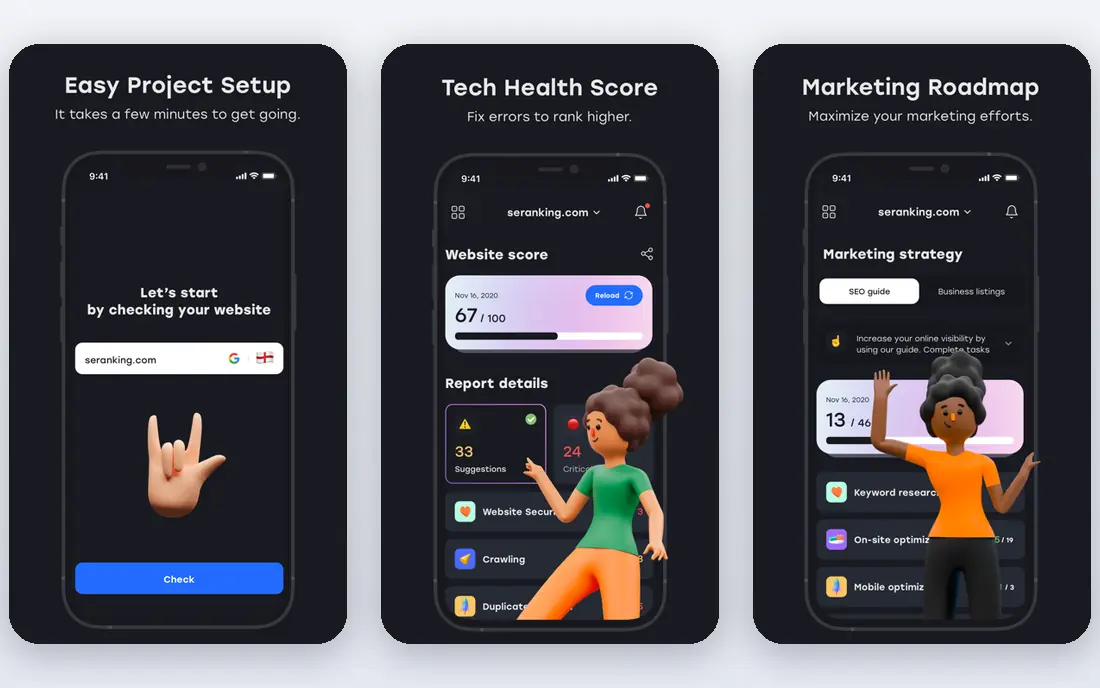
SE Ranking has grown from a rank tracker into a full AI SEO platform. Its core rank tracking covers classic search results, while its SE Visible tool tracks brand mentions, sentiment, and share of voice across major AI search engines, including ChatGPT, Gemini, AI Overviews, and AI Mode. That combination matters now that answers, not just blue links, shape visibility.
Pricing scales with keyword limits and add-ons, and a 14-day trial gives full access without a credit card. For agencies that need to show clients both classic rankings and AI visibility, SE Ranking is one of the best-value options on this list.
- Rank tracking plus AI visibility tool, flexible pricing that scales, agency reporting features, 14-day full-access trial
- No free plan, AI search features cost extra on some plans, advanced data needs higher tiers
AccuRanker
Ideal for: Agencies that need fast, accurate daily rankings
AccuRanker is a dedicated rank tracker, and that focus shows in speed and accuracy. Rankings update quickly, local and mobile tracking is precise, and reports are clean enough to send to clients with little editing. It also tracks AI search visibility features, which keeps it current as search changes.
Because AccuRanker does not try to be a full SEO suite, teams that also need audits or backlink research will pair it with another tool. If rankings are your main reporting metric, though, its speed and clarity are hard to beat.
- Very fast rank updates, accurate local and mobile tracking, clean reporting, strong agency features
- No free plan, focused on rankings rather than full SEO, pricing scales with keyword volume
Nightwatch
Ideal for: Specialists and agencies that want detailed rank data and reports
Nightwatch is a rank tracker built for SEO specialists and agencies. It tracks rankings across locations and devices, integrates with Search Console data, and produces white-label reports that agencies can brand for clients. Its charts make it easy to spot ranking trends and connect them to site changes.
Nightwatch does not match the breadth of the big suites, so teams that need keyword research and backlink data will use it alongside another platform. As a dedicated tracker with strong reporting, it earns its place here.
- Detailed rank tracking and reporting, local tracking, white-label reports, search console integration
- No free plan, smaller ecosystem than Ahrefs or Semrush, setup takes care for large lists
SERPWatcher
Ideal for: Small sites and beginners who want simple, affordable rank tracking
SERPWatcher, from Mangools, is the simplest tool on this list. Its Performance Index turns a whole keyword list into one visibility score based on positions and search volumes, which helps beginners see progress at a glance. It tracks rankings across more than 65,000 locations on desktop and mobile, with interactive reports you can share by link.
The main limit is update frequency: most plans update weekly, with daily updates reserved for the Agency plan. That is fine for small sites and monthly reporting, but daily traders of ranking data should pick a faster tool. For simplicity and price, SERPWatcher is hard to beat.
- Very easy to use, Performance Index summarizes overall visibility, local tracking across many locations, part of the Mangools suite
- Weekly updates on most plans, daily updates only on Agency plan, fewer advanced features than dedicated trackers
Advanced Web Ranking
Ideal for: Teams that need deep rank data plus AI search visibility
Advanced Web Ranking, or AWR, has focused on rank tracking for more than 20 years. It tracks rankings on Google, YouTube, Amazon, and country-specific engines like Baidu and Naver, with click-through and SERP feature analysis down to pixel positions. Its AI Search Visibility tool tracks brand appearance in AI Mode and AI Overviews across more than 170 countries, plus ChatGPT, Perplexity, Gemini, and Claude.
AWR offers unlimited projects, users, and reports, which suits agencies with many clients. A 7-day free trial needs no credit card. If your reporting depends on ranking depth and AI visibility together, AWR is a strong contender.
- Daily, weekly, and on-demand updates, AI visibility across many countries and platforms, unlimited projects and users, 7-day free trial
- No free plan, interface rewards experienced users, pricing scales with tracked keywords
Nozzle
Ideal for: Large teams that need full SERP data and AI Overview citation tracking
Nozzle takes a different approach from every other tool here. Instead of recording one rank per keyword, it records the whole search results page, five pages deep, parsing hundreds of fields per result, and it keeps every SERP it has ever collected, raw HTML included. That depth includes AI Overview citations, so you can see which of your pages AI answers cite and where each citation ranks.
Pricing follows how often you collect data rather than list length, and a 14-day free trial needs no credit card. Nozzle is built for teams whose keyword lists multiply across locations and products. Small sites will find it more than they need, but data-driven teams will find little else like it.
- Records full SERPs five pages deep, parses AI Overview citations, unlimited competitors, BigQuery export and API included
- No free plan, enterprise pricing model, more depth than small sites need
How we picked these
We compared official feature pages, pricing pages, and public reviews for rank tracking tools live in October 2026. We favored tools with accurate daily or weekly ranking data, location and device tracking, and some coverage of AI search visibility, since classic rankings alone no longer describe search performance. We kept only tools whose official homepages we could load and confirm. Pricing is listed as "See website" throughout because plans depend on keyword counts, update frequency, and AI features, and a single figure would mislead. We did not claim hands-on testing of ranking accuracy, and we treated vendor accuracy claims as claims, not verified results.
What to look for in AI SEO rank tracking software
Start with the keywords that matter. List the terms that drive revenue, group them by product, location, and intent, and check how many each tool's plan covers. A tool that looks cheap can become expensive once your real keyword list, locations, and devices are counted.
Next, decide how you will measure AI visibility. Classic rank tracking shows where your pages appear in search results, but AI Overviews and chat answers now shape what searchers see first. Tools like SE Ranking, Advanced Web Ranking, and Nozzle track AI citations and mentions, while others add AI features as paid extras. Pick the coverage that matches how your audience searches today.
Then check update frequency and reporting. Daily updates suit agencies and competitive markets, while weekly updates suit small sites. Confirm that reports can be shared or white-labeled if clients will see them, and that data can be exported or sent to your dashboard tools. Finally, use the free trial to track your own keywords for a week, and compare the tool's numbers against Search Console before you commit.
Frequently asked questions
What is the best AI SEO rank tracking software?
Ahrefs and Semrush are the best all-round picks for most teams, since they combine rank tracking with research and reporting. SE Ranking and Advanced Web Ranking are strong alternatives when AI visibility tracking matters as much as classic rankings.
How is AI rank tracking different from classic rank tracking?
Classic tracking records where your pages rank in search results. AI tracking records whether AI answers mention or cite your brand, which pages they cite, and how often competitors appear instead. Both matter now, because searchers see AI answers before or instead of classic results.
How often should rank tracking update?
Daily updates suit competitive markets and agency reporting, while weekly updates suit small sites with stable rankings. SERPWatcher updates weekly on most plans, while AccuRanker, Advanced Web Ranking, and Nozzle offer daily or on-demand updates.
Can I track rankings by location and device?
Yes, every tool on this list supports location and device tracking, though the number of locations and the granularity vary. Local businesses should check postcode-level coverage, while national brands should confirm country and city coverage for each market they serve.
Do I need a separate tool for AI search visibility?
Not always. SE Ranking, Advanced Web Ranking, and Nozzle include AI visibility tracking, and Semrush and AccuRanker add AI features to their platforms. If your current tracker lacks AI coverage, a dedicated AI visibility tool may still be worth adding.
How many keywords can I track?
Limits depend on the plan and vendor. Entry plans suit small sites with a few hundred keywords, while agency and enterprise plans cover thousands or more. Count your keywords across locations and devices before choosing, since each combination can count separately.