Best AI SOC Platforms (2026): 7 Options Compared

- 1
 Torq HyperSOCEngineering-led automationVisit
- 2
 SentinelOne with Purple AISentinelOne endpoint estatesVisit
- 3
 Dropzone AIDrop-in triage over existing SIEMVisit
- 4
 Splunk Enterprise SecurityLarge Splunk investmentsVisit
- 5
 Google Security OperationsGoogle Cloud and Mandiant usersVisit
- This list starts with Torq HyperSOC, which is built for engineering-led automation.
- Prophet Security suits lean teams needing full investigations.
- A permanent free plan is missing from all 7 tools, Torq HyperSOC and Prophet Security included; plan for a trial or a premium start.
- Pricing across the list, from Torq HyperSOC to Prophet Security, is by quote only.
Direct answer
Start with Torq HyperSOC if you need engineering-led automation. Alternatives: SentinelOne with Purple AI for SentinelOne endpoint estates, and Dropzone AI for drop-in triage over existing SIEM. All 7 tools are compared below on price, free plan and limits.
Quick comparison
| Product | Ideal for | Price from | Free version | |
|---|---|---|---|---|
| Torq HyperSOC | Engineering-led automation | See website | No | Visit |
| SentinelOne with Purple AI | SentinelOne endpoint estates | See website | Free trial | Visit |
| Dropzone AI | Drop-in triage over existing SIEM | See website | No | Visit |
| Splunk Enterprise Security | Large Splunk investments | See website | Free trial | Visit |
| Google Security Operations | Google Cloud and Mandiant users | See website | No | Visit |
 CrowdStrike Falcon with Charlotte AI | Falcon endpoint estates | See website | Free trial | Visit |
 Prophet Security | Lean teams needing full investigations | See website | No | Visit |
AI SOC Platforms profiles
Ainotely put together this guide to AI SOC platforms for readers who want a clear shortlist without reading every vendor page. It compares 7 tools on starting price, free plans, who each one suits and where each one falls short.
Torq HyperSOC
Ideal for: Engineering-led automation
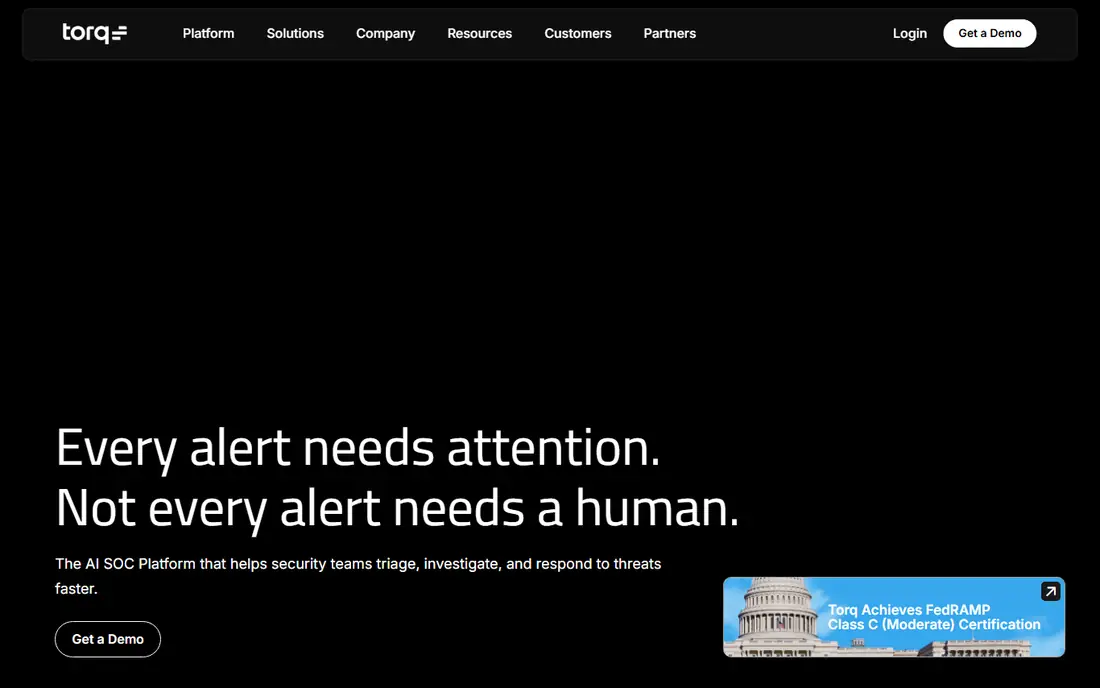
Torq HyperSOC serves engineering-led automation. Socrates, its natural language agent, lets analysts describe a remediation goal and have the system carry it out with guardrails. That adaptability helps mature teams encode their own response logic.
For everyday use, the same adaptability is a demand on staff. For everyday use, teams without automation skills may use only a fraction of the platform, and enterprise pricing reflects its target audience. Torq HyperSOC shows no starting price here, so confirm the cost on the vendor site. Torq HyperSOC has no free plan.
Drawbacks to consider: Enterprise pricing and implementation.
- Agentic AI plus workflow automation in one system
- Capable fit for sophisticated SOC teams
- Needs engineering skill to get full value
SentinelOne with Purple AI
Ideal for: SentinelOne endpoint estates
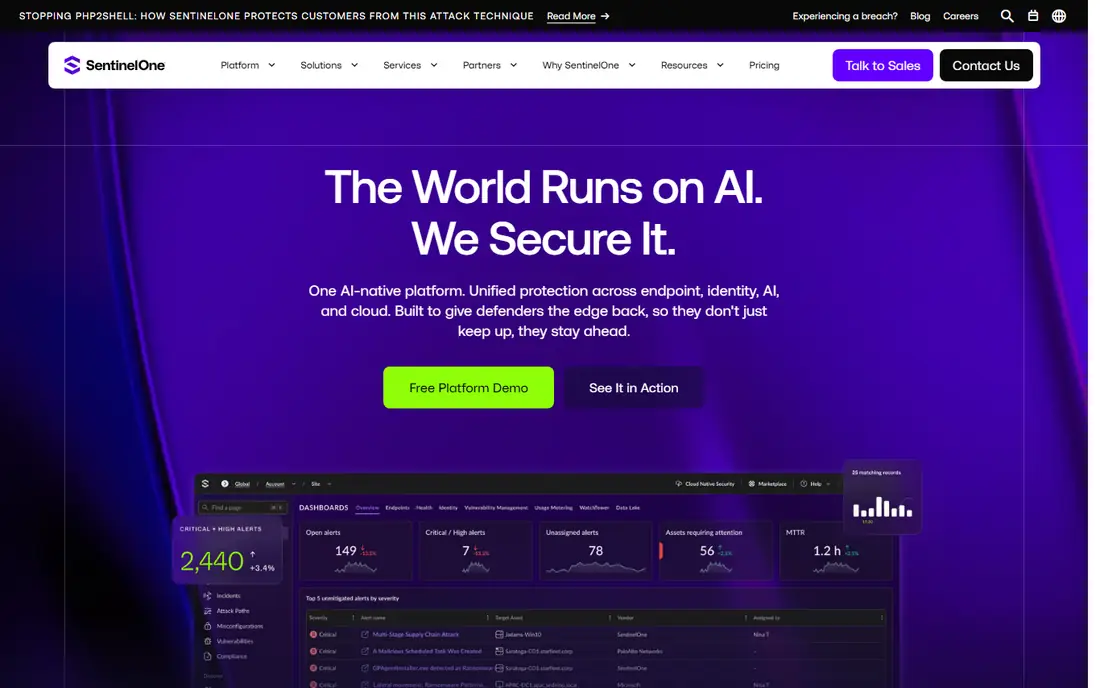
SentinelOne with Purple AI is built with SentinelOne endpoint estates in mind. SOC features also sit above entry-level endpoint pricing, so a quote is needed for a real comparison. For everyday use, SentinelOne with Purple AI appeals to teams already running Singularity endpoints.
Points against: Full SOC value relies on SentinelOne coverage.
Choose SentinelOne when Singularity is your endpoint standard and you want AI investigation tied closely to that agent and its rollback capability. The single console spans endpoint, identity, and cloud, which shortens the path from detection to containment. Check the vendor site for SentinelOne with Purple AI pricing; none is listed in this comparison. On free options: Free trial.
- Autonomous response choices
- Single console for endpoint, identity, cloud
- Enterprise pricing by quote
Dropzone AI
Ideal for: Drop-in triage over existing SIEM
Pick Dropzone AI if this describes you: drop-in triage over existing SIEM. Each verdict includes an evidence trail, which helps analysts trust the result and audit it later. You still need a place to collect and retain logs, and Dropzone fits best when those sources are already clean and connected.
In daily use, threat hunting and threat intel agents extend the same approach beyond triage. It does not replace a SIEM. No starting price is listed for Dropzone AI here; confirm pricing on the vendor site. There is no free plan with Dropzone AI.
Where it falls short: Triage layer.
- Presents evidence behind each verdict
- Investigates alerts across 90 plus integrations without moving data
- Not a full SIEM replacement
Splunk Enterprise Security
Ideal for: Large Splunk investments
In short, Splunk Enterprise Security is for large Splunk investments. Choose Splunk Enterprise Security when your data, detections, and team skills already live there, and when you can fund the system properly. For teams with years of Splunk searches, dashboards, and detections, staying put avoids an expensive migration.
Also, Splunk Enterprise Security remains the choice for organizations with a large existing Splunk investment. It brings security content, risk-based alerting, and investigation workflows on top of Splunk's search and data product, with an integration library few rivals match. Pricing for Splunk Enterprise Security is not stated here, so ask the vendor for current figures. Free options: Free trial.
Downsides: Ingest and licensing costs at scale.
- Huge integration library
- AI agents for investigation on top of existing data
- Needs skilled staff to run well
Google Security Operations
Ideal for: Google Cloud and Mandiant users
Google Security Operations is aimed squarely at Google Cloud and Mandiant users. Google Security Operations, formerly Chronicle, fits teams that require to search huge volumes of telemetry over long periods. Its architecture retains data longer than numerous SIEMs without the same ingest penalty, which helps threat hunting across months of history.
Worth adding: pick it when scale, retention, and Mandiant intelligence matter most, and when your team can handle a cloud-native SOC design. Beyond that, Mandiant intelligence and Gemini-powered summaries add context to investigations, and the Agentic SOC direction brings AI triage on top. This comparison lists no price for Google Security Operations; ask the vendor. Google Security Operations has no permanent free option.
Honest limits: Less natural for non-Google estates.
- Mandiant threat intelligence built in
- Gemini AI for summaries and detection help
- Google Cloud setup and pricing model
CrowdStrike Falcon with Charlotte AI
Ideal for: Falcon endpoint estates
Think of CrowdStrike Falcon with Charlotte AI for Falcon endpoint estates. Charlotte AI helps analysts triage, investigate, and summarize detections using the product's threat intelligence and endpoint data, whereas the Next-Gen SIEM extends that view to other sources.
What to check first: Full SOC pricing is quote-based.
More specifically, Falcon Complete brings a managed response choice for teams without 24-hour coverage. Pricing for CrowdStrike Falcon with Charlotte AI is not stated here, so ask the vendor for current figures. On free options: Free trial.
- Managed response choice with Falcon Complete
- Deep endpoint telemetry with AI triage in one product
- Best value when endpoints already run Falcon
Prophet Security
Ideal for: Lean teams needing full investigations
Prophet Security makes the most sense for lean teams needing full investigations. Pricing is quote-based.
Points against: Needs existing telemetry sources.
Upsides: Agents include investigation, hunting. For everyday use, Prophet Security targets lean SOC teams that require senior-analyst depth across every alert, not just the top few. Its agents investigate end to end, hunt proactively, and feed findings back into detection engineering, so the system boosts instead of just clearing queues. Check the vendor site for Prophet Security pricing; none is listed in this comparison. There is no free plan with Prophet Security.
- Detection engineering
- Single-tenant deployment with bring-your-own-key
- Newer vendor with smaller footprint than system giants
How we compared the tools
The comparison looks at four things: starting price, free access, how well the feature set matches AI SOC platforms, and the main limit of each tool. Where a vendor does not publish a price, the entry says quote. Where a price depends on seats or billing term, the entry says so. Order on the page follows fit for the typical buyer first, then price transparency and free access. Your own requirements should decide the final pick.
What to confirm before you sign up
- Request quotes from Torq HyperSOC, Prophet Security and the others; the list shows no fixed prices.
- Run a trial of SentinelOne with Purple AI, Splunk Enterprise Security and CrowdStrike Falcon with Charlotte AI with real work before paying for a year; your own workflow is the best test.
- Read the limits listed for Torq HyperSOC first: needs engineering skill to get full value.
- Check whether the features you need in Splunk Enterprise Security sit on the entry plan or only on higher tiers.
- Confirm you can export your data from Google Security Operations, so leaving later does not mean losing records.
Frequently asked questions
Can I try these options before paying?
Often, yes. SentinelOne with Purple AI, Splunk Enterprise Security and CrowdStrike Falcon with Charlotte AI offer a free trial. Use your own data and a real task during the test, and check what the free tier or trial limits before you rely on it.
Is Torq HyperSOC the right pick for everyone comparing AI SOC platforms?
No single tool suits every team. Torq HyperSOC comes first because it fits engineering-led automation, while SentinelOne with Purple AI suits SentinelOne endpoint estates and Dropzone AI suits drop-in triage over existing SIEM. Match the tool to your own size, budget and workflow before deciding.
Do these tools publish their prices?
No. None of the tools, from Torq HyperSOC to Prophet Security, shows a fixed starting price here, so budget time for quotes.
How are the tools for AI SOC platforms ordered?
Torq HyperSOC sits first and Prophet Security last because the order follows typical fit for AI SOC platforms, then price clarity and free access. It is a judgement call, so read each profile for fit and limits.
What is an AI SOC system?
It is a security operations product that uses AI agents to triage alerts, investigate incidents, hunt threats, and automate response, with humans setting boundaries and approving sensitive actions.