7 AI Tech in Customer Service Programs Ranked for 2026

- 1
 HubSpot Service HubCRM-aligned serviceVisit
- 2
 Freshdesk Freddy AIValue AI helpdeskVisit
- 3
 GorgiasE-commerce supportVisit
- 4
 Intercom FinConversational AI agentVisit
- 5
 Zendesk AIAI service at scaleVisit
- Top of the list is HubSpot Service Hub, which targets CRM-aligned service.
- For Salesforce-native service, Salesforce Agentforce is worth a look.
- Starting prices begin at $10 per month with Gorgias.
- Free plans exist at 2 of 7 tools (HubSpot Service Hub, Tidio Lyro).
Direct answer
HubSpot Service Hub is the first pick on this list for CRM-aligned service. Alternatives: Freshdesk Freddy AI for value AI helpdesk, and Gorgias for E-commerce support. Details, prices and limits for the rest of the 7 tools are below.
Quick comparison
| Product | Ideal for | Price from | Free version | |
|---|---|---|---|---|
| HubSpot Service Hub | CRM-aligned service | $20 per seat a month | Yes | Visit |
| Freshdesk Freddy AI | Value AI helpdesk | $19 per agent a month | Free trial | Visit |
| Gorgias | E-commerce support | $10 a month | No | Visit |
| Intercom Fin | Conversational AI agent | $29 per seat a month | Free trial | Visit |
| Zendesk AI | AI service at scale | $19 per agent per month | Free trial | Visit |
 Tidio Lyro | Small business AI chat | $29 a month | Yes | Visit |
 Salesforce Agentforce | Salesforce-native service | $25 per user a month | Free trial | Visit |
The best AI tech in customer service programs
Short on time? The summary and table above give the quick view of 7 AI tech in customer service programs, and the profiles that follow give the detail behind each entry.
HubSpot Service Hub
Ideal for: CRM-aligned service

HubSpot Service Hub is designed for CRM-aligned service. The limit is specialisation. HubSpot's AI service tools are solid for CRM-aligned teams, but a dedicated support product like Zendesk or Intercom supplies deeper ticketing, AI agent, and contact centre features.
Where it shines: AI features use HubSpot credits, which suit existing HubSpot teams.
Trade-offs to know: Onboarding fees apply on Pro and Enterprise in listings.
In practice, premium plans start at $20 per seat a month in one current listing, with a free level for two users. The service tools share the same contact, deal, and ticket data as the rest of HubSpot. What you pay to start with HubSpot Service Hub: $20 per seat per month. A free plan is available with HubSpot Service Hub.
- Free plan for up to two users in listings
- Service tools tied to HubSpot CRM, marketing
- Premium plans in some comparisons start higher for full service features
Freshdesk Freddy AI
Ideal for: Value AI helpdesk

Freshdesk Freddy AI is aimed squarely at value AI helpdesk. Plans start at $19 per agent a month, with a 14-day trial, and Freddy spans an AI agent for self-service, a copilot for agents, and insights that summarise tickets and sentiment.
Downsides: More solid AI features sit on higher levels.
Beyond that, the tiering is the thing to check. Beyond that, the session-based pricing, with 500 sessions included on some levels and further blocks at $49 per 100, is simpler to forecast than open-ended per-resolution billing for moderate volumes. The starting price for Freshdesk Freddy AI: $19 per agent per month. Free options: Free trial.
- Insights inside an accessible helpdesk
- Then $49 per 100 sessions
- Copilot is a separate per-agent add-on in listings
Gorgias
Ideal for: E-commerce support
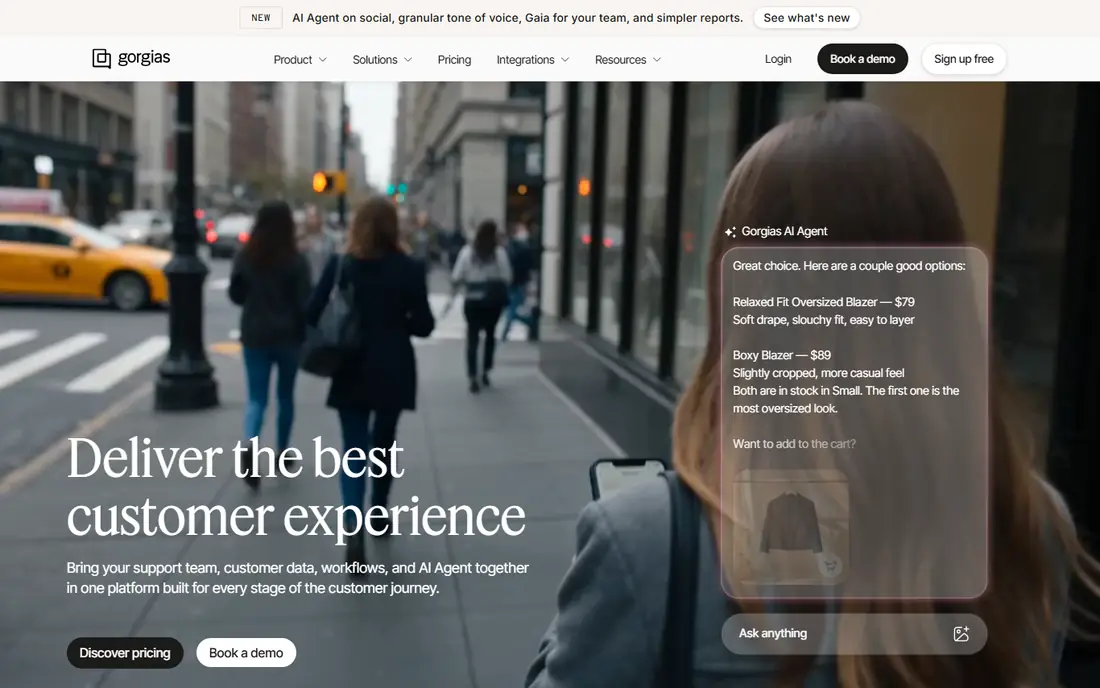
Gorgias is built with E-commerce support in mind. Outside e-commerce, Gorgias loses its primary advantage, and the ticket-based model can penalise a store with a sudden spike in contacts.
What you pay to start with Gorgias: $10 per month. No free plan comes with Gorgias.
What to check first: Weak fit outside e-commerce.
- AI Agent interactions priced at $0.90 each on annual billing in listings
- Made for Shopify and e-commerce, with order data inside tickets
- Starter plan spans only 50 tickets a month in listings, so expanding stores upgrade rapidly
Intercom Fin
Ideal for: Conversational AI agent
For conversational AI agent, Intercom Fin is a natural candidate. Intercom Fin is the chat-first AI agent to beat.
From a buyer's view, the main limit is content. Intercom Fin cost at the entry level: $29 per seat per month. On free options: Free trial.
Drawbacks to consider: Seat price plus outcome charges can grow with volume.
- Fin AI agent resolves chat conversations with a clear outcome-based price of $0.99 per resolution in listings
- Solid messenger and help centre experience
- Full value needs a well-maintained help centre
Zendesk AI
Ideal for: AI service at scale
Zendesk AI serves AI service at scale. For a large team with complicated workflows, that breadth and the marketplace depth are hard to match.
Also, the cost model needs a spreadsheet. Starting cost for Zendesk AI: $19 per agent per month. As for free access: Free trial.
Upsides: AI agents, copilots. Where it falls short: Copilot for agents is a separate add-on in listings.
- Knowledge tools across a mature ticketing system
- Large app marketplace with over 1,000 integrations in listings
- AI resolution charges stack on top of seat pricing
Tidio Lyro
Ideal for: Small business AI chat
Choose Tidio Lyro for small business AI chat. Tidio with Lyro AI is the small-business chat pick. Also, scale is the limit.
Where it falls short: English-language focus in some listings.
Strengths: Lyro AI agent aimed at small keeps and websites.
Tidio is not aimed at a large support operation with complicated routing, voice, and deep CRM workflows, and conversation-based pricing can rise with traffic. Use it for a small store or website, and move to a full helpdesk AI product when ticket volume or complexity outgrows chat-first support. Price to start with Tidio Lyro: $29 per month. You can start on Tidio Lyro without paying.
- Chat, flows
- Free plan for getting started with entry-level chat
- Pricing in listings varies by conversation volume and level, so verify at checkout
Salesforce Agentforce
Ideal for: Salesforce-native service
Salesforce Agentforce is a good fit for Salesforce-native service. Salesforce Agentforce, sold as part of Service Cloud, begins at $25 per user a month in current listings, with a 30-day trial, and its advantage is context.
Points against: Poor value outside the Salesforce ecosystem.
What Salesforce Agentforce does well: Flex Credits model for scaling agent actions. That CRM depth is why Salesforce-native enterprises choose it despite the cost and complexity. What you pay to start with Salesforce Agentforce: $25 per user per month. As for free access: Free trial.
- AI agents with full Salesforce CRM context
- Including cases, orders
- Highest admin load in this list
How these tools were picked
We compared the tools on published pricing, free plan or trial availability, feature coverage for AI tech in customer service programs, and the limits each vendor documents. Figures are shown as the vendors publish them. Billing terms, seat minimums and add-ons can change the real cost. The ranking is editorial: typical fit first, then clear pricing, then free access. If your needs are unusual, read the profiles rather than relying on position.
Before you commit
- Prices are a starting point; Gorgias shows $10 per month to start, so verify what your seat count would cost.
- Check what the free option really includes: HubSpot Service Hub and Tidio Lyro offer a free plan, and usage caps differ.
- Run a trial of Freshdesk Freddy AI, Intercom Fin, Zendesk AI and Salesforce Agentforce with real work before paying for a year; your own workflow is the best test.
- Read the limits listed for HubSpot Service Hub first: premium plans in some comparisons start higher for full service features.
- See whether Gorgias offers onboarding or training, and whether it is included in the price.
- List the apps you already depend on and check that Intercom Fin supports each one on the plan you would buy.
Frequently asked questions
Do these tools publish their prices?
Yes. Every tool from HubSpot Service Hub to Salesforce Agentforce shows a starting price, though seats, add-ons and billing terms still change the final cost.
Can I try these tools before paying?
Often, yes. HubSpot Service Hub and Tidio Lyro have a free plan and Freshdesk Freddy AI, Intercom Fin, Zendesk AI and Salesforce Agentforce offer a free trial. Use your own data and a real task during the test, and check what the free tier or trial limits before you rely on it.
Is HubSpot Service Hub the right pick for everyone comparing AI tech in customer service programs?
No single tool suits every team. HubSpot Service Hub comes first because it fits CRM-aligned service, while Freshdesk Freddy AI suits value AI helpdesk and Gorgias suits E-commerce support. Match the tool to your own size, budget and workflow before deciding.
How are the tools for AI tech in customer service programs ordered?
The order follows typical fit for AI tech in customer service programs, with HubSpot Service Hub first and Salesforce Agentforce last, then price clarity and free access. It is editorial judgement, not a score, so another team could rank the tools differently.