6 AI Tools for Academic Research Options Ranked for 2026

- 1
 Connected PapersRelated-paper graphsVisit
- 2
 Semantic ScholarFree discovery and skimmingVisit
- 3
 ScholarcyStructured paper summariesVisit
- 4
 ElicitSystematic literature tablesVisit
- 5
 ConsensusEvidence-backed claim synthesisVisit
- Top of the list is Connected Papers, which targets Related-paper graphs.
- The cheapest monthly starting price in the list is $3 per month, offered by Connected Papers.
- SciSpace is the one to check for reading and understanding papers.
- A free plan is offered by 6 of the 6 tools, including Connected Papers, Semantic Scholar, Scholarcy and Elicit.
Direct answer
Our first pick is Connected Papers, best for Related-paper graphs. Semantic Scholar is the stronger choice for free discovery and skimming, while Scholarcy suits structured paper summaries. All 6 tools are compared below on price, free plan and limits.
Quick comparison
| Product | Ideal for | Price from | Free version | |
|---|---|---|---|---|
| Connected Papers | Related-paper graphs | $3 per month (billed annually) | Yes | Visit |
| Semantic Scholar | Free discovery and skimming | $0 | Yes | Visit |
| Scholarcy | Structured paper summaries | $9.99 a month | Yes | Visit |
| Elicit | Systematic literature tables | $10 a month (billed yearly) | Yes | Visit |
| Consensus | Evidence-backed claim synthesis | $8.99 per month (billed yearly) | Yes | Visit |
 SciSpace | Reading and understanding papers | $12 a month (billed yearly) | Yes | Visit |
The best AI tools for academic research
Choosing AI tools for academic research usually comes down to price, fit and limits. This Ainotely guide sets 6 tools side by side on those three points, with the facts kept short and checkable.
Connected Papers
Ideal for: Related-paper graphs
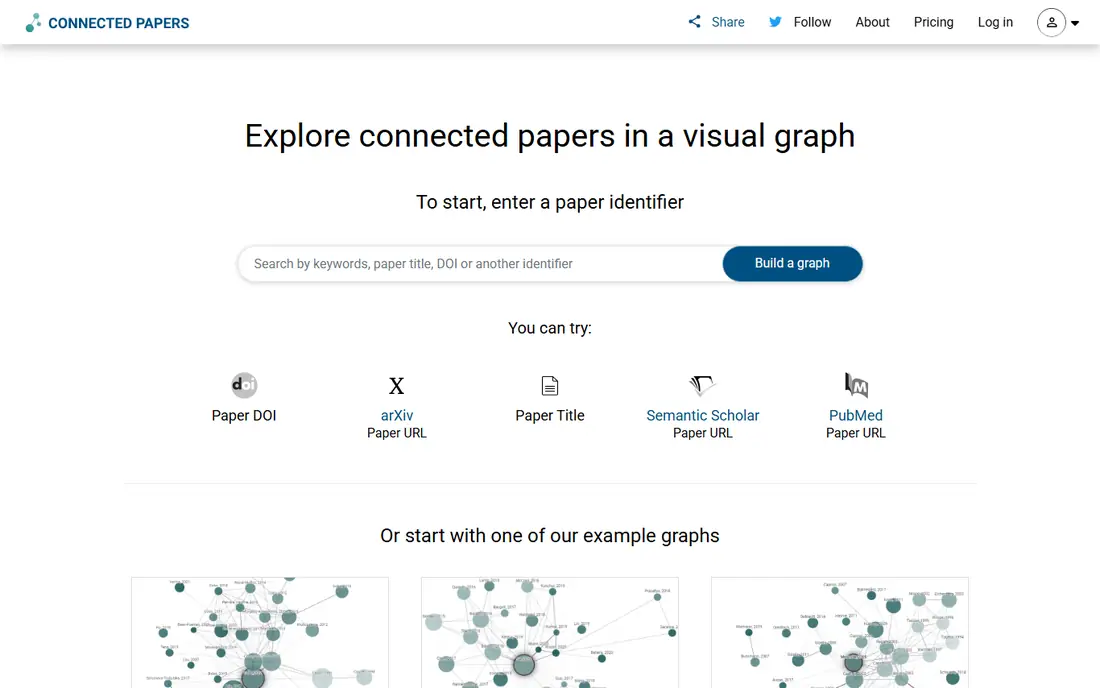
Connected Papers is aimed squarely at Related-paper graphs. Connected Papers suits researchers entering a new topic who want a quick visual map of the key papers around one seed article.
Where it is weaker: One graph type only.
For everyday use, Connected Papers builds a similarity graph from a single seed paper, showing related work clustered by co-citation so researchers can orient themselves in a new field in minutes. Connected Papers starts at: $3 per month. Connected Papers has a free plan.
- Fast field orientation
- Cheapest premium tool here
- Free level restricted to 5 graphs per month
Semantic Scholar
Ideal for: Free discovery and skimming

Semantic Scholar makes the most sense for free discovery and skimming. Semantic Scholar is the free discovery foundation: over 200 million papers, TLDR summaries for fast skimming, recommendations, and API access for building custom pipelines.
Points against: No extraction tables or synthesis.
Best features of Semantic Scholar: Recommendations.
It powers Elicit and Connected Papers behind the scenes, and its data quality and citation grounding make it the safest free starting point. It provides no extraction tables, synthesis or writing features, so it anchors a stack instead of completing one. On cost, Semantic Scholar starts like this: $0. Semantic Scholar has a free plan.
- API access
- 200-million-plus papers
- Skimming only
Scholarcy
Ideal for: Structured paper summaries

Choose Scholarcy for structured paper summaries. It works from user uploads and open-access sources instead of a full discovery database.
What to check first: not a discovery database.
So it pairs with a discovery tool instead of replacing one. As for the details, Scholarcy suits students and researchers who require fast, structured summaries of papers they already found, for revision and literature mapping. On cost, Scholarcy starts like this: $9.99 per month. Scholarcy includes a free tier.
- Browser extension for fast summaries
- Structured summary flashcards
- Summary quality varies by paper type
Elicit
Ideal for: Systematic literature tables
Elicit was built for systematic literature tables. Elicit is the systematic review tool: it searches over 200 million papers via Semantic Scholar, extracts custom columns like methods, outcomes and sample sizes into structured tables, and accelerates the extraction phase of literature reviews dramatically.
Limits to weigh: Extraction needs verification for limitations.
Extraction is usable for methods and outcomes columns but needs verification for limitations. The free level's 5,000 one-time credits run out on large reviews. Elicit pricing: $10 per month. You can start on Elicit without paying.
- Structured tables for systematic reviews
- Custom column extraction across 50-plus papers
- Free level restricted
Consensus
Ideal for: Evidence-backed claim synthesis
Consensus serves evidence-backed claim synthesis. Consensus answers research questions with evidence-backed synthesis drawn from over 200 million papers, showing a Consensus Meter that reflects how far studies agree on a claim.
It flags study quality and evidence strength, distinguishing randomised trials from observational work, and surfaces methodological limitations and biases in individual studies. From a buyer's view, AI-generated conclusions are starting points, not final answers: verify every claim at the source before citing it. Price to start with Consensus: $8.99 per month. Consensus includes a free tier.
What to check first: Synthesis needs source checking.
Where it shines: Study quality flags.
- Evidence-backed claim synthesis
- Consensus Meter showing agreement across studies
- Premium features gated behind subscription
SciSpace
Ideal for: Reading and understanding papers
SciSpace is built with reading and understanding papers in mind. SciSpace is the reading copilot: it explains papers interactively, chats about math formulas, builds review matrices and helps users understand dense academic text, drawing on a 280-million-plus paper index.
Higher levels reach $160 a month in one comparison, so check which level your needs require. SciSpace cost at the entry level: $12 per month. SciSpace has a free plan.
What to check first: Writing features need academic-integrity care.
- Math formula chat
- Interactive paper reading copilot
- Premium levels reach $160 a month in one guide
How we chose
Each tool was reviewed on what its vendor publishes: price, plan limits, core features and stated drawbacks. We did not run hands-on tests. Figures are shown as the vendors publish them. Billing terms, seat minimums and add-ons can change the real cost. The ranking is editorial: typical fit first, then clear pricing, then free access. If your needs are unusual, read the profiles rather than relying on position.
Things to verify first
- Prices are a starting point; Connected Papers shows $3 per month to start, so verify what your seat count would cost.
- Check what the free option really includes: Connected Papers, Semantic Scholar, Scholarcy and others offer a free plan, and usage caps differ.
- Read the limits listed for Connected Papers first: one graph type only.
- Let daily users try Elicit on real work; their feedback beats any feature checklist.
- See whether Scholarcy offers onboarding or training, and whether it is included in the price.
Frequently asked questions
How are the tools for AI tools for academic research ordered?
Connected Papers sits first and SciSpace last because the order follows typical fit for AI tools for academic research, then price clarity and free access. It is a judgement call, so read each profile for fit and limits.
What is the best AI tool for academic research?
The first pick on this list is Connected Papers, because it suits Related-paper graphs. Semantic Scholar is better for free discovery and skimming, and Scholarcy for structured paper summaries. Check price and limits against your own needs before choosing.
What is the cheapest option for AI tools for academic research in this list?
On published monthly entry prices, Connected Papers is the lowest here at $3 per month. Entry price is only part of the cost, because seats, add-ons and billing terms can change the total.
Is Connected Papers the right pick for everyone comparing AI tools for academic research?
No single tool suits every team. Connected Papers comes first because it fits Related-paper graphs, while Semantic Scholar suits free discovery and skimming and Scholarcy suits structured paper summaries. Match the tool to your own size, budget and workflow before deciding.
Are AI research citations reliable?
AI tools can misattribute findings, invent references or misread methods, so open every DOI and verify authors, methods and findings against the source before citing. Citation grounding accuracy varies by tool and paper type.
Which options for AI tools for academic research have a free plan?
6 of the 6 tools have a free plan, including Connected Papers, Semantic Scholar, Scholarcy and Elicit. Free plans usually cap users, projects or features, so check the limits on the vendor page.