Best AI Tools for Digital Marketing in 2026: 8 Tools Compared

- 1
 JasperBrand-consistent contentVisit
- 2
 Copy.aiGo-to-market workflowsVisit
- 3
 HubSpot AIFull CRM platformVisit
- 4
 Semrush AISearch and AI visibilityVisit
- 5
 AdCreative.aiAd creativesVisit
- Jasper suits marketing teams that want brand-consistent content at scale.
- HubSpot suits teams that want AI inside a full CRM and marketing platform.
- Semrush, Surfer, and Frase suit teams focused on search and AI answer visibility.
- AdCreative.ai suits advertisers who need many ad creatives tested fast.
- AI drafts still need human review, since accuracy, tone, and facts must be checked before publishing.
Quick comparison
| Product | Ideal for | Price from | Free version | |
|---|---|---|---|---|
| Jasper | Brand-consistent content | See website | No | Visit |
| Copy.ai | Go-to-market workflows | See website | Yes | Visit |
| HubSpot AI | Full CRM platform | See website | Yes | Visit |
| Semrush AI | Search and AI visibility | See website | Yes | Visit |
| AdCreative.ai | Ad creatives | $39/month | Yes | Visit |
 Surfer | Content optimization | See website | No | Visit |
 Writesonic | AI search growth | See website | Yes | Visit |
 Frase | SEO and AI content | $39/month | Yes | Visit |
The best AI tools for digital marketing
AI marketing tools now cover content writing, ad creation, search optimization, and full go-to-market workflows, so the best pick depends on which job you need done. We compared official product pages, pricing, and public reviews for the tools below, looking at content quality, brand controls, SEO and AI visibility features, ad tools, integrations, and cost. Where we could not verify a current price on the vendor's own page, we list See website rather than guessing.
Jasper
Ideal for: Brand-consistent content
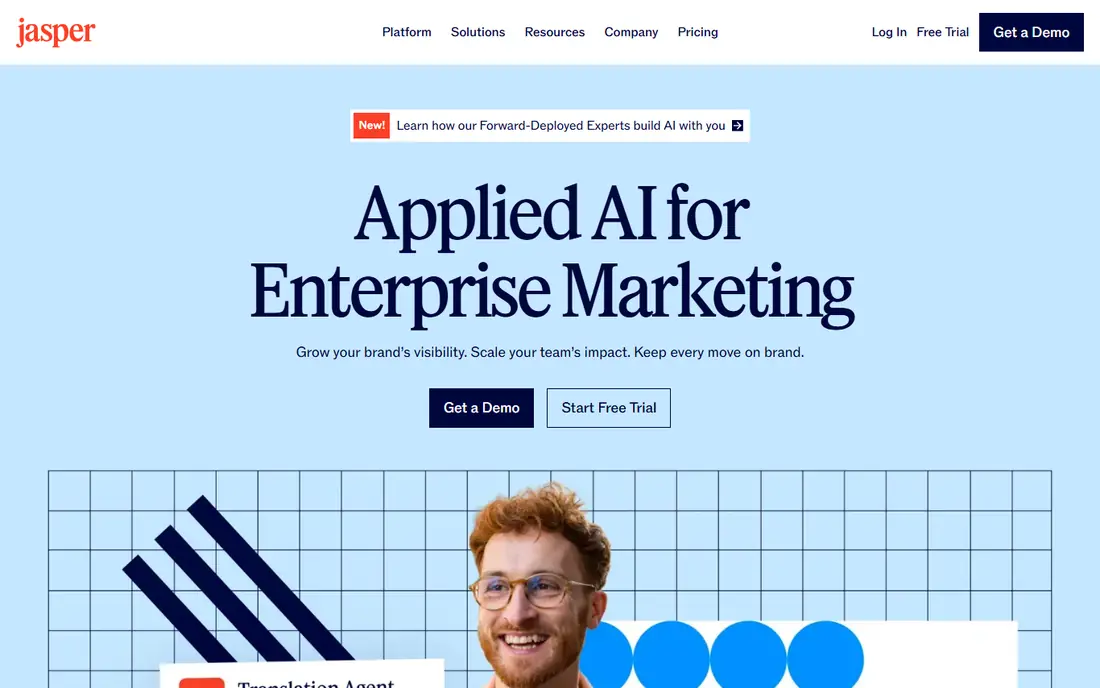
Jasper is an AI platform built for marketing teams, with agents that run SEO, campaign, email, social, and personalization workflows, plus content pipelines that move work from idea to launch. Jasper IQ stores brand voice, style guides, audience profiles, and product knowledge, then applies that context to every output across the team. AI visibility tools also help brands get cited in AI answers, not just ranked in search.
Jasper suits teams that produce a lot of content and need it to sound like one brand. Solo creators may find it more than they need, while larger teams benefit most from its governance and pipelines.
- Brand voice and style guides built in
- AI agents for marketing jobs
- Content pipelines for campaigns
- Enterprise governance
- No free plan
- Best value needs a team plan
- Learning curve for agent setup
Copy.ai
Ideal for: Go-to-market workflows
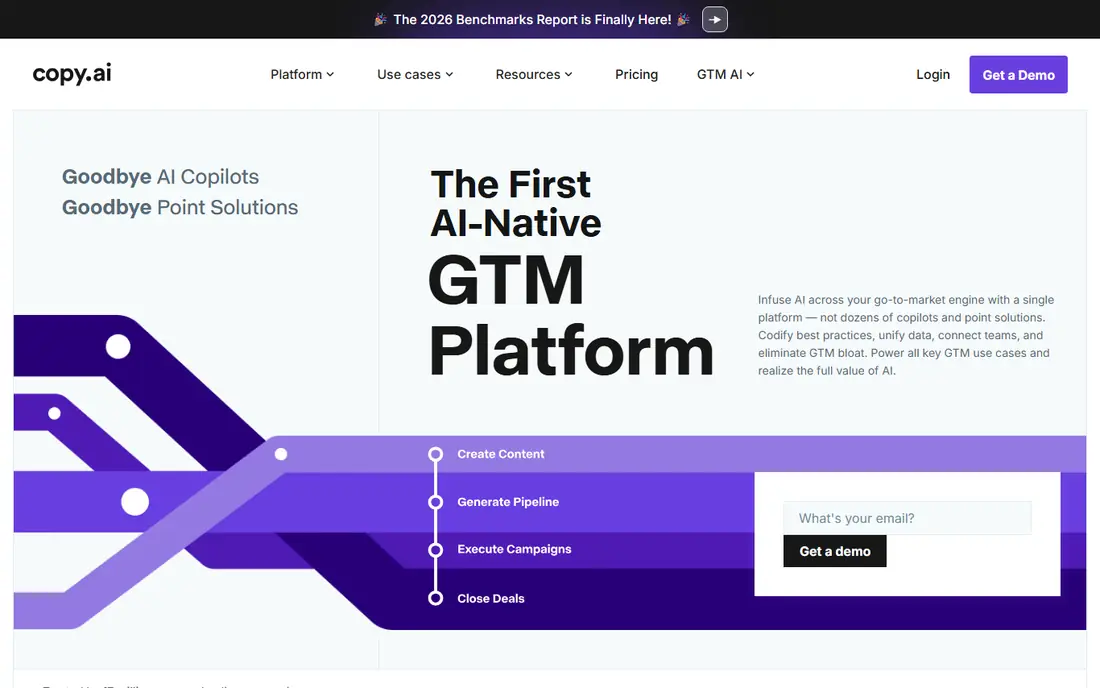
Copy.ai positions itself as a go-to-market AI platform rather than a single writing tool, with workflows for prospecting, content creation, lead processing, account-based marketing, translation, and deal coaching. It connects to common sales and marketing tools and works across several large language models, so teams are not tied to one provider. Content drafts arrive in seconds, while workflows handle repetitive go-to-market tasks.
Copy.ai suits revenue teams that want AI across the full go-to-market engine, not just a blog writer. Smaller teams should start with its free tier and add workflows gradually.
- Workflows across sales, marketing, and operations
- 2,000 plus integrations
- Model-agnostic design
- Content creation at scale
- Platform depth needs setup time
- Pricing is enterprise-oriented for full use
HubSpot AI
Ideal for: Full CRM platform
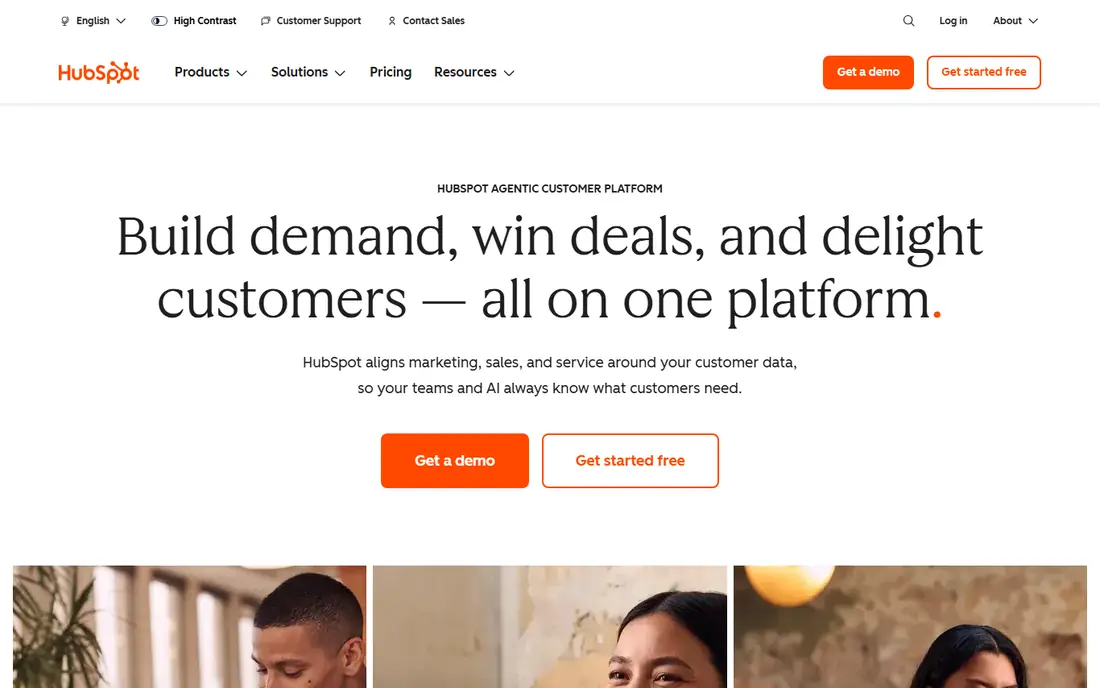
HubSpot AI lives inside HubSpot's customer platform, so marketing, sales, service, and content teams share one CRM and one data set. AI agents resolve customer inquiries, speed up sales pipelines, and flag interested accounts, while marketing tools generate and personalize content and track campaigns. A free CRM tier lets small teams start without cost, and paid hubs add deeper AI and automation.
HubSpot suits teams that already use HubSpot or want one platform for the whole customer journey. If you only need a writing tool, a focused option such as Jasper or Frase may be simpler.
- AI inside marketing, sales, service, and content hubs
- Shared customer data
- AI agents for support and sales
- Free CRM tier
- Full feature set needs paid hubs
- AI credits vary by subscription tier
Semrush AI
Ideal for: Search and AI visibility
Semrush is a large SEO and marketing toolkit that now covers AI search visibility alongside classic search, with keyword research, competitor analysis, content tools, and rank tracking. Its AI features help teams see how brands appear in AI answers and plan content for both search engines and AI assistants. A free tier covers basic use, while paid plans add the full toolkit.
Semrush suits SEO-led teams that want AI visibility inside a familiar, deep toolkit. Beginners should start with one workflow, such as keyword research or content optimization, before exploring the rest.
- Deep keyword and competitor data
- AI visibility tracking
- Content tools
- Large marketing toolkit beyond AI
- Full toolkit is broad and can overwhelm beginners
- AI features sit across several tools
AdCreative.ai
Ideal for: Ad creatives
AdCreative.ai generates ad creatives for many platforms in seconds, with a creative scoring system that predicts which ads may perform better and competitor insights that show rival ad creatives. Starter plans begin at $39 per month with monthly credits, and a 7-day free trial lets advertisers test the output before paying. Product photoshoots and video ads extend the tool beyond static banners.
AdCreative.ai suits ecommerce brands and agencies that run paid ads and need many tested creatives quickly. It is less relevant for teams focused on organic content or SEO.
- Generates ad banners, texts, photos, and videos fast
- Creative scoring predicts performance
- Competitor insights
- 7-day free trial
- Credit-based pricing needs care
- Best for paid advertisers, not organic content
Surfer
Ideal for: Content optimization
Surfer is an AI visibility platform that helps content rank in Google and get cited in AI answers, with a content score built from what actually drives visibility. Tools audit existing pages, find competitor gaps, track AI mentions, and guide writing with live optimization guidelines. Brand details and voice controls keep output consistent across a team.
Surfer suits content teams that live by search performance and now need AI answer visibility too. It is not a general marketing automation platform, so pair it with a CRM or ad tool for full coverage.
- Content score based on ranking data
- AI visibility tracking
- Audits and gap analysis
- Brand voice controls
- No free plan
- Focused on content rather than full marketing automation
Writesonic
Ideal for: AI search growth
Writesonic now calls itself an AI search growth engine, tracking where brands appear across AI platforms such as ChatGPT, Claude, Gemini, and Google, then running content, citation, and technical fixes through agent workflows. It measures lift after each fix, so teams can see whether visibility, traffic, and pipeline moved. Security and compliance options cover common enterprise needs.
Writesonic suits teams whose buyers now ask AI tools first and who need to prove search growth in business terms. Classic content writers may prefer Frase or Surfer for drafting depth.
- Tracks AI visibility across many platforms
- Agents run fixes and prove lift
- SEO plus AI search in one system
- Compliance options
- Positioning has shifted toward AI search, so classic writing features are secondary
- Enterprise features need higher plans
Frase
Ideal for: SEO and AI content
Frase runs SEO and AI search end to end, starting with a site audit that scores every page and ranks fixes by likely payoff, then drafting content in your brand voice for approval. AI visibility tracking shows where AI tools mention your pages, and content guard watches for ranking decay and drafts fixes. Plans open at $39 per month on yearly billing, with a 7-day free trial that needs no credit card.
Frase suits small teams and solo marketers who want a clear next task list and publish-ready drafts. Larger teams should check the Professional plan for extra seats and sites.
- Site audits with ranked fixes
- Opportunity reports
- Drafts in your brand voice
- AI visibility tracking
- 7-day free trial with no card
- One site and one seat on the basic plan
- Team plans cost more
How we picked these
We compared official product pages, pricing, and public reviews, checking content quality, brand controls, SEO and AI visibility features, ad tools, integrations, and cost. We favored tools that are active in October 2026 and publish clear feature and pricing information. Where we could not verify a current price on the vendor's own page, we list See website rather than guessing.
How to choose an AI marketing tool
Start with your bottleneck. If content volume is the problem, try Jasper or Copy.ai. If search visibility is the problem, try Semrush, Surfer, Frase, or Writesonic. If ads are the problem, try AdCreative.ai. If you need everything in one place, try HubSpot AI.
Then test with a real project, not a demo prompt. Run one campaign or one content cluster through the tool, check output quality, brand fit, and factual accuracy, and measure time saved against the subscription cost. Finally, set review rules: every AI draft gets a human check for facts, claims, and tone before it reaches customers, since AI errors in marketing copy can damage trust fast.
Frequently asked questions
Can AI write all of my marketing content?
AI can draft most marketing content, but human review stays essential. Check facts, claims, pricing, and tone before publishing, and keep a human in charge of strategy, since AI drafts reflect patterns in training data rather than your business judgment.
What is AI visibility?
AI visibility means how often AI assistants mention or cite your brand when users ask questions. As buyers ask AI tools before searching, brands need content that AI systems can find, trust, and cite, which is why tools such as Surfer, Frase, and Writesonic now track it.
Do I need a separate tool for ads and content?
Not always. Some teams use one platform for both, while others pair a content tool with a dedicated ad tool such as AdCreative.ai. The right split depends on how much of your budget goes to paid ads versus organic content.
How much do AI marketing tools cost?
Costs range from free tiers to hundreds of dollars per month, with credit or seat-based pricing common. Start with free trials and free tiers, then pay for the plan that matches your content volume and team size.
Will AI content hurt my search rankings?
Low-quality, unchecked AI content can hurt rankings, but well-edited AI-assisted content that answers real questions can rank well. Focus on original value, accurate facts, and genuine expertise rather than publishing raw AI output at volume.