This list puts DocuSign CLM first for agreement management with e-signature. Listed starting prices: DocuSign CLM from $45 per user per month. For a different need, ContractPodAi covers agentic contracting across departments and Harvey covers law businesses and corporate legal teams. The other 3 tools in the list cover narrower or pricier cases.
If you are comparing AI tools for legal contract automation, this page covers 6 tools in one place: what each is best for, what it costs to start, whether it has a free plan, and the main limit to know about.
Key takeaways
DocuSign CLM takes the first slot, best suited to agreement management with e-signature.
What to know about Harvey first: wide scope may be more than a single-task need.
DocuSign CLM, Ironclad and the 4 others all need a premium plan or a trial, since no free plan is listed.
The cheapest monthly starting price in the list is $45 per user per month, offered by DocuSign CLM.
DocuSign CLM makes the most sense for agreement management with e-signature. Also, DocuSign CLM is centered on agreement management and signing.
Where it falls short: Broader agreement system instead of pure legal AI.
So teams seeking deep AI drafting or diligence review may have to pair it with a specialized tool. DocuSign CLM pricing: $45 per user per month. Trial and free access: Not stated.
ContractPodAi is aimed squarely at agentic contracting across departments. ContractPodAi, now known as Leah, describes itself as an agentic AI system that runs contracting, legal and procurement end to end. Its homepage positions it for enterprises that want contracting handled across departments instead of in a single legal silo.
Teams that only need help reviewing individual contracts may prefer a lighter choice, and smaller organizations should check whether the system's breadth matches their processes. The end-to-end, multi-department scope can mean more configuration than a focused drafting or review tool. Check the vendor site for ContractPodAi pricing; none is listed in this comparison. Free plan details: Not stated.
Best for: Law businesses and corporate legal teams
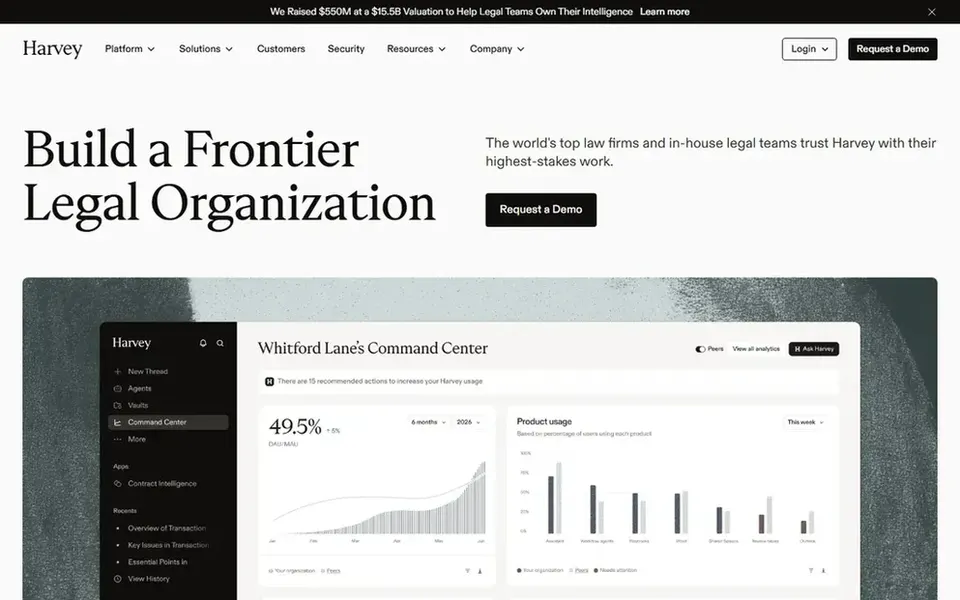
Where Harvey fits: law businesses and corporate legal teams. Harvey is AI software for legal and professional services, positioned for leading law businesses and corporate legal teams worldwide.
Points against: Oriented toward established legal teams.
Its stated focus on law businesses and corporate legal departments means smaller or non-legal teams should check whether the scope matches their work before committing. Check the vendor site for Harvey pricing; none is listed in this comparison. On free options: Not stated.
Spellbook makes the most sense for transactional lawyers drafting in Word. Spellbook concentrates on drafting and review, so teams needing end-to-end lifecycle management, procurement workflows or signature handling should look at a broader system. Its legal-professional focus also means non-legal business users may prefer a tool built around their own processes.
Limits to weigh: Pitched at legal professionals.
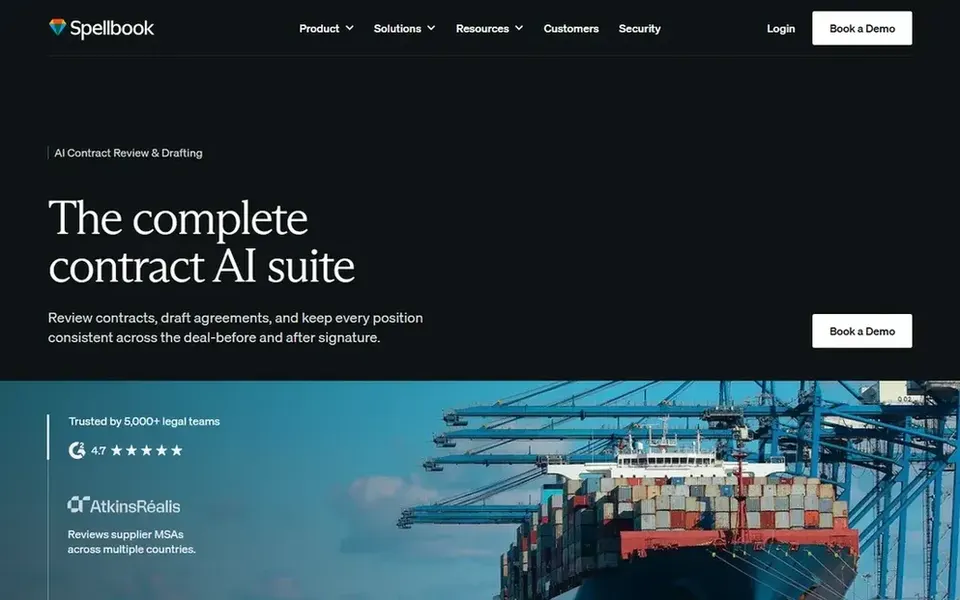
For everyday use, Spellbook is an AI contract review and drafting product geared toward transactional lawyers. Its homepage states that it works right in Microsoft Word, helping legal teams draft and review contracts with greater precision. Spellbook shows no starting price here, so confirm the cost on the vendor site. Trial and free access: Free trial.
Best for: Enterprise contract intelligence and risk
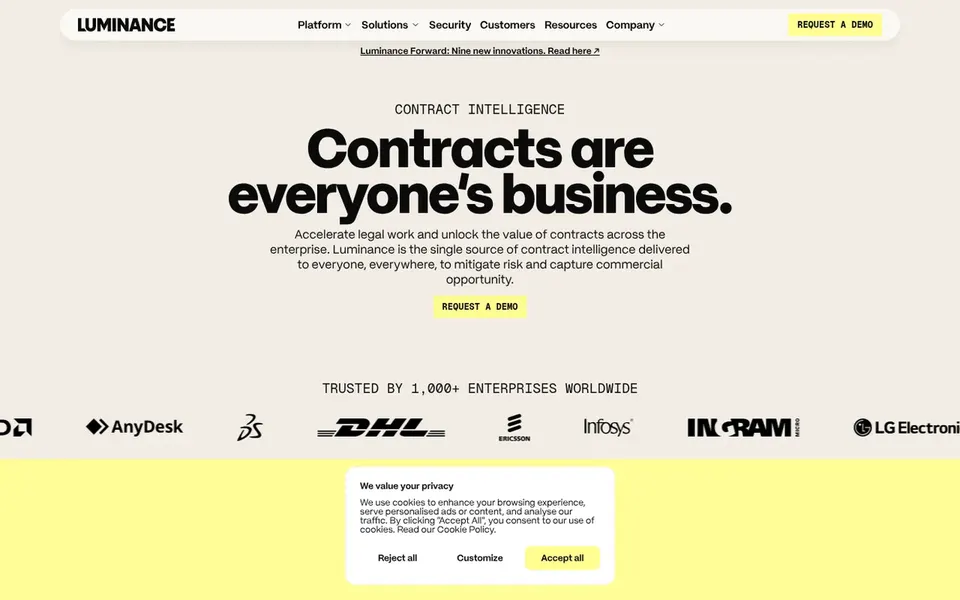
Think of Luminance for enterprise contract intelligence and risk. Luminance gives you a Contract Intelligence Platform that, per its homepage, turns business language into actionable insights to mitigate risk and unlock value for teams across the enterprise.
In practice, Luminance leans toward analysis and insight instead of in-document drafting help, so transactional lawyers wanting writing assistance may pair it with a drafting tool. Its enterprise framing means smaller legal teams should confirm the scope suits their daily review needs. Pricing for Luminance is not stated here, so ask the vendor for current figures. Free plan details: Not stated.
Where it falls short: Insight focus instead of drafting assistance.
Choose Ironclad for contract lifecycle management. Ironclad is AI contract lifecycle management software. Its homepage describes designing and deploying any type of contract in minutes, immediately surfacing insights from legal agreements and managing risk.
The main drawbacks: Needs setup around your processes.
Adopting a lifecycle system also involves aligning templates and processes, which takes planning for teams with restricted legal operations resources. Beyond that, Ironclad is built around lifecycle management, so a lawyer who primarily wants in-document drafting help may find a dedicated drafting assistant more direct. Ironclad does not show a starting price in this comparison, so check the vendor site for current pricing. Free options: Not stated.
Confirm the entry price on the vendor page. For ContractPodAi, Harvey, Spellbook and others that means a quote rather than a fixed price.
Run a trial of Spellbook with real work before paying for a year; your own workflow is the best test.
Before choosing DocuSign CLM, weigh its main limit: broader agreement product instead of pure legal AI.
Ask Ironclad about contract length, onboarding fees and user minimums before you sign.
A short pilot of ContractPodAi with your real workflow tells you more than a feature table.
How we picked
For each of the 6 tools we noted price, free plan or trial, fit for AI tools for legal contract automation and the main limit, using vendor pages and documentation. Seat minimums, billing terms and add-ons can move the real cost, so the starting prices here are a guide and not a quote. Position on the page reflects fit for a typical buyer first, with price clarity and free access breaking ties. Treat it as a guide, not a ruling.
Every price and plan detail on this page comes from the vendors’ own websites. We did not run hands-on tests unless the text says so, and we do not publish star ratings or review scores. See how we score and our disclosure.
Keep your shortlist in one place
Paste prices, trial dates and notes from this guide into Ainotely, our AI note app. It files them into a topic and pulls out tasks like “cancel trial by Friday”. Free 7-day trial, no card needed.
Often, yes. Spellbook offers a free trial. Use your own data and a real task during the test, and check what the free tier or trial limits before you rely on it.
What is the difference between contract review tools and contract lifecycle tools?
Review tools focus on reading and analyzing existing contracts, like extracting provisions or supporting diligence. Some teams use one of each, whereas others prefer a single wide system.
Do these tools publish their prices?
Not all of them. ContractPodAi, Harvey, Spellbook and others publish no starting price, so expect a quote request for those. The rest, DocuSign CLM included, show a starting price, though seats and billing terms still change the final cost.
Is DocuSign CLM the right pick for everyone comparing AI tools for legal contract automation?
No single tool suits every team. DocuSign CLM comes first because it fits agreement management with e-signature, while ContractPodAi suits agentic contracting across departments and Harvey suits law firms and corporate legal teams. Match the tool to your own size, budget and workflow before deciding.
How are the tools for AI tools for legal contract automation ordered?
The order follows typical fit for AI tools for legal contract automation, with DocuSign CLM first and Ironclad last, then price clarity and free access. It is editorial judgement, not a score, so another team could rank the tools differently.