Microsoft Azure AI comes first here, mainly for building custom AI on an adaptable cloud. If your case is different, PTC ThingWorx suits Industrial IoT application development and Google Cloud AI suits AI and data services across hybrid clouds. Prices, free plans and limits for all 6 tools follow.
Ainotely compared 6 AI tools for manufacturers. The goal is a practical shortlist: published prices, free plan facts, best-fit use cases and honest limits for every entry.
Key takeaways
Top of the list is Microsoft Azure AI, which targets building custom AI on an adaptable cloud.
Only AWS Industrial AI offers a free plan among these 6 tools.
AWS Industrial AI suits scalable cloud infrastructure for industrial AI.
Every tool from Microsoft Azure AI to AWS Industrial AI works by quote, with no list price shown.
Best for: Building custom AI on an adaptable cloud
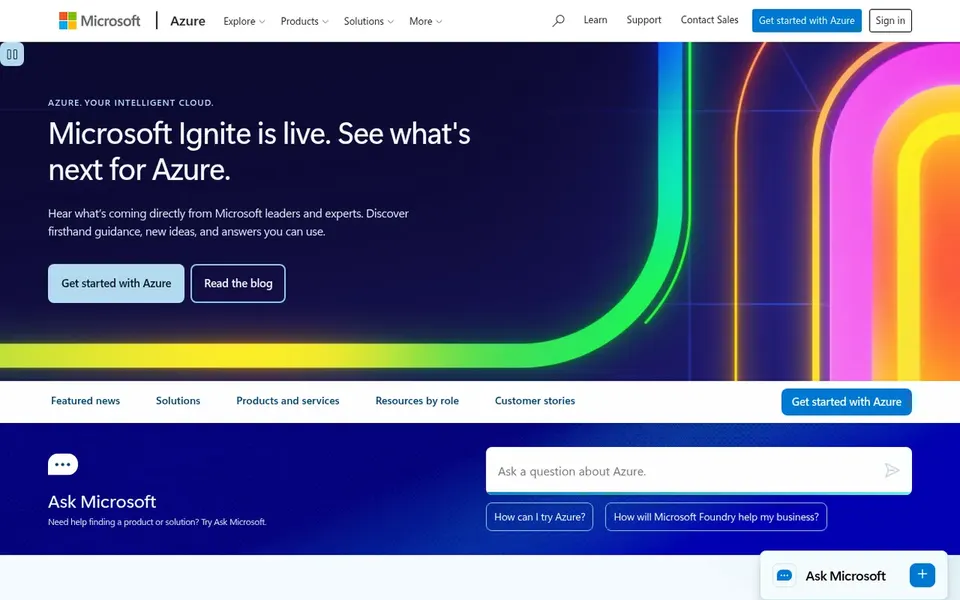
Microsoft Azure AI is aimed squarely at building custom AI on an adaptable cloud. Microsoft Azure AI is part of Azure's open and adaptable cloud computing system, which Microsoft positions around inventing with purpose, realizing cost savings and improving organizational efficiency.
Microsoft Azure AI shows no starting price here, so confirm the cost on the vendor site. As for free access: Free trial.
What to check first: Value relies on how well workloads are designed.
PTC ThingWorx works best for Industrial IoT application development. PTC ThingWorx is an industrial IoT product used to build connected applications for products, plants and equipment. As for the details, value relies on having dependable connected data from equipment.
Manufacturers often use it to link machines, model data and build monitoring or analytics applications. On top of that, ThingWorx is a system, so teams must invest in design, integration and skills to deliver working applications. If your goal is a ready-made predictive maintenance service, a focused option may get you there with less build effort. PTC ThingWorx shows no starting price here, so confirm the cost on the vendor site. As for free access: Not stated.
Watch-outs: Implementation effort can be significant.
Best for: AI and data services across hybrid clouds
Google Cloud AI works best for AI and data services across hybrid clouds. Manufacturers can use it to run analytics and AI models over operational data, particularly where multi-cloud flexibility matters.
Success relies on data engineering and governance effort. Google Cloud AI does not show a starting price in this comparison, so check the vendor site for current pricing. As for free access: Not stated.
Best for: AI inside industrial engineering workflows
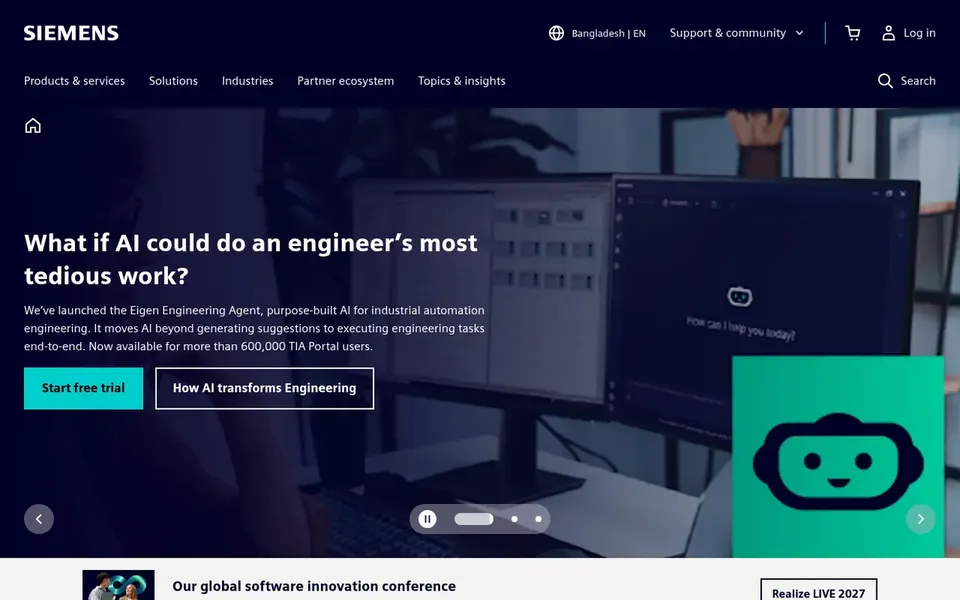
In short, Siemens Industrial Copilot is for AI inside industrial engineering workflows. Teams without Siemens-based systems may find integration less natural.
Where it is weaker: Scope can be broad and need planning.
For everyday use, since Siemens describes itself as a wide technology leader, the copilot sits inside a large portfolio, which can mean a steeper path to a focused deployment. Siemens Industrial Copilot is positioned within Siemens' wider push to drive innovation in industry, infrastructure and mobility through digital transformation. This comparison lists no price for Siemens Industrial Copilot; ask the vendor. As for free access: Not stated.
Best for: AI-driven asset and maintenance management
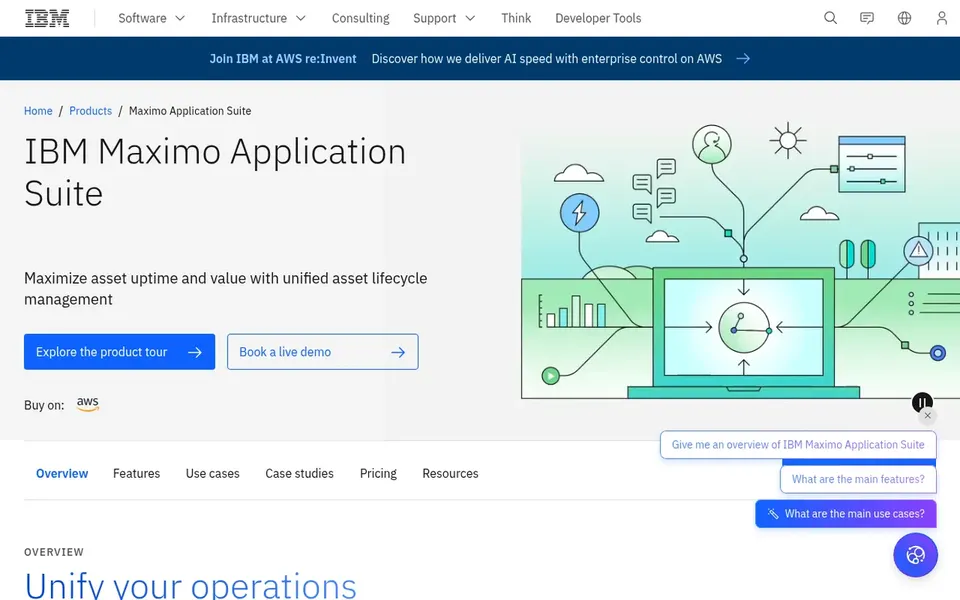
Pick IBM Maximo Application Suite if this describes you: AI-driven asset and maintenance management. If your central need is predicting equipment failure from sensor data, a dedicated predictive maintenance tool may be a better starting point.
Results rely on the quality of maintenance and asset records you feed in. For everyday use, IBM Maximo Application Suite helps organizations handle, maintain and optimize assets using AI insights, with the stated goals of reducing downtime, controlling costs and improving reliability. IBM Maximo Application Suite does not show a starting price in this comparison, so check the vendor site for current pricing. Free access: Not stated.
Watch-outs: Needs solid maintenance data to be handy.
Best for: Scalable cloud infrastructure for industrial AI
AWS Industrial AI makes the most sense for scalable cloud infrastructure for industrial AI. For everyday use, without disciplined cost management, usage can expand unexpectedly.
Watch-outs: Needs skilled teams to architect options.
For everyday use, a packaged industrial suite may be more straightforward if you lack dedicated cloud engineers. This comparison lists no price for AWS Industrial AI; ask the vendor. Free access exists with AWS Industrial AI.
Request quotes from Microsoft Azure AI, AWS Industrial AI and the others; the list shows no fixed prices.
Look at the free plan from AWS Industrial AI closely: its caps decide whether it is usable for real work.
Run a trial of Microsoft Azure AI with real work before paying for a year; your own workflow is the best test.
Before choosing Microsoft Azure AI, weigh its main limit: needs in-house cloud and AI skills.
Test how quickly IBM Maximo Application Suite answers a pre-sales question; it hints at how support will feel later.
Before you load data into AWS Industrial AI, check what an export looks like and who can run it.
How we picked
Each tool was reviewed on what its vendor publishes: price, plan limits, core features and stated drawbacks. We did not run hands-on tests. Plan names, prices and limits change often. Treat the figures here as a starting point and verify them with the vendor. Order on the page follows fit for the typical buyer first, then price transparency and free access. Your own requirements should decide the final pick. Keep it in mind while reading the 6 AI tools for manufacturers profiles on this page.
Every price and plan detail on this page comes from the vendors’ own websites. We did not run hands-on tests unless the text says so, and we do not publish star ratings or review scores. See how we score and our disclosure.
Keep your shortlist in one place
Paste prices, trial dates and notes from this guide into Ainotely, our AI note app. It files them into a topic and pulls out tasks like “cancel trial by Friday”. Free 7-day trial, no card needed.
Which options for AI tools for manufacturers have a free plan?
AWS Industrial AI is the only tool in this list with a free plan. Free plans usually cap users, projects or features, so check the limits on the vendor page. One other tool offers a trial instead.
Can I try these tools before paying?
Often, yes. AWS Industrial AI has a free plan and Microsoft Azure AI offers a free trial. Use your own data and a real task during the test, and check what the free tier or trial limits before you rely on it.
Is Microsoft Azure AI the right pick for everyone comparing AI tools for manufacturers?
No single tool suits every team. Microsoft Azure AI comes first because it fits building custom AI on a flexible cloud, while PTC ThingWorx suits Industrial IoT application development and Google Cloud AI suits AI and data services across hybrid clouds. Match the tool to your own size, budget and workflow before deciding.
Do these tools publish their prices?
No. None of the tools, from Microsoft Azure AI to AWS Industrial AI, shows a fixed starting price here, so budget time for quotes.
Which AI tool is a good match for manufacturers new to AI?
Start with Microsoft Azure AI if you need building custom AI on an adaptable cloud. PTC ThingWorx is the better match for Industrial IoT application development, and Google Cloud AI for AI and data services across hybrid clouds. The best choice depends on budget, team size and workflow.
How should a manufacturer evaluate these tools?
Define one measurable use case, like reducing unplanned downtime on a critical line, and check which tools address it straight. Then compare vendor documentation and run a scoped evaluation before deciding.