For sanctions and trade controls research, Kharon is where this list starts. Look at Flexport for freight forwarding with supply chain visibility, and at Exiger for supply chain and procurement automation. The remaining 2 options are covered below with prices and limits.
Ainotely put together this guide to AI trade compliance software for readers who want a clear shortlist without reading every vendor page. It compares 5 tools on starting price, free plans, who each one suits and where each one falls short.
Key takeaways
Kharon takes the first slot, best suited to sanctions and trade controls research.
The main caution on Flexport: compliance is not the sole focus.
Pricing across the list, from Kharon to SAP GTS, is by quote only.
SAP GTS is the one to check for enterprise-wide trade compliance integration.
Think of Kharon for sanctions and trade controls research. Organizations seeking a single system for logistics and compliance may have to combine it with another system.
Honest limits: Specialist instead of general logistics.
No starting price is listed for Kharon here; confirm pricing on the vendor site. Free plan details: Not stated.
Best for: Freight forwarding with supply chain visibility
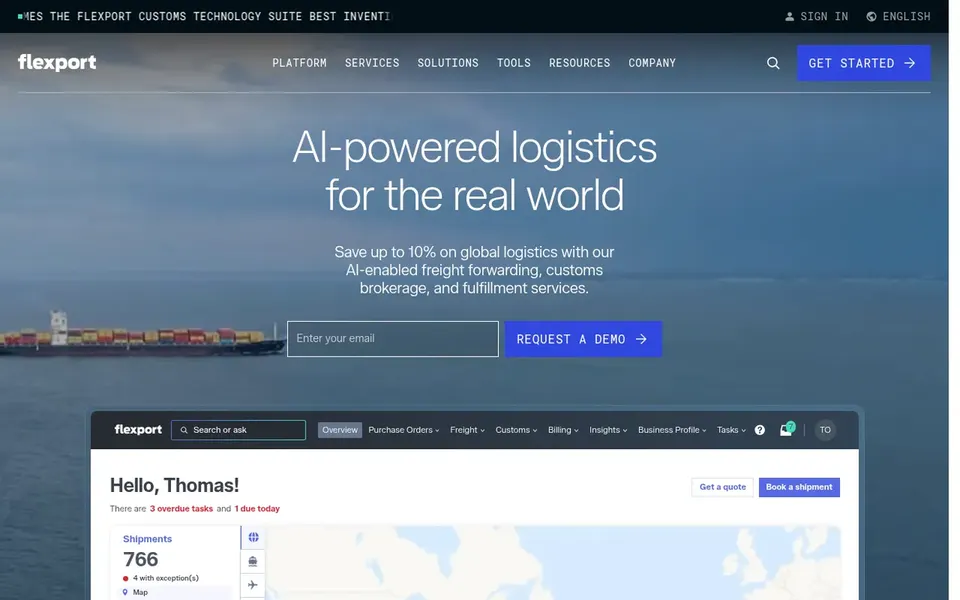
For freight forwarding with supply chain visibility, Flexport is a natural candidate. Flexport presents itself as a freight forwarding and supply chain system built around shipping smarter. For importers and exporters, it brings logistics execution and supply chain data together, which can support compliance work for example documentation and shipment visibility.
Drawbacks to consider: Suits shippers more than regulators.
Its center of gravity is logistics instead of deep regulatory analytics, so specialist sanctions or export control research may need a separate tool. For everyday use, choose it when shipping workflows are the priority and compliance is a supporting concern. Flexport shows no starting price here, so confirm the cost on the vendor site. As for free access: Not stated.
Exiger targets supply chain and procurement automation. It suits manufacturers and procurement teams that want visibility and automation across a large supplier base, including trade-related risk checks.
On top of that, since the scope is wide, buyers should define which compliance workflows they need covered before committing. Pricing for Exiger is not stated here, so ask the vendor for current figures. Free access: Not stated.
Trade-offs to know: Compliance is one part of the system.
Pick Altana Atlas if this describes you: mapping global supply chain networks. Public documentation is relatively high level, so buyers should confirm data sources and coverage during evaluation.
Downsides: Narrow public feature detail.
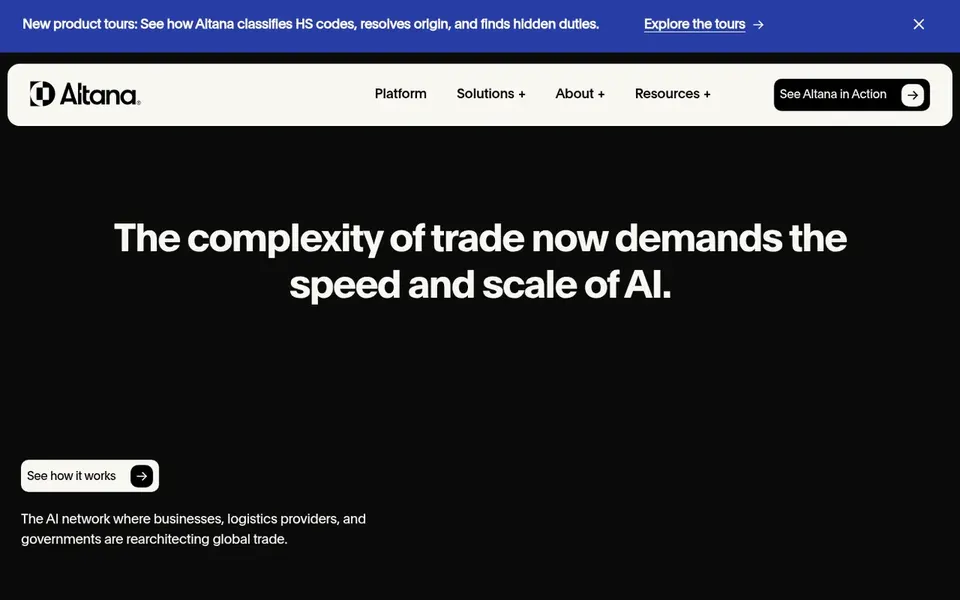
Worth adding: if you primarily need sanctions screening of individual parties, a dedicated screening product may be more straightforward. Altana Atlas describes itself as an AI-powered network for trusted trade, targeted at giving organizations visibility into the supply chains and business relationships behind their trade activity. Altana Atlas shows no starting price here, so confirm the cost on the vendor site. On free options: Not stated.
Best for: Enterprise-wide trade compliance integration
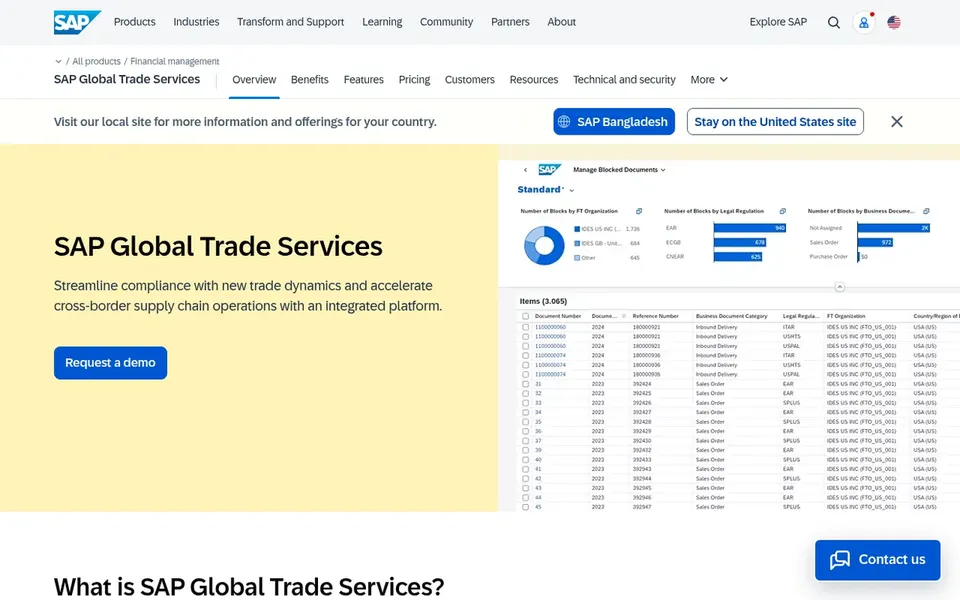
For enterprise-wide trade compliance integration, SAP GTS is a natural candidate. If your priority is a light screening tool instead of an integrated compliance layer, a narrower system may serve you better.
Teams with complicated customs and export control needs are the natural fit. Check the vendor site for SAP GTS pricing; none is listed in this comparison. Free options: Not stated.
Request quotes from Kharon, SAP GTS and the others; the list shows no fixed prices.
Read the limits listed for Kharon first: specialist instead of general logistics.
Check the support hours and onboarding help Exiger offers; smaller vendors vary a lot here.
Run a one or two week pilot of Flexport with the people who will use it every day.
Check the integration list for Kharon against the tools you run today, and note which ones need a higher plan.
How we picked
Each tool was reviewed on what its vendor publishes: price, plan limits, core features and stated drawbacks. We did not run hands-on tests. Treat prices as a snapshot: vendors change plans often, so check the vendor site for the figure that applies today. Order on the page follows fit for the typical buyer first, then price transparency and free access. Your own requirements should decide the final pick. That approach shaped the order of the 5 AI trade compliance software tools listed here.
Every price and plan detail on this page comes from the vendors’ own websites. We did not run hands-on tests unless the text says so, and we do not publish star ratings or review scores. See how we score and our disclosure.
Keep your shortlist in one place
Paste prices, trial dates and notes from this guide into Ainotely, our AI note app. It files them into a topic and pulls out tasks like “cancel trial by Friday”. Free 7-day trial, no card needed.
How are the tools for AI trade compliance software ordered?
Kharon sits first and SAP GTS last because the order follows typical fit for AI trade compliance software, then price clarity and free access. It is a judgement call, so read each profile for fit and limits.
Is Kharon the right pick for everyone comparing AI trade compliance software?
No single tool suits every team. Kharon comes first because it fits sanctions and trade controls research, while Flexport suits freight forwarding with supply chain visibility and Exiger suits supply chain and procurement automation. Match the tool to your own size, budget and workflow before deciding.
Can I try these options before paying?
Not by default. None of the tools, from Kharon to SAP GTS, lists a free plan or a free trial here, so ask each vendor for a demo before committing.
Do these tools publish their prices?
No. None of the tools, from Kharon to SAP GTS, shows a fixed starting price here, so budget time for quotes.
What should AI trade compliance software do first?
Most teams start with restricted party and sanctions screening, then add classification and customs content. Confirm that the system spans your primary workflow before considering advanced analytics or network mapping.