Best AI Voice Mimic for Video Apps (2026): 5 Options Compared

- 1
 WellSaid LabsConsistent English brand narrationVisit
- 2
 MurfStudio video voiceoversVisit
- 3
 CartesiaLive voice APIVisit
- 4
 ElevenLabsMost realistic voice cloningVisit
- 5
 DescriptAudio repair by typingVisit
- WellSaid Labs sits first on this list: consistent English brand narration.
- A free plan is available from 4 of the 5 tools: Murf, Cartesia, ElevenLabs, Descript.
- One limit worth knowing about Murf: voice cloning is an Enterprise-only add-on.
- The lowest published monthly entry price here is $5 per month, from Cartesia.
- Descript is the one to check for Audio repair by typing.
Direct answer
This list puts WellSaid Labs first for consistent English brand narration. Look at Murf for Studio video voiceovers, and at Cartesia for real-time voice API. All 5 tools are compared below on price, free plan and limits.
Quick comparison
| Product | Ideal for | Price from | Free version | |
|---|---|---|---|---|
| WellSaid Labs | Consistent English brand narration | $10 a month | Free trial | Visit |
| Murf | Studio video voiceovers | $19 per month | Yes | Visit |
| Cartesia | Live voice API | $5 a month | Yes | Visit |
| ElevenLabs | Most realistic voice cloning | $6 a month | Yes | Visit |
| Descript | Audio repair by typing | $24 a month | Yes | Visit |
5 AI voice mimic for video apps in detail
Ainotely put together this guide to AI voice mimic for video apps for readers who want a clear shortlist without reading every vendor page. It compares 5 tools on starting price, free plans, who each one suits and where each one falls short.
WellSaid Labs
Ideal for: Consistent English brand narration
Where WellSaid Labs fits: consistent English brand narration. Its studio-quality voices stay consistent across ads, courses, and training videos, its unlimited generation on premium plans removes character-cap anxiety, and its compliance controls suit regulated teams.
What you pay to start with WellSaid Labs: $10 per month. Trial and free access: Free trial.
Limits to weigh: Starter at $10 a month on annual billing.
- Unlimited generation on premium plans
- Strict compliance for enterprise teams
- English-first, restricted multilingual range
Murf
Ideal for: Studio video voiceovers
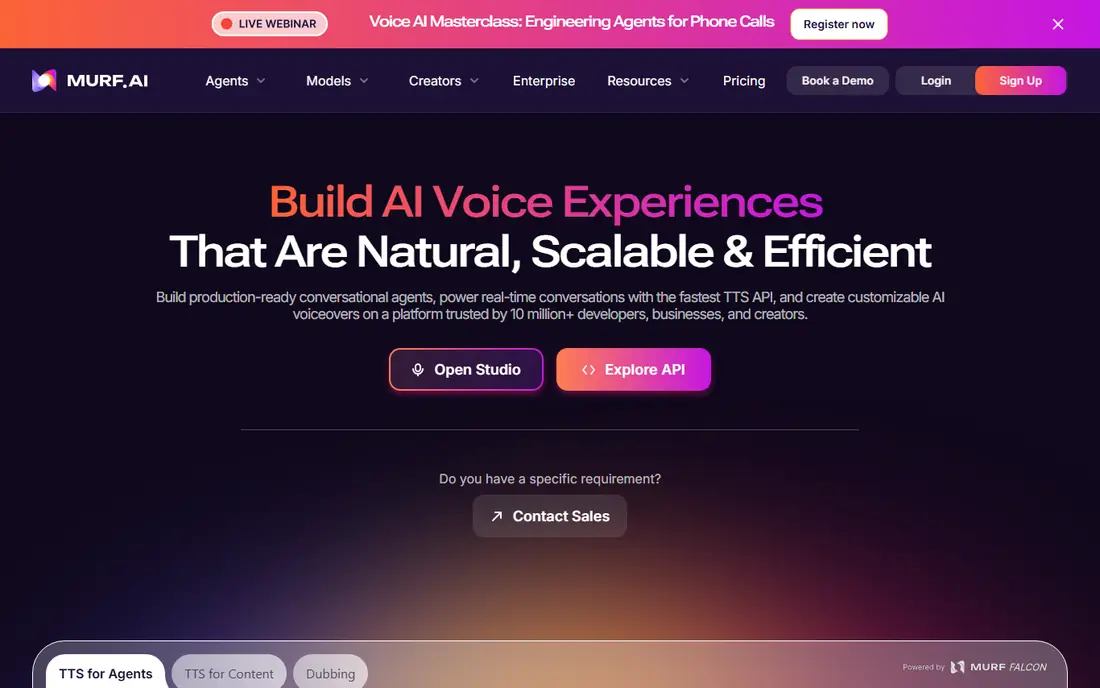
Think of Murf for Studio video voiceovers. Its timeline-style Studio, background music, and slide sync line voiceover up with PowerPoint-style decks, and its minute-based billing makes costs predictable: about $29 per month for roughly two hours of generation, or about $19 a month on annual billing. In practice, for corporate training and e-learning teams, that studio workflow is a real advantage.
Voice cloning is an Enterprise-only add-on, so most Murf users work with stock voices instead of clones. Its raw realism trails ElevenLabs in blind listener tests. On cost, Murf starts like this: $19 per month. Murf offers a free plan.
What to check first: Creator at about $19 a month on annual billing.
- Video sync and background music
- Timeline-style Studio editor
- Voice cloning is an Enterprise-only add-on
Cartesia
Ideal for: Live voice API
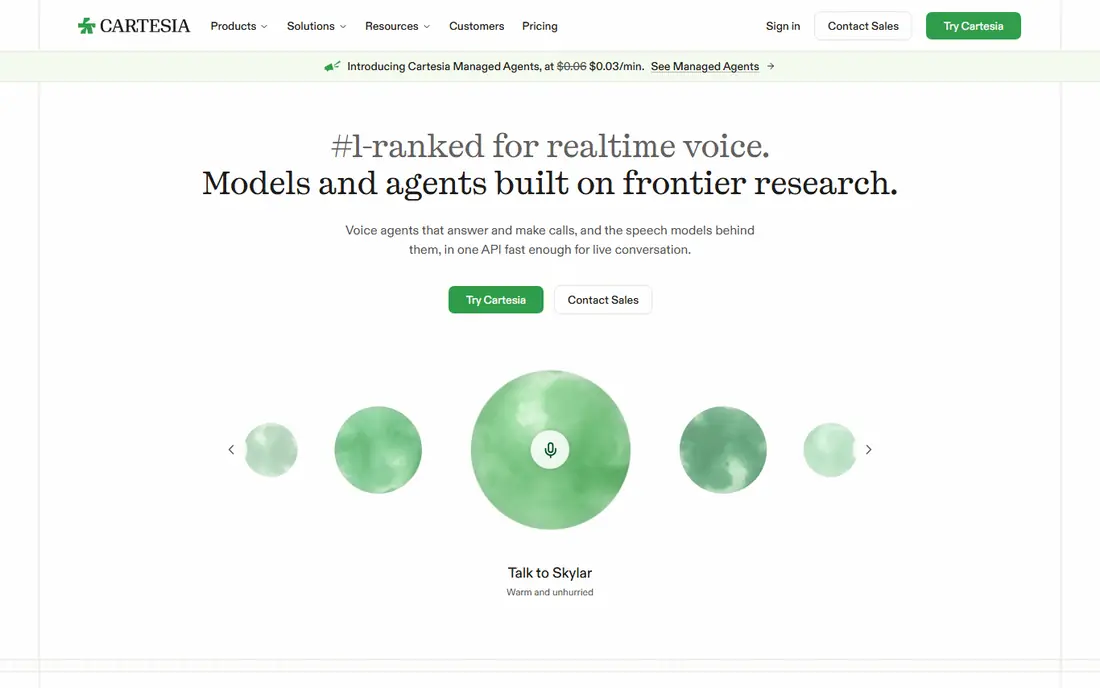
Cartesia is a good fit for live voice API. Cartesia is API-first and needs developer skill, its Pro clone costs more in some guides. It is less of a video editor than Murf or Descript.
Downsides: API-first, needs developer skill.
In practice, Cartesia suits best for developers embedding live voice into video apps. From a buyer's view, the trade is skill and scope. Cartesia starts at: $5 per month. Cartesia offers a free plan.
- 20,000 credits a month on free level
- Instant cloning from Pro
- Less of a video editor than Murf or Descript
ElevenLabs
Ideal for: Most realistic voice cloning
For most realistic voice cloning, ElevenLabs is a natural candidate. ElevenLabs is the benchmark for voice mimicry in video.
For everyday use, the limits are character caps and commercial terms. Price to start with ElevenLabs: $6 per month. ElevenLabs offers a free plan.
Trade-offs to know: Free plan has no commercial use.
- Top realism in blind listener tests with Eleven v4 models
- 100 or more languages
- Advanced features need premium levels
Descript
Ideal for: Audio repair by typing
Descript targets Audio repair by typing. Its Overdub feature clones your voice, then lets you type a correction and synthesize it cleanly into the recording, without re-recording.
Where it falls short: Full editor ramp-up time.
That workflow saves hours for podcasters and course creators who catch a mistake after publishing. Worth adding: the limits are language and price. Descript starts at: $24 per month. A free plan is available with Descript.
- Overdub clones your voice for text-edit audio repair
- Full audio and video editor
- Premium plans from about $24 a month
How the list was put together
For each of the 5 tools we noted price, free plan or trial, fit for AI voice mimic for video apps and the main limit, using vendor pages and documentation. Prices and plan limits come from vendor pages and can change, so confirm them on the vendor site before you buy. The order reflects how well each tool fits the most common buying scenario for AI voice mimic for video apps, then price clarity, then free plan access. It is a starting point, not a verdict.
What to confirm before you sign up
- Check the vendor page for the current price: Cartesia starts at $5 per month here, and seats or billing terms can move it.
- Check what the free option really includes: Murf, Cartesia, ElevenLabs and Descript offer a free plan, and usage caps differ.
- Take the trial from WellSaid Labs and push a live task through it before you pay.
- Read the limits listed for WellSaid Labs first: English-first, restricted multilingual range.
- Confirm the exact Cartesia plan that includes your must-have features.
- Get the contract term, renewal terms and any onboarding fees from Descript in writing.
Frequently asked questions
Do these tools publish their prices?
Yes. Every tool from WellSaid Labs to Descript shows a starting price, though seats, add-ons and billing terms still change the final cost.
How are the tools for AI voice mimic for video apps ordered?
The order follows typical fit for AI voice mimic for video apps, with WellSaid Labs first and Descript last, then price clarity and free access. It is editorial judgement, not a score, so another team could rank the tools differently.
Is AI voice cloning legal?
Cloning your own voice with consent is legal, whereas cloning someone else's voice without permission can break system rules and, in some places, the law.
Can I try these options before paying?
Often, yes. Murf, Cartesia, ElevenLabs and Descript have a free plan and WellSaid Labs offers a free trial. Use your own data and a real task during the test, and check what the free tier or trial limits before you rely on it.
What is the best AI voice cloning tool for video?
Start with WellSaid Labs if you need consistent English brand narration. Murf is the better match for Studio video voiceovers, and Cartesia for live voice API. The best choice depends on budget, team size and workflow.
Which options for AI voice mimic for video apps have a free plan?
Murf, Cartesia, ElevenLabs and Descript offer a free plan in this list. Free plans usually cap users, projects or features, so check the limits on the vendor page. One other tool offers a trial instead.