Blue Yonder Warehouse Management leads the list, best for end-to-end supply chain coverage. Alternatives: Epicor Warehouse Management for ERP-connected warehouse operations, and Manhattan Active Warehouse Management for unified cloud warehouse execution. Prices, free plans and limits for all 6 tools follow.
Short on time? The summary and table above give the quick view of 6 tools for AI warehouse automation software, and the profiles that follow give the detail behind each entry.
Key takeaways
Top of the list is Blue Yonder Warehouse Management, which targets end-to-end supply chain coverage.
Locus Robotics is the one to check for AI-driven mobile warehouse robots.
Blue Yonder Warehouse Management, Locus Robotics and the 4 others all need a premium plan or a trial, since no free plan is listed.
A fair warning about Blue Yonder Warehouse Management: broad scope can lengthen rollout.
In short, Blue Yonder Warehouse Management is for end-to-end supply chain coverage. Blue Yonder Warehouse Management sits within an end-to-end system that spans planning, execution, commerce, and returns. That positioning makes it a natural fit for organizations that want warehouse operations connected to forecasting and fulfillment decisions instead of managed in isolation.
Since the system includes so much ground, implementations can take time and demand clear scoping at the start. In practice, if your needs are restricted to entry-level warehouse execution, a narrower tool may be more straightforward to run. Blue Yonder Warehouse Management shows no starting price here, so confirm the cost on the vendor site. Free options: Not stated.
Where it is weaker: Configuration choices need careful scoping.
Epicor Warehouse Management was built for ERP-connected warehouse operations. Epicor Warehouse Management is offered alongside Epicor's ERP software, which the vendor describes as curated to the unique needs of each business with industry-specific tools for efficiency and growth.
For everyday use, the value proposition leans on the Epicor ecosystem, so organizations on other ERP systems should weigh integration effort carefully. Epicor Warehouse Management does not show a starting price in this comparison, so check the vendor site for current pricing. As for free access: Not stated.
What to check first: Most solid inside Epicor ERP.
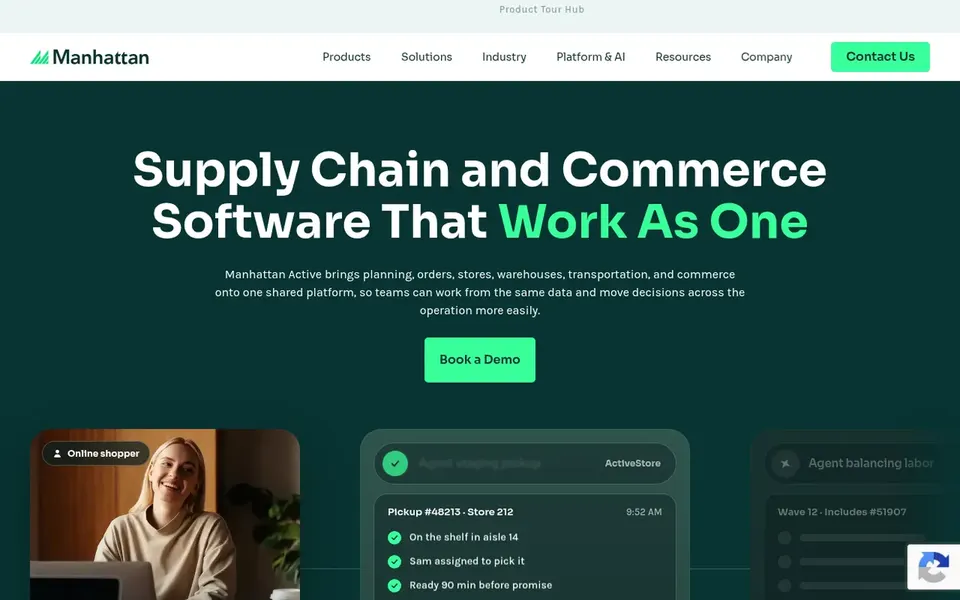
Where Manhattan Active Warehouse Management fits: unified cloud warehouse execution. Manhattan Active Warehouse Management comes from Manhattan Associates, a global technology company centred on supply chain commerce, retail, and omnichannel operations.
Limits to weigh: Enterprise-scale scope may overwhelm small operations.
Teams without complicated omnichannel requirements may prefer a lighter tool, whereas those already running Manhattan systems should evaluate how much integration work is required before committing. The breadth that makes it feature-rich also makes it a serious implementation effort, so smaller warehouses may find the scope heavier than needed. Manhattan Active Warehouse Management shows no starting price here, so confirm the cost on the vendor site. Free plan details: Not stated.
Where SAP Extended Warehouse Management fits: SAP-centric enterprise warehouses. Implementation usually needs experienced specialists.
Drawbacks to consider: Best value assumes SAP ecosystem.
In practice, firms with multi-warehouse complexity and existing SAP investments are the most natural fit. This comparison lists no price for SAP Extended Warehouse Management; ask the vendor. As for free access: Not stated.
Best for: Industry-specific cloud warehouse management
Think of Infor CloudSuite WMS for industry-specific cloud warehouse management. Distributors and manufacturers already using Infor applications are the most obvious candidates, since shared data models cut integration effort.
For everyday use, if you need a vendor-neutral warehouse tool with minimal ERP ties, other choices may be more straightforward. This comparison lists no price for Infor CloudSuite WMS; ask the vendor. As for free access: Not stated.
Points against: Industry focus narrows general appeal.
Locus Robotics is aimed squarely at AI-driven mobile warehouse robots. Locus Robotics provides adaptable warehouse automation built around AI-driven robots and orchestration, positioning itself as a way to increase productivity across fulfillment sites. From a buyer's view, retail and e-commerce fulfillment teams are the most usual audience.
In daily use, since robots are physical assets, deployment involves facility layout, charging, and workflow changes that pure software does not need. If you only need planning and execution software, a software-first WMS is the better starting point. No starting price is listed for Locus Robotics here; confirm pricing on the vendor site. Free plan details: Not stated.
Confirm the entry price with every vendor: no tool from Blue Yonder Warehouse Management to Locus Robotics shows a fixed starting price.
Before choosing Blue Yonder Warehouse Management, weigh its main limit: broad scope can lengthen rollout.
Confirm you can export your data from Epicor Warehouse Management, so leaving later does not mean losing records.
Before rolling out Blue Yonder Warehouse Management, verify the integrations your workflow depends on.
The entry price of Locus Robotics is only the starting point; model the full cost with seats and extras.
How we picked
Ainotely used vendor pricing pages and product documentation as the base, then compared plans, free access and documented limits for 6 tools. Where a vendor does not publish a price, the entry says quote. Where a price depends on seats or billing term, the entry says so. The ranking is editorial: typical fit first, then clear pricing, then free access. If your needs are unusual, read the profiles rather than relying on position.
Every price and plan detail on this page comes from the vendors’ own websites. We did not run hands-on tests unless the text says so, and we do not publish star ratings or review scores. See how we score and our disclosure.
Keep your shortlist in one place
Paste prices, trial dates and notes from this guide into Ainotely, our AI note app. It files them into a topic and pulls out tasks like “cancel trial by Friday”. Free 7-day trial, no card needed.
Is Blue Yonder Warehouse Management the right pick for everyone comparing AI warehouse automation software?
No single tool suits every team. Blue Yonder Warehouse Management comes first because it fits end-to-end supply chain coverage, while Epicor Warehouse Management suits ERP-connected warehouse operations and Manhattan Active Warehouse Management suits unified cloud warehouse execution. Match the tool to your own size, budget and workflow before deciding.
What does AI add to warehouse automation software?
AI usually supports forecasting, task prioritization, labor planning, and robot orchestration so warehouse work adapts to demand in near live. Vendors describe these capabilities differently, so ask for concrete examples tied to your processes.
Do these tools publish their prices?
No. None of the tools, from Blue Yonder Warehouse Management to Locus Robotics, shows a fixed starting price here, so budget time for quotes.
Can I try these options before paying?
Not by default. None of the tools, from Blue Yonder Warehouse Management to Locus Robotics, lists a free plan or a free trial here, so ask each vendor for a demo before committing.
Does any tool for AI warehouse automation software here have a free plan?
A permanent free plan is not offered by Blue Yonder Warehouse Management, Locus Robotics or the other tools here. Plan a short evaluation period instead.