Best Analytics Company in 2026: 8 Options Compared

- 1
 Tableauteams that want visual dashboardsVisit
- 2
 Databricksteams building data and AI work at scaleVisit
- 3
 Snowflakecompanies that want a cloud data warehouseVisit
- 4
 SASorganizations that want advanced analytics and governanceVisit
- 5
 Adobe Analyticsteams that want web and app behavior dataVisit
- The strongest overall options for best analytics company are Tableau, Databricks, and Snowflake, each with a different strength.
- Prices are mostly quote based, so use the official pricing page for Tableau and SAS before you compare totals.
- Free options exist in this list, including Mixpanel, Amplitude, but free tiers usually limit volume or features.
- The right pick depends on your budget, your current tools, and how much setup help you need, not on brand size alone.
Quick comparison
| Product | Ideal for | Price from | Free version | |
|---|---|---|---|---|
| Tableau | teams that want visual dashboards | See website | Free trial | Visit |
| Databricks | teams building data and AI work at scale | See website | Free trial | Visit |
| Snowflake | companies that want a cloud data warehouse | See website | Free trial | Visit |
| SAS | organizations that want advanced analytics and governance | See website | Free trial | Visit |
| Adobe Analytics | teams that want web and app behavior data | See website | No | Visit |
 Mixpanel | product teams that want user behavior funnels | See website | Yes | Visit |
 Amplitude | product teams that want behavior and session data | See website | Yes | Visit |
 Looker | teams that want governed business data models | See website | Free trial | Visit |
The best analytics company
We compared official feature pages, pricing pages, app store listings, privacy policies, and public reviews for best analytics company. The list below mixes well known leaders with strong smaller options, and each write-up notes one honest weakness. Use the table above to shortlist two or three options, then check their current terms before you buy.
Tableau
Ideal for: teams that want visual dashboards
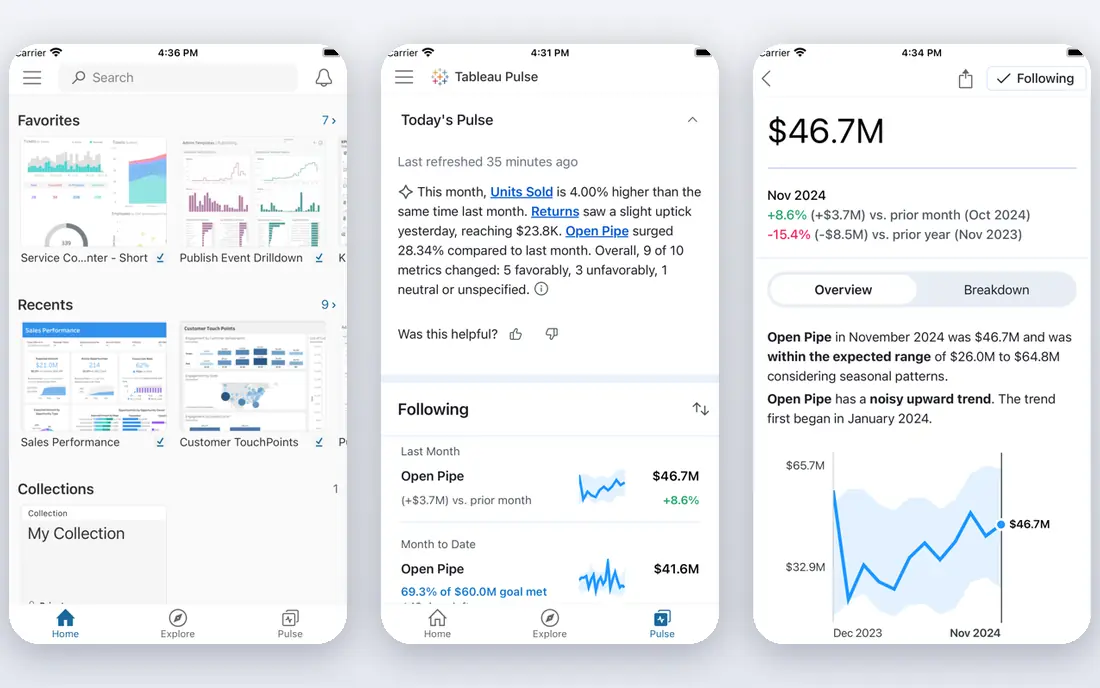
For teams that want visual dashboards, Tableau is a strong starting point. Makes visual dashboards and reports that non technical staff can read. Connects to many data sources. Suits teams that present data to leaders.
The honest catch is full features need paid plans and some training. Large deployments need data prep work first. That trade-off matters most if teams that want visual dashboards is your main use case, so check the current pricing page and any limits before you commit. A short trial with a real task will show whether the limits matter for your work.
- Makes visual dashboards and reports that non technical staff can read
- Connects to many data sources
- Suits teams that present data to leaders
- Full features need paid plans and some training
- Large deployments need data prep work first
Databricks
Ideal for: teams building data and AI work at scale

If teams building data and AI work at scale is your main goal, start with Databricks. Combines data engineering, analytics, and AI work in one platform. Handles large data volumes. Suits data teams with engineering skills.
The honest catch is costs depend on compute use and need monitoring. Smaller teams may find it more platform than they need. That trade-off matters most if teams building data and AI work at scale is your main use case, so check the current pricing page and any limits before you commit. A short trial with a real task will show whether the limits matter for your work.
- Combines data engineering, analytics, and AI work in one platform
- Handles large data volumes
- Suits data teams with engineering skills
- Costs depend on compute use and need monitoring
- Smaller teams may find it more platform than they need
Snowflake
Ideal for: companies that want a cloud data warehouse
Snowflake fits companies that want a cloud data warehouse well, with a clear focus on that use case. Stores and queries large data sets in the cloud. Separates storage and compute for flexible scaling. Suits teams with growing data needs.
The honest catch is costs depend on usage and need cost controls. Query design affects bills more than many buyers expect. That trade-off matters most if companies that want a cloud data warehouse is your main use case, so check the current pricing page and any limits before you commit. A short trial with a real task will show whether the limits matter for your work.
- Stores and queries large data sets in the cloud
- Separates storage and compute for flexible scaling
- Suits teams with growing data needs
- Costs depend on usage and need cost controls
- Query design affects bills more than many buyers expect
SAS
Ideal for: organizations that want advanced analytics and governance
Start your shortlist with SAS if organizations that want advanced analytics and governance matters most to you. Offers advanced analytics, forecasting, and data management. Has a long record in regulated industries. Suits teams that need governed analytics.
The honest catch is pricing is quote based and often enterprise level. Learning curve is steep for new users. That trade-off matters most if organizations that want advanced analytics and governance is your main use case, so check the current pricing page and any limits before you commit. A short trial with a real task will show whether the limits matter for your work.
- Offers advanced analytics, forecasting, and data management
- Has a long record in regulated industries
- Suits teams that need governed analytics
- Pricing is quote based and often enterprise level
- Learning curve is steep for new users
Adobe Analytics
Ideal for: teams that want web and app behavior data
For teams that want web and app behavior data, Adobe Analytics is a strong starting point. Tracks web and app behavior in detail. Connects with Adobe marketing tools. Suits teams already using Adobe products.
The honest catch is best value comes inside the Adobe ecosystem. Setup and tagging need care to keep data clean. That trade-off matters most if teams that want web and app behavior data is your main use case, so check the current pricing page and any limits before you commit. A short trial with a real task will show whether the limits matter for your work.
- Tracks web and app behavior in detail
- Connects with Adobe marketing tools
- Suits teams already using Adobe products
- Best value comes inside the Adobe ecosystem
- Setup and tagging need care to keep data clean
Mixpanel
Ideal for: product teams that want user behavior funnels
If product teams that want user behavior funnels is your main goal, start with Mixpanel. Focuses on product funnels, retention, and user flows. Offers a free tier for smaller volumes. Suits product and growth teams.
The honest catch is event based pricing grows with product usage. It is not a full business intelligence replacement. That trade-off matters most if product teams that want user behavior funnels is your main use case, so check the current pricing page and any limits before you commit. A short trial with a real task will show whether the limits matter for your work.
- Focuses on product funnels, retention, and user flows
- Offers a free tier for smaller volumes
- Suits product and growth teams
- Event based pricing grows with product usage
- It is not a full business intelligence replacement
Amplitude
Ideal for: product teams that want behavior and session data
Amplitude fits product teams that want behavior and session data well, with a clear focus on that use case. Offers behavior analytics, session replay options, and experimentation. Has a free tier for getting started. Suits product teams testing changes.
The honest catch is pricing rises with monthly tracked users. Some features need technical setup. That trade-off matters most if product teams that want behavior and session data is your main use case, so check the current pricing page and any limits before you commit. A short trial with a real task will show whether the limits matter for your work.
- Offers behavior analytics, session replay options, and experimentation
- Has a free tier for getting started
- Suits product teams testing changes
- Pricing rises with monthly tracked users
- Some features need technical setup
Looker
Ideal for: teams that want governed business data models
Start your shortlist with Looker if teams that want governed business data models matters most to you. Lets data teams define shared metrics in one model. Connects to cloud warehouses. Suits companies that need consistent reporting.
The honest catch is requires data team effort to model well. Pricing is quote based through Google Cloud. That trade-off matters most if teams that want governed business data models is your main use case, so check the current pricing page and any limits before you commit. A short trial with a real task will show whether the limits matter for your work.
- Lets data teams define shared metrics in one model
- Connects to cloud warehouses
- Suits companies that need consistent reporting
- Requires data team effort to model well
- Pricing is quote based through Google Cloud
How we picked these
We compared official feature pages, pricing pages, app store listings, privacy policies, and public reviews for each option in this list. We kept only products that exist and work in October 2026 and truly fit the topic, and we left out options that were too narrow, discontinued, or a poor fit. We did not claim hands-on testing that did not happen. Prices and free tiers change often, so where a price could not be verified from the vendor site we wrote See website instead of guessing a number.
What to check before you choose
- Define the job first. Write down what best analytics company must do for you in the next year, then drop any option that misses a must have feature.
- Check the full price. Look for per user fees, volume limits, setup costs, and renewal terms on the official pricing page.
- Test the free tier or trial. Use a real task from your work, not a demo, and note where you hit a limit.
- Check support and privacy. Read the privacy policy and support terms, and ask how your data is stored and deleted.
- Confirm fit with your current tools. Check integrations, import options, and whether you need help to migrate.
Frequently asked questions
What is the best best analytics company?
There is no single best pick for every buyer. Tableau suits teams that want visual dashboards, while Databricks suits teams building data and AI work at scale. Shortlist by your budget and your current tools, then test the top two.
How much does best analytics company cost?
Costs vary widely in this list, and many options use quote based pricing. Check the official pricing page for each shortlisted option, and add per user, volume, and renewal costs before you compare totals.
Is there a free option for best analytics company?
Some options in this list offer a free tier or a free trial, but free tiers usually limit volume or features. Use a free tier to test fit, and plan for a paid plan if you need full use.
How do I choose between these options?
Start with the job you need done, then compare price, limits, support, and integrations. A short trial with a real task will tell you more than a feature list alone.
What should I check before signing up?
Check contract length, renewal terms, data export options, and privacy terms. Ask what happens to your data if you cancel, and confirm support hours for your time zone.